Did you know that first EBDC fungicide was registered for use in vegetable crops in 1964 followed by chlorothalonil in 1966. Historically speaking, the first New Jersey Vegetable Production Recommendations Guide was produced in 1969 and was only 33 pages long (it’s 502 pages now). Things have changed significantly over the past 55 years when […]
Continue reading...July 31, 2025 Andy Wyenandt
Quick reviews of fungicide chemistries, FRAC groups, and fungicide resistance management
July 30, 2025 Andy Wyenandt
Identifying and controlling leaf mold in high tunnel & greenhouse tomato production
Leaf mold occasionally appears in high tunnel or greenhouse tomato production in New Jersey. However, under ideal conditions the disease will develop in field-grown crops. The fungus will cause infection under prolonged periods leaf wetness and when relative humidity remains above 85%. If relative humidity is below 85% the disease will not occur. Therefore, the […]
Continue reading...Fruit IPM Report July 29, 2025
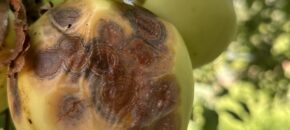
Peach: Diseases: Brown rot: Brown rot is appearing in ripening fruit throughout the state. Highly effective rot materials such as DMI’s (FRAC group 3) and Strobilurins (FRAC group 11) should be applied beginning 3 – 4 weeks prior to harvest. See the NJ Commercial Tree Fruit Production Guide for more information. Tarnished Plant Bugs; and […]
Continue reading...July 29, 2025 Andy Wyenandt
What’s up with corn smut!
There have been numerous reports of corn smut throughout the state of New Jersey the past few weeks. Corn smut (also called common smut), caused by Ustilago maydis, is found infecting corn throughout most of the world. In most years, corn smut is reported in New Jersey , but reports are limited to just a […]
Continue reading...Box tree moth confirmed in MD, VA, and expanded quarantines in MI, OH. Plus+ IPM webinar recordings and 8/12 session
Box tree moth has been detected in MD and VA. Additionally quarantines have been expanded (7/21/25) in counties of Michigan and Ohio: Click here for: APHIS Expands Box Tree Moth (Cydalima perspectalis) Quarantines in Michigan and Ohio (July 2025) Click here for: Maryland BTM confirmed in Washington Co., MD. Click here for: Virginia BTM confirmed […]
Continue reading...July 26, 2025 Andy Wyenandt
Diagnosing pith necrosis in tomato
Symptoms usually begin to appear on random plants throughout the field as green fruit begins to mature. The bacterium (Pseudomonas corrugata) is ubiquitous to soils and develops when weather conditions (cooler nights/very hot, humid days) and cultural practices (i.e., excess heavy N use) lead to favorable conditions for disease development. Symptoms include the development of […]
Continue reading...