NJ DEP issues Open Burn Permit from April 6 through April 12, 2025

To Agriculture and Agribusiness Representatives:

The New Jersey Department of Environmental Protection (DEP) is issuing this notice concerning open burning due to colder spring overnight temperatures presently forecasted for areas of New Jersey from April 6 (Sun), through April 12 (Sat), 2025, which could adversely affect fruit, vegetable, and floriculture crops in bloom or near bloom around the state. The DEP intends to exercise its authority and discretion under the Air Pollution Control Code, N.J.A.C. 7:27, et seq., and other applicable authorities to permit the following procedure for open burning or the use of smudge pots to assist farmers in protecting their crops in low temperatures. These cold events could adversely affect some of the fruit, vegetable, and floriculture crops. 

Note: The NJDEP and New Jersey Forest Fire Service caution all farmers and agriculture businesses with respect to the use of open burning in high wind velocity conditions. Please take note that farmers are encouraged to utilize smudge pots is warming as necessary during higher wind conditions. Use of open burning when wind velocity is greater than 5mph is strictly prohibited, may contribute to wildfire risk, and can carry significant penalties.

For the Burn Permit Application form, please see: https://www.state.nj.us/dep/parksandforests/fire/docs/ag-permit.pdf

The DEP intends to exercise its authority and discretion under the Air Pollution Control Code, N.J.A.C. 7:27, et seq., and other applicable authorities to permit the following procedure for open burning or the use of smudge pots to assist farmers in protecting their crops in low temperatures. Procedures for Open Burning and the Use of Smudge Pots Pertaining to New Jersey Fruit, Vegetables, and Floriculture

  • Facilities that believe they will conduct open burning or use smudge pots must provide notice to the DEP 24-hour Communications Center at 1-877- WARN DEP (1-877-927-6337) prior to the use of either technique. • Facilities should notify DEP if they believe they may need to use either technique. • Where DEP cannot be notified in advance, a facility must notify DEP the following morning no later than 9:00 a.m. • The following information must be provided to DEP upon each notification:
  1. Name of the individual deciding to conduct the open burning or use of smudge pots.
  2. Name of the farm or facility
  3. Actual street address of the facility on which either technique will be used.
  4. Contact person and telephone number at the facility.
  5. Predicted temperature (in F) at facility anticipated when the technique will be used.
  6. Predicted wind speed at facility anticipated when the technique will be used.
  7. Predicted hours of open burning or use of smudge pots
  8. Predicted material to be used for open burning or use of smudge pots.
  • Upon completion of the open burning or the use of smudge pots, the facility must provide the following information within 2 business days to the DEP 24-hour Communication Center at 1877-WARN DEP (1-877-927-6337):
  1. The DEP Communications Center incident number
  2. Ambient orchard(s) temperature (in F) at the time the technique was used.
  3. Actual wind speed at the orchard(s) location at the time the technique was used.
  4. A statement that all restrictions in the open burning or use of smudge pots were followed. The restrictions are noted below.

RESTRICTIONS

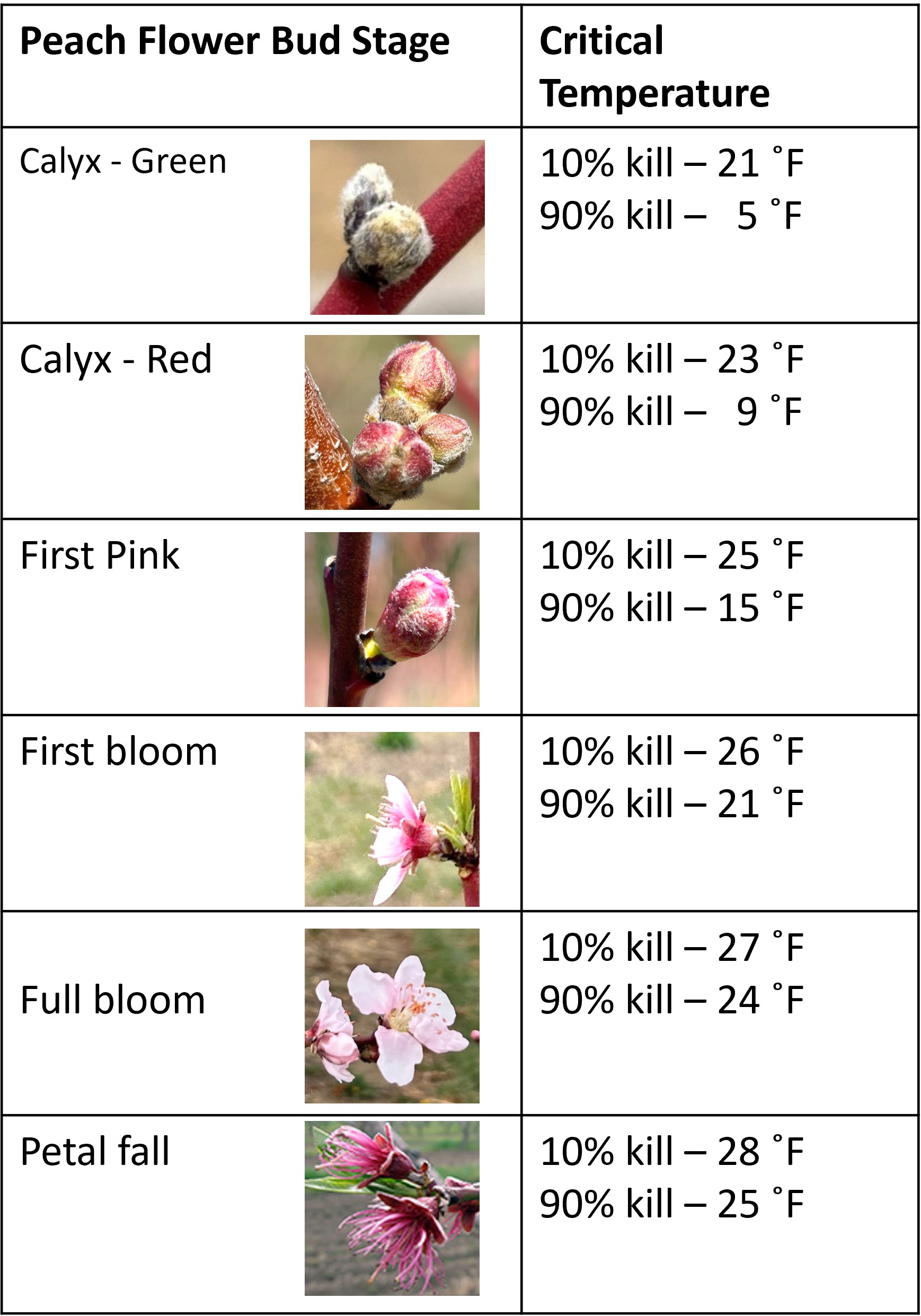
  • NO OPEN BURNING WILL BE PERMITTED UNLESS: 1. The temperature within the orchard area is at or below the critical temperature for the bud stage. The attached report lists the critical temperatures for New Jersey crops. -AND 2. The wind velocity is less than 5 miles per hour.
  • Authorized open burning material may consist only of either the following materials: clean scrap lumber (untreated), felled trees, prunings, hedgerows or firewood.
  • ABSOLUTELY NO refuse, trade waste, tires, garbage, or other solid waste may be added to the authorized open burning material. Introduction of any unauthorized material into an authorized open burn is a violation of environmental laws and may carry significant penalties.
  • Smudge pots are only permitted when the temperature within the orchard area is at or below the critical temperature for the bud stage (wind velocity restriction does not apply).
  • Smudge pots must be fueled only with either kerosene or No. 2 fuel oil.
  • Failure to abide by these provisions and restrictions may result in enforcement action.


Preparing Orchards Against the Frost – Low Tech Strategies

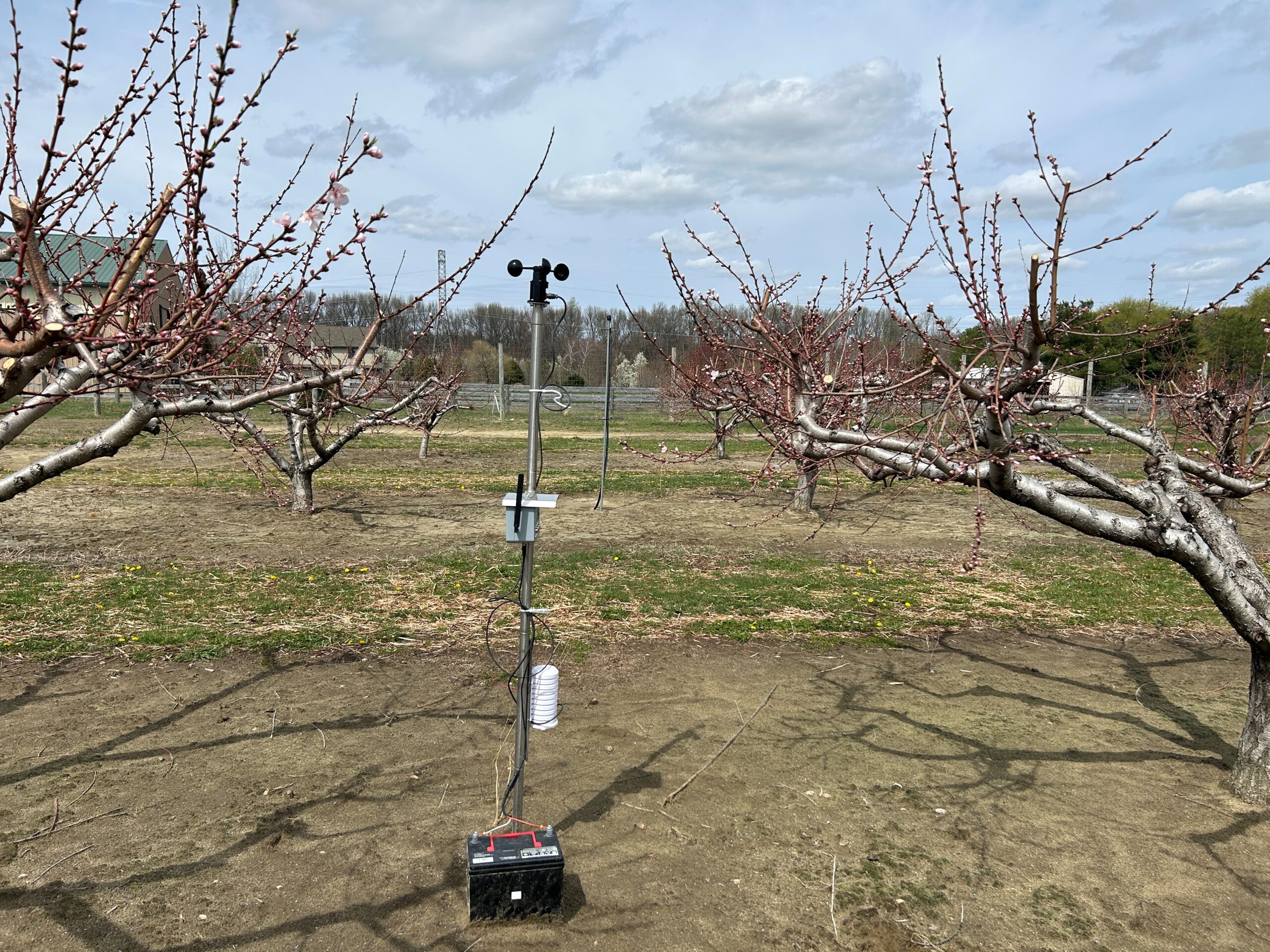
Frost is common in the northeastern US. However, frost events during bloom, specifically in orchard crops, can be economically devastating. Often, the cause is a few hours below the injury threshold temperature for the developing buds, as cooler nights result in the rapid loss of thermal energy. Several passive or low-tech strategies can help maintain a slightly higher orchard floor temperature and potentially prevent substantial crop loss.

Site selection is the most effective frost protection method. When planning a new orchard, selecting a site with proper cold air drainage is the most valuable decision a grower can make and enjoy the rewards for many years. Cold air drainage is essential, so avoid buying a site or planting trees on the site that accumulate cold air. Also, identify areas where the cold air moves in and out. When possible, plant early blooming varieties in the least frost-prone areas and plant delayed and or extended bloom varieties in frost-prone areas.

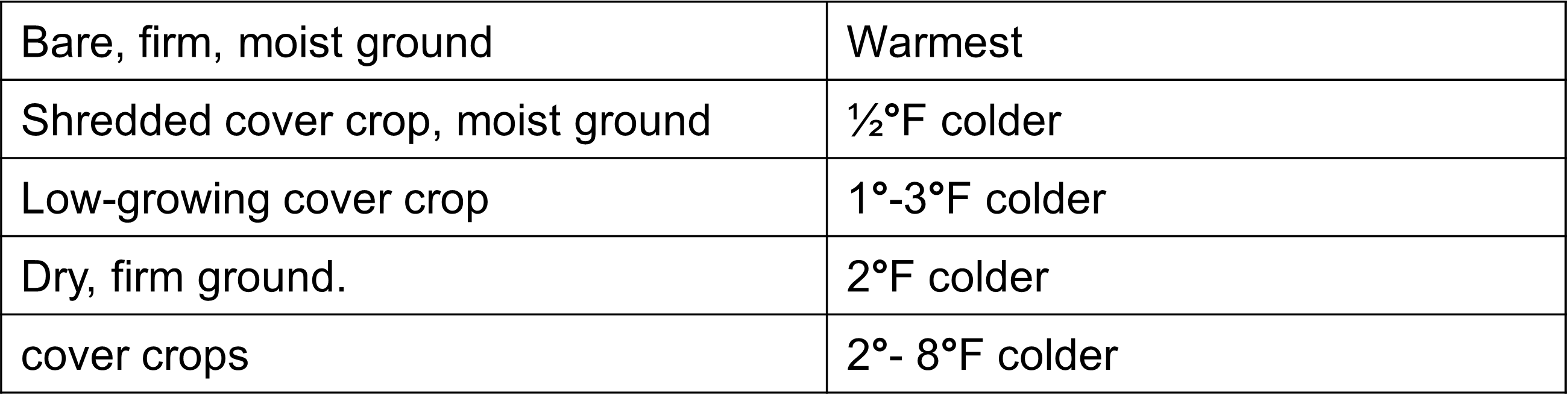
Table 1. Relative temperature differences are influenced by orchard floor conditions (Courtesy, Robert Crassweller, PSU).

Do not invite the frost with excess vegetation and ground cover. The management of weeds along the row and sod between the rows will influence orchard temperatures. The bare ground will absorb more heat during the day and release more heat at night than soil covered in vegetation (Table 1). During the day, 45-50% of solar radiation gets reflected or absorbed by the atmosphere, and the earth absorbs the remaining 50-55%. Vegetation reduces this heat transfer to the soil because it reflects light before it can reach the soil surface. Removing tall weeds and windbreaks along the edges of orchards will also help improve airflow and limit the accumulation of cold air pockets in some areas of the orchard. This can be particularly important during spring bloom when just a few more degrees can make the difference between killing the flowers or not!

Extremely low grass cutting: Maintaining sod between the rows at a minimum height by frequently mowing will help with frost protection. Similarly, keeping the rows weed-free by using postemergence herbicides to kill emerged weeds and removing weed residues from the previous season will maximize the warming of the soil by solar energy during the day. Maintaining weed-free rows should also be considered by applying residual herbicides in the fall. Depending on herbicides applied in the fall, this will prevent or reduce weed emergence in early spring and give you more flexibility for applying your residual and postemergence herbicides in spring. 

The cold air drain machine has a fan that pulls cold air from the surrounding ground and pushes it into the sky. This is effective in a lower section of the orchard or the end of the vineyard where the cold air drains due to a slight slope. Placing the machine in the middle of the orchard may prove ineffective as the pulled cold air could settle back into the orchard unless there is a low inversion layer to mix with warmer air. Using the cold air drain machine can enhance the effectiveness of low grass cutting. The machine costs around $15,000, and its operating cost is much less than other active frost protection methods.

Wet soil slows the release of thermal energy on frost night. However, the soil profile must be thoroughly wet. This can be achieved by irrigating the soil to field capacity (maximum water holding capacity of that soil). Also, the temperature must be warmer during the preceding days to pack sufficient heat into the soil. Sandy soils store less energy than loamy soils because there is more air space between soil particles than loamy soils. Heavier soils may require more than 8–10 hours of irrigation to reach field capacity.

Delayed pruning delays bud development, which helps avoid damage from early spring frosts. Years of observation in commercial orchards in the northeast indicate that more buds survive after a frost event, specifically in peaches, if the pruning is delayed. Often, large farm operations begin pruning early in the dormant season due to labor availability and time constraints. In such cases, avoid pruning upper branches until the risk of a late freeze has passed. Also, avoid hard blossom thinning on peaches on lower branches or blossom thinning altogether. Instead, focus only on fruit thinning, which can serve as insurance against crop loss. Remember that any available crop will likely command a good price in frost years.

Combining the above methods can have a cumulative effect on overall frost protection in the orchard. Keeping trees healthy with proper nutrient and pest management is also important. Healthy trees may still lose a crop but are more likely to survive the next season than poor vigor and diseased trees. The success of Frost Protection will also depend on understanding each method’s working principles and the combination of environmental factors necessitating its use. The bulletin https://njaes.rutgers.edu/e363/ explains what to monitor before a frost event and active frost protection methods such as irrigation, heat application, and air mixing.

Allium Leafminer Update 3/24/2025- First oviposition scars spotted

The first Allium leafminer (ALM) oviposition scars were reported in Cape May this past weekend (38.9588N, 74.9082W), suggesting that adults are active in the southern part of the state. ALM are active around 250 GDDs. If you want to know how many GDDs have accumulated in your area, the NEWA website https://newa.cornell.edu/ has a helpful GDD calculator. From the NEWA home screen, select the nearest weather station from the drop-down menu at the center of the page.  Next, scroll down to “Weather Tools” on the right side of the page and select “DD Calculator.”  Select your start date (1/01/25) and end date, as well as Degree Day Type (39 F) from the menu at the left of the page.  The site will automatically generate the accumulated GDD base 39 F to the last day of your requested sample, and then offer a forecast of accumulated GDD for the next week.

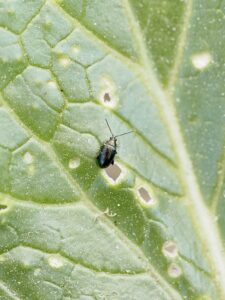
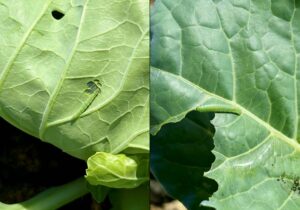
ALM can cause injury to chives, scallions, garlic, onions and leeks, but leeks and scallions seem to be the most effected. Look for neat rows of white spots descending from the upper tips of allium leaves (see photo below). Initial injury often occurs on the tallest leaves. Adults may be seen in warmer conditions at the tips of the leaves- look for small flies with grey-black bodies and yellow heads (see photo below).

If you are concerned about crop injury due to Allium leafminer, you may want to prepare for control efforts. Floating row covers, kept on until the first flight ends (around the end of May) can restrict ALM’s access to vulnerable plants. Adults can be targeted through insecticide sprays. Appropriate materials that are labeled for ALM control include spinosyns (Radiant, Entrust (OMRI approved)), pyrethroids (Mustang Maxx, Warrior), neonicotinoids (Scorpion, Venom), and the insect growth regulator Trigard. The first application should be applied 2- 3 weeks after initial detection of ALM flies (if you see oviposition scars or the fly itself) and subsequent sprays should be completed in 1–2-week intervals. Two or three sprays should provide adequate control.

Field Scouting Guide: Allium Leafminer - Growing Produce

Notice the white oviposition scars and an adult female ALM. Photo: Brian A. Nault, Cornell AgriTech. 

If you have any questions/concerns, feel free to reach out to me at amanda.quadrel@rutgers.edu or 732-742-8441.

Food Safety Modernization Act Traceability Rule Delayed

The Food and Drug Administration (FDA) announced March 20 that the Traceability Rule is being delayed for 30 months.  The rule was to go into effect January 1, 2026, but now enforcement will not start for at least 2.5 years.  FDA will be publishing a proposed rule at a later date.  There are no indications at this time what changes they plan to make or how it will impact growers of different size operations.

Allium Leafminer Update 3/20/2025

Happy first day of Spring! Many parts of New Jersey are close to accumulating 250 growing degree days (GDDs) base 39˚F, which is when the first emergence of Allium leafminer (ALM) adults is predicted to occur. In some areas of New Jersey, 250 GDDs are forecasted to be surpassed as early as this weekend. In Cape May, oviposition scars have already been spotted. If you would like to know how many GDDs have accumulated in your area, the NEWA website https://newa.cornell.edu/ has a helpful GDD calculator. From the NEWA home screen, select the nearest weather station from drop down menu at the center of the page.  Next, scroll down to “Weather Tools” on the right side of the page, and select “DD Calculator”.  Select your start date (1/01/25) and end date, as well as Degree Day Type (39 F) from the menu at the left of the page.  The site will automatically generate the accumulated GDD base 39F to the last day of your requested sample, and then offer a forecast of accumulated GDD for the next week.

ALM can cause injury to chives, scallions, garlic, onions and leeks, but leeks and scallions seem to be the most effected. Look for neat rows of white spots descending from the upper tips of allium leaves (see photo below). Initial injury often occurs on the tallest leaves. Adults may be seen in warmer conditions at the tips of the leaves- look for small flies with grey-black bodies and yellow heads (see photo below).

If you are concerned about crop injury due to Allium leafminer, you may want to prepare for control efforts. Floating row covers, kept on until the first flight ends (around the end of May) can restrict ALM’s access to vulnerable plants. Adults can be targeted through insecticide sprays. Appropriate materials that are labeled for ALM control include spinosyns (Radiant, Entrust (OMRI approved)), pyrethroids (Mustang Maxx, Warrior), neonicotinoids (Scorpion, Venom), and the insect growth regulator Trigard. The first application should be applied 2- 3 weeks after initial detection of ALM flies (if you see oviposition scars or the fly itself) and subsequent sprays should be completed in 1–2-week intervals. Two or three sprays should provide adequate control.

Field Scouting Guide: Allium Leafminer - Growing Produce

Notice the white oviposition scars and an adult female ALM. Photo: Brian A. Nault, Cornell AgriTech. 

If you have any questions/concerns, feel free to reach out to me at amanda.quadrel@rutgers.edu or 732-742-8441.

LAST CHANCE FOR FSMA PRODUCE SAFETY RULE GROWER TRAINING

When:  March 10, 2025, 9:00 AM – 4:00 PM

 Where:  Rutgers Cooperative Extension of Mercer County, 1440 Parkside Ave., Ewing Township, NJ 08638

Pre-Registration Required Deadline to register online is Monday March 3 

This training fulfills the requirements of the Food and Drug Administration (FDA) that at least one person from each farm needs to receive a standardized curriculum recognized by the FDA.

Topics Include:

  • Introduction to Produce Safety
  • Worker Health, Hygiene & Training
  • Soil Amendments
  • Wildlife, Domesticated Animals & Land Use
  • Agricultural Water – Production Water
  • Agricultural Water – Postharvest Water
  • Postharvest Handling & Sanitation
  • How to Develop a Farm Food Safety Plan

Each attendee will receive a grower manual and be eligible for a certificate from the Association of Food & Drug Officials of the United States (AFDO). Note: Each participant must stay the entire training to be eligible for the certificate of training.

The cost is $100/per person (Lunch included)

For more information, email Jennifer at jmatthews@njaes.rutgers.edu

Register at:  https://onfarmfoodsafety.rutgers.edu/

This training is partly funded through grants from the United States Food & Drug Administration.

Note:  Financial Assistance for Food Safety Certification and Training is available from the USDA Farm Service Agency. This is the chance for eligible fresh fruit and vegetable growers to recover some of their expenses for implementing food safety practices on the farm. For more information on this program please go to: Food Safety Certification for Specialty Crops for Program Years 2024 and 2025