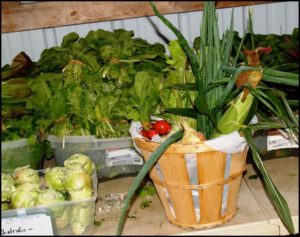
COVID-19 Resources for Nursery, Greenhouse, Landscape, Garden Centers, etc.

Please contact Cumberland County Extension Agent Tim Waller if you would like to have an association added to the “Green Industry COVID links PDF”. twaller@njaes.rutgers.edu


Defining Essential Businesses

Closing of non-essential retail businesses following New Jersey Executive Orders 107 and 108 have had many NJ green-industries wondering, “what does this mean for my business”.

Many NJ Green-Industries are now considered Essential Businesses (as of 3/24/20, list subject to change).

  • Nurseries
  • Greenhouses
  • Landscaping
  • Garden Centers
  • Farms
  • Farm equipment suppliers
  • Farmer-markets
  • Farms that sell directly to customers
  • Grocery stores
  • Hardware and home improvement stores
  • Livestock feed stores

These businesses can remain open as long as they adhere to the safety guidelines outlined in Executive Order 107 and the CDC recommendations (links in PDF attachment).

The included attachment (PDF) with web-links: has a number of important resources concerning COVID-19 at state and federal levels (click or copy links). East and west coast states have been included, as many nurseries will be shipping throughout those regions. Additionally, web-links to nursery and landscape associations of each state, have been included to serve as a point of reference when shipping in to or out of that state. Contact the local associations for additional clarification if needed. The list is in no way exhaustive as many states have numerous green-industry associations.

Links pertaining to international land border agreements between the USA, and Canada, and Mexico have also been listed.


(PDF): Green Industry COVID links PDF 3 30  (Click link. Copy web-address if not working)


Quick links to New Jersey Associations:

New Jersey Landscape Contractors Association: https://www.njlca.org/

New Jersey Nursery and Landscape Association: https://www.njnla.org/

New Jersey Green Industry Council: http://njgic.org/

New Jersey Turfgrass Association: https://njta.wildapricot.org/

New Jersey Christmas Tree Growers Association: https://njchristmastrees.org/

New Jersey Farm Bureau: https://njfb.org/


BUSINESSES WILL NEED TO FOLLOW SOCIAL DISTANCING PRACTICES.

Business social distancing:

Social distancing for customers will include but limited to, signage for customers to remain 6 feet apart from one another as well as a concerted effort by owners/employees to sanitize frequently used carts, doors, loading equipment, etc.

  • Commonly touched hard surfaces should be routinely disinfected while wearing disposable gloves with 70% alcohol, or other common EPA-registered household disinfectants (diluted bleach instructions below). Soft/porous surfaces should be cleaned with EPA-approved spray/aerosol sanitizers. Any fabric that can be laundered (uniforms, table cloths, etc.) should be done so separately from household laundry. The use of non-clothing linens should be discouraged. For example the use of tablecloths under cash registers is discouraged.

Employee social distancing:

These same efforts must be applied for social distancing amongst employees, including but not limited to, prohibit sharing of vehicles between different work crews or tightly packing single vehicles, routinely sanitizing commonly used tools and equipment, prohibiting congregations around break/lunch areas, etc.

  • Travelers per vehicle should be limited to maximize physical distance between employees/occupants. If possible 1 crew per vehicle for the duration of COVID-19 concerns should be implemented. While conducting business, employee sanitation efforts should be constantly minded. This would include cleaning hard vehicle interiors with disinfectant solutions (70% alcohol, and most common EPA-registered household disinfectants) as well as soft interior surfaces with EPA-approved spray/aerosol sanitizers while wearing disposable gloves. Any fabric that can be laundered (seat covers, work uniform, bibs, etc.) should be done so separately from household laundry.

Diluted household bleach solutions can be used if appropriate for the surface. Follow manufacturer’s instructions for application and proper ventilation. Check to ensure the product is not past its expiration date. Never mix household bleach with ammonia or any other cleanser. Unexpired household bleach will be effective against coronaviruses when properly diluted.

Prepare a bleach solution by mixing:

  • 5 tablespoons (1/3rd cup) bleach per gallon of water or
  • 4 teaspoons bleach per quart of water

Detailed disinfection instructions can be found at the CDC website: https://www.cdc.gov/coronavirus/2019-ncov/prepare/cleaning-disinfection.html


Businesses are encouraged to give each employee a letter indicating that the employee works in an industry permitted to continue operations.

Employees reporting to work are permitted to travel to and from their place of business. This would also apply when nursery deliveries or landscapers services are being performed.


Ideas to generate more business during COVID-19:

  • Increase social media marketing, targeting local audiences
  • Offer delivery services or order online-pick up at store
  • Generate ‘kits’, of easy to grow plants for a new wave of horticulture enthusiasts
  • Offer online demonstrations or classes, branding your business as top-notch
  • Promote different horticulture techniques that should spur purchases
  • Promote unique plants that the average person has not seen and may take interest


In the case of economic disaster:

The Small Business Administration (SBA) has been approved for Economic Injury Disaster Loans, which includes businesses, agricultural cooperatives, and non-profits. Application filing deadline is 12/18/2020.

Applicants may apply online, receive additional disaster assistance information, and download applications at https://disasterloan.sba.gov/ela

Applicants may also call SBA’s Customer Service Center for more information on SBA disaster assistance.

phone: (800) 659-2955

email: disastercustomerservice@sba.gov


OTHER IMPORTANT QUICK LINKS:

CDC COVID page: https://www.cdc.gov/coronavirus/2019-ncov/index.html

NJ COVID page: https://covid19.nj.gov/

Inventory or donations of PPE (Executive Order No. 109): https://covid19.nj.gov/ppereport

All current and archived executive orders: https://nj.gov/infobank/eo/056murphy/approved/eo_archive.html


Stay healthy. Exercise caution on- and off-the-clock!  


COVID-19 Resources for Best Practices on Farms

North Carolina State University and the University of Florida have made additional resources available for farmers regarding best practices during this COVID-19 outbreak.

FAQ for U-Pick Farms

Preventive Cleaning and Sanitizing Surfaces for COVID-19

FAQ For Farmers Markets

FAQ For Food Service and Retail Workers

If you have questions please contact Wes Kline wkline@njaes.rutgers.edu or Meredith Melendez melendez@njaes.rutgers.edu


Status of U.S. Consular Operations in Mexico in Light of COVID-19

In response to the global pandemic COVID-19, and in line with the Mexican government’s call to increase social distancing, the U.S. Embassy in Mexico City and all U.S. consulates in Mexico will suspend routine immigrant and nonimmigrant visa services starting March 18, 2020, and until further notice. For farmers this means, H-2A workers and others from Mexico may be prevented from entering the U.S. until further notice. NJ Farm Bureau is researching the subject for more clarification. For now to see more information go to the U.S. Embassy’s website at: Field of plantershttps://mx.usembassy.gov/status-of-u-s-consular-operations-in-mexico-in-light-of-covid-19/

2020 Recommendations for Preemergence Weed Control in Established Blueberry

With T3 stage scheduled for late March, it’s really time now to apply your preemergence herbicides before blueberry bud break!

Preemergence herbicides should be applied prior to weed seed germination. If applied to weeds that are already out of the ground, most of these products will not control them. Keep also in mind that these herbicides should receive at least ½” rainfall or irrigation one to seven days after application (depending on herbicides) to incorporate the herbicide in the soil

In order to reduce the potential of selecting for herbicide-resistant weeds, it is highly recommended mixing two residual herbicides with different MOA whenever you apply preemergence herbicides. Make sure the herbicides you plan to apply will be effective at controlling the weed species in your field by checking the herbicide label. Usually, residual herbicides will suppress weed for 6 to 8 weeks depending on irrigation as well as soil and weather conditions. After this period, another residual herbicide can be needed to control weeds through harvest and could be mixed with a postemergence herbicides to control emerged weeds. Roundup (glyphosate), Rely 280 (glufosinate,) and Gramoxone (paraquat) are postemergence herbicides that may be applied with preemergence herbicides before bud break with little risk for crop injury.

  •  MOA 2: Solida (rimsulfuron) and Sandea (halosulfuron) are ALS inhibitors that have both preemergence and postemergence activity. They control most annual broadleaves but are weak on common groundsel, common lambsquarters and eastern black nightshade. Sandea is ONLY recommended for postemergence control of yellow nutsedge. However, these two herbicides will not control ALS resistant weeds (horseweed, ragweed…) already widespread in New Jersey. Thus, these herbicides should always be tank mixed with a partner effective at controlling these weeds
  • MOA 3: Kerb (pronamide) and Surflan (oryzalin) are mitosis inhibitor that will be effective at controlling many annual grass species for 4 to 6 weeks after application. Kerb also help controlling perennial quackgrass. If applied to warm soils (> 55°F), Kerb persistence (and weed control) is much reduced; therefore, reserve Kerb for fall/winter application. Do not use Kerb on blueberries that have not been established for about a year.
  • MOA 5 and 7: The photosynthesis inhibitors (PS II inhibitors) have a broad spectrum of control and will be effective against many broadleaves and annual grasses when applied in spring. Karmex (diuron) and Princep (simazine) have relatively low solubility and have been very safe on blueberries. Sinbar (terbacil) has a longer residual life in the soil and also is more soluble, so it should be used infrequently on light, wet soils. Velpar (hexazinone) is very soluble and should not be used on New Jersey sandy soils. These herbicides are effective on a many broadleaf weed species, including common chickweed, common lambsquarters, common groundsel, henbit, nightshade, redroot pigweed, pineappleweed, shepherd’s-purse, smartweed, and some mustards. Sinbar and Princep will also control most of the annual grasses and help suppressing quackgrass.
  • MOA 12: Solicam (norflurazon) is a pigment inhibitor that may be applied in fall or early spring primarily for annual grass control and quackgrass suppression. Solicam may also provide partial control of many broadleaf weeds as well as of yellow nutsedge. Do not use Solicam on blueberries that have not been established for about a year.
  • MOA 14: Chateau (flumioxazin), Zeus XC (sulfentrazone), and Zeus Prime XC (sulfentrazone plus carfentrazone) are PPO inhibitors with activity against many broadleaves (including redroot pigweed, catchweed bedstraw, common mallow, common lambsquarters, ladysthumb, wild mustard, and shepherd’s-purse) when applied preemergence in spring. Chateau and Zeus Prime XC also have some postemergence activity on newly emerged seedlings of annual weeds. Zeus products may also provide some suppression of yellow nutsedge. Chateau has a 7 day preharvest interval (PHI) and Zeus Prime XC have 3 day PHI, and can therefore be applied later in the season to extend preemergence broadleaves control into late summer. Blueberry plants must have been established at least two years prior to use of these herbicides.
  • MOA 15: Devrinol (napropamide) and Dual Magnum (s-metolachlor) are long chain fatty acid inhibitor. Devrinol will provide good control of annual grasses and should therefore be tank mixed with a PSII or a PPO inhibitor for controlling broadleaf weeds. Devrinol is rapidly degraded if left exposed on the soil surface, so it should be applied less than 24 hours before a rain event to incorporate the herbicide in the soil. Dual Magnum has a 24c Special Local Need label for blueberry in New Jersey. This herbicide controls many annual grasses and some small-seeded broadleaf annual weeds such as redroot pigweed, nightshade and common purslane. Dual Magnum also suppresses emergence of yellow nutsedge. Use Dual Magnum only on plants established for more than one year, and lower rates are suggested on 2- to 3-year-old plantings.
  • MOA 20: Casoron (dichlobenil) is a cellulose synthesis inhibitor recommended for fall application to control many annual and perennial broadleaves, grasses and yellow nutsedge. If left on the soil surface or if applied to warm soil (> 55°F or 70°F depending on dichlobenil formulation), Casoron can lose much of its activity. So, reserve this herbicide ONLY for fall/winter applications. Plants must be at least one year old before Casoron should be used.
  • MOA 21: Trellis SC (isoxaben) is a cell wall synthesis inhibitor currently currently registered for bearing and non-bearing blueberry. Trellis SC primarily controls annual broadleaf weeds, such as horseweed, common lambsquarters, wild mustards, shepherd’s- purse, purslane, and common chickweed; higher rates may also suppress field bindweed and curly dock. However, Trellis SC will have to be mixed with a Group 3, 12, or 15 residual herbicide for controlling annual grasses.
  • MOA 27: Callisto (mesotrione) is an HPPD inhibitor recommended for spring application to control many annual broadleaf weeds as well as annual sedges. It controls large crabgrass but no other grasses, such as goosegrass. Callisto may be used as a broadcast spray between rows to control broadleaves and crabgrass without injuring the fescue sod. Callisto has both preemergence and postemergence activity, and can therefore be used in spring to control ALS-resistant horseweed at the rosette stage.

Consult the 2020 Commercial Blueberry Pest Control Recommendations for New Jersey available on https://njaes.rutgers.edu for rates and additional information. The information above is correct to the best of our knowledge. Other formulations with the same active ingredient as some of the products listed above may exist that may or not may be labeled for the same uses. Always consult the label before making pesticide applications. Information was current as of February 25, 2020.

Build Your Own Handwashing Station

Providing handwashing opportunities for customers and those working on the farm is considered a best practice in reducing human pathogen risk.  Handwashing stations can be portable and inexpensive.  Click on the picture below for one example of an easy to make handwashing station:

Instructions to build a handwashing station

Vegetable IPM Update 9/25/2019

Joe Ingerson-Mahar and Kris Holmstrom

This is an abbreviated edition of the IPM Update.  The final IPM Update for the 2019 season will appear next week.  Pest alerts will appear as needed.


Sweet Corn

European corn borer (ECB) remains at very low levels across most of the state, with a few moths (1 per night) being found in the Hillsborough and Milltown areas this past week.  Late-season plantings are still at risk from ECB feeding but are likely to be minimal at this point.  In the late-season corn borers tend to lay eggs on many different crops, including apples and eggplant, so do not be surprised that you find ECB on unexpected crops.

Corn earworm (CEW) numbers have fallen somewhat across the state with the generally cooler night-time temperatures of the past week.  Counts in both blacklights and pheromone traps are highly variable across the state.

Blacklights – counts statewide range from 0 to 5 moths per night with larger numbers in the southern half of the state.  Spray schedules range from 4 to 5-day to 3-day.

Pheromone traps – counts have also declined somewhat, due both to cooler weather and aging sweet corn.  Plantings that are tasseling now will be the most attractive to CEW moths and these plantings should be on 3-day schedules, especially in South Jersey where despite declining numbers there is still a large reservoir of moths in the area.  Highest counts seen are at Eldora with 58 moths per night and Beckett with 48 moths per night.  The pheromone traps are showing a 4-day or 3-day schedule.

Fall armyworm pressure has been light in at least the southern part of the state.  Infestations of less than 10% are the norm.

Peppers

Corn earworm numbers have been high in pheromone traps placed at pepper fields.  Some injury has been found from these pests where insecticide applications have been backed off.

Beet armyworm continues to be a significant pest in the southernmost part of the state with counts at 73 per night at Jones Island and 32 per night at Pedricktown.  Traps in Hammonton record less than 10 per night.  Plant injury has occurred at counts under 5 per night.

Pepper weevil has become a widespread pest with now at least 8 farms infested in the Swedesboro, Glassboro, Hammonton and East V

Adult weevil on pepper

ineland areas.  It is hard to estimate yield loss to weevils but most of these farms probably have light to moderate loss.  Two of the farms had severe losses from weevils this year.  Farms that are located near, or do business with, processors should routinely have yellow pheromone traps placed in high traffic areas on the farm and in fields.  Weevils are most likely to be transported to the farm by hitchhiking on vehicles or on produce bins, though they are capable of spreading on their own to adjacent fields of solanaceous crops.

Other insect pests

Brown marmorated stinkbug has nearly become absent in blacklight trap catches.  At this time of year, they are seeking ov

Hawaiian beet webworm on spinach

erwintering sites and do not present much of a problem for vegetable crops.  Centerton had the highest nightly count of 2 for the past week.

Hawaiian beet webworm (HBWW) moths have been trapped in blacklights in South Jersey – Jones Island and Eldora.  Though the numbers are light, farmers with spinach, beets, and chard should check their fields for the presence of webbing and feeding injury.  These are small migratory moths usually occurring in mid-to-late summer.  Their favored host is the pigweed, Amaranthus sp., but they are capable of causing defoliation and contamination to crops.  Since they are migratory and have a short life cycle they can rapidly appear and cause extensive damage to crops unnoticed.  There were isolated highly-infested weedy areas last year on vegetable farms in South Jersey.