Ask the Ag Agent Weekly Online/Call-In Forum and New Web Page

Ask the Ag Agent was created when COVID-19 forced a new normal in communications nationwide. Rutgers Cooperative Extension Agricultural Agents working with “Ask the Ag Agent” education and outreach are cAsk the Ag agentommitted to the agriculture industry and all interested in growing plants, raising livestock and essential resources related to agriculture. The program now features a new Ask the Ag Agent website with more information.

Farmers and others are welcome to join a weekly teleconference each Wednesday night from 7:00pm-8:00pm. Weekly events are hosted by Rutgers Cooperative Extension Agricultural Agents working with the farming industry.

This call-in/WebEx event features updates on farm management, crop conditions, farm industry observations, agricultural agency programs and other topics discussed by farmers, agricultural agents and other agricultural service providers.

Hosted by Bill Bamka, Stephen Komar, Michelle Infante-Casella and Meredith Melendez, this weekly communication provides a forum for discussion for farmers and all involved in NJ agriculture. Agricultural agency personnel, non-profit organizations and others have participated and added additional discussion with farmers.

This event and other events hosted by Rutgers Cooperative Extension can be found on the Rutgers NJAES Events website.

To join the “Ask the Ag Agent” forum each week on a computer/tablet/smartphone via the WebEx Videoconference:

Use the URL: https://go.rutgers.edu/rc9n3kxtiPhone

To join the “Ask the Ag Agent” each week on the Phone:
Call: (650)-429-3300
Access Code: 799-743-872 # followed by #

Penn State Webinar: H-2A Agricultural Workers in Times of Uncertainty

Penn State Cooperative Extension is hosting a free webinar to discuss the H-2A program in Pennsylvania. This may be helpful for NJ Farmers to listen in to find any updates or tips on how to handle this agricultural worker program. You must register to join this online event. In order to register you will need to create an account on the Penn State advertisement page.

Webinar Date: Thu., May 7, 2020
(6:30 PM – 8:00 PM ET)

Registration deadline: May 7, 2020
5:30 p.m.

COVID-19 mitigation efforts, including international travel restrictions and consulate closures, have disrupted the normal functioning of the H-2A visa program for temporary workers. These disruptions to the H-2A program raise questions about the timely arrival of guest workers and the impact on essential food and agricultural businesses. The H-2A Agricultural Workers in Times of Uncertainty Webinar will provide answers and guidance to the many questions surrounding this topic.
The dangers of COVID-19 itself similarly raises questions around how to protect the health and well-being of H-2A visa holders. As front-line workers, the protection of their livelihoods and health are integrally tied to the protection of public health.

Penn State Extension will be holding a townhall-style webinar to address these topics, and to provide answers and guidance to these questions. Join us as we hear from a panel of subject matter experts, including Brook Duer, Staff Attorney at the Penn State Center for Agricultural and Shale Law; Grant Meckley, Pennsylvania Keystone Health’s Agricultural Worker Program; Scott Sheely, Executive Director of the Lancaster County Agriculture Council; and Richard Stup, Agricultural Workforce Specialist at Cornell Cooperative Extension. Also joining us will be Alyssa Charney, Agriculture Legislative Assistant from Senator Casey’s Office.

Attendees will have the opportunity to either send in questions ahead of time, or during the webinar itself, for a Q&A session following the panelists’ overview and update on the H-2A visa program.

There is no cost for this webinar, however registration is required to receive the webinar link. To go to the registration page you can also see https://go.rutgers.edu/if9tsm4h.

Dealing with Stress on the Farm During Trying Times

This is a stressful time for many people in our country and especially on the farm. With constant updates from government officials and media sharing new about the pandemic and the fear of the unknown for the future, it is understandable to feel overwhelmed, stressed and anxious. Seeing other farmers around the nation struggling with crop losses and distribution nightmares makes other farmers wonder what is yet to come. You are not alone and there are resources to help if you are struggling with stress and anxiety.

For assistance contact the Substance Abuse and Mental Health Services Administration’s (SAMHSA) Disaster Distress Helpline at 800-985-5990, the National Suicide Prevention Lifeline at 800-273-8255 or text MHFA to 741741 to talk to a Crisis Text Line counselor.

Farmers often feel they may be mentally and physically tougher than most people. That may be true. However, it is understandable if you are feeling depressed or anxious right now, just like the millions of people across the country who are facing the same worries and challenges. It’s perfectly understandable since most people have never experienced times like we are facing now. It’s extremely important to take care of your mental health. Helping yourself means you will be able to help others in the future.

While times may not change as quickly as we would like, there are easy self-care strategies that can help reduce feelings of depression and anxiety, or prevent anxiety before it even starts.

Here are some tips that may help:
1. Eat healthy foods to keep your body in top working order and avoid foods/beverages that cause issues with underlying health conditions.
2. Exercise reduces symptoms of depression and anxiety. Exercise is not the same as regular activity at work. Take a brisk walk or jog down a farm road, ride a bike, lift weights (even if you need to make your own out of what you have around the farm and start light).
3. Practice relaxation therapy. Focusing on tensing and relaxing muscle groups can help you relax voluntarily when feeling overwhelmed, stressed or anxious. Concentrate on the shoulder and neck regions of the body, where stress often builds.
4. Be kind to yourself. Treat yourself with the same compassion you would a friend and allow others to help as you would help them.
5. Stay connected. Even if you can’t get together face-to-face, you can stay connected to friends, family and neighbors with phone calls, text messages, video chats and social media. If you’re feeling lonely, sad or anxious, reach out to your social support networks – all is kept confidential. Share what you are feeling and offer to listen to friends or family members about their feelings. We are all experiencing this scary and uncPerson holding a fishertain time together.
6. Monitor media consumption. While you might want to stay up-to the minute with COVID-19 news, too much exposure can be overwhelming. Balance media consumption with other activities you enjoy, such as playing with pets, reading, cooking, fishing at the farm pond, playing games with family or listening to music.

Adding small changes to your routine each day can make a big difference to your overall mood and well-being. Just remember, if you need help, help is available.

“Ask the Ag Agent” 7:00PM Weekly – Every Wednesday – Farmer Video Conference/Call-In Forum

By, William Bamka, Stephen Komar, Michelle Infante-Casella and Meredith Melendez

“Ask the Ag Agent” weekly 1-hour sessions for farmers will be hosted by Rutgers Agricultural Agents working with commercial farmers, on Wednesday April 15th and continue each Wednesday. The online conferencing/call in events will begin at 7:00PM with an open forum to discuss ag-related questions about production, marketing, regulations and any other topics farmers wish to discuss. All are welcome.

To access via WebEx on a computer go to https://go.rutgers.edu/rc9n3kxt

Join by phone
+1-650-429-3300 USA Toll
Access code: 799 743 872

COVID-19 Resources for Nursery, Greenhouse, Landscape, Garden Centers, etc.

Please contact Cumberland County Extension Agent Tim Waller if you would like to have an association added to the “Green Industry COVID links PDF”. twaller@njaes.rutgers.edu


Defining Essential Businesses

Closing of non-essential retail businesses following New Jersey Executive Orders 107 and 108 have had many NJ green-industries wondering, “what does this mean for my business”.

Many NJ Green-Industries are now considered Essential Businesses (as of 3/24/20, list subject to change).

  • Nurseries
  • Greenhouses
  • Landscaping
  • Garden Centers
  • Farms
  • Farm equipment suppliers
  • Farmer-markets
  • Farms that sell directly to customers
  • Grocery stores
  • Hardware and home improvement stores
  • Livestock feed stores

These businesses can remain open as long as they adhere to the safety guidelines outlined in Executive Order 107 and the CDC recommendations (links in PDF attachment).

The included attachment (PDF) with web-links: has a number of important resources concerning COVID-19 at state and federal levels (click or copy links). East and west coast states have been included, as many nurseries will be shipping throughout those regions. Additionally, web-links to nursery and landscape associations of each state, have been included to serve as a point of reference when shipping in to or out of that state. Contact the local associations for additional clarification if needed. The list is in no way exhaustive as many states have numerous green-industry associations.

Links pertaining to international land border agreements between the USA, and Canada, and Mexico have also been listed.


(PDF): Green Industry COVID links PDF 3 30  (Click link. Copy web-address if not working)


Quick links to New Jersey Associations:

New Jersey Landscape Contractors Association: https://www.njlca.org/

New Jersey Nursery and Landscape Association: https://www.njnla.org/

New Jersey Green Industry Council: http://njgic.org/

New Jersey Turfgrass Association: https://njta.wildapricot.org/

New Jersey Christmas Tree Growers Association: https://njchristmastrees.org/

New Jersey Farm Bureau: https://njfb.org/


BUSINESSES WILL NEED TO FOLLOW SOCIAL DISTANCING PRACTICES.

Business social distancing:

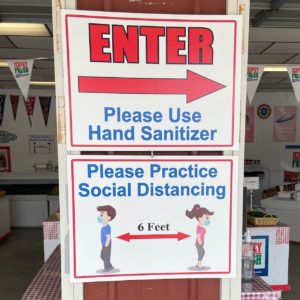
Social distancing for customers will include but limited to, signage for customers to remain 6 feet apart from one another as well as a concerted effort by owners/employees to sanitize frequently used carts, doors, loading equipment, etc.

  • Commonly touched hard surfaces should be routinely disinfected while wearing disposable gloves with 70% alcohol, or other common EPA-registered household disinfectants (diluted bleach instructions below). Soft/porous surfaces should be cleaned with EPA-approved spray/aerosol sanitizers. Any fabric that can be laundered (uniforms, table cloths, etc.) should be done so separately from household laundry. The use of non-clothing linens should be discouraged. For example the use of tablecloths under cash registers is discouraged.

Employee social distancing:

These same efforts must be applied for social distancing amongst employees, including but not limited to, prohibit sharing of vehicles between different work crews or tightly packing single vehicles, routinely sanitizing commonly used tools and equipment, prohibiting congregations around break/lunch areas, etc.

  • Travelers per vehicle should be limited to maximize physical distance between employees/occupants. If possible 1 crew per vehicle for the duration of COVID-19 concerns should be implemented. While conducting business, employee sanitation efforts should be constantly minded. This would include cleaning hard vehicle interiors with disinfectant solutions (70% alcohol, and most common EPA-registered household disinfectants) as well as soft interior surfaces with EPA-approved spray/aerosol sanitizers while wearing disposable gloves. Any fabric that can be laundered (seat covers, work uniform, bibs, etc.) should be done so separately from household laundry.

Diluted household bleach solutions can be used if appropriate for the surface. Follow manufacturer’s instructions for application and proper ventilation. Check to ensure the product is not past its expiration date. Never mix household bleach with ammonia or any other cleanser. Unexpired household bleach will be effective against coronaviruses when properly diluted.

Prepare a bleach solution by mixing:

  • 5 tablespoons (1/3rd cup) bleach per gallon of water or
  • 4 teaspoons bleach per quart of water

Detailed disinfection instructions can be found at the CDC website: https://www.cdc.gov/coronavirus/2019-ncov/prepare/cleaning-disinfection.html


Businesses are encouraged to give each employee a letter indicating that the employee works in an industry permitted to continue operations.

Employees reporting to work are permitted to travel to and from their place of business. This would also apply when nursery deliveries or landscapers services are being performed.


Ideas to generate more business during COVID-19:

  • Increase social media marketing, targeting local audiences
  • Offer delivery services or order online-pick up at store
  • Generate ‘kits’, of easy to grow plants for a new wave of horticulture enthusiasts
  • Offer online demonstrations or classes, branding your business as top-notch
  • Promote different horticulture techniques that should spur purchases
  • Promote unique plants that the average person has not seen and may take interest


In the case of economic disaster:

The Small Business Administration (SBA) has been approved for Economic Injury Disaster Loans, which includes businesses, agricultural cooperatives, and non-profits. Application filing deadline is 12/18/2020.

Applicants may apply online, receive additional disaster assistance information, and download applications at https://disasterloan.sba.gov/ela

Applicants may also call SBA’s Customer Service Center for more information on SBA disaster assistance.

phone: (800) 659-2955

email: disastercustomerservice@sba.gov


OTHER IMPORTANT QUICK LINKS:

CDC COVID page: https://www.cdc.gov/coronavirus/2019-ncov/index.html

NJ COVID page: https://covid19.nj.gov/

Inventory or donations of PPE (Executive Order No. 109): https://covid19.nj.gov/ppereport

All current and archived executive orders: https://nj.gov/infobank/eo/056murphy/approved/eo_archive.html


Stay healthy. Exercise caution on- and off-the-clock!  


COVID-19 Resources for Best Practices on Farms

North Carolina State University and the University of Florida have made additional resources available for farmers regarding best practices during this COVID-19 outbreak.

FAQ for U-Pick Farms

Preventive Cleaning and Sanitizing Surfaces for COVID-19

FAQ For Farmers Markets

FAQ For Food Service and Retail Workers

If you have questions please contact Wes Kline wkline@njaes.rutgers.edu or Meredith Melendez melendez@njaes.rutgers.edu