

Landscape, Ornamentals, Nursery, and Turf Edition

Seasonal updates on ornamental, nursery, and turf pests.
Subscriptions are available via EMAIL and RSS.


Companion Website Links:

Rutgers Turf Blog - Articles on turfgrass diseases and cultural practices for the commercial turfgrass industry. Subscription available via RSS.


Rutgers Weather Forecasting - Meteorological Information important to commercial agriculture.

USDA to Measure Financial Well-Being of Farmers and Ranchers

Agricultural Resource Management Survey Survey       Image result for usda ag counts

Initiated back in late December, the U.S. Department of Agriculture’s National Agricultural Statistics Service (NASS) will be spending these next several months gathering information about farm economics and production practices from farmers and ranchers across the United States, as the agency conducts the third and final phase of the 2020 Agricultural Resource Management Survey (ARMS).

“ARMS is the only survey that measures the current financial well-being of producers and their households as a whole,” said King Whetstone, director of the NASS Northeastern Region. “The results of this survey will help inform decisions on local and federal policies and programs that affect farms and farm families.”

In an effort to obtain the most accurate data, NASS will reach out to more than 30,000 producers nationwide, between January and April in 2021. The survey asks producers to provide in-depth information about their operating revenues, production costs, and household characteristics.

The 2020 ARMS survey includes a version of the questionnaire focused on hog and pig production costs and returns. This year the survey also includes questions to help measure any impacts of COVID-19 on farms, farm and household finances, and off-farm employment. “In February, our interviewers will begin reaching out to those farmers who have not yet responded,” said Whetstone. “We appreciate their time and are here to help them with the questionnaire so that their information will continue supporting sound agricultural decision making.”

In addition to producing accurate information, NASS has strong safeguards in place to protect the confidentiality of all farmers who respond to its surveys. The agency will only publish data in an aggregate form, ensuring the confidentiality of all responses and that no individual respondent or operation can be identified.

Growers can complete the survey online, saving you time by allowing you to skip over questions that do not apply to you, by calculating totals automatically, and by providing drop-down menus for common answers. It also saves taxpayer dollars that would otherwise be spent on return postage and data entry.

To complete your survey online, you will need your unique Survey Code from the address label on the paper questionnaire or letter you received in the mail. You can save a partially completed survey by clicking “Save and Return Later.” Do not click the “Submit” button until you are sure you are finished with your survey.

The expense data gathered in ARMS will be published in the annual Farm Production Expenditures report in July 2021. That report and others are available by clicking here. More reports based on ARMS data and more information about ARMS are available online here. For more information, please call the NASS Northeastern Regional Field Office at (800) 498-1518.

NASS is the federal statistical agency responsible for producing official data about U.S. agriculture and is committed to providing timely, accurate and useful statistics in service to U.S. agriculture.

USDA APHIS Ends Emerald Ash Borer Domestic Quarantine Regulations

Effective January 14, 2021, USDA’s Animal and Plant Health Inspection Service (APHIS) has removed the domestic quarantine regulations for the Emerald Ash Borer (EAB, Agrilus planipennis, Fairmare). According to the Federal Register posting, “this action will discontinue the domestic regulatory component of the emerald ash borer program as a means to more effectively direct available resources toward management and containment of the pest. Funding previously allocated to the implementation and enforcement of these domestic quarantine regulations will instead be directed to nonregulatory options to mitigate and control the pest.”

APHIS’ final rule was posted December 15, 2020, based on the original Federal Register posting from September of 2018, which received over 140 comments. A federal quarantine for EAB has been in place since 2003.

Under this rule, establishments operating under EAB compliance agreements will no longer incur costs of complying with Federal EAB quarantine regulations, although States could still impose restrictions.

EAB has now been found in 35 States and the District of Columbia and it is likely that there are infestations that have not yet been detected. Newly identified infestations are estimated to be 4 to 5 years or more in age. Known infestations cover more than 27 percent of the native ash range within the conterminous United States.

APHIS further summarized, “The domestic quarantine regulations for EAB have not substantially reduced the likelihood of introduction and establishment of the pest in quarantine-adjacent areas. Interstate movement of EAB host articles is unrestricted within areas of contiguous quarantine, and irrespective of human-assisted spread, a mated EAB is capable of flying up to 100 miles in her lifetime, resulting in a high potential for natural spread.”

Public outreach activities outside the EAB regulatory program will continue, and APHIS will continue to work with State counterparts to encourage the public to buy firewood where they burn it and to refrain from moving firewood. The primary national communications tool to warn the public about the plant pest risk associated with the movement of firewood is the Don’t Move Firewood campaign, which is administered by The Nature Conservancy with support from APHIS and other Federal agencies.

EAB and New Jersey

Emerald Ash Borer was discovered in New Jersey in May 2014 in Somerset County. All ash trees in NJ should be considered at high risk for EAB: even if Emerald Ash Borer has not yet been detected, all ash trees are considered to be at high risk of EAB infestation within the next few years.

Through December of 2019, EAB has been found in New Jersey in Bergen, Burlington, Camden, Essex, Gloucester, Hudson, Hunterdon, Mercer, Middlesex, Monmouth, Morris, Passaic, Somerset, Sussex and Warren counties.

The NJ Department of Agriculture hosts an EAB website where industry, communities, woodland owners, and homeowners can access an EAB Action Kit and Management Options Resource Guide.

Landscape IPM Scouting Techniques: Basic Overview

KEY PLANTS vs. KEY PESTS vs. KEY LOCATIONS CONCEPT:

Landscape IPM (Integrated Pest Management) methods require site-specific information. Every landscape typically contains at least several key pests, key plants and key locations that will be unique to each site. These concepts are extremely useful to simplify monitoring procedures at any given landscape. They will enable field technicians to concentrate on plants and locations that are prone to problems as well as those plants and locations that have low aesthetic thresholds. Scouting efficiency should improve and a more productive use of time spent on landscapes is the result. It is important to emphasize that Integrated Pest Management is a philosophy & practitioners will need to develop skills & experience to improve their levels of commitment.

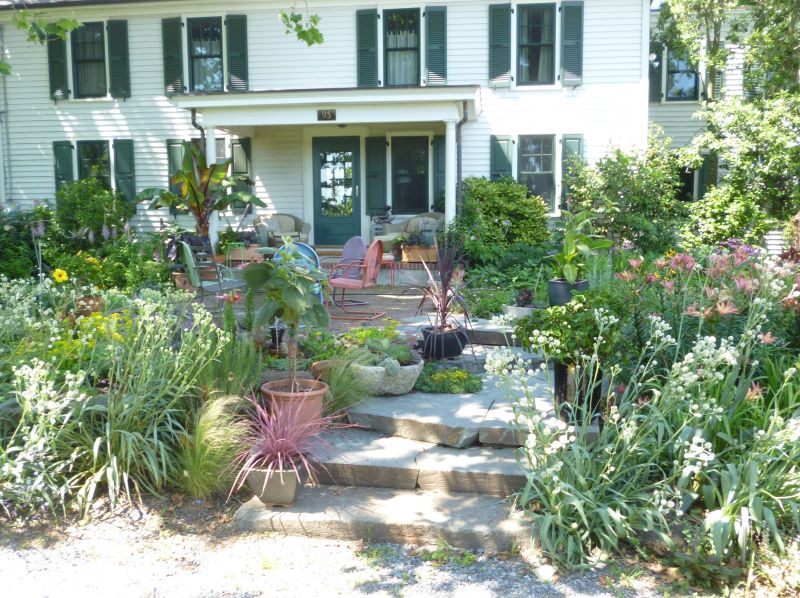
Well-landscaped house

A diverse, well designed landscape that will unlikely develop many pest problems. (Photo Credit: Steven K. Rettke, Rutgers Coop. Ext.)

[Read more…]

Turf/sod producers are now eligible for assistance through CFAP – Deadline 2/26

Turf/sod producers are now eligible for assistance through CFAP – LINK

This is one of several commodities that experienced COVID-19 market disruptions but had not been explicitly included in the initial CFAP 2 rule.

Eligible turfgrass sod producers can now apply for CFAP 2 between January 19 – February 26, 2021

Payments for turfgrass sod will be equal to:

  1. The amount of the producer’s eligible sales in calendar year 2019, plus crop insurance indemnities, Noninsured Crop Disaster Assistance Program (NAP), and Wildfire and Hurricane Indemnity Program Plus (WHIP+) payments received for the 2019 crop year, multiplied by
  2. The payment rate for that range.
2019 Sales Range Percent Payment Factor for the Producer’s 2019 Sales of Eligible Commodities Falling in the Range
$0 to $49,999 10.6%
$50,000 to $99,999 9.9%
$100,000 to $499,999 9.7%
$500,000 to $999,999 9.0%
Sales over $1 million 8.8%

Payments for producers who began farming in 2020 and had no sales in 2019 will be based on the producer’s actual 2020 sales as of the producer’s application date.

Example: A producer’s 2019 sales of eligible commodities and Noninsured Crop Disaster Assistance Program payments totaled $75,000. The payment is calculated as ($49,999 times 10.6%) plus ($25,001 times 9.9%) equals a total payment of $7,775.

Contact:

  • Eligible turfgrass sod producers can now apply for CFAP by contacting their local USDA Service Center.
  • One-on-one support with applications is also available by calling 877-508-8364.
  • Access all CFAP 2 application resources at farmers.gov/cfap2/apply.

2021 NJ Ag/VGANJ Virtual Convention Update 2

My apologies for some of the confusion from my initial update regarding the educational sessions of our 2021 NJ Ag/VGANJ Convention will be held virtually the last week of February. While the entire up-to-date program was, and is, available to view on the Vegetable Growers Association of NJ website – VGANJ.com/schedule, I forgot one critical point in that last post. The link for signing up for pesticide re-certification credits was not ready to go at that time.

It is ready now.

(One other clarification – when you join the VGANJ and pay your membership dues at either the full or daily rate, you are also registered for these educational sessions.)

Registration for Pesticide License Re-certification Credits

If you want to receive pesticide re-certification credits for attending any of the sessions offering them, you must supply identification information that will allow us to confirm your participation and to let DEP know which sessions you attend. You do not have to sign up for individual sessions, but you must supply these required pre-registration details or you will not receive credit. If supplied, you will receive credits for any session you attend in its entirety as described in our guide.

If you are attending for credits, you will need to be signed in to the Zoom meeting within 10 minutes of the start, remain attentive and responsive to random polls, and logged into the session until it ends. You will not get credit if you leave to join another Zoom session. There will be some allowance and support if there are technical issues, but otherwise, leaving a meeting early will disqualify you for credits.

Before you start to register for credits, please have the following ready before you start:

  • A photo, scan or screen-shot (your ID and license may be submitted as one photo or two) of:
    • your Government-issued ID, and
    • NJ Pesticide applicator status
      • copy of your current license, OR
      • status page from the NJ DEP <https://go.rutgers.edu/t0hiphuz>- search for your name in either the “Commercial Certified Pesticide Applicators by Name” or “Private Certified Pesticide Applicators by Name” menu selections on the page.)

NOTE:  If you are NOT looking for credits, DO NOT enter your license and ID information. You will be able to move from Zoom session to Zoom session.


NEW- Nursery and Ornamentals Track (2 sessions – 8 speakers) at this year’s virtual VGA

Please join us at the NEW- Nursery and Ornamentals Track at this year’s virtual VGA

When: Monday, February 22nd (Session I:  9:15 – 11:45am)(Session II:  1:15 – 3:45pm (recert. credits pending))

Click here to register by Wednesday Feb. 17th for pesticide credits!

Click here for additional pesticide credit requirements and instructions (mandatory steps for recertification credits at VGA)

Price options:

  1. One day pass – $60.00
  2. Full 1yr VGA Membership (access to all four days of sessions 2/22-2/25)- $120

Summary: The sessions are geared towards delivering information broadly applicable to ornamental AND vegetable nurseries and producers alike. The speakers assembled for these sessions are renown experts and we are extremely lucky to learn from them.

  • Session I will focus on production techniques and plant selections, including management of drip irrigation clogging, fall mum selections, producing broadleaf evergreens, and native plant selections.
  • Session I – Featured Speaker: Dr. Paul Fisher (University of Florida)
  • Dr. Fisher is an expert in irrigation system management and will be discussing how to avoid or manage clogged irrigation emitters and pipes. He will be discussing how these clogs happen through the buildup of salts, biofilms, and various other particles. He will help you diagnose the cause of problems and select the best solutions.


  • Session II will focus on pest and disease mitigation including key pests in micro green production (aphids), the red headed flea beetle, and boxwood blight. Additionally, updates on utilizing growing degree days and other predictive models will be discussed (applicable to all crops)
  • Session II – Featured Speaker: Dr. Chuan Hong (Virginia Tech)
  • In addition to being at the forefront of Phytophthora research, Dr. Hong is a world renown boxwood blight researcher who was recently awarded nearly 4M dollars to investigate innovative methods to safeguard one of the nation’s most economically important evergreen shrubs. He will be discussing effective strategies and tools for blight mitigation at local and national levels. Together we can save this iconic landscape plant.

(pesticide recertification credits have been requested for Session II.)

Rutgers is dedicated to protecting your privacy and keeping your personal information safe. Upon upload, your files will be encrypted and stored to Rutgers Connect. Your information will be kept strictly confidential; used solely to meet NJDEP ID verification protocol for recertification credit; and will not be used for any other purpose. Your files will be deleted within 60 days after the training event.

New Nursery and Ornamental Track at the 2021 VGA
