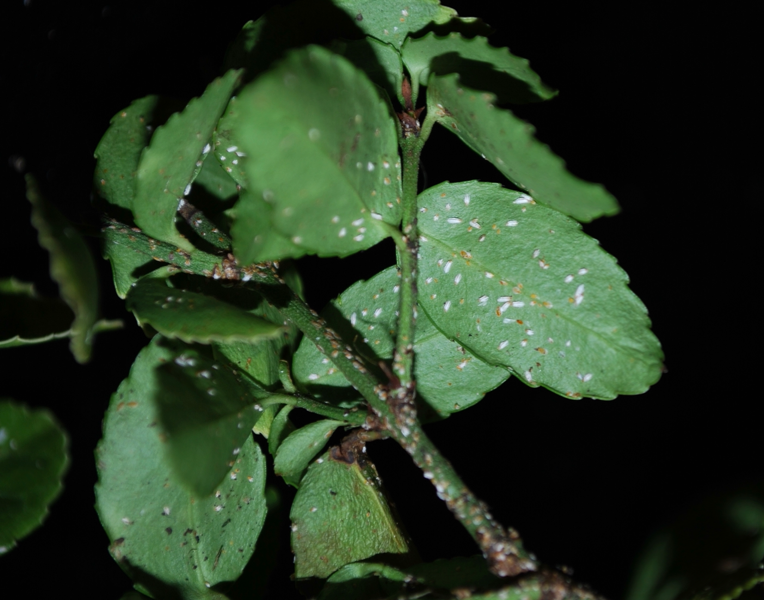
Questioning the Plant Stress Hypothesis

Definition

The Plant Stress Hypothesis generally states that plants subjected to stressful conditions become more susceptible to attack by insects and diseases. This is often thought to be due to the plant’s increased suitability as a food or due to the reduced ability of the stressed plant to defend itself. It is commonly believed that when a plant is stressed it becomes better food for “bugs.” Is it correct to state that plant stress leads to pest outbreaks, or is the statement too simplistic?

The Experiments

A publication written in 1998 (Koricheva et. al.) summarized approximately 70 controlled experiments that were performed to study how distinct types of plant stresses affected insect/mite attacks. Diverse types of environmental stresses were included in these studies (e.g., drought stress, waterlogged roots, ozone exposure, excess shade, as well as many others). Plant nutrient stress & insect impacts has been researched but was not performed within these studies.

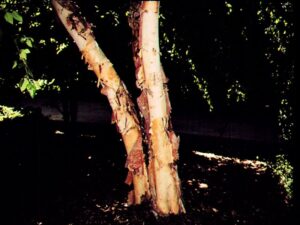
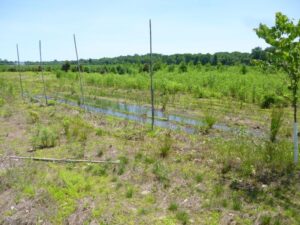
Plant roots stressed from waterlogged soils were included in these studies. Research also included other types of environmental stresses such as excess shade & ozone exposure. (Photo Credit: Steven K. Rettke, Rutgers Coop. Ext.)
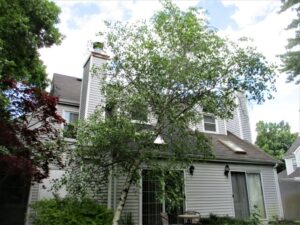
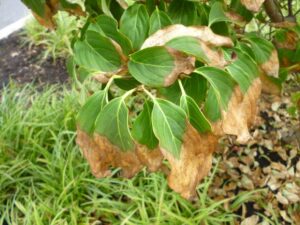
Dogwood leaves scorched from environmental drought stress. How does this plant stress impact insect herbivores? (Photo Credit: Steven K. Rettke, Rutgers Coop. Ext.)


[Read more…]

Bagworm hatch & Boxwood Blight potential now through Friday

Boxwood Blight (BWB) Alert – Infection Potential (Now – FRIDAY) 

There is a potential for new boxwood blight infections throughout much of NJ. The end of week rains coupled with more mild temperatures, cloud cover, and prolonged periods of leaf wetness will contribute to the spread or worsening of boxwood blight infections.

Boxwood Blight Risk Assessment as of 5/24/2022
Region Location CODE 1-June 2-June 3-June 4-June 5-June 6-June
Southern Upper Deerfield NJ50 Very Low  Infection Risk Infection Risk Very Low Very Low  Very Low 
Central Howell / Freehold NJ10 Infection Risk Infection Risk Infection Risk Very Low  Very Low  Very Low 
Northern High Point NJ59 Infection Risk Infection Risk Infection Risk Very Low  Very Low  Very Low 
Check local boxwood blight risk here (CLICK HERE – input your area code – select closest weather station – check 7-14 prediction – click on graph / table)


ALSO: Volutella Blight is extremely common and readily mis-diagnosed as boxwood blight or vise-versa.

  • There is a free / open to the public seminar June 23, 2022 about this important disease. Boxwood International Seminar on Biology and Management of Boxwood Volutella Blight by Prof. Tom Hsiang, University of Guelph, Guelph, Ontario, Canada. Registration Link: Click here to register

Pest Scouting – Please refer to these documents for a full listing of insects pests for your area corresponding to growing degree-days (GDDs). 

Bagworm hatch is upon us in Southern NJ and will soon be /already the case throughout NJ. Please be ready to control these insects during the VERY SHORT treatment window.

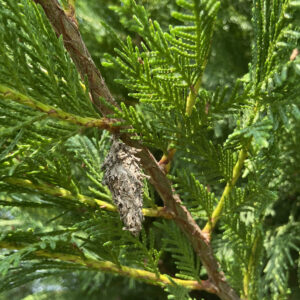
Days old bagworm sizeBagworm female case with developing juveniles

BAGWORMS (600-900 GDD) (Bagworm hatch prediction as of 6/1/22)
Crop type Common Name Scientific Name GDD Min (50F) GDD Max (95F) Reference Developmental / Target Stage
Conifer mostly, many minor hosts Bagworm Thyridopteryx ephemeraeformis 600 900 RU Larvae (early instars) – ONLY CONTROL WINDOW
Region Location Station Date (600 GDD) Date (900 GDD) Treatment window  Bagworm Hatch – Predictions only, SCOUTING is critical! Treat as soon as larvae detected. 
South Upper Deerfield NJ50 30-May 12-Jun 13 days
Central Howell / Freehold NJ10 3-Jun 18-Jun 15 days
North High Point NJ59 14-Jun 30-Jun 16 days 


Nursery Pests Scouting June – Bagworms, Scales, Borers, RHFB, BWB


Red-headed flea beetle – Adult emergence beginning any day now

  • Contains material selection and timing, along with regime information and considerations

Boxwood Blight Alert – Infection Potential (Saturday) 5/27

Boxwood Blight Risk Assessment as of 5/24/2022
Region Location CODE 24-May 25-May 26-May 27-May 28-May 29-May
Southern Upper Deerfield NJ50 Very Low  Very Low  Low  High Risk Very Low  Very Low 
Central Howell / Freehold NJ10 Very Low  Very Low  Low  Infection Risk Very Low  Very Low 
Northern High Point NJ59 Very Low  Very Low  Very Low  Infection Risk Very Low  Low 
Check local boxwood blight risk here (CLICK HERE – input your area code – select closest weather station – check 7-14 prediction – click on graph / table)


Refer to the most recent Alert for more information – CLICK HERE


Pest Scouting – Please refer to these documents for a full listing of insects pests for your area corresponding to growing degree-days (GDDs). 

Contact if seeing insects at different times: twaller@njaes.rutgers.edu (or call the Cumberland County Extension Office – 856-451-2800)

The following key groups of pests will be active, vulnerable, or otherwise treatable during the next month throughout most of NJ. Here, bagworms, scale insects and borers with key life stage events during the 350-1500 GDD timeframe are discussed. Note there are many other insect pests present this time of year so please view the pest scouting guides above for your particular needs.

Projected GDD50 accumulation as of 5/24/2022 (USPEST) Note: Growing degree-day values utilize daily average air temperatures with a minimum temperature threshold (a.k.a. ‘base’) of 50F = GDD50 (max. temp. threshold set at 95F). These values are accumulated from a biofix date, such as January or March 1st in the NE USA. Provided GDD50 are scouting ranges and should be truthed.
Region Location Station 24-May 1-Jun 1-Jul
South Upper Deerfield NJ50 488 638 1358
Central Howell / Freehold NJ10 426 551 1203
North High Point NJ59 288 387 909
Forecast: NOAA NCEP Coupled Forecast System model version 2 (CFSv2) forecast system (3.5 months) (USPEST.ORG)

Refer to this post “Obtaining your local growing degree-days” for additional information 

BAGWORMS (600-900 GDD) (Bagworm hatch prediction as of 5/24/22 – now until July 14 (Southern NJ (NJ50)))
Crop type Common Name Scientific Name GDD Min (50F) GDD Max (95F) Reference Developmental / Target Stage
Conifer mostly, many minor hosts Bagworm Thyridopteryx ephemeraeformis 600 900 RU Larvae (early instars) –

ONLY CONTROL WINDOW

Refer to this post for additional information on Bagworms

BORER Insect Activity for 350 – 1500 GDD (Now until ~July 1 in Southern NJ (NJ50))
Crop type Common Name Scientific Name GDD Min (50F) GDD Max (95F) Reference Developmental / Target Stage
Malus, Prunus, many Lesser peach tree borer Synanthedon pictipes 350 375 4 Adult flight, egg laying
Dogwood, apple, pecan, elm, hickory, willow Dogwood borer Synanthedon scitula 350 850 4 adults, eggs, caterpillars
Birch Bronze Birch Borer Agrilus anxius 440 880 RU Adults (egg laying)
Malus, Prunus, many Peach Tree Borer Synanthedon sp. 500 600 RU Adults – emerge (1st treatment both types)
Rhododendron Rhododendron borer Synanthedon rhododendri 509 696 RU Adults emerge
Malus, Prunus, many Greater peach tree borer Synanthedon exitiosa 575 710 4 Adult emergence
Many Roundheaded appletree borer Saperda candida 802 1129 RU Adults
Ash Emerald ash borer Agrilus planipennis 1000 1200 4 Peak adult activity
Malus, Prunus, many Peachtree borer Synanthedon sp. 1500 1800 RU Larvae Treatment
Many Roundheaded apple tree borer Saperda candida 1514 1798 5 Typical treatment window
Conifer Nantucket tip moth Rhyacionia frustrana 1514 1917 RU Adults 2nd generation

Click here – “Identifying Clearwing Moth Borers in Pheromone Traps” or “Differentiating the Common Wood Borers of Ash Trees”

[Read more…]

Leaf Spot and Melting Out……of Pachysandra?

Last week’s post concerning leaf spot diseases in turfgrass, and a few samples of dead pachysandra in the lab this week, got me thinking about how much I hate pachysandra. Hate might be too strong a word for a plant, but like Neumann and Jerry, this subshrub is my nemesis. Some of you may have heard me tell stories about trying to rid my home garden of pachysandra and finding it impossible to kill, but subsequently planting several hundred plants at my late-mother’s house only to see them all die of disease, so surely you can empathize with my perspective!

Pachysandra can grow in deep-shade areas, so it is well-suited and popular as a ground cover for shade gardens. The most commonly used species is P. terminalis, the Japanese spurge, which is an aggressively spreading evergreen. It is very deer-resistant, which unfortunately, also means that it gets planted into many New Jersey landscapes and gardens for that reason alone.

Deep shade usually means a wet site and that is where the disease issue comes in. Pachysandra, especially P. terminalis, is susceptible to the fungus Pseudonectria pachysandricola, which is the cause of the disease Volutella Leaf and Stem Blight. Leaf and stem blight is the most destructive disease of pachysandra in New Jersey.

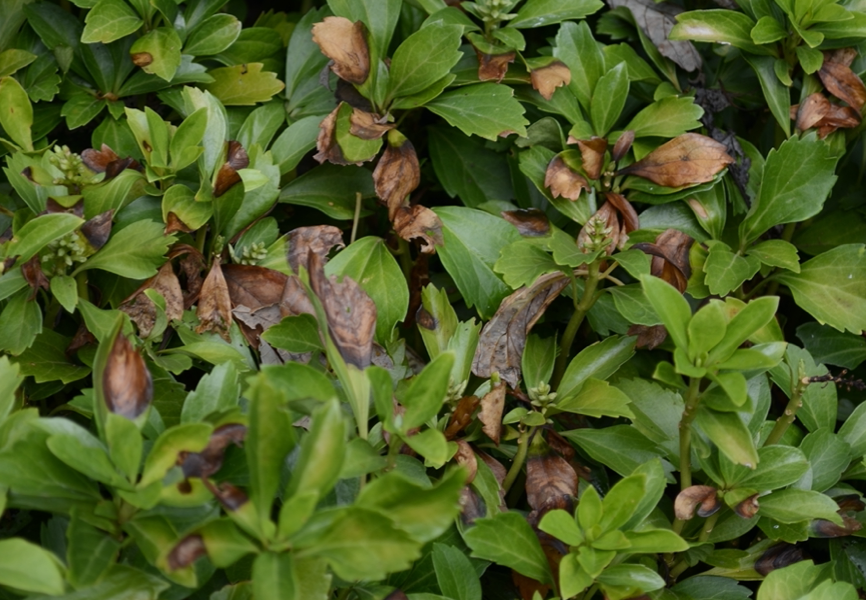
Photo 1: Leaf spot phase of Volutella Leaf and Stem Blight. Photo: Richard Buckley, Rutgers PDL

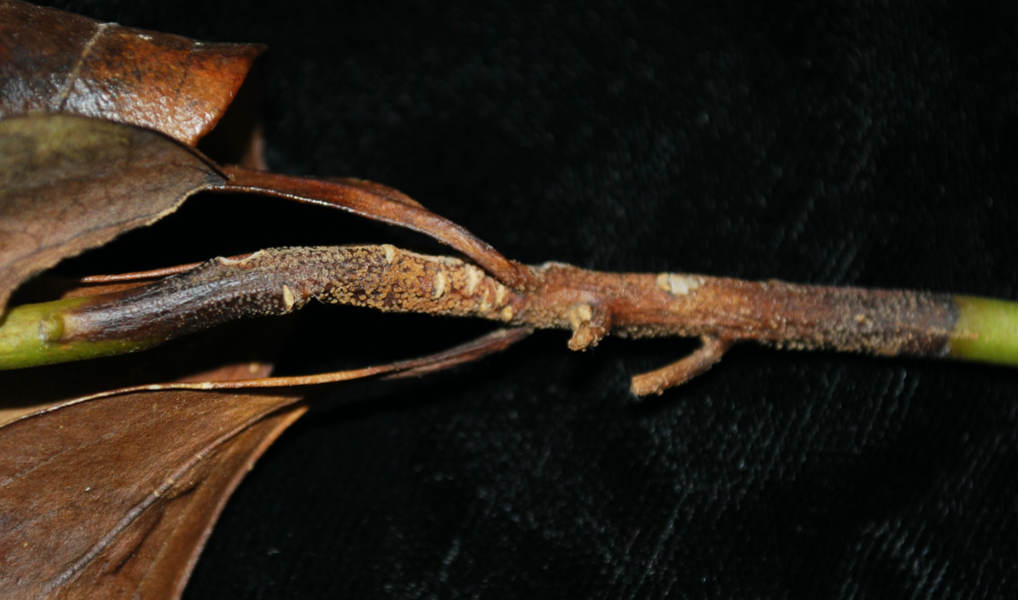
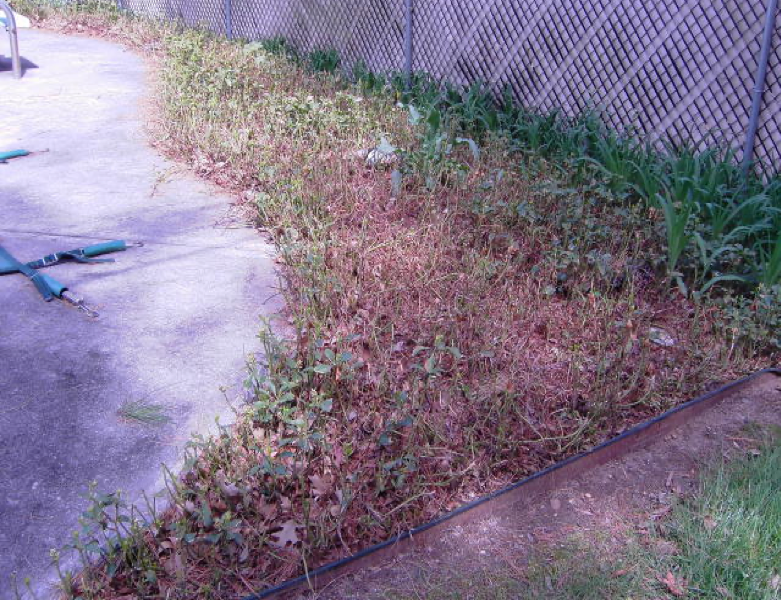
Numerous patches of wilting and dying plants in a landscape bed are often the first indication that Volutella blight is in active in the bed. Both leaves and stems are attacked by the causal fungus. Leaves develop irregular tan to brown blotches, often with concentric circles of light and darker zones and sometimes with dark-brown margins. These blotches gradually increase in size until the entire leaf turns brown or black and dies. Stem cankers usually develop and cause whole plants to die back. Stem cankers can appear at any point on the stem and begin as greenish-brown and water-soaked lesions that eventually turn brown or black as the stems shrivel. As the fungus girdles the stem, sizeable parts of the plant beyond or above that point turn brown and die. Plant death from stem infections can be quite extensive, so the planting appears to melt away in a manner very much like turfgrass subjected to leaf spot and melting out.

Photo 2: Stem infection of Volutella Leaf and Stem Blight. Photo: Sabrina Tirpak, Rutgers PDL

Photo 3: Melting out of a Pachysandra planting due to Volutella Leaf and Stem Blight. Photo: Richard Buckley, Rutgers PDL

During wet, humid weather, affected plant parts can be covered with reddish-orange, cushion-like fungal fruiting bodies, called sporodochia. Conidia (asexual spores) produced in the sporodochia disseminate the fungus within the planting. They are easily spread by rain splashing and wind, or mechanically by people working the bed during wet weather. If blight is suspected, but fruiting bodies are not evident, place suspect plant material in a plastic bag with a moist paper towel. In a day or two fruiting bodies will develop that can be seen with a hand-lens.

Weak or injured plant material is much more susceptible to the disease than healthy tissue, so damage may be very severe when plants have been stressed by excessive sunlight, winter injury, drought, or insect attack. Spread of the fungus is also more rapid in dense plantings, where heavy mulches are used, or in beds with residual leaf debris. Planting beds subject to regular overhead irrigation often have more disease activity.

Photo 4: Winter injury to Pachysandra. Photo: Dr. Ann Gould, NJAES

Photo 5: Euonymus scale on Pachysandra. Photo: Richard Buckley, Rutgers PDL

Normally this disease does little damage to vigorous plants, thus providing good growing conditions is one of the most important control measures. Begin by selecting healthy, disease-free planting materials. Plant in a well-drained soil and on sites with suitable sun/shade exposure.

Control of the disease in an infected planting bed begins with good sanitation. Remove and destroy all of the affected plants and plant debris. Use a regular lawn mower set at a 1 to- 2 inch cutting height to mow the affected area. Catch all of the debris in a bag and discard. Be sure to mow an area well outside of the diseased patch. A little nitrogen fertilizer will help the remaining plants to fill in the mowed area.

Prune trees and shrubs to increase light penetration and air circulation in and around the site to help keep it dry. Avoid overhead irrigation and avoid wet foliage whenever possible. If irrigation is needed to avoid drought stress, then water early in the day, so the foliage can dry as quickly as possible.

On high value landscapes, and after sanitation and moisture management issues are corrected, fungicides may be an effective addition to a management program: make applications of chlorothalonil, copper, mancozeb, myclobutanil, or thiophanate-methyl at the first sign of disease and repeat at label specified intervals and rates.

I’ll leave you with this existential question: are you sure you really want to plant pachysandra? How about a hosta or something instead?

Pest Scouting 200-500 GDD – Get sprayers ready for Borers, Scale Crawlers, and other important pests

It’s that time of year again, many scale crawlers and borers will be active over the next few weeks throughout NJ. Be prepared to target specific pest life-stages for the highest level of efficacy per material cost and get those problem insects in check. Application of contact insecticides during specific activity windows for these pests should be coupled with systemic applications now to help protect woody plants later on.

Borers attack stressed plants. If you recently dug then heeled-in trees, transplanted seedlings, or otherwise seriously stressed a tree, please consider taking immediate action to protect them from both adult flights (contact trunk sprays) and future infestations (systemics)   

Please Download these resources: (The scouting guide is for you to print and keep on hand…these are just updates)

Nursery and Landscape Pest Scouting Guide 2022 PDF (note this contains conifer pests as well)

Conifer Pest Scouting Guide 2022 PDF

Contact if seeing insects at different times: twaller@njaes.rutgers.edu (or call the Cumberland County Extension Office – 856-451-2800)

Projected GDD50 accumulation as of 5/13/2022 Note: Growing degree-day values utilize daily average air temperatures with a minimum temperature threshold (a.k.a. ‘base’) of 50F = GDD50 (max. temp. threshold set at 95F). These values are accumulated from a biofix date, such as January or March 1st in the NE USA. Provided GDD50 are scouting ranges and should be truthed.
Region Location Station 13-May 1-Jun 1-Jul
South Upper Deerfield NJ50 297 603 1323
Central Howell / Freehold NJ10 242 508 1160
North High Point NJ59 135 345 867
Forecast: NOAA NCEP Coupled Forecast System model version 2 (CFSv2) forecast system (3.5 months) (USPEST.ORG)

Refer to this post “Obtaining your local growing degree-days” for additional information 

[Read more…]

ALERT – Boxwood Blight Infection Potential for the majority of NJ this weekend (5/13 – 5/15)!

There is a potential for new boxwood blight infections this weekend throughout much of NJ – especially southern regions. The end of week rains coupled with increased temperatures and prolonged periods of leaf wetness will contribute to the spread of boxwood blight infections.

  • It is time to begin protective fungicide applications in high value areas if you have not already done so! 

  • Protective fungicide applications should remain in effect or be initiated immediately for Boxwood Blight throughout much of NJ
  • If your area is not listed (throughout all of NJ please visit the USPEST.ORG Boxwood Blight Risk Model – CLICK HERE TO CHECK YOUR LOCAL PREDICTIONS
  • BWB has already been observed this season just south of us in Maryland.

Boxwood Blight risk-model information, considerations, and links:

Boxwood Blight Risk Assessment as of 5/10/2022
Region Location CODE 10-May 11-May 12-May 13-May 14-May 15-May NOTES
Southern Upper Deerfield NJ50 Very Low  Very Low  Very Low  Low  Infection Risk Infection Risk High probability of new infections
Central Howell / Freehold NJ10 Very Low  Very Low  Very Low  Low*  Low*  Low*  *5/13-15 very close to infection risks
Northern High Point NJ59 Very Low  Very Low  Very Low  Very Low Low*  Low*  *5/14-15 very close to infection risks
Please check your local boxwood blight risk at (https://uspest.org/risk/boxwood_app)

(CLICK on this link – input your area code – select closest weather station – check 7-14 prediction – click on graph / table)

These advisories are general in nature and change rapidly over time and throughout the state! Someone from your business should be using this risk model daily if boxwood is important to your financial stability – In 30 seconds you can have a better idea of boxwood blight (and other pathogen) activity in your immediate area! Please contact Tim Waller if you need help using this service (twaller@njaes.rutgers.edu), I want to help! 

Fungicides; 

  1. You very well may have these materials already applied as ‘cover-sprays’ – But – be mindful that protectant fungicides loose efficacy the more rain (or overhead irrigation) they are subjected to, and reapplication may be warranted.
  2. ROTATE between Fungicide Resistance Action Committee (FRAC codes) to avoid this pathogen becoming resistant to specific chemicals

Format: [FRAC code]: Chemical name (Trade names * no endorsement implied) 

  • [M05]: Chlorothalonil (Daconil WS)
  • [M05 + 1] Chlorothalonil + Thiophanate methyl (Spectro 90WDG)
  • [11] Trifloxystrobin + [7] Fluopyram  (Broadform)
  • [11] Trifloxystrobin + [3] Triadimefon (Armada 50WDG)
  • [M03] Mancozeb
  • [12] Fludioxonil (Medallion WDG)
  • [3] Tebuconazole (Torque)BW

DISCLAIMER: The label is the law, always refer to it for allowable host crops, use-restrictions, application rates, reapplication intervals, re-entry intervals (REI), and mix compatibility information. Production and pesticide information on this site are for private/commercial pesticide applicators and landscape professionals only, and are NOT for home gardener use. Provided materials represent examples and do not cover all possible control scenarios. Trade-names listed do not imply endorsement and are used as examples only. Please contact your local agent or chemical sales representative for more information or to discuss additional pest management options.

Resources 

Background on the pathogen: 

There will be another post pertaining to insect development tomorrow (5/12/22)