Powdery mildew, Alternaria and Cercospora are three important fungal foliar pathogens that can cause early defoliation in carrots, thus reducing yields and making harvest difficult. Each pathogen produces distinct symptoms. [Read more…]
Vegetable Crops Edition
Seasonal updates and alerts on insects, diseases, and weeds impacting vegetable crops. New Jersey Commercial Vegetable Production Recommendations updates between annual publication issues are included.
Subscriptions are available via EMAIL and RSS.
Quick Links:
 NJ Commercial Vegetable Production Recommendations
Rutgers Weather Forecasting - Meteorological Information important to commercial agriculture.
July 20, 2023 Hemant Gohil and Daniel Ward
New Peach Varieties – ‘Felicia’, ‘Evelynn’ and ‘Anna Rose’
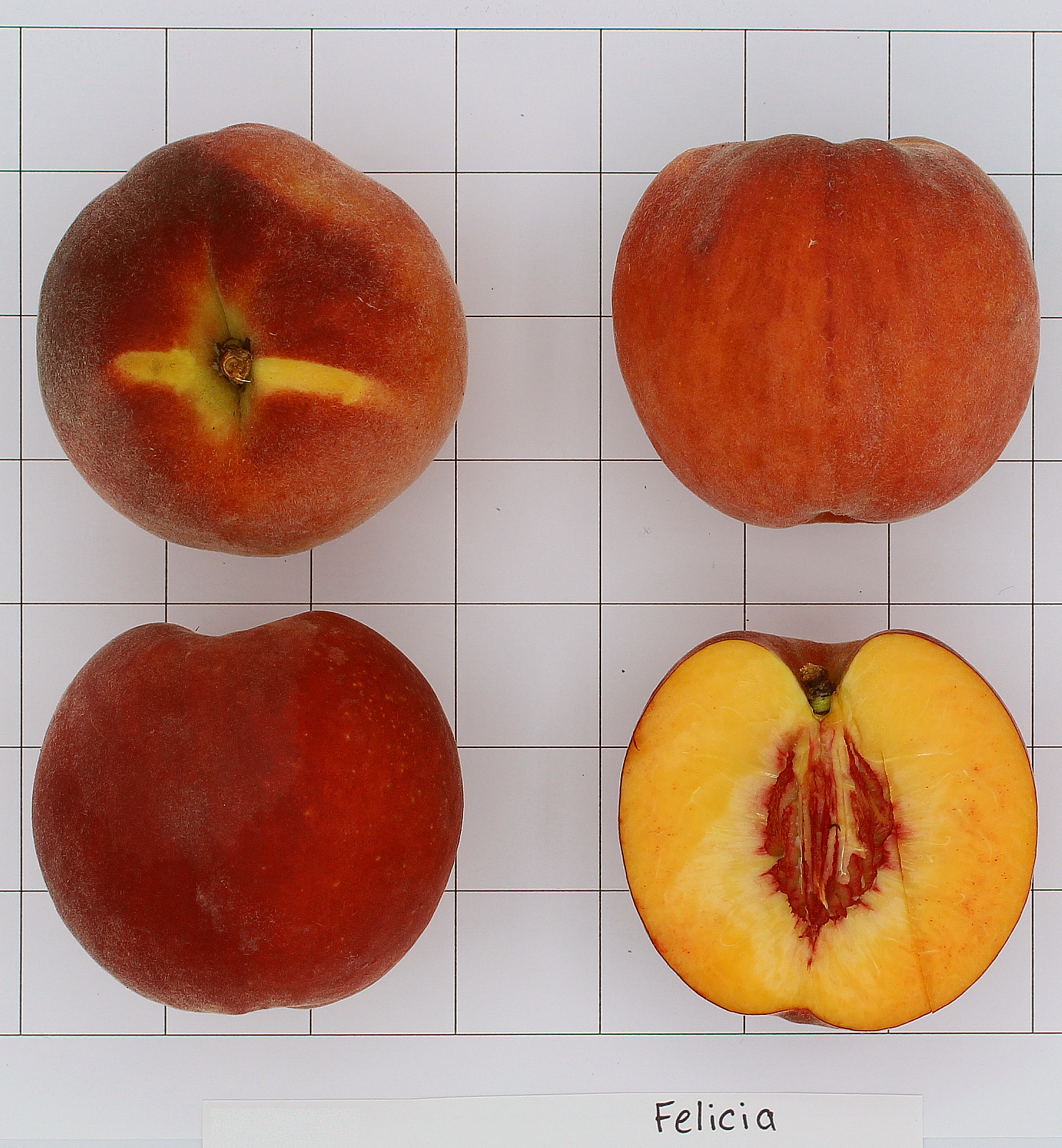 The Rutgers/NJAES stone fruit breeding program, led by Joe Goffreda, continues to create, and release exciting new peach varieties. We, in collaboration with growers, also continue to develop the varieties by evaluating their performance in plantings in commercial orchards and at Rutgers Agricultural Research and Extension Center. During this key time of the season, historically Redhaven season, it is important for our area to capture a substantial market share with premium fresh peaches. We are glad to feature some new and improved peach options for this season.
Felicia is a recent release from Rutgers University. It is a very attractive freestone yellow-fleshed peach variety. It has attractive red to dark red skin, little pubescence, with traces of red in the flesh. It ripens a few days before Redhaven; however, unlike Redhaven, it retains firmness for longer while maintaining the balance of sweetness and acidity (Table 1). Fruit is large and firm-fleshed, which is essential for post-harvest handling. It has low susceptibility to bacterial spot.
Though Redhaven is still the standard, yellow-fleshed, traditional peach in this season, it has a few challenges. For example, fruit can ripen faster than it changes skin color. That means it requires experience to start picking. Felicia is a good choice if one is planning a replacement for Redhaven. [Read more…]
July 20, 2023 Andy Wyenandt
Controlling Root Knot Nematode in New Jersey
The Root Knot Nematode does show up from time to time in vegetable production in New Jersey. Fortunately, for New Jersey, the distribution and damage done by the Root Knot Nematode is no where near the levels seen in regions further south of the state. There are two species involved, the Northern Root Rot Nematode (Meloidogyne hapla) and the Southern Root Rot Nematode (Meloidogyne incognito) and both species have been found in the state. [Read more…]
July 19, 2023 Kris Holmstrom
Vegetable IPM Update 7/19/23
Sweet Corn
Fall armyworm (FAW) has begun to appear in coastal areas. We have low level infestations of this pest in whorl stage sweet corn in Monmouth County, and reports of early populations in Cape May, where FAW was a significant problem last season. This pest is capable of significant injury to sweet corn plants, resulting in severe stunting and failure to produce viable ears. Importantly, FAW favors whorl, and even seedling stage sweet corn for egg laying so it is critical that growers check even recently emerged plantings for signs of FAW injury.
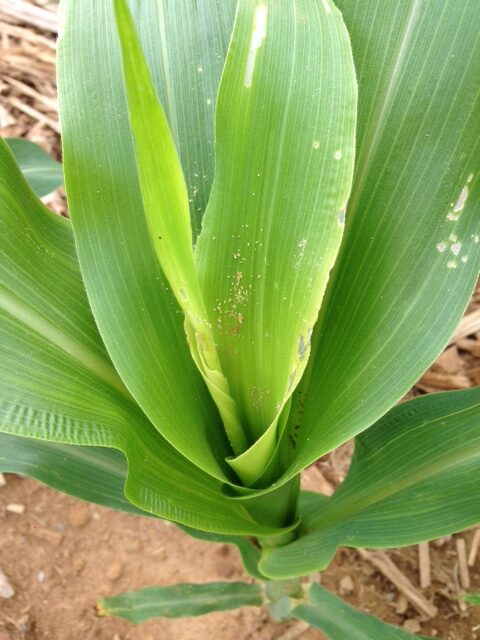
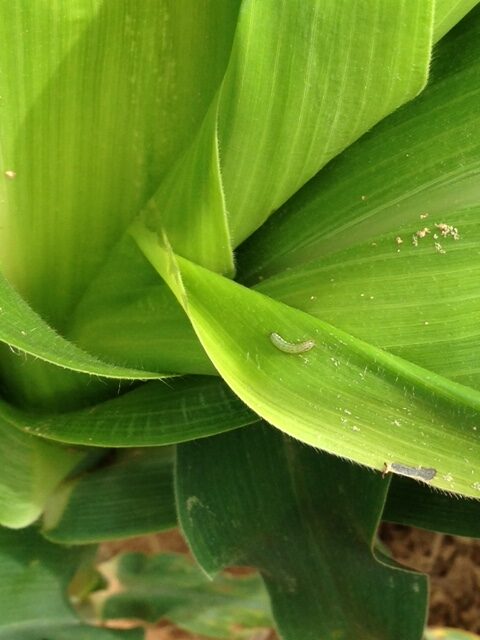 Newly hatched FAW larvae cause holes and scratches on leaves that are similar to European corn borer (ECB) feeding, except that they tend to be more concentrated and always lead down into the whorl (see photos at left). As the larvae grow, the feeding becomes more destructive, with large ragged holes and obvious droppings deposited in the whorl (see photo at right).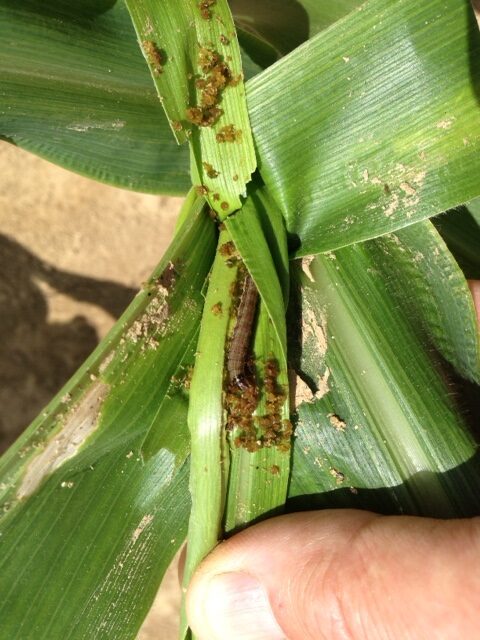
We will provide updates on new FAW appearances and severity as reports come in. FAW are resistant to synthetic pyrethroids. Effective sprays should include IRAC grp. 5 (spinosyns) or IRAC grp. 28 (diamides). The carbamate (IRAC grp. 1A) Lannate is also still effective. Sufficient water should be used in the applications to allow the solution to penetrate the layer of droppings that may have formed above the caterpillar.
European corn borer (ECB) moth activity remains extremely low in areas where blacklight traps are operating in the northern and central counties. Many plantings exhibiting no ECB injury at all. We will report on ECB activity should numbers rebound to potentially damaging levels during the second flight. In recent years, this later flight has not required targeted control in sweet corn.
July 19, 2023 Andy Wyenandt
Preparing for important fungal diseases in Asparagus during the summer.
Asparagus growers should consider scouting their fields regularly during the summer months for foliar disease development. Important pathogens that growers need to scout for on a regular basis include Purple spot, Cercospora, and Rust. [Read more…]
July 18, 2023 Rick VanVranken
Farm Credit East Report on Grants & Incentives Available for Northeast Agriculture Businesses
One of the most frequent calls over the past few years has been, “I want to start a farm/business/value-added product (etc.).”
That is usually followed up with, “What grants/funding sources are available?”
After rattling off a list of a few common sources of funding for new farmers there’s an added caveat that I don’t know the current status of those programs or what restrictions they have regarding new farming ventures. There are more programs out there with available funding, but there’s no comprehensive list of all grant programs supporting agricultural businesses, until now.
Farm Credit East has just released a report “identifying federal, regional and state grants, loan guarantees, and other incentives available to assist Northeast producers of all types and sizes.”
“Grants can be a great resource to provide additional funds needed to take on larger projects,” said Chris Laughton, Farm Credit East Director of Knowledge Exchange. “Unfortunately, they’re often under-utilized because they can be time consuming and involve quite a bit of paperwork.”
The report, from Farm Credit East Knowledge Exchange, includes funding opportunities available in the eight states served by Farm Credit East. Programs are categorized by their main focus: beginning farmers; conservation, environment and forestry; energy; fisheries and aquaculture; organic; rural business development; and research, education and promotion.
The report titled Grants and Incentives for Northeast Agriculture is available at FarmCreditEast.com or by contacting Chris Laughton at (800) 562-2235 or Chris.Laughton@farmcrediteast.com for more information.
Farm Credit East also has grant writing assistance services. Information is available on their grant writing page.

