Vegetable Crops Edition

Seasonal updates and alerts on insects, diseases, and weeds impacting vegetable crops. New Jersey Commercial Vegetable Production Recommendations updates between annual publication issues are included.
 
Subscriptions are available via EMAIL and RSS.
 
Quick Links:

NJ Commercial Vegetable Production Recommendations

Rutgers Weather Forecasting - Meteorological Information important to commercial agriculture.

IPM Update 5/06/20

Sweet Corn

IPM Program personnel are currently finishing deployment of the black light trap network in New Jersey.  At present, we are approximately 70% operational and have begun to monitor traps.  With below normal temperatures, no corn earworm (CEW) or  European corn borer (ECB) moths have been captured.  As numbers increase, look for population maps of ECB, CEW, brown marmorated stink bug (BMSB) and CEW catches from pheromone traps in this weekly publication.  The resulting full-state maps will include interpretive information.

[Read more…]

Printable Signage to Inform Customers of COVID-19 Policies

Communicating your policies to customers is critical during this season, especially about your COVID-19 policies.  Printable signs have been developed for use on New Jersey farms.  Click on the images below for a direct link to the letter-size paper printable of each sign. Visit the Rutgers On-Farm Food Safety COVID-19 website for more resources.

Cloth face coverings and gloves must be made available to employees by the business.  Employees must wear a cloth face covering and gloves but may supply their own if they prefer.  Customers must wear a cloth face covering while on the property of essential retail businesses.  If a customer cannot or is not willing to wear a face-covering you must consider alternative methods of selling your food to them.  An order can be taken over the phone, or in a parking lot.  Options include phone ahead orders or parking lot orders where staff select the items for the customer.

Face coverings required to shop inside


Essential retail businesses must maintain social distancing in retail areas, and whenever possible in other areas.

Maintain social distancing


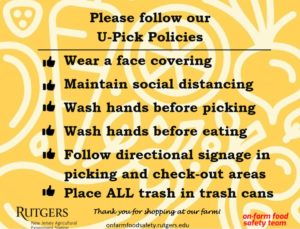
Pick your own operations to need to enforce face-covering use and social distancing in both indoor and outdoor areas of the farm.  Executive Order 122 requires the wearing of face coverings by staff and customers at essential retail businesses.  Prominent signage with your farm policies will help convey the message and ample posting on your social media sites.  You can create your own or use the one below.

Please follow our U-Pick Policy

Manage your transplant watering schedule

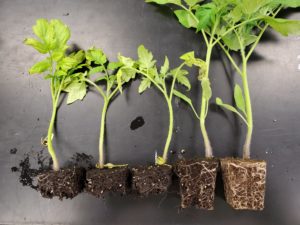
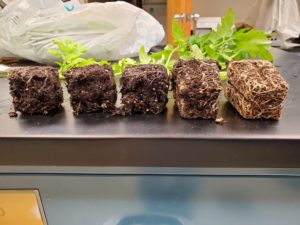
The weather this spring has been anything but normal with the up and downs in the temperature as well as the on and off again sunny days followed by many days of cloudy weather. These types of weather patterns can cause problems in transplant production in the greenhouse, especially when it comes time for watering. Hot days may require more than one watering, and cloudy days may require no water. In either case, growers need to anticipate their transplant water needs without over or under estimating watering. Of course, other factors include the growing media and the plant itself. Lets focus on media, for example, growers using a lighter soilless media, these will dry out much quicker than a heavier media and will require more daily watering (e.g., once in AM, afternoon, and evening). Growers using a heavier media may only have to water once a day, or early in the AM and maybe once more in the PM. Either type of media works fine as long as the weather doesn’t change and it fits the growers needs. Proper transplant watering is all about adjustment. If you have stuck to the same daily watering schedule this spring its very likely you have grossly over or under watered your transplants at some point. And, in all likelihood, grossly over or under watered trying to correct the situation. Uniformity is also key when it comes to proper transplant watering. If you find yourself spot watering out of schedule because some flats dry out quicker than others then most likely your uniformity is off. This is easily done when watering is done by hand with a wand. Poor uniformity can also be the result of transplant flats being set on uneven benches or uneven floors. Much like a field, low spots tend to collect the most water. All of this can lead to uneven transplant growth as well as disease and pest pressure, such as fungus gnat problems. If you are experiencing uneven transplant growth, then most likely your watering is uneven. For transplant growth to remain even, flats need to be watered each time to maximum water holding capacity, where each cell in the flat holds the maximum amount of water. An easy way to see this is to watch for water dripping out the bottom of the flat. As important, flats should also uniformly dry out. Below is an example of tomato transplants that have been pulled from the same flat. You can see the differences in plant height as well as root system formation as a result of uneven watering in a “heavy” soilless media. Cells that have remained on the wet side show poor growth and poor root system development because of a waterlogged cell; whereas cells that have been receiving the appropriate amount of water have much better growth and a nice root ball. The weight test. When was the last time you picked up a transplant tray? Picking up a transplant flat every once in a while will give you an idea of how well your watering schedule and uniformity is! Everyone has picked up a tray that has felt like it has the weight of a rock or the tray breaks apart because of the weight, or when you pick it up and it feels as light as a feather. Doing this is a good way to determine if your soilless media is “heavy” – holds more water than you think or if you have been overwatering on days you shouldn’t be or if you have not watered enough. Consistency is key when watering. Going from an extremely wet to an extremely dry transplant tray is not what you want for the transplant production season. You want consistent soil moisture as much as possible, thus proper transplant watering is all about the proper adjustments and knowing your media.

Difference in soil temperature

Differences in soil moisture across a single flat of tomato transplants.

Difference in soil temperature in plant roots

Roots of tomato transplants in a flat that has irregular soil moisture.

New Jersey Statewide Tree Fruit Twilight Meeting

New Jersey Statewide Tree Fruit Twilight Meeting

May 12, 2020     5:00 PM – 7:00 PM

It has been a VERY busy spring for the tree fruit industry in New Jersey.  Let us all take an evening to sit and discuss field and industry updates.  Rutgers University Agricultural Agents and Specialists will assist us all in moving forward efficiently through the season.

In our efforts to continue to comply with COVID-19 guidelines and will be meeting as a statewide industry online.  A number of our statewide specialists and agricultural agents will provide presentations and lead discussions on the following topics which will include:

Guidance for Operating Farm Stands and ‘U-Pick’ Operations under COVID-19 Restrictions

Assessing Frost Injury on Tree Fruit

Weed Management and alternatives to Paraquat

IPM Updates around the state

Changes to the DEP Pesticide Code

To register for this training session

Go to https://rutgers.webex.com/rutgers/k2/j.php?MTID=t95666ca9e039986a46f10751ab184f05 and register.

Once you are approved by the host, you will receive a confirmation email with instructions for joining the session.

Registration password: This session does not require a registration password.

To view in other time zones or languages, please click the link
https://rutgers.webex.com/rutgers/k2/j.php?MTID=t491ad60af7fd8c091b6436c659e4140e

NJ_Tree_Fruit_Twilight_Meeting_II_Agenda

For assistance contact Megan Muehlbauer at: muehlbauer@njaes.rutgers.edu

Disinfection of Surfaces for Prevention of COVID-19 Spread – Use Caution

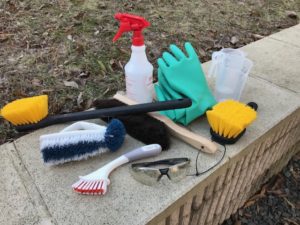
Cleaning supplies

The chemical concentrations for the disinfection of high touch surfaces in retail markets during the COVID-19 pandemic are higher than we normally recommend. This concentration is for the disinfection of hard non-porous surfaces and is not for use on produce. Care must be taken to ensure the safety of yourself and your workers when using this concentration. Typical concentrations of bleach for sanitizing surfaces is 150 PPM, the disinfection recommended 1/3 cup bleach to 1 gallon of water is 1000 PPM. This concentration can be caustic to skin, airways, and produce.  Take the following precautions:

1. Clean the surface with detergent removing all visible debris and with a clean water rinse.
2. Conduct mixing in a well-ventilated area and increase ventilation when possible in areas of use, wear rubber gloves to protect skin from contact with the bleach and bleach solution.
-If skin comes in contact with the bleach or bleach solution rinse with water, if irritation continues call a doctor.
-If the bleach or bleach solution comes into contact with the eyes rinse with water for 15 minutes, if irritation continues call a doctor.
5. Chlorine PPM measurement strips typically used in packing houses do not go up to 1000 PPM.
-1000 PPM test strips are available online through Granger, Amazon, and restaurant supply stores.
-Test strips must be for FREE chlorine, not total chlorine.
-Test strips have expiration dates, make sure yours are not expired.
6. Follow bleach label instructions for contact time requirement. This is the amount of time your surface needs to stay wet with the bleach solution to ensure efficacy and is usually 1 minute or more.
7. Use containers of bleach that have been opened no longer than 30 days to ensure proper concentration.
8. Mixed concentrations of bleach should be stored at cool temperatures and away from direct light, used within a few days and retested for PPM prior to each use to ensure correct concentration.
9. Do not mix bleach with any other cleanser!

Vegetable Disease Update – 4/30/20

  • Tomato and pepper transplanting has begun in southern New Jersey. With the on and off again heavy rains we have been getting all growers should consider applying at-transplanting fungicides for root rot control. Please click here to see this article from last week.
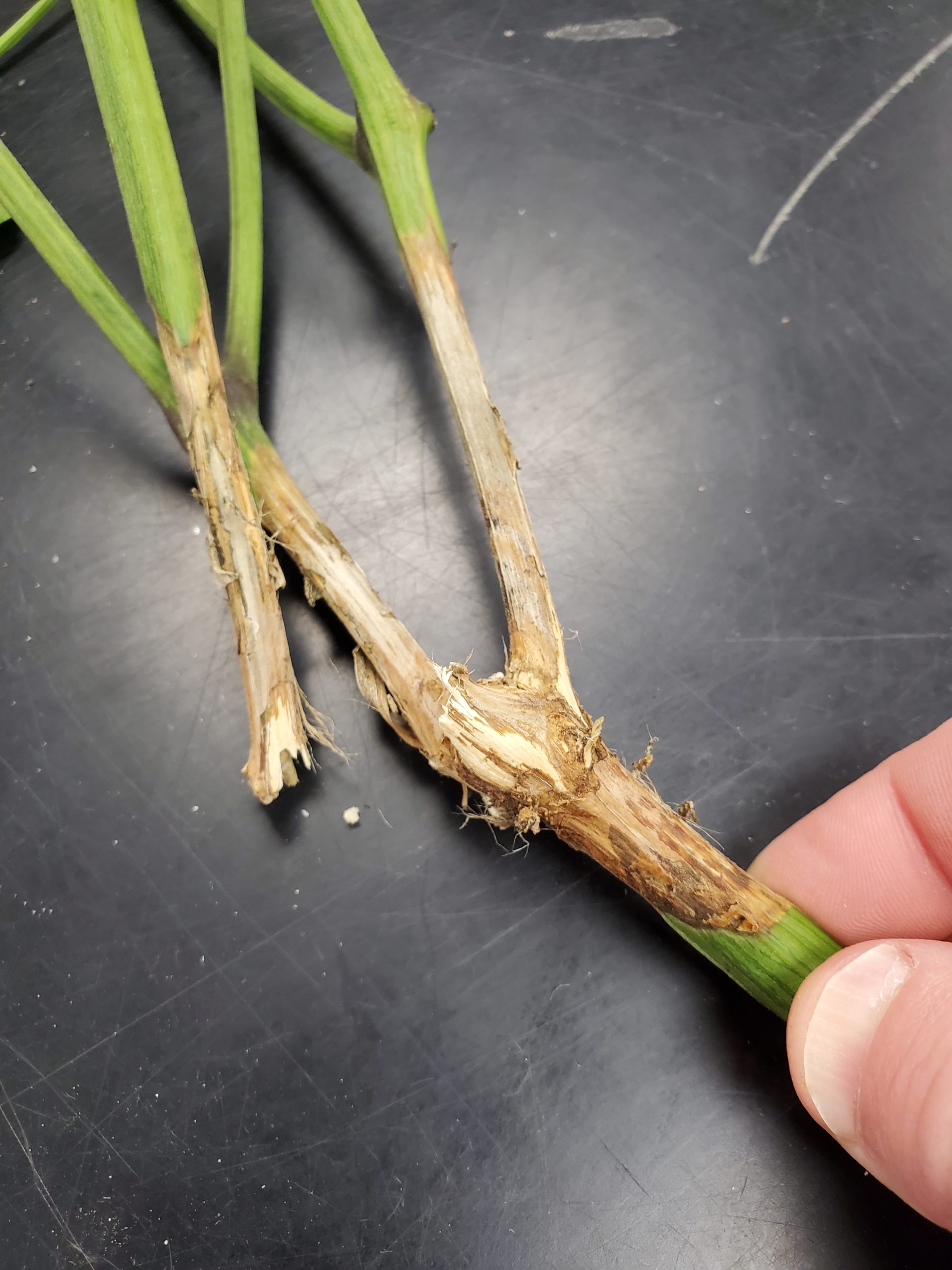
  • Root rot in pea has been reported. Infected plants will wilt and collapse, especially in wet, low areas of the field. Look for black stem lesions at the base of the plant at the soil line. In general, Pythium infections won’t extend beyond one inch above the soil line in infected plants. Under ideal conditions a white, cottony growth may be present and is a diagnostic feature. In Pythium infected plants, the outer cortex of the root can easily be pulled off. For, more information on damping-off please click here.
  • Scouting and controlling Septoria leaf spot in parsley.
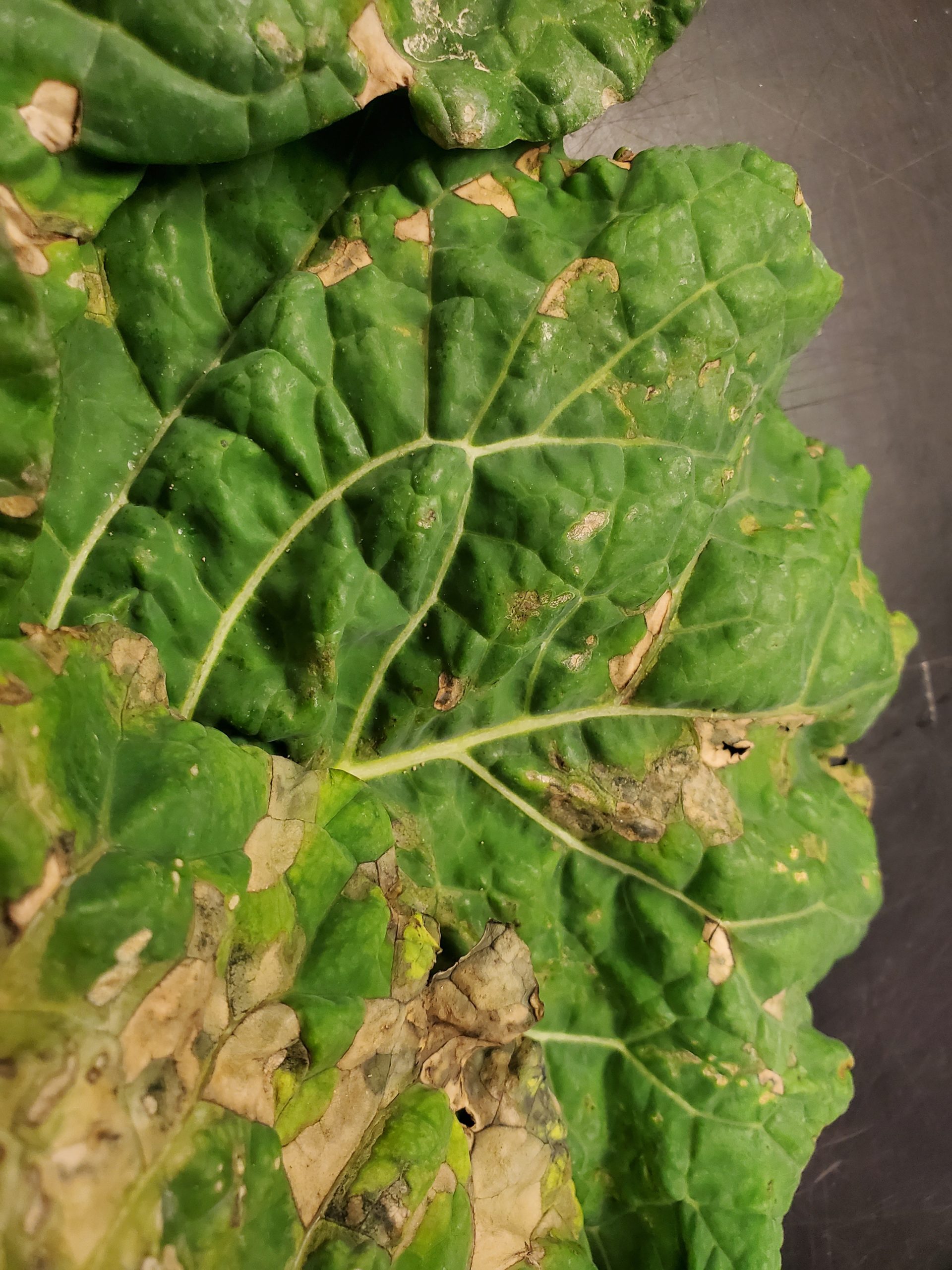
  • Bacterial leaf spot has been reported on savoy cabbage in southern New Jersey.
  • Timber rot has been reported in greenhouse pepper in southern New Jersey. For more information on white mold on tomato and pepper click here.
  • Cold weather injury has been reported in numerous vegetable crops throughout the state.
  • Bacterial leaf blight in Cilantro was reported in southern New Jersey.
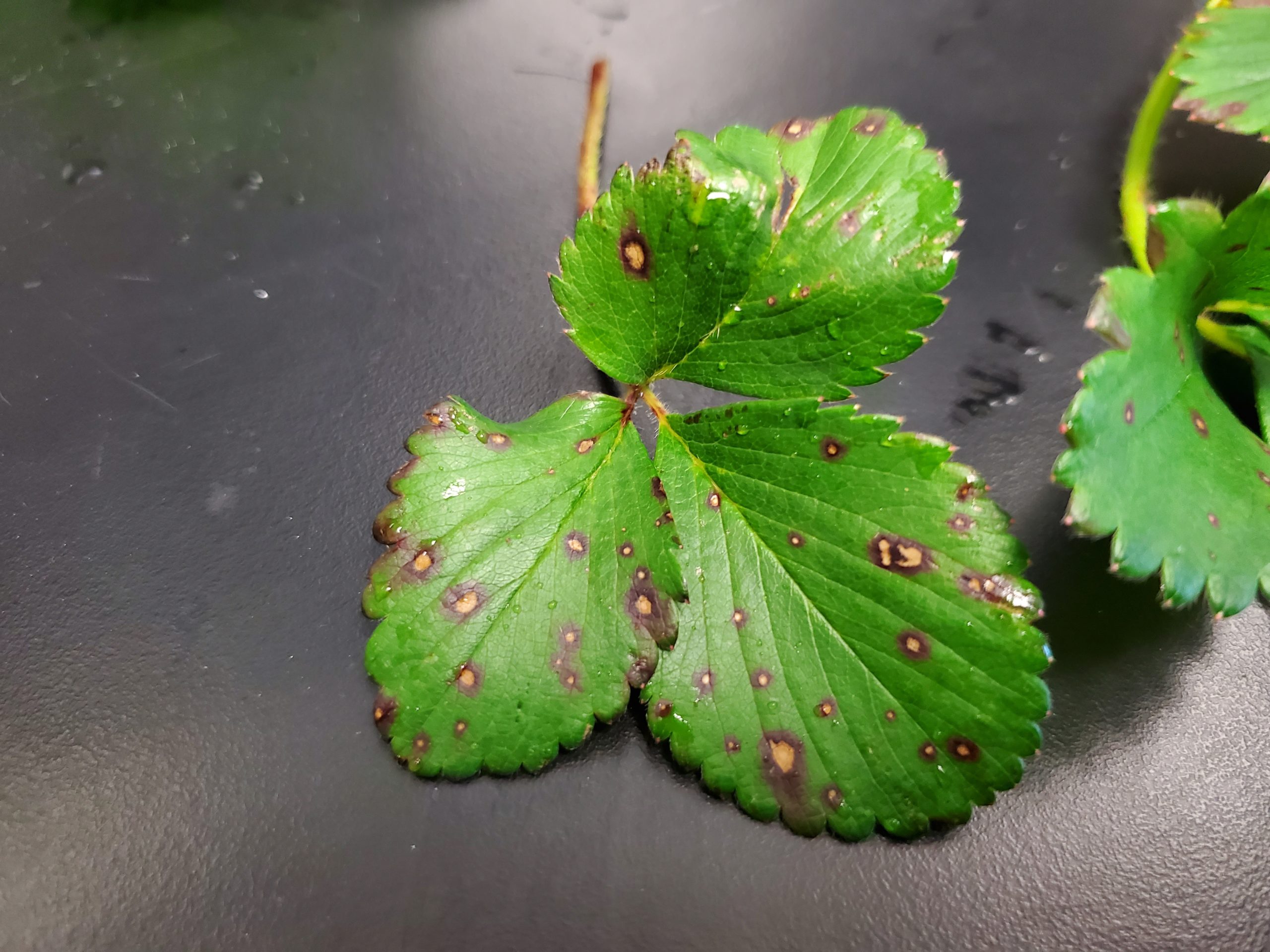
  • Common leaf spot was reported in strawberry. For more information click here. Weather conditions have also been ideal for fruit rot infections. For more information on controlling fruit rots in strawberry please click here.
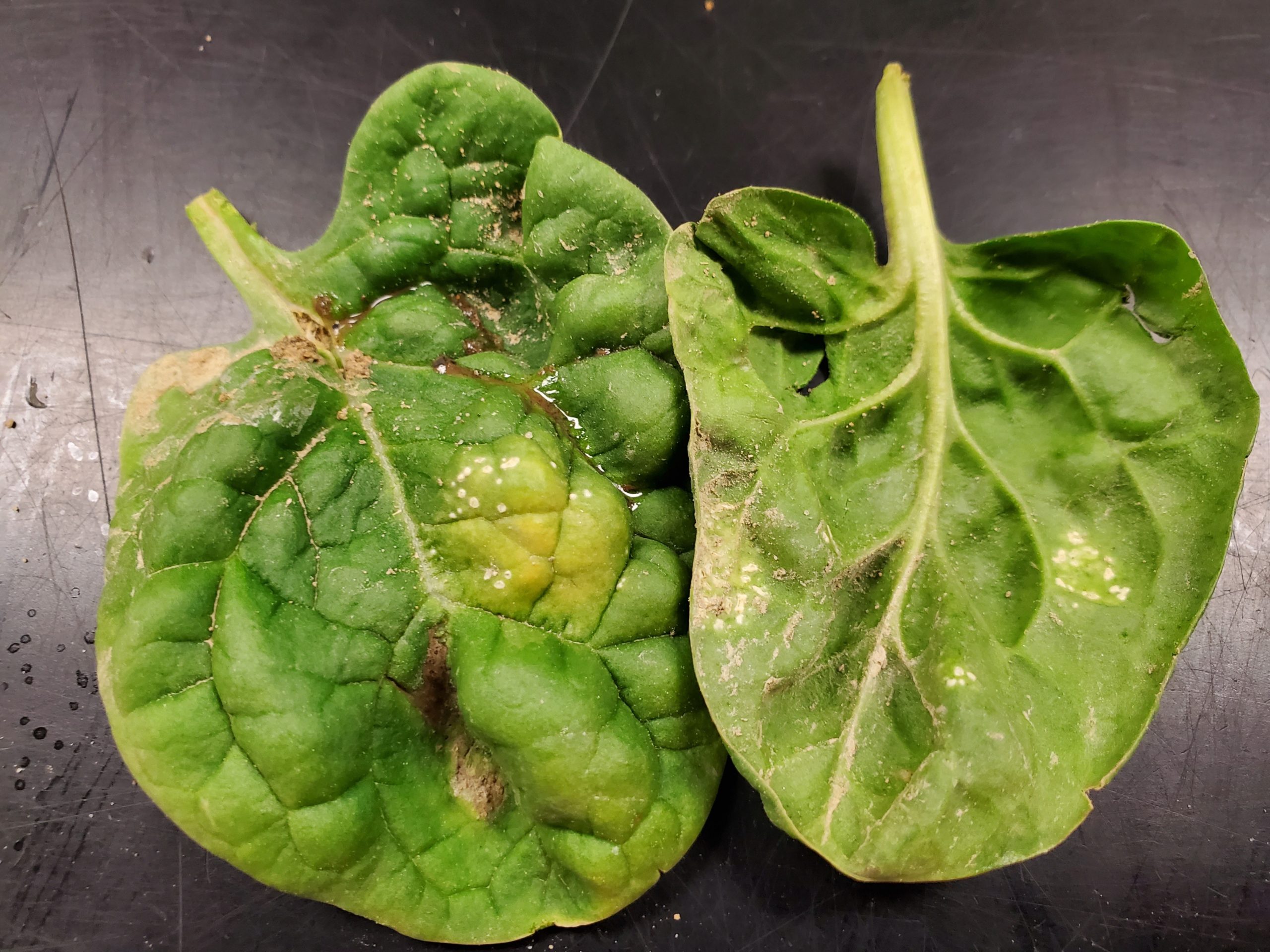
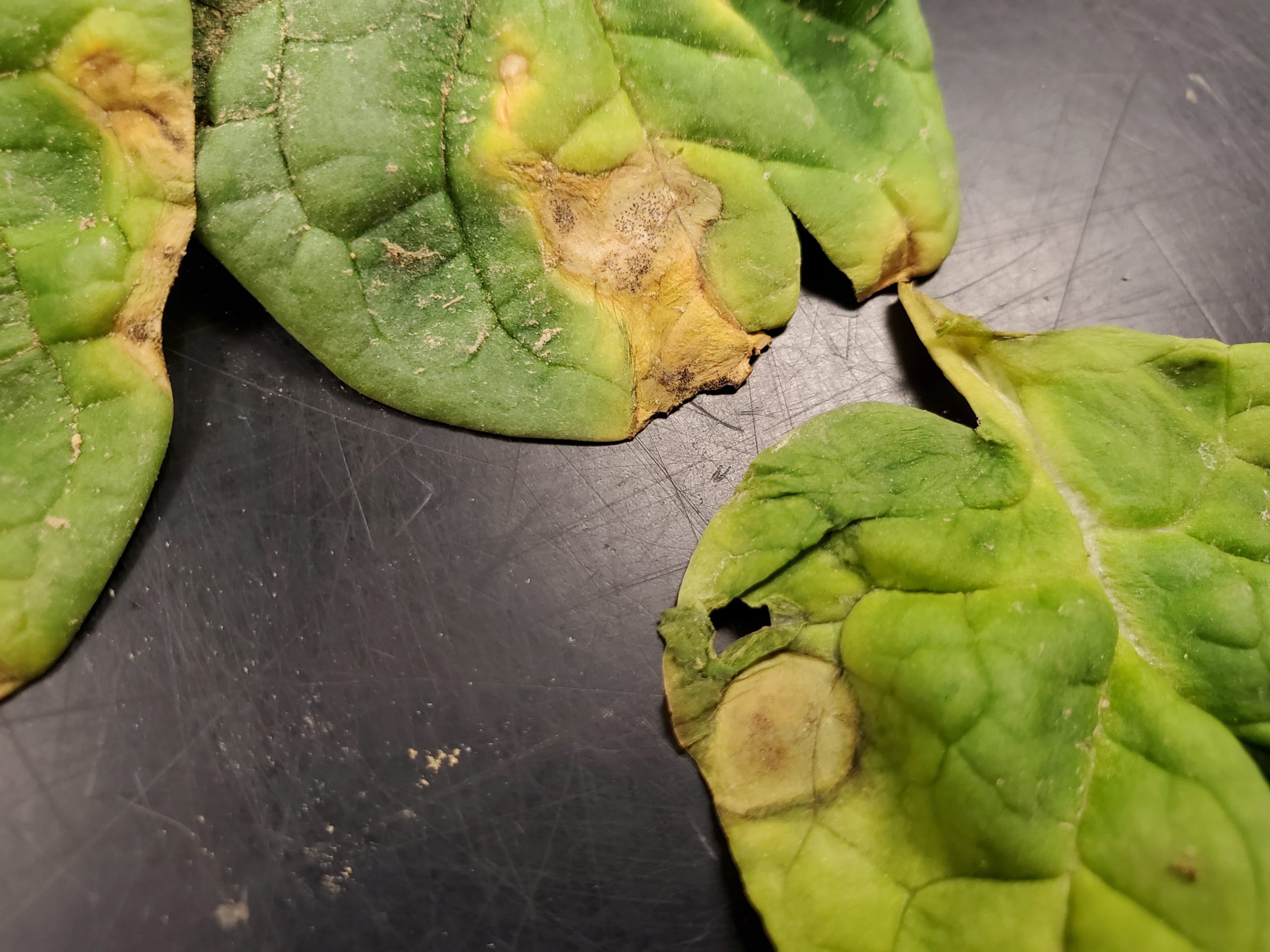
  • White rust and anthracnose have been reported in spinach over the past few weeks. For more information click here
  • For the updated list of fungicides for use in the control of important diseases in the greenhouse please click here.
  • Transplant producers need to remember to vent their structures to reduce relative humidity buildup going into the evenings to help reduce leaf wetness during the overnight.
  • The 2020/2021 Commercial Vegetable Production Recommendations Guide is available for free online! With many county offices running reduced hours or being closed this is the easiest way to obtain the newest recommendations.
  • For a quick review on managing fungicide resistance development using tank mixes and fungicide rotations, and information on FRAC group 4, FRAC group 7, and FRAC group 3 and FRAC group 11 fungicides please click on hyperlinks.