Rutgers Cooperative Extension Ag and Natural Resources Dept Chair Nick Polanin has announced the good news that RCE has been able to hire Ms. Kate Brown as Program Associate II to work on commercial crop production in the RCE-Burlington County office. We welcome Kate to the job. In continuing some of the programs of retired County Agent Ray Samulis, Kate is now the Rutgers liaison to the NE Ag Safety and Health Coalition and has shared this news about next week’s celebration of National Farm Safety & Health Week (NFSHW). — Rick VanVranken [Read more…]
Vegetable Crops Edition
Seasonal updates and alerts on insects, diseases, and weeds impacting vegetable crops. New Jersey Commercial Vegetable Production Recommendations updates between annual publication issues are included.
Subscriptions are available via EMAIL and RSS.
Quick Links:
 NJ Commercial Vegetable Production Recommendations
Rutgers Weather Forecasting - Meteorological Information important to commercial agriculture.
September 17, 2020 Kate Brown
Every Farmer Counts! 76th National Farm Safety & Health Week – Sept. 20-26, 2020.
September 16, 2020 Megan Muehlbauer
Virtual Statewide Commercial Tree Fruit Growers Twilight Meeting IV Harvest Season Update
Virtual Statewide Commercial Tree Fruit Growers Twilight Meeting IV
Harvest Season Update
Wednesday September 23, 2020
Online 6:00 PM – 7:30 PM
Statewide Tree Fruit Twilight Meeting IVClick here to register for the twilight meeting.
Password: fallfruit
NJDEP PESTICIDE RECERTIFICATION CREDITS ARE ANTICIPATED
If you wish to receive pesticide credits for this meeting, DEP regulations require you to upload a copy of a government issued photo ID and a copy of your pesticide applicator license prior to the meeting.
Click here to upload a government issued photo ID and pesticide license
Upload directions: If you click on the photo ID upload link using a smart phone/tablet you will have the option of simply taking a photo of your ID and uploading it directly into the system. If you are using a computer you will need to scan or take a photo of your photo ID and upload the file using the directions at the upload link. If you need assistance uploading your documentation contact; Kimberley Crommelin kfrey@co.hunterdon.nj or Megan Muehlbauer muehlbauer@njaes.rutgers.edu to assist you in verifying your identity for NJDEP recertification credit purposes.
Please note: The files are uploaded into a secure Rutgers University digital folder that no one other than the session hosts (Megan Muehlbauer and Kimberley Crommelin) can view or access.
To Enter the Meeting: Click the link in the registration confirmation E-mail and select “join by browser-New” BE SURE TO KEEP VIDEO ON IF YOU WISH TO OBTAIN PESTICIDE CREDITS.
If you do not wish to receive pesticide credits, and would like to call into the meeting, dial USA Toll: +1-650-429-3300 Access code: 120 185 4274
PLEASE BE IN THE MEETING BY 6 PM AS IT WILL BEGIN PROMPTLY AT 6 PM!
Thank you very much for your willingness to cooperate!
Program
Hosted by: Megan Muehlbauer PhD. County Agent III Rutgers New Jersey Agricultural Experiment Station (NJAES) Cooperative Extension of Hunterdon County
Hemant Gohil PhD. County Agent III Rutgers (NJAES) Cooperative Extension of Gloucester County
6:00 PM – 6:20 PM Peach Tree Borer and Spotted Lanternfly Management
Anne Nielsen, PhD. Extension Specialist, Fruit Entomology, Rutgers University
Dean Polk, Fruit IPM Agent Rutgers NJAES
6:20 PM – 6:40 PM Herbicide Decisions for Fall Weed Management
Thierry Besancon, PhD. Extension Specialist, Weed Science, Rutgers NJAES
6:40 PM – 7:00 PM Peach Leaf Curl and Apple Scab Management in High Inoculum Orchards.
Norm Lalancette PhD, Extension Specialist Tree Fruit Pathology, Rutgers NJAES
7:00 PM – 7:30 PM New Jersey Pesticide Regulation and Safety Update
Patricia Hastings, Pesticide Safety Education Program Coordinator, Rutgers NJAES
September 16, 2020 Kris Holmstrom and Joe Ingerson-Mahar
Vegetable IPM Update 9/16/20
Sweet Corn
Fall armyworm (FAW) larval infestations remain at low levels in the few remaining sweet corn plantings not yet silking. At this point in the season, FAW shouldn’t become a widespread economic problem. However, growers should be alert to the possibility of infestations on the last of their late plantings. Injury from newly hatched larvae shows up as “window panes” or areas where leaf tissue has been eaten down the the lower epidermis. This injury leads down into the whorl. As larvae gain size, they begin to consume leaf tissue in its’ entirety, creating ragged holes and lots of droppings. FAW can be tough to manage because it is resistant to synthetic pyrethroid insecticides (IRAC 3A) and because larvae are often covered by their own droppings, making contact with the insecticide more difficult. Treat when 12% or more plants exhibit FAW injury alone, or in combination with ECB injury.
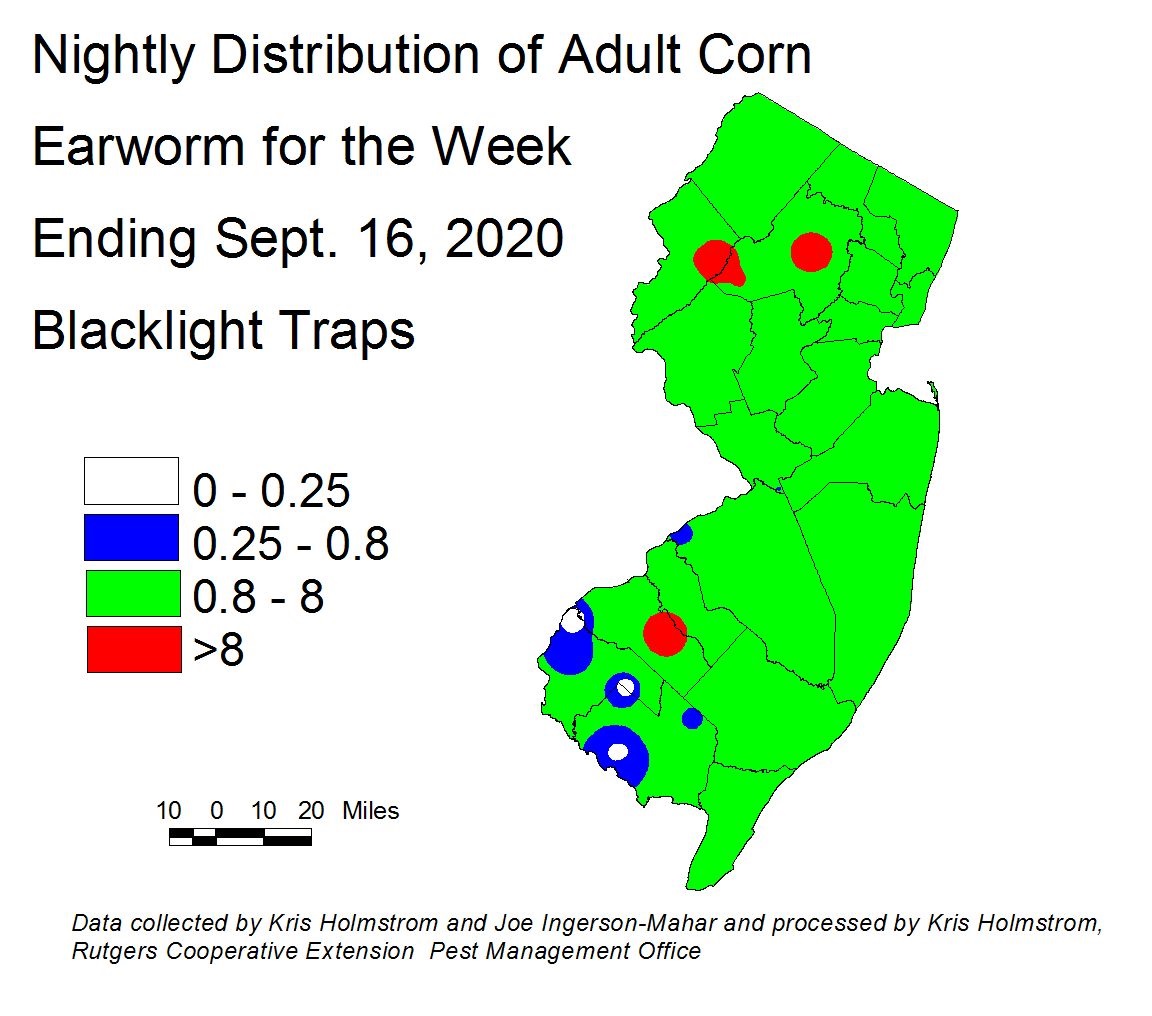 Corn earworm (CEW) moth captures continued a gradual decline over this past week due to several nights with low temperatures. The decline is less noticeable in the northern counties, where CEW blacklight catches had been quite high prior to the onset of cooler weather. Therefore the weekly averages there are higher. Overall, these catches are representative of lower adult activity, and growers should consider this pest to still be at moderately high population levels in the state. The current population poses a significant risk to silking corn. The reduction in CEW catch was not enough to substantially change this weeks map from last week (see map at left). Green areas on this map representing a 3-day spray schedule. For further information on CEW activity, see pheromone trap information below.
The highest nightly trap catches of CEW in black light traps for the week ending 9/16/20 are as follows:
| Hackettstown 19 | Morristown 8 | Port Colden 6 |
| Long Valley 16 | Allamuchy 7 | Princeton 6 |
| Denville 13 | Sereantsville 7 | Blairstown 5 |
| Chester 9 | Downer 6 | Hillsborough 5 |
September 14, 2020 Andy Wyenandt
Vegetable Disease Update – 9/14/20
- No reports of Late blight in region. Late blight was reported in tomato and potato in western NY with no immediate threat to New Jersey. To track the progress of Late blight in the US please click here.
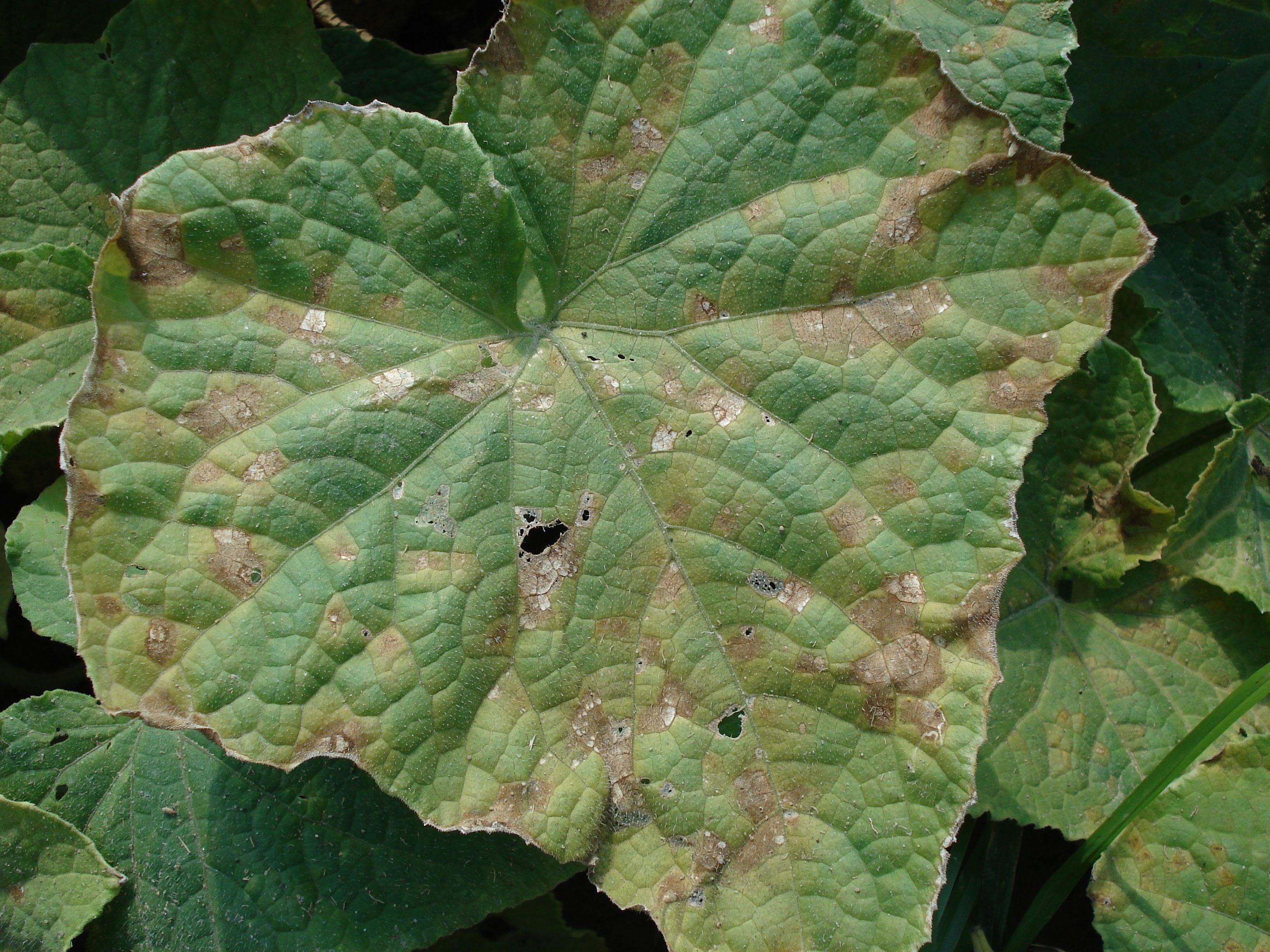
- Cucurbit downy mildew remains active on cucumber and cantaloupe in New Jersey. There have been no reports of CDM in other cucurbit crops in the region to date. For a review of CDM control please click here. To track the progress of CDM on your phone or PC please visit the CDM forecasting website.
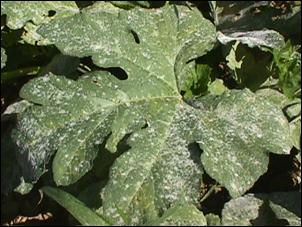
- Cucurbit powdery mildew (CPM) season continues. Growers should continue regular fungicide programs to help maintain foliage through harvest. For a review of CPM control strategies please click here.
- All cucurbit plantings that are no longer in production should be destroyed immediately after the last harvest by mowing or with herbicide to reduce the risk of harboring of CDM, CPM, and virus.
- Alternaria and Cercospora leaf blights have been reported in carrot plantings.
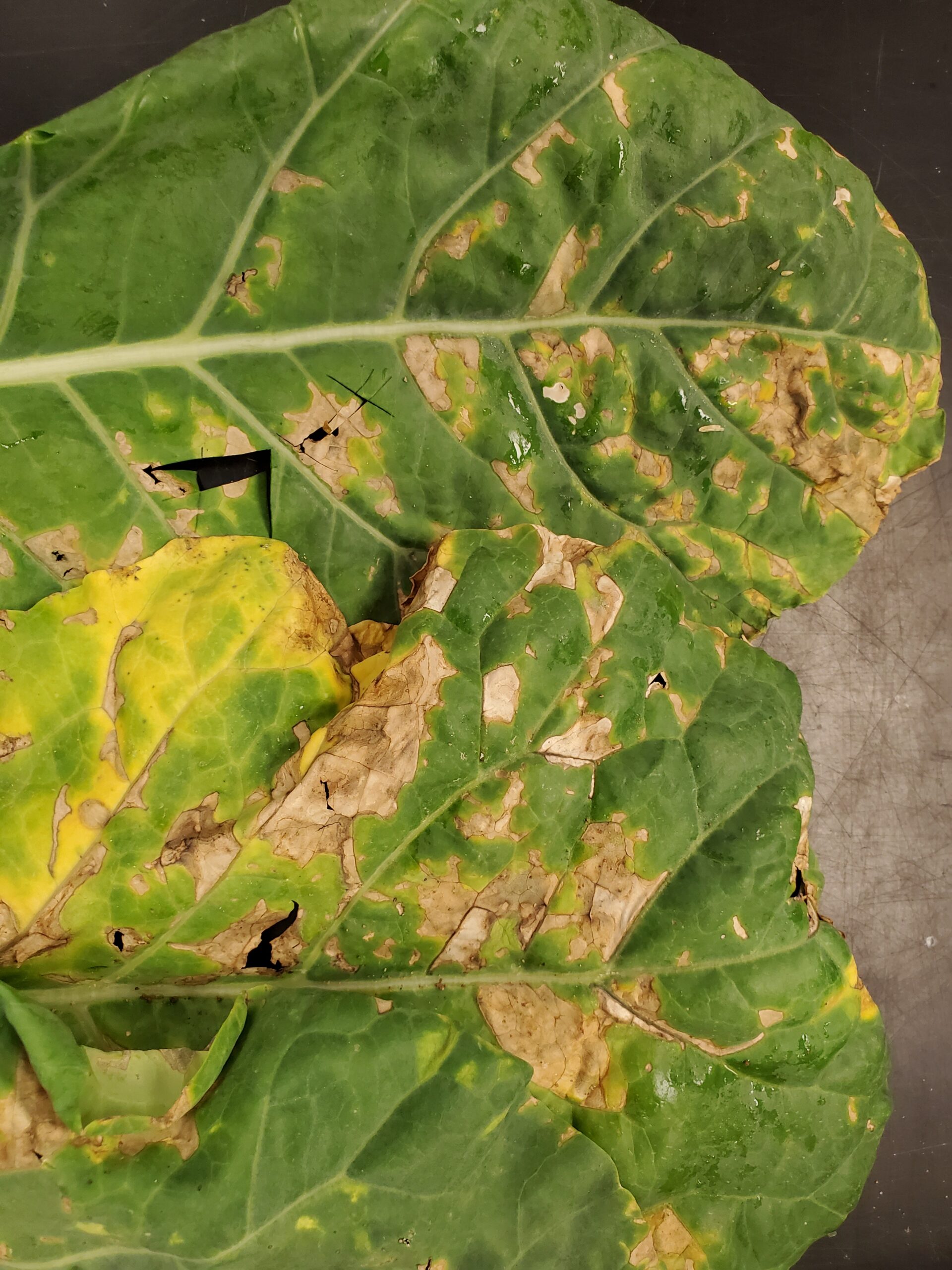
- Bacterial leaf blight has been reported in collards.
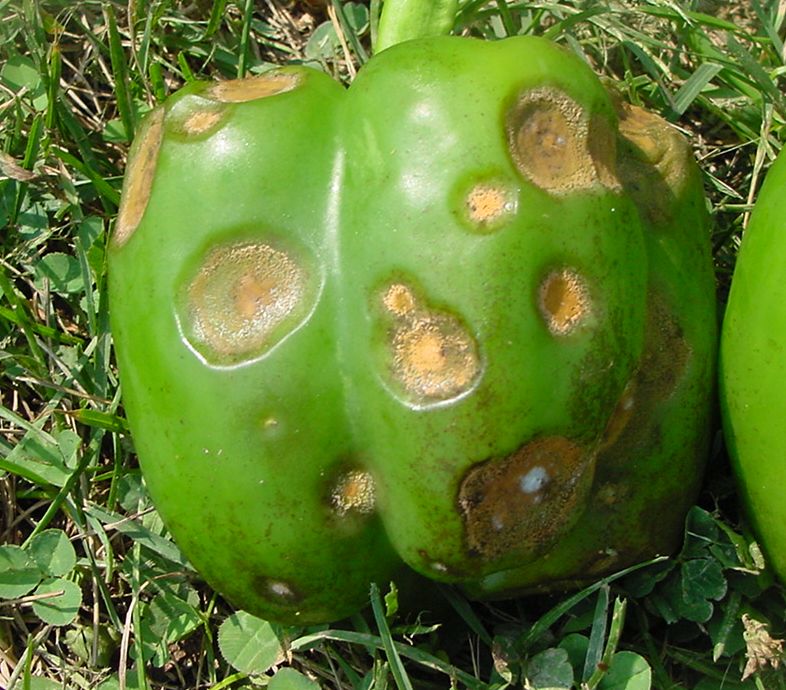
- Pepper anthracnose is still active in southern New Jersey and is a serious problem in all bell and non-bell peppers, especially in fields with a history of the disease. For more information on controlling pepper anthracnose please click here.
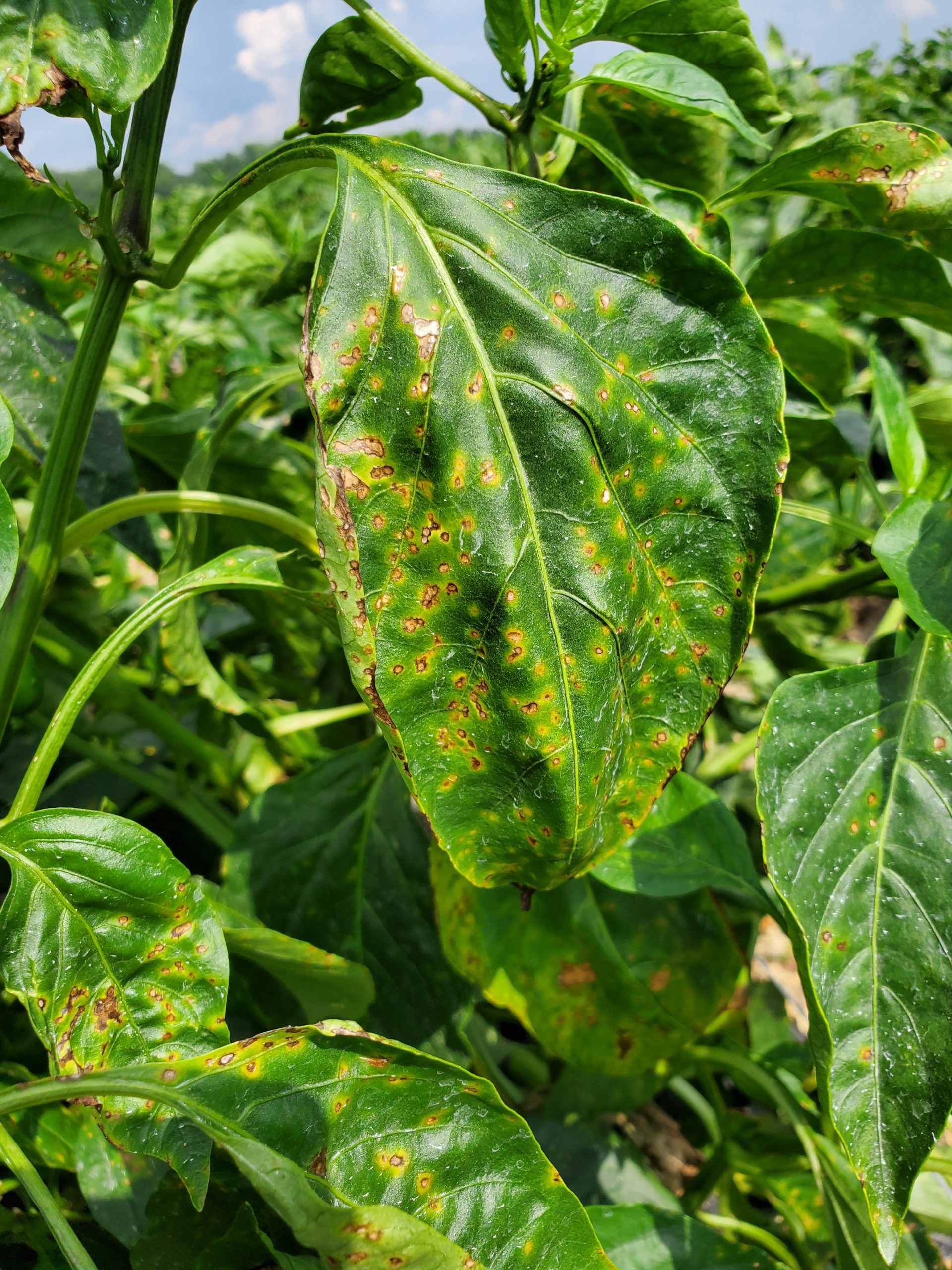
- Bacterial leaf spot is still extremely active in in bell and non-bell peppers. For more information on BLS and copper resistance please click here.
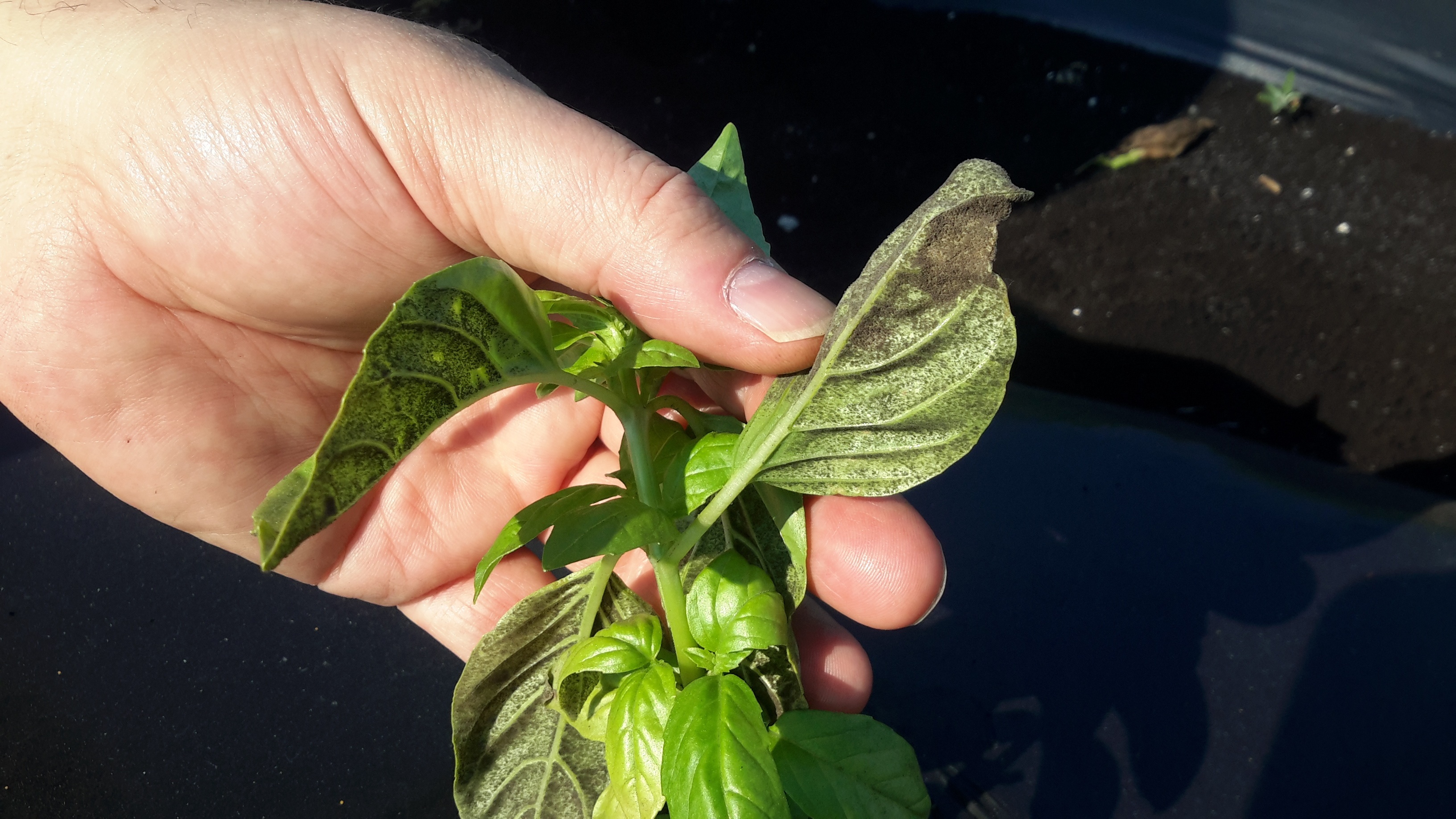
- Basil downy mildew (BDM) remains active. All growers are encouraged to initiate preventative fungicide programs on DMR and non-DMR basil. For control options and to follow the progress of BDM in the US on your phone or PC please click here.
- With the on and off again heavy rains we have been getting, all growers should consider applying at-transplanting fungicides for root rot control in fall crops. Please click here to see these articles.
- For more information on the control of the diseases mentioned above please see The 2020/2021 Commercial Vegetable Production Recommendations Guide which is available for free online! With many county offices running reduced hours or being closed this is the easiest way to obtain the newest recommendations.
September 10, 2020 Stephen Komar
Ask the Agent Fall Series
“Ask the Ag Agent” was created in spring 2020, when COVID-19 forced a new normal in communications nationwide. Rutgers Cooperative Extension Agricultural Agents working with “Ask the Ag Agent” education and outreach are committed to the agriculture industry and all interested in growing plants, raising livestock and essential resources related to agriculture. The program will now continue beginning on Wednesday, September 16th and run every-other Wednesday in September and October.
Farmers and others are welcome to join this bi-weekly teleconference each Wednesday night from 7:00pm-8:00pm. Weekly events are hosted by Rutgers Cooperative Extension Agricultural Agents working with the farming industry.
This call-in/WebEx event features updates on farm management, crop conditions, farm industry observations, agricultural agency programs and other topics discussed by farmers, agricultural agents and other agricultural service providers.
Hosted by Agricultural Agents Bill Bamka, Stephen Komar, Michelle Infante-Casella and Meredith Melendez, this bi-weekly communication provides a forum for discussion for farmers and all involved in NJ agriculture, including agricultural agency personnel, non-profit organizations and others.
This event and other events hosted by Rutgers Cooperative Extension can be found on the Rutgers NJAES Events website.
To join the “Ask the Ag Agent” forum each week on a computer/tablet/smartphone via the WebEx Videoconference use the link:
“Ask the Ag Agent” was created in spring 2020, when COVID-19 forced a new normal in communications nationwide. Rutgers Cooperative Extension Agricultural Agents working with “Ask the Ag Agent” education and outreach are committed to the agriculture industry and all interested in growing plants, raising livestock and essential resources related to agriculture. The program will now continue beginning on Wednesday, September 16th and run every-other Wednesday in September and October.
Farmers and others are welcome to join this bi-weekly teleconference each Wednesday night from 7:00pm-8:00pm. Weekly events are hosted by Rutgers Cooperative Extension Agricultural Agents working with the farming industry.
This call-in/WebEx event features updates on farm management, crop conditions, farm industry observations, agricultural agency programs and other topics discussed by farmers, agricultural agents and other agricultural service providers.
Hosted by Agricultural Agents Bill Bamka, Stephen Komar, Michelle Infante-Casella and Meredith Melendez, this bi-weekly communication provides a forum for discussion for farmers and all involved in NJ agriculture, including agricultural agency personnel, non-profit organizations and others.
This event and other events hosted by Rutgers Cooperative Extension can be found on the Rutgers NJAES Events website.
To join the “Ask the Ag Agent” forum each week on a computer/tablet/smartphone via the WebEx Videoconference click here
Join by phone
+1-650-429-3300 passcode 1202639477##
September 9, 2020 Kris Holmstrom and Joe Ingerson-Mahar
Vegetable IPM Update 9/09/20
Sweet Corn
European corn borer (ECB) adults continue to be very low, and no map will appear in this edition.
Fall armyworm (FAW) larval infestations are at fairly low levels. Infestations generally are in the single digits to below 20%, and with few plantings in the whorl stage at this point in the season, FAW shouldn’t become a widespread economic problem. However, growers should be alert to the possibility of infestations on the last of their late plantings. Injury from newly hatched larvae shows up as “window panes” or areas where leaf tissue has been eaten down the the lower epidermis. This injury leads down into the whorl. As larvae gain size, they begin to consume leaf tissue in its’ entirety, creating ragged holes and lots of droppings. FAW can be tough to manage because it is resistant to synthetic pyrethroid insecticides (IRAC 3A) and because larvae are often covered by their own droppings, making contact with the insecticide more difficult. Treat when 12% or more plants exhibit FAW injury alone, or in combination with ECB injury.
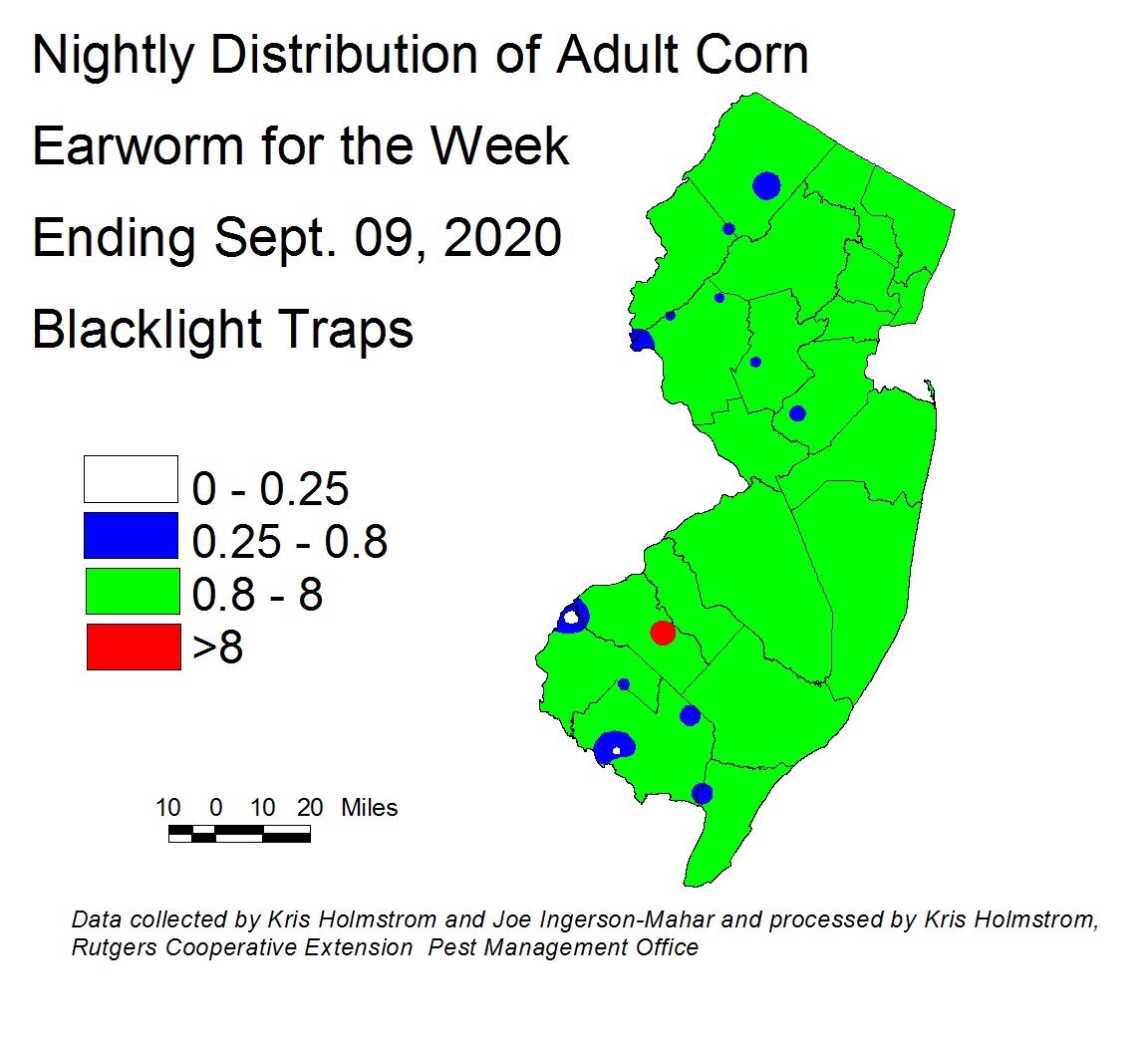 Corn earworm (CEW) moth captures have decreased slightly over the past week. This is likely due to several nights with temperatures dropping into the low 60s and even 50s F. The decline is representative of lower adult activity, and growers should consider this pest to still be at moderately high population levels in the state. The current population poses a significant risk to silking corn. The reduction in CEW catch was not enough to substantially change this weeks map from last week (see map at left). Green areas on this map representing a 3-day spray schedule. For further information on CEW activity, see pheromone trap information below.
The highest nightly trap catches of CEW in black light traps for the week ending 9/09/20 are as follows:
| Downer 7 | Bellemeade 4 | Chester 3 |
| Denville 6 | Green Creek 4 | Crosswicks 3 |
| Georgetown 5 | Morristown 4 | Farmingdale 3 |
| New Egypt 5 | Sergeantsville 4 | Long Valley 3 |