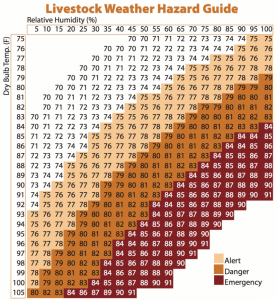
The intense lightening storm of May 26th that impacted most of New Jersey is a reminder that pastured livestock are also at risk from more than heat exhaustion as summer progresses.
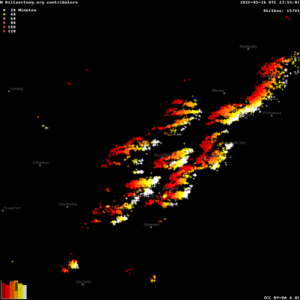
Network for Lightning and Thunderstorms in Real Time map by Blitzortung.org for the storm system that moved across New Jersey on May 26th.
Measures to protect livestock from predators, sun exposure and dehydration should take lightening strikes into consideration. Lightening can kill animals by direct and indirect pathways and start fires in tinder dry grasses. A true act of nature, lightening deaths are random but producers can take steps to minimize losses from man-made structures, trees and water sources.
Tree shade: Lightening electricity seeks the path of least resistance. Different trees contain different amounts of sap and water making some a better conductor of lightening than others. “Among the most common tree species that get hit by lightning are oak, gum, maple, poplar, and pine trees.” – https://www.americanarborists.net/tree-tips/2017/june/what-to-do-if-your-tree-is-struck-by-lightning-/
Cotton woods are a type of poplar. A single cottonwood can intake between 50 and 200 gallons of water every day, making them a potential risk to livestock during severe storms. In general, the more surface roots a tree has the more danger to livestock crowded around the tree. Rows of trees theoretically spread out the possibility of lightening strikes and less livestock are crowded under a single tree. Avoid having livestock in pastures on high ground with trees during these storms.
Poorly drained areas: Naturally occurring wet areas and wet areas associated with irrigation pumps and rigging increase the potential risk to livestock from lightening strikes. Grazing of livestock in and around these structures and others like solar panels should be restricted when severe storms are forecasted.
Fence and metal gate grounding: When lightening strikes the voltage will follow electric fence wires back to the charger and then into the ground rod. Grounding rods are recommended to be in the ground five feet to dissipate lightening safely. If livestock are crowded up against fence or have their heads through metal gates, they become the grounding rod. Woven electrified fence increases the surface area that animals may come in contact with.The charger itself may not survive a lightening strike. Fence chargers are expensive investments, turn off the charger and disconnect it prior to severe storms when feasible.
Metal water troughs: In crowded pens, metal and even rubber water troughs are a lightening injury risk to livestock. Again, this is due to the animal becoming the conduit to the water soaked ground. General guidelines suggest animals should be separated (not forced to congregate due to enclosure size) at least 50 feet from water troughs during lightning storms.
Temporary shelters: Temporary shelters to limit sun exposure and prevent heat exhaustion should be properly grounded and made of materials that limit electrical conductivity. Emergency shelters made of hay bale rings and metal panel gates with plywood or tarp roofs during high heat warnings should be temporary; and removed when lightning storms are forecasted.
Roosts: Chickens will roost where they are when dusk arrives. Evaluate pasture poultry locations for areas that chickens are using to roost and take measures to limit their roosting on objects that conduct electricity.
Buried commercial utility lines. I lost a first calf heifer to a lightening strike a few years back. A tree in a cemetary nearly a mile away along the same path as the phone line took a direct hit as did another tree on the opposite end of the pasture. The cow was standing directly over the buried unmaintained line and died instantly. Note the copper line was installed more than fifty years ago and through heave and thaw presumably had a crack in the insulation at that location. As farm usage and ownership changes over the decades, be familiar with what is buried on your farm in utility right of ways that may no longer be maintained.
Lightening insurance. Farmers can cover their losses by adding lightening protection to their policy. USDA also covers eligible lightening losses under their Livestock Indemnity Program. For general information see this 2009 article https://www.fsa.usda.gov/Internet/FSA_File/29229200909.pdf and contact your local FSA office for current program requirements.
For more information on insulating your farm against lightening, see ‘Lightning Protection for Farms’ by National Ag Safety Database. https://nasdonline.org/1882/d001825/lightning-protection-for-farms.html
 A Missouri woman named Jane Heisey died on her family farm recently.