On-Farm Food Safety Section

Keep up with the latest news on this dynamic topic that impacts growers on multiple levels. Developing a farm food safety plan is a good idea for all growers, and may be required as part of food safety audits if you sell to certain buyers.

View NJAES On-Farm Food Safety Essentials

Subscriptions are available via EMAIL and RSS.

Food Safety Certification for Specialty Crop (FSCSC) Cost Share Program

This is the chance for eligible fresh fruit and vegetable growers to recover some of their expenses for implementing food safety practices on the farm.

For 2024:

  • Applications are due between July 1, 2024 and January 31, 2025
  • Eligible expenses must be between June 26, 2024 and December 31, 2024

For 2025:

  • Application is due between January 1, 2025 and January 1, 2026
  • Eligible expenses must be between January 1, 2025 and December 31, 2025

Eligible specialty crop operations can apply for FSCSC by working directly with the Farm Service Agency offices at your local FSA office for details. Applications will be accepted via mail, fax, hand delivery, or electronic means.

How the Food Safety Certification for Specialty Crops Program Works

The FSCSC program provides financial assistance for specialty crop operations that incur eligible on-farm food safety program expenses related to obtaining or renewing a food safety certification in years 2024 and 2025. This program helps offset costs to comply with regulatory requirements and market-driven food safety certification requirements.  FSCSC will cover a percentage of the specialty crop operation’s cost of obtaining or renewing their certification, as well as a percentage of their related expenses.

Program Eligibility

Eligibility requirements for FSCSC applicants are outlined below. We recommend you review these requirements before initiating your FSCSC application.

To be eligible for FSCSC, an applicant must:

  • Have obtained or renewed:
  • 2024 food safety certification issued between June 26, 2024, and December 31, 2024
  • 2025 food safety certification issued during calendar year 2025.
  • Be a specialty crop operation (growing fresh fruits and vegetables); and meet the definition of a small business or very small business.
  • A small (farm) business means an applicant that had an average annual monetary value of specialty crops the applicant sold during the 3-year period preceding the program year of more than $250,000 but not more than $500,000.
  • A very small (farm) business means an applicant that had an average annual monetary value of specialty crops the applicant sold during the 3-year period preceding the program year of no more than $250,000.
Category of Eligible Expenses Payment Amount of Eligible Costs
Developing a Food Safety Plan for First Time Certification 75% (no maximum)
Maintaining or Updating a Food Safety Plan 75% up to $675
Food Safety Certification 75% up to $2,000
Certification Upload Fees 75% up to $375
Microbiological Testing of Produce 75% up to 5 tests
Microbiological Testing of Soil Amendments 75% up to 5 tests
Microbiological Testing of Water 75% up to 5 tests
Training Expenses 100% up to $500

FSCSC payments are calculated separately for each category of eligible costs based on the percentages and maximum payment amounts.  The FSCSC application and associated forms are available online at  farmers.gov/food-safety.

You are encouraged to contact the Farm Service Agency office about FSCSC, program eligibility, or the application process. You may also call 877-508-8364 to speak directly with a USDA employee ready to provide one-on-one assistance.

Getting Ready for Your Food Safety Audits

Scheduling USDA audits GAP, Harmonized or Harmonized Plus

Anyone who has not scheduled their audit needs to be aware of the documentation needed to be sent to the New Jersey Department of Agriculture prior to the audit.  They will want to see a copy of your food safety plan, proof of your food safety training, any current water tests, training records of all personnel, ten days of supporting records (for example – cleaning and sanitizing equipment, monitoring for wildlife, approved supplier list, etc.), mock recall and a self-audit.  Why do they want the records prior to the audit?  It saves time on their end plus it will save the grower money by them spending less time on the farm.

The audits can be scheduled in two ways either call the NJDA office at 856-839-3388 or go to fvinspection@ag.nj.gov .  There is a new request form so if you have an old form contact them for the new one.  The request should be at least two weeks prior to the audit.

Need for multiple audits.

Crops may be grouped together on the initial request to be included in the audit.  The audit needs to be scheduled so the auditor can see the distinct types of harvest activities.  For an asparagus and tomatoes example, if the asparagus is being harvested during the initial audit while the tomatoes are growing but won’t be ready for harvest until a later date, the initial audit can cover both commodities but an unannounced audit would be used by the auditor to observe the harvest of the tomatoes.  Also, the auditor will want to see all crops listed on the audit request form.

It is an option for the auditee to ask for commodities to be split on different audits.   To certify two audits that occur at separate times for different commodities the auditee would need to let the auditor know the intention for two audits in the season.  There would be a separate audit done, a certificate for each audit and a website posting for each audit.  The certification dates would be separate for each audit done.

USDA Audit Rates Increasing October 1, 2024

Anyone who is getting a GAP, Harmonized or Harmonized Plus Audit through the New Jersey Department of Agriculture will see the rates increase in October.  The basic hourly rate will increase from $155.00 to $163.00.  Those that are getting a Global Food Safety Initiative (GFSI) certification will have an additional $250.00 for each audit.

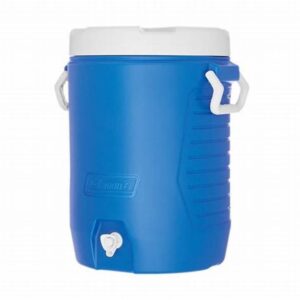
Beat the Heat: Water and Sports Drinks for Hydration

Article By: The Rutgers Farm Health and Safety Working Group: Kate Brown, Michelle Infante-Casella, Stephen Komar and William Bamka

When it comes to hydration, the U.S. National Academies of Sciences, Engineering, and Medicine recommends an adequate daily fluid intake of about 15.5 cups (3.7 liters) of fluids a day for men and about 11.5 cups (2.7 liters) of fluids a day for women. Even with this guidance, the amount varies from person to person. Also, when temperatures are hotter and when workloads increase so should drinking water, to prevent dehydration and to help maintain the proper body temperature especially when sweating.

Regular intake of water throughout the day and during the evening, at recommended amounts may help prevent a person from becoming excessively thirsty and also prevent dehydration. The choice of drinking sports drinks that contain electrolytes may be considered when a person’s activities dramatically increase, when they excessively sweat, if they show signs of dehydration, and/or heat stress.

Most sports drinks are designed to replenish glucose, fluids, and electrolytes (sodium, potassium, magnesium, calcium) lost during strenuous exercise or heavy workloads. Sports drinks may contain carbohydrates in the form of sugar, usually glucose, high-fructose corn syrup, or sucrose. Some contain no sugar and are “sweetened” instead with low-calorie sweeteners. The amounts of sugar and electrolytes in sports drinks are intended to allow for quick hydration and absorption.

It is important to note, persons with diabetes should be mindful of not intaking amounts of sports drinks that are high in sugar that could raise blood sugar to unhealthy levels. Additionally, persons with high blood pressure should be mindful when drinking sports drinks that are high in sodium – most are. Persons who eat a healthy diet should have enough glucose and electrolytes to maintain their health, even during extra activities and with proper water intake. Some studies show drinking too many sports drinks, especially when not performing vigorous exercise, can increase the risk of overweight/obesity and other health issues such as type 2 diabetes, cardiovascular disease, gout and the risk of dental cavities.

Water is the best choice to stay hydrated and it is the responsibility of each individual person to be sure they drink enough water to maintain their proper health.

Additional Information for New Jersey Farm Owners on H5N1 Bird Flu

The New Jersey Departments of Health (NJDOH) and Agriculture (NJDA) are closely monitoring the emerging situation with H5N1 bird flu and would like to provide important information to New Jersey farm owners. Please refer to the memo from NJDOH and NJDA: Information for Farm Owners and Farm Workers (highlights provided below). The public health risk of H5N1 bird flu is low, but people can sometimes get bird flu, usually after close, unprotected contact with infected animals. Poultry and livestock farmers and workers, veterinarians and veterinary staff, and slaughterhouse workers performing certain tasks on lactating dairy cattle are at increased risk of exposure to animals infected with bird flu viruses. Farms containing multiple species, particularly cattle, and/or poultry, should uphold biosecurity practices that reduce the risk of disease spreading between animals. Farm staff and visitors should adhere to recommended precautions regarding contact with other animals and follow personal protective equipment (PPE) protocols.

Rutgers Cooperative Extension is collaborating with NJDOH, following guidance from the CDC, to assist farm owners with preparedness by providing initial PPE supplies by request at county extension offices. To request PPE supplies and/or receive additional information, please contact your respective county extension office (https://njaes.rutgers.edu/county/). You will be asked to specify the quantity and type of PPE needed for your operation.

Refer to the Centers for Disease Control and Prevention’s flyer “Protect Yourself from H5N1 When Working With Farm Animals,” for more guidance on the application, removal, and disposal (or possible re-use) of each personal protective equipment item.

PPE from NJDOH includes the following as supply remains available:

  • Bouffant caps
  • Coveralls
  • Face shields and refills
  • Goggles
  • Gloves
  • N95 respirators
  • Gowns
  • Shoe covers

Webinar on the FSMA Final Rule on Pre-Harvest Agricultural Water – MAY 20, 2024 – Time: 1:00 PM – 2:00 PM ET

The U.S. Food and Drug Administration (FDA) invites the public to registerExternal Link Disclaimer for a webinar on the Standards for the Growing, Harvesting, Packing, and Holding of Produce for Human Consumption Relating to Agricultural Water (Agricultural Water Final Rule). The purpose of this webinar is to provide an overview of the final rule and answer pre-submitted and live questions.

Background

The final rule replaces certain pre-harvest agricultural water requirements for covered produce (other than sprouts) in the 2015 Produce Safety Rule with requirements for systems-based agricultural water assessments to determine and guide appropriate measures to minimize potential risks associated with pre-harvest agricultural water. Specifically, this rule:

  • Establishes requirements for agricultural water assessments that evaluate a variety of factors that are key determinants of contamination risks associated with pre-harvest agricultural water; this includes an evaluation of the water system, water use practices, crop characteristics, environmental conditions, potential impacts on water from adjacent and nearby land, and other relevant factors;


  • Includes testing pre-harvest agricultural water as part of an assessment in certain circumstances;


  • Requires farms to implement effective mitigation measures within specific timeframes based on findings from their assessments. Hazards related to certain activities associated with adjacent and nearby land uses are subject to expedited mitigation; and


  • Adds new options for mitigation measures, providing farms with additional flexibility in responding to findings from their pre-harvest agricultural water assessments.

The rule also finalizes the dates for compliance with the pre-harvest agricultural water requirements for non-sprout covered produce as follows:

  • For very small farms: 2 years, 9 months (April 5, 2007)
  • For small farms: 1 year, 9 months (April 6, 2026)
  • For all other farms: 9 months (April 7, 2025)

 Registration

The May 20 webinar is a virtual event. Registration is free and will be open through the day of the webinar. Persons interested in attending the public meeting must register at: FSMA Final Rule on Pre-Harvest Agricultural Water Webinar

If you have questions about the final rule that you wish to submit for possible discussion during the webinar, please note them during registration. All questions must be received by May 15, 2024, to be considered for discussion.

Effective today, 4/29/2024: USDA Federal Order on testing and reporting Influenza A in cattle

Please see the attached memo from Dr. Amar Patil, DVM, MVSc, Ph.D., Diplomate ACVM, Director of the Division of Animal Health/State Veterinarian: Federal Order Influenza A in Cattle Memo April 27, 2024

This order includes specific requirements regarding the testing of lactating cows for Bovine Influenza A Virus (H5N1) before interstate movement. New Jersey dairy producers needing pre-movement testing should contact their attending veterinarian to arrange for sample collection, which must occur no more than seven (7) days before interstate movement. The test sample required from lactating dairy cattle is milk/udder secretions from each quarter per individual cow (ensure each quarter is sampled, as there have been reports of only one quarter having the virus), which is then combined into one sample tube (a total volume of 3-10 ml of milk per animal should be submitted). The samples can be submitted to the NJDA Animal Health Diagnostic Laboratory (AHDL), a USDA-approved National Animal Health Laboratory Network (NAHLN) laboratory. Samples submitted to the NJDA AHDL will be tested by real-time polymerase chain reaction (PCR) assay for influenza A, which will be completed at no cost to the producers/veterinarians. Influenza A testing for interstate dairy cattle movement is an additional requirement to the preexisting livestock importation regulations in New Jersey, N.J.A.C. 2:3 Livestock and Poultry Importation. Persons moving dairy cattle are reminded that these requirements are in addition to the official identification, certificate of veterinary inspection (CVI), and testing requirements conventionally required for cattle movement. Please consult the receiving state to confirm all other interstate movement requirements prior to affecting an animal’s movement.

Listed below are particularly important aspects of the Federal Order and USDA guidance.

Mandatory Testing for Interstate Movement of Dairy Cattle:

  • Prior to interstate movement, non-clinical lactating dairy cows are required to receive a negative test for Influenza A virus at an approved National Animal Health Laboratory Network (NAHLN) laboratory in addition to meeting the importing state’s testing requirements and a certificate of veterinary inspection (CVI).
  • Non-clinical lactating dairy cows moving interstate direct to slaughter do not require influenza A testing but require a certificate of veterinary inspection (CVI).
  • Non-clinical lactating dairy cows moving interstate through auction markets in New Jersey to out-of-state slaughter do not require influenza A testing but require a certificate of veterinary inspection (CVI).
  • Non-clinical lactating dairy cows moving interstate to auction market in another state require influenza A testing and a certificate of veterinary inspection.
  • Nonlactating dairy cattle, including bull calves, dry cows, and heifers; and beef cattle are exempt from Influenza A testing for interstate movement.
  • Movement tests are valid for seven (7) days from the date of sample collection.
  • For imported cattle attending a New Jersey Fair/Show, Influenza A testing is required for lactating dairy cattle in addition to meeting requirements in the 2024 fair and show letter.
  • Owners of herds in which dairy cattle test positive for interstate movement will be required to provide epidemiological information, including animal movement tracing.
  • Sick cattle are not eligible for movement. Dairy cattle herds that have tested positive for influenza A must wait 30 days and retest negative to be eligible for movement.

Mandatory Reporting: Laboratories and state veterinarians must report positive Influenza A detection diagnostic results in livestock to USDA APHIS.