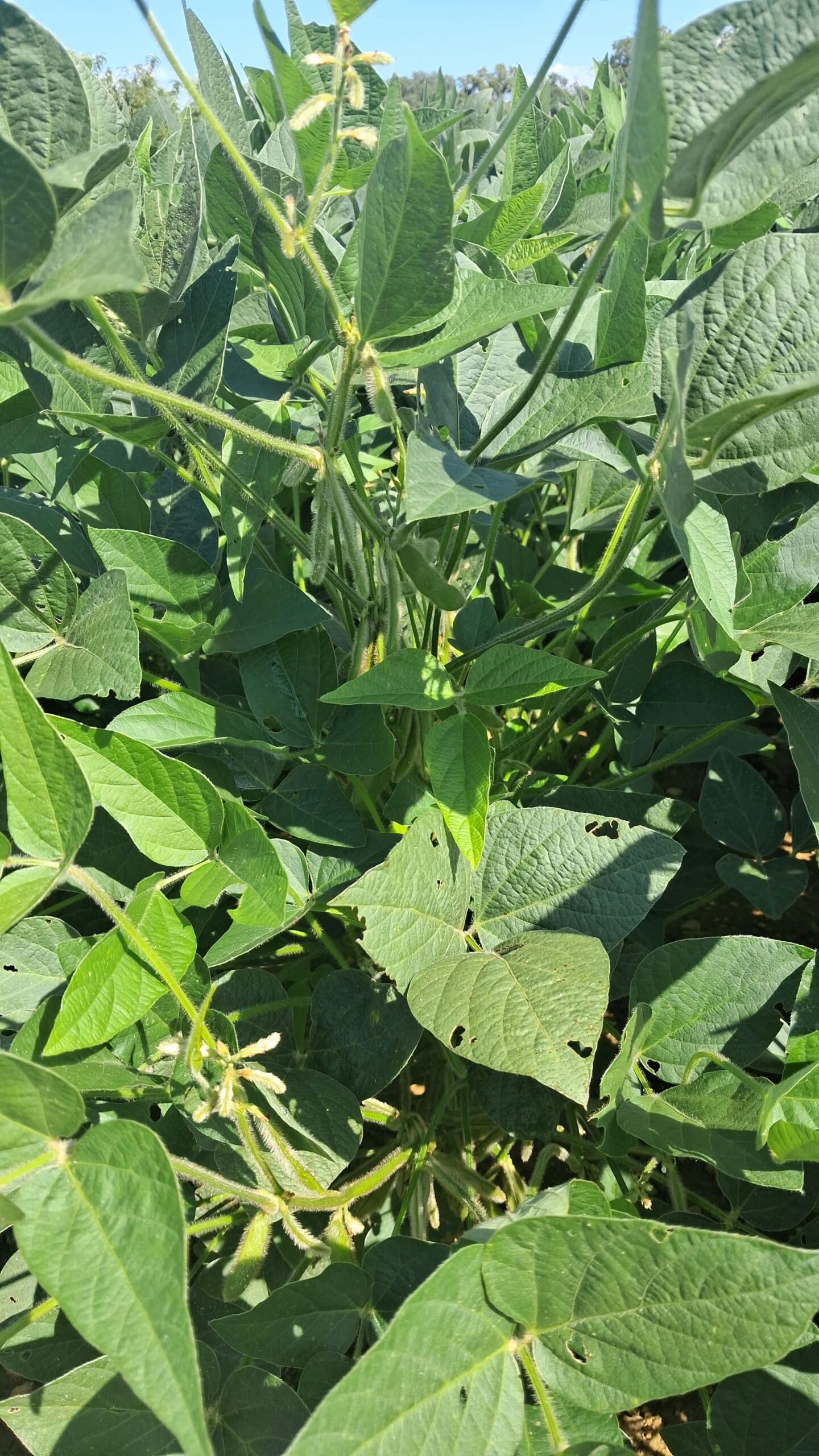
Fertigation: Improving Nitrogen Management In New Jersey Vegetable Crops

Nitrogen is one of the most important nutrients for vegetable production, but it can also be one of the easiest to lose (by leaching), especially on New Jersey’s sandy Coastal Plain soils. Heavy rainfall or excessive irrigation can move nitrogen below the crop root zone before plants have a chance to use it.

One way growers can improve nitrogen-use efficiency is through fertigation. Fertigation is the application of fertilizer through an irrigation system. In many New Jersey vegetable crops, including tomatoes, peppers, cucumbers, pumpkins, watermelons, and sweet corn, drip irrigation systems can be used to deliver small amounts of nitrogen throughout the season rather than applying all of it at planting.

Applying nitrogen in smaller, timely doses helps match crop demand and can reduce the risk of nutrient losses. Fertigation also gives growers more flexibility to adjust nitrogen programs based on crop growth and weather conditions. For example, following periods of heavy rainfall, growers can evaluate fields and make adjustments if additional nitrogen is needed.

Like any management practice, successful fertigation depends on proper irrigation scheduling. Applying too much water can still move nutrients below the root zone. However, when irrigation and fertilizer applications are properly managed, fertigation can be an effective tool to improve nitrogen efficiency, support crop productivity, and reduce nutrient losses.

When does fertigation make sense?

  • Fields equipped with drip irrigation systems.
  • High-value vegetable crops with season-long nutrient demand.
  • Sandy soils with greater leaching potential.
  • Situations where growers want flexibility to adjust nitrogen applications during the growing season

Common New Jersey crops where fertigation may be beneficial

Tomato, pepper, cucumber, pumpkin, watermelon, muskmelon, and sweet corn production systems that utilize irrigation.

Some common things to know when fertigating

  • Use only fully soluble fertilizers that can move easily through the irrigation system.
  • Base fertilizer selections on soil test results. Fields with high phosphorus (P) and potassium (K) levels may only require supplemental nitrogen during the season.
  • Common fertigation materials include soluble NPK fertilizers, calcium nitrate, and potassium nitrate.
  • Ensure fertilizer injectors are properly calibrated and matched to the flow rate of the irrigation system for uniform nutrient distribution.
  • Start irrigation first and allow the system to reach normal operating pressure before injecting fertilizer.
  • After fertigating, continue irrigating briefly to flush fertilizer from the drip lines.
  • Avoid over-irrigation, as excess water can move nutrients below the root zone and reduce fertilizer-use efficiency.
  • Regularly inspect drip lines, filters, and injectors to ensure the system is operating properly.
  • Calculate fertigation rates based on the actively cropped area rather than the entire field acreage.

References

  • Ernst, T., McWhirt, A., Zimmerman, T., Henderson, E., Duncan, M., and Lay-Walters, A. Basics of Drip Irrigation and Fertigation for Specialty Crops (FSA6160). University of Arkansas Cooperative Extension Service.
  • Johnson, G. 2010. Fertigating Drip Irrigated Vegetables. University of Delaware Cooperative Extension, Weekly Crop Update.
  • Kelley, L. 2026. Nitrogen Prices Spawn Interest in Fertigation. Michigan State University Extension.

Ag Drone Webinar, Tuesday, April 28th 7:00PM

Using Drones in Agriculture
Webinar
Date: April 28, 2026
Time: 7:00-8:30 PM

This program will highlight research projects, and real-world uses of drones in agricultural operations and will foster discussion and networking for anyone interested in using drones in their agricultural operation.

7:00 PM Drone Technology: A Tool for Crop Production and Management
– Stephen Komar, ANR Agent /Rutgers SARE Coordinator
7:25 PM Getting Started with Drones: Regulatory Compliance and Other Practical Considerations
– Adam Kyle, Warren Co. Com. College, Teaching Administrator, Precision Agriculture
7:50 PM Trusting the Data: Ground Truthing for Monitoring with Drones
– Michelle Infante-Casella, ANR Agent/Rutgers SARE Coordinator
8:15 PM Questions

TO JOIN THE WEBINAR PLEASE USE THE LINK OR QR CODE

https://go.rutgers.edu/agdrones 


Farm Safety Needs Assessment Closing May 1

The Rutgers Farm Health and Safety Working Group is conducting a survey to evaluate the priority needs of New Jersey farmers for training and resource development related to safety and health.  As a New Jersey farmer, you are invited to complete this survey by Friday, May 1, 2026. Click here to access the survey and learn more.  [Read more…]

North Jersey Commercial Vegetable Growers Meeting Program and Registration

NORTH JERSEY COMMERCIAL
VEGETABLE GROWERS MEETING

March 11, 2026
8:30 am – 3:00 pm

Harvest Hall, Alstede Farms
100 Route 24
Chester, NJ 07930

Program


Program Chair
Peter Nitzsche, Agriculture and Resource Management Agent
Cooperative Extension of Morris County

8:30 – Registration
Continental breakfast compliments of industry sponsors

9:00 – Welcome and Introductions

9:10 – Vegetable IPM Update
Amanda Quadrel, Senior Program Coordinator – Vegetable IPM, Cooperative Extension

9:40 – Developing a Targeted Worker Training Program for Produce Safety
Meredith Melendez, ANR Agent, Cooperative Extension of Mercer County

10:10 – Update on Farm Service Programs
Kristen Lake, County Executive Director, Farm Service Agency

10:20 – Jersey Fresh Marketing Update
Christine Fries, Coordinator of Agricultural Marketing, Division of Markets, NJ Dept. of Agriculture

10:30 – Strawberry Disease Management: How Environment Changes the Game
Nancy Sharma, Specialist in Fruit Pathology, Cooperative Extension

11:00 – Resistance Management and the Pesticide Label – What You Need to Know
Kate Brown, ANR Agent, Cooperative Extension of Somerset County

11:30 – What is New from Industry

11:40 – Next-Generation Weed Management Innovative Solutions for Specialty Crop Productions
Thierry Besancon is an Extension Specialist in Weed Science for Specialty Crops

12:10 – LUNCHEON (pre-registration required)

1:00 – Updates on Disease Control in Vegetable Crops
Andrew Wyenandt, Specialist in Vegetable Pathology, Cooperative Extension

1:30 – Update on Rutgers/NJAES Agrivoltaics Crops Research
Daniel Ward, Associate Research Professor, Dept. of Plant Biology, NJAES

2:00 – New and Emerging Vegetable Pests
Patricia Prade, Extension Entomologist, Penn State Extension

2:30- Specialty Winter Squash for NJ Growers
David Hlubik, ANR Agent, Cooperative Extension of Burlington County

3:00 – Pesticide Recertification Credits and Adjourn.  Attendees must be present for the entire program in order to apply for NJDEP credits

NJDEP PESTICIDE RECERTIFICATION CREDITS ARE ANTICIPATED

North Jersey Veg Meeting Registration 2026 then fax or email to:
Fax: (908) 806-4735
E-mail: kfrey@co.hunterdon.nj.us

PRE-REGISTRATION BY MARCH 4, 2026 REQUIRED FOR LUNCH

Directions:
Harvest Hall, Alstede Farms 100 Route 24, Chester, NJ 07930
Look for the Harvest Hall sign at the entrance to the driveway.
The entrance to the Harvest Hall driveway is directly across the street from Chubb Park ~¼ mile east of the farmstand.

If you have any question please call Kim Crommelin: (908)-788-1338


Assistance for Specialty Crop Farmers (ASCF) Program: Contact FSA and Reporting Due March 13, 2026

U.S. Secretary of Agriculture Brooke L. Rollins announced that the U.S. Department of Agriculture (USDA) is providing $1 billion in Assistance for Specialty Crop Farmers (ASCF) Program assistance for specialty crops and sugar, commodities not covered through the previously announced Farmer Bridge Assistance (FBA) program. These one-time bridge payments will help address market disruptions, elevated input costs, persistent inflation, and market losses from foreign competitors engaging in unfair trade practices that impede exports. Specialty crop producers have until March 13, 2026, to report 2025 acres to USDA’s Farm Service Agency (FSA).

“President Trump has the backs of our farmers, and today we are building on our Farmer Bridge Assistance program with the Assistance for Specialty Crop Farmers (ASCF) Program. Our specialty crop producers continue to feel the negative effects of four years under the Biden Administration, suffering from record inflation, a depleted farm safety net, and delayed disaster assistance,” said Secretary Rollins. “President Trump and the entire cabinet are working every day to fight bidenflation and lower prices for consumers. If our specialty crop producers are not economically able to continue their operations, American families will see a decrease in the food they rely on, wholesome and nutritious fruits and vegetables. Putting Farmers First is essential to the Make America Healthy Again movement and we are doing both at USDA by expanding market opportunities and improving the farm economy for all producers. Today’s specialty crop announcement builds on our efforts to improve markets for real food into American schools, institutions, and family dinner tables.”

The Assistance for Specialty Crop Farmers Program is authorized under the Commodity Credit Corporation Charter Act and will be administered by FSA.

Eligible Specialty Crops

ASCF-eligible specialty crops include: (A) Almond, Apple, Apricot, Aronia berry, Artichoke, Asparagus, Avocado (B) Banana, Bean (Snap or green; Lima; Dry edible), Beet (Table), Blackberry, Blueberry, Breadfruit, Broccoli (including Broccoli Raab), Brussels Sprouts (C) Cabbage (including Chinese), Cacao, Carrot, Cashew, Cauliflower, Celeriac, Celery, Cherimoya, Cherry, Chestnut (for Nuts), Chive, Citrus, Coconut, Coffee, Collards (including Kale), Cranberry, Cucumber, Currant (D) Date, Dry Edible Beans and Peas* (E) Edamame, Eggplant, Endive (F) Feijou, Fig, Filbert (Hazelnut) (G) Garlic, Gooseberry, Grape (including Raisin), Guava (H) Horseradish (K) Kiwi, Kohlrabi (L) Leek, Lettuce, Litchi (M) Macadamia, Mango, Melon (All Types), Mushroom (Cultivated), Mustard and Other Greens (N) Nectarine (O) Okra, Olive, Onion, Opuntia (P) Papaya, Parsley, Parsnip, Passion Fruit, Pea (Garden; English or Edible Pod; Dry edible), Peach, Pear, Pecan, Pepper, Persimmon, Pineapple, Pistachio, Plum (including Prune), Pomegranate, Potato, Pumpkin (Q) Quince (R) Radish (All Types), Raspberry, Rhubarb, Rutabaga (S) Salsify, Spinach, Squash (Summer and Winter), Strawberry, Suriname Cherry, Sweet Corn, Sweet Potato, Swiss Chard (T) Taro, Tomato (including Tomatillo), Turnip (W) Walnut, Watermelon

*Dry edible beans and peas covered by FBA will not be eligible for ASCF.

ASCF payments are based on reported 2025 planted acres.

Eligible farmers should ensure their 2025 acreage reporting is factual and accurate by 5 p.m. ET on March 13, 2026. Commodity-specific payment rates will be released by the end of March. Crop insurance linkage will not be required for the ASCF Program. However, USDA strongly urges producers to take advantage of the new One Big Beautiful Bill Act (OBBBA) risk management tools to best protect against price risk and volatility in the future.

More information on ASCF is available online at www.fsa.usda.gov/fba or producers can contact their local FSA county office.

Farm Safety Needs Assessment

The Rutgers Farm Health and Safety Working Group is conducting a survey to evaluate the priority needs of New Jersey farmers for training and resource development related to safety and health.  As a New Jersey farmer, you are invited to complete this survey. Click here to access the survey and learn more.  [Read more…]