ALERT – Potential for Ambrosia Beetle flight early next week – if you regularly have issues with this pest – take notice

The last few seasons we have seen an upswing in ambrosia beetle activity in nursery production, principally in field grown nursery stock of thin barked trees (commonly – dogwood, honey locust, magnolia, maple, redbud, zelkova, styrax, Prunus spp.). Based on evidence from multiple lines of trap collection data throughout the United States, adult female flights appear to be correlated to consecutive days (2-3) of 70F temperatures (highs) with daily average air temps around 65F (max+min/2). That is extremely close to what we will have throughout most areas of NJ early next week, based on 10-day weather forecasts. Note: this is historically very early for treatment of this pest and it will get colder the following days, however, we have missed control opportunities over multiple years so take treatment into consideration if you regularly encounter this pest.

Consider using pyrethroids in your production areas next Monday or Tuesday (weather dependent) if this pest has been a regular problem.

Contact insecticides: 

  • Pyrethroids [3A]: –thrins (bifenthrin, permethrin, etc.) – Pyrethroids longer lasting residual activity is why these materials are so effective against ambrosia beetles. 
  • Systemic insecticides DO NOT WORK


Potential for adult female ambrosia beetle flight 2026

Stay informed:

  • Sign up for the 2026 – Rutgers Ornamental IPM Program – click here to sign up
  • First webinar 4/14/26
  • Program is free, but registration is required – Registration includes:
    • Site visit to your ornamental nursery/farm from Rutgers agents
    • Delivered printed IPM resources (Guides, factsheets, bulletins)
    • Free pheromone & sticky trap kit + guidance on setup/monitoring (for commercial nursery/greenhouse and Christmas tree farms)
    • Access to live bi-weekly webinars (Zoom)
    • (First session TUESDAY 4/14 @ 12PM)
    • Every Second and Fourth, Tuesday, April through September

[Read more…]

Approaching boxwood blight season – 2026 (threat this week in Central and Southern NJ)

March weather is always unpredictable, however, if we have sustained periods of increased temperatures (above 50F) and spring rains, boxwood blight (BWB) can become an issue quickly.

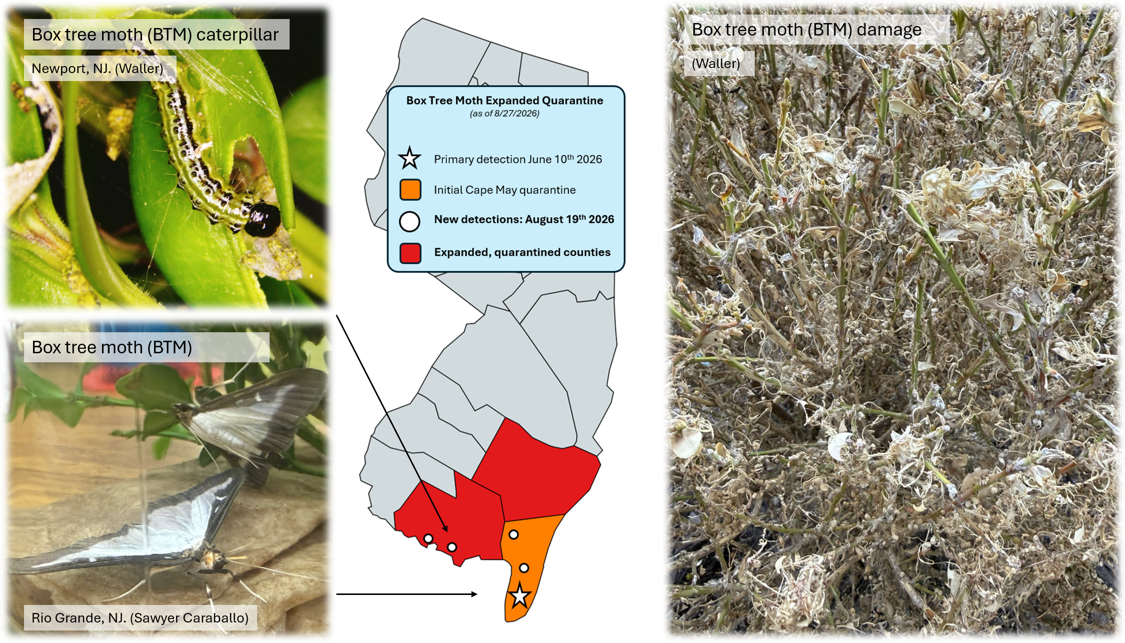
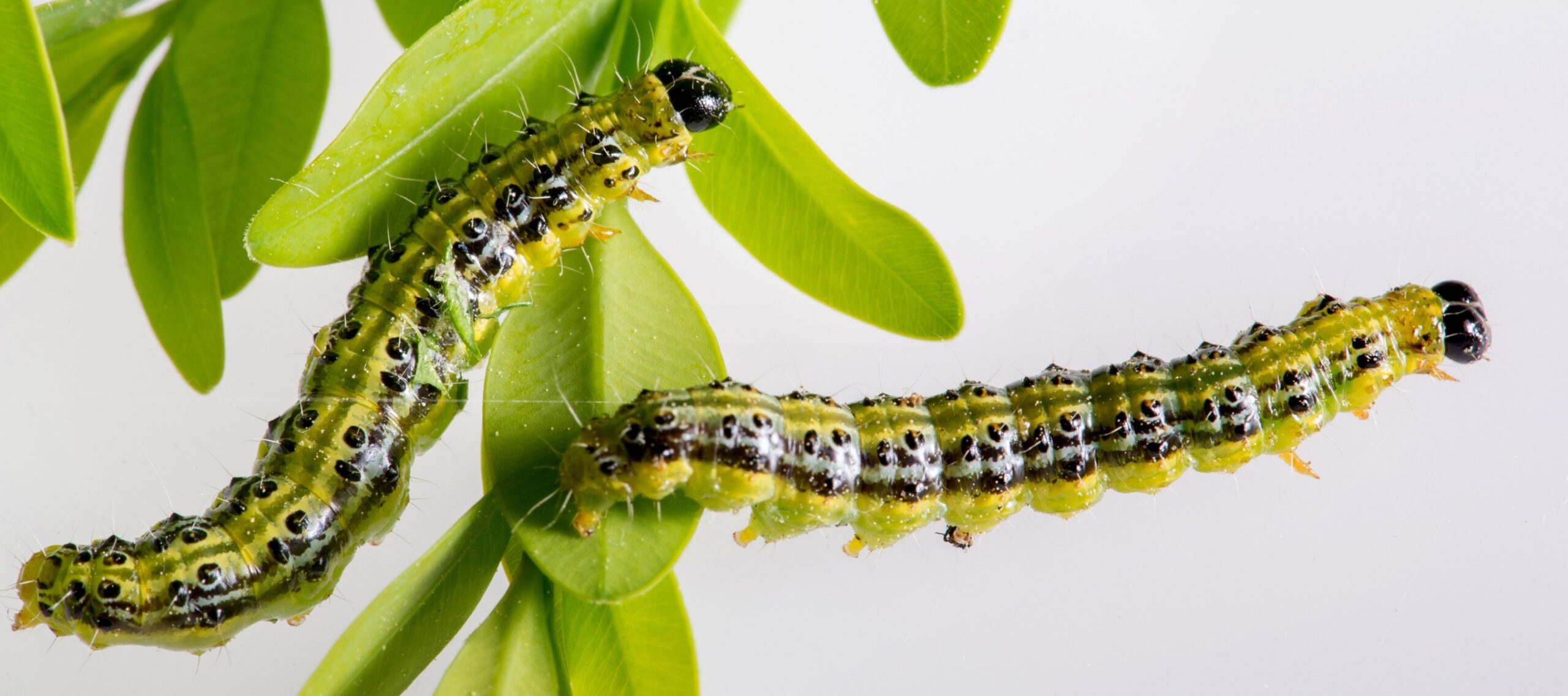
[pictorial tri-fold] Common Boxwood Pests and Diseases (click-here). This includes Box Tree Moth images. Print the PDF out double-sided, then fold.

If you suspect Boxwood Blight and would like to have this verified – please contact the Rutgers Plant Diagnostic Laboratory (click here) for sample submission instructions

Boxwood Blight Risk Assessment as of 3/2/2026
Region Location Station

CODE

MON TUE WED THU FRI SAT
2-Mar 3-Mar 4-Mar 5-Mar 6-Mar 7-Mar
Southern Upper Deerfield NJ50 Very Low  Very Low  Very Low  Infection Risk Low Low 
Southern Vineland NJ73 Very Low  Very Low  Low  Infection Risk Infection Risk Infection Risk
Southern Millville KMIV Very Low  Very Low  Low  Infection Risk Low  Low 
Southern Bridgeton D4116 Very Low  Very Low  Very Low  Infection Risk Low  Low 
Southern Mays Landing G4661 Very Low  Very Low  Low  Infection Risk Low  Low 
Central Howell / Freehold NJ10 Very Low  Very Low  Very Low  Low  Low  Low 
Central Princeton F0303 Very Low  Very Low  Very Low  Low  Infection Risk Very Low 
Central Somerville F6261 Very Low  Very Low  Very Low  Low  Infection Risk Infection Risk
Northern High Point NJ59 Very Low  Very Low  Very Low  Very Low  Low  Low 
Northern Randolph AU137 Very Low  Very Low  Very Low  Very Low  Low  Low 
Northern Belvidere E7133 Very Low  Very Low  Very Low  Very Low  Low  Very Low 
Please check your local boxwood blight risk at (https://uspest.org/risk/boxwood_app)  

There is a minor potential for boxwood blight infections this Thursday, Friday, & Saturday throughout Southern and Central NJ. Incoming rains, coupled with warmer temperatures may initiate boxwood blight infections this week. This will likely extend into the following week with anticipated higher temperatures.

  • It is time to begin protective fungicide applications in boxwoods throughout the state if you have not already done so. 

  • If BWB is important to your business Use the USPEST – PUSH Alerts – (click here) – to setup weekly email alerts. Create an account, watch the tutorial, and then set up your subscriptions. You select which locations (as many as you like), days you want to receive emails, and what you would like to receive alerts about (BWB and a variety of other pests and diseases). Rutgers is not directly affiliated, however this is an incredible tool. 

[Read more…]

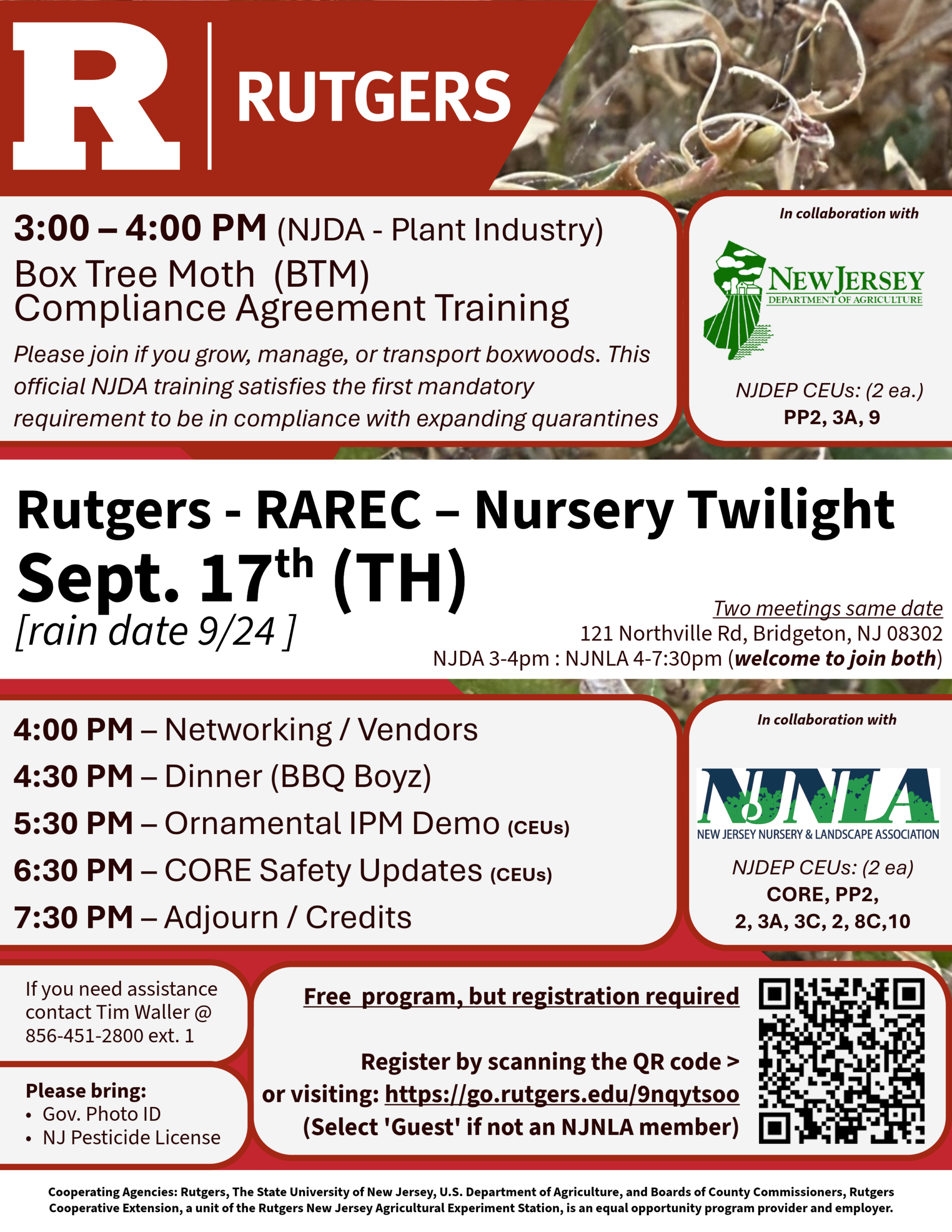
In-person CEU session – 10/20/25 – Cumberland Co. RCE

‘Core Pesticide Topics in Agriculture’ 
NJDEP Approved Credits [4 units each – CORE] [3 units each – PP2, 1A, 3A, 10] [1 unit each – 3B, 6B, 8C]

Register by calling (only): 856-451-2800 ext. 1

Date: 10/20/2025 (Monday)
Location: Rutgers Cooperative Extension – Cumberland County
Address: 291 Morton Ave. Millville, NJ 08332
Time: 5:30pm sign-in, 6:00-8:15pm lectures (please arrive prior to 6:00pm)
Cost: $30 fee per participant – only cash or checks will be accepted at the start of the event. Please make checks payable to “Rutgers The State Univ. of NJ”. Receipts will be available.
Seminars: (6-7pm) Back to Basics – Pesticide USE & (7:15-8:15pm) How Chemicals Work and Which to Use – Speaker: Tim Waller, PhD. 


Note: October 7th – Ornamental Twilight meeting has been postponed until Spring 2026

Save the Dates – Sept. 23 (Final IPM webinar), Oct 7 (POSTPONED), Oct 22 (Core Credit, In-person)

Join us for the Final Ornamental IPM webinar Tuesday 9/23/25 

Still time to Sign up (click here) for the final remaining 2025 session

Topics to be covered:

  1. Beneficial insect: Preying mantids​
  2. Mums   ​
  3. White pine aphid​
  4. Eastern spruce gall adelgid​
  5. Cooley spruce gall adelgid​
  6. Hemlock woolly adelgid​
  7. Spruce spider mite​
  8. Southern red spider mite​
  9. Hemlock rust mite​
  10. Fall practices for sanitation
  11. Importance of fall irrigation in field ​settings​
  12. Using horticultural dormant oil​
  13. Questions to consider regarding​ your nursery IPM monitoring ​program

Please visit our new –Rutgers Ornamental IPM Program Website (click here)


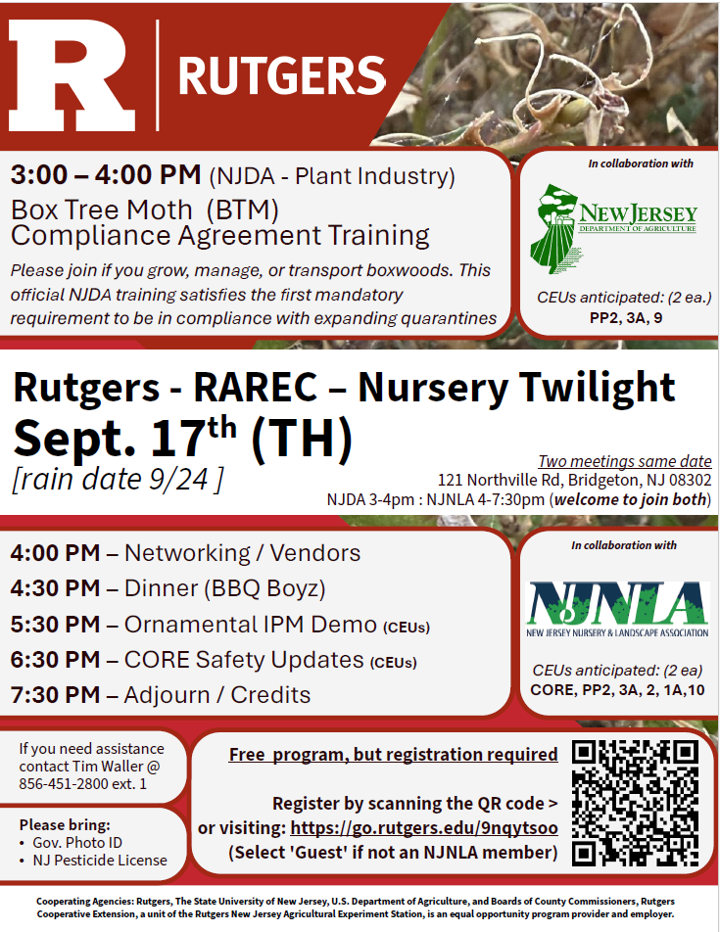
More details and registration links to follow in the coming days – once CEUs and collaborators are finalized. NOTE: CEUs have been applied for but those listed below are not guaranteed. Both events are in-person in Cumberland County, NJ.   

Final two Ornamental IPM Webinars 9/9 (Ticks 4 Science) and 9/23 (final pest updates for 2025) + 8/26 webinar upload

Join us for the next session Tuesday 9/9/25 

  • Emily Fontaine​ (Project Manager, Rutgers NJ Ticks 4 Science)


Previous webinars:


Ornamental IPM Webinar – Next Session Tuesday 8/26 plus upload from 8/12 RU PDL guest

Still time to Sign up for the remaining 2025 sessions- Rutgers Ornamental IPM Program

Please visit our new –Rutgers Ornamental IPM Program Website (click here)

Join us for the next session Tuesday 8/26/25 

Topics covered:

  • 1.Beneficial insect: Dragonflies​
  • 2. Leafcutter bees                   ​
  • 3. Fleahopper​
  • 4. Nostoc​
  • 5. Nickel deficiency in River Birch​
  • 6. Tulip tree & Magnolia soft scales​
  • 7. Douglas-fir needle midge​
  • 8. Slugs/snails​
  • 9. Banded ash clearwing moth borer​
  • 10. Verticillium wilt

Previous webinars: