 EVELYNN is a new, excellent, semi-free stone with a firm, yellow-fleshed peach variety. It is a low-acid, sweet to very sweet peach that ripens with Redhaven. Fruit is large, uniform, and has attractive, complete scarlet coloring, with smooth, low pubescence skin. It retains firmness on trees and during storage for longer than Redhaven, giving extra days for marketing the fruit. This variety is consistently productive and exhibits a low susceptibility to bacterial spot and split pits. Fruit skin doesn’t develop ‘inking’ even when it turns dark red. Bloom is generally delayed and extended, and, as a result, it produces a normal crop even in the frost years. Few varieties tick as many boxes as Evelynn. The fruit characteristics of Evelynn and other popular varieties in this season are compared in Table 1. [Read more…]
Archives for July 2025
Late July Peach Varieties for New Jersey – New and Standard
Late-July Nectarine Varieties for New Jersey – New and Standard
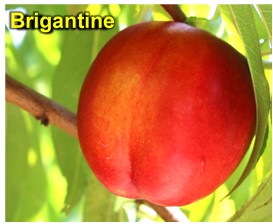 BRIGANTINE is a new yellow-fleshed nectarine with semi-freestone, ripening July 20-25, just before ‘Summer Beaut’ and ‘Redhaven’. It has a full, glossy scarlet coloring with a slight golden-yellow background. Fruit skin is consistently free from blemishes. It has a nice, sweet, and acidic flavor, and firm, melting flesh. Flesh has traces of red. This is a very productive tree with low susceptibility to bacterial spot, while the fruit has slight to moderate susceptibility to bacterial spot. Fruit hangs well. Fruit characteristics of Brigantine and other late-July nectarines are listed below in Table 1. [Read more…]
Quick reviews of fungicide chemistries, FRAC groups, and fungicide resistance management
Did you know that first EBDC fungicide was registered for use in vegetable crops in 1964 followed by chlorothalonil in 1966. Historically speaking, the first New Jersey Vegetable Production Recommendations Guide was produced in 1969 and was only 33 pages long (it’s 502 pages now). Things have changed significantly over the past 55 years when it comes to pest management! For a quick review on fungicides, FRAC groups, and managing fungicide resistance development please click on the links below.
Using tank mixes and fungicide rotations and information on FRAC group 4, FRAC group 7, and FRAC group 3 and FRAC group 11 fungicides.
As a reminder, the new 2024-2025 Mid-Atlantic Commercial Vegetable Production Recommendations Guide can be purchased at most county offices and is also available for FREE on-line here!
Identifying and controlling leaf mold in high tunnel & greenhouse tomato production
Leaf mold occasionally appears in high tunnel or greenhouse tomato production in New Jersey. However, under ideal conditions the disease will develop in field-grown crops. The fungus will cause infection under prolonged periods leaf wetness and when relative humidity remains above 85%. If relative humidity is below 85% the disease will not occur. Therefore, the proper venting of high tunnels and greenhouses on a regular basis is important. The pathogen can survive (overwinter) as a saprophyte on crop debris or as sclerotia in the soil. Conidia (spores) of the fungus can also survive up to one year in the soil.
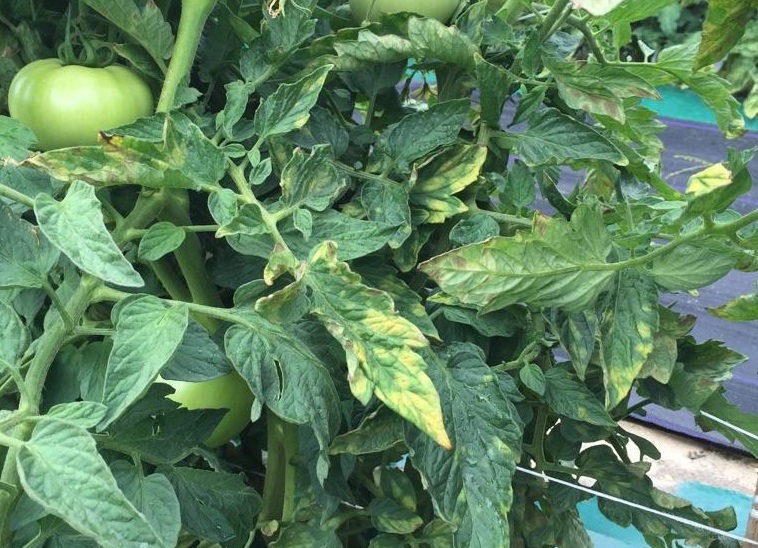
Symptoms of leaf mold on infected tomato plant. Note bright yellow leaves and olive-green spores developing on undersides of leaves.
Fruit IPM Report July 29, 2025
Peach:
Diseases: Brown rot: Brown rot is appearing in ripening fruit throughout the state. Highly effective rot materials such as DMI’s (FRAC group 3) and Strobilurins (FRAC group 11) should be applied beginning 3 – 4 weeks prior to harvest. See the NJ Commercial Tree Fruit Production Guide for more information.
Tarnished Plant Bugs; and Other Cat-facing Insects: Cat-facing insects remain active in orchards. The percent fruit injury observed remains low (average <1%).
Oriental Fruit Moth: A biofix point for OFM was set on 4/2 for southern counties and 4/17 in northern counties. See below for timings for third generation.
|
|||||||||||||||||||||||||
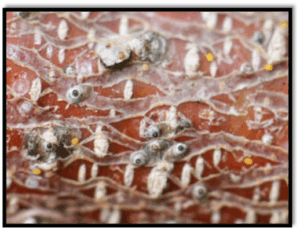
Figure 1. San Jose scale crawlers (orange motile insects) on peach. Photo by Dave Schmitt.
Scale Insects: Numbers of scale crawlers on traps in southern county orchards are increasing indicating the second generation has emerged (Figure 1).
Crawler emergence will continue through August. Esteem and Centaur are both good scale materials that should be applied at the start of crawler emergence. These materials should only need one application. Other options include: Assail, Belay, Actara (Group 4A): Closer (Group 4C); Sivanto (Group 4D) and Venerate. These products may need more than one application. Venerate is a good option as a pre-harvest treatment with a 0-day PHI.
Japanese Beetles: Japanese beetles and June bugs have been observed feeding on fruit throughout the state. Adults are attracted to ripening fruit. Insecticides that are effective against Japanese beetles and june bugs are products that contain imidacloprid (Admire pro and Leverage 360), Danitol, and Sevin.
Apples and Pears:
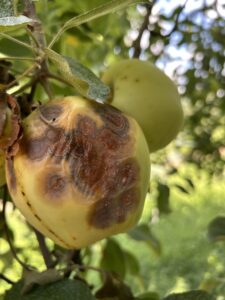
Figure 2. Bitter rot infection on maturing apple fruit.
Diseases: Various rots but mostly bitter rot is present in orchards throughout the state (Figure 2).
Research has suggested products such as Merivon, Luna Sensation, Inspire Super, Omega, and Aprovia are effective rot materials to be alternated with broad-spectrum fungicides such as captan and ziram. Phosphorous acid products such as Prophyt or Rampart can be added to captan sprays to improve control.
Brown Marmorated Stink Bugs: Brown Marmorated Stink bugs are being captured at low levels in orchards statewide. Both adults and nymphs are present. See the NJ Tree Fruit Production guide for effective materials.
Codling Moth (CM): Second generation timings are updated below. Adult male trap captures continue and increased slightly in some southern county orchards last week. Additional applications should be made if trap captures exceed 5 moths/trap.
| Codling Moth Degree Day Timing – Second Generation | ||||||||
| Application and Insecticide Type | ||||||||
| County Area | Biofix | Rimon:
75-100DD + 14-17 days later
|
Intrepid
1150 + 1450 DD Diamides – Altacor, Voliam mixes: (150-200 DD) |
Madex
1250 DD + every 7-9 days during brood hatch (later if first spray is an IGR) |
Standard Insecticides – Delegate, Avaunt, OP’s, carbamates, pyrethroids
1250 DD + 1550 DD
|
|||
| DD | 1150 | 1450 | 1250 | 1250 | 1550 | |||
| Southern | April 28 | N/A | N/A | past | past | past | past | past |
| Northern | April 30 | N/A | N/A | past | past | past | past | past |
Scale Insects: See earlier statement on scale insects in peaches.
Phenology Table: Based on annual observations made in Gloucester County.
| Pest Event or Growth Stage | Approximate Date | 2025 Observed Date |
| Bud Swell (Redhaven/PF-17) | March 23 +/- 15 Days | March 30 |
| 1/4″ Green Tip Red Delicious | March 31 +/- 13 Days | March 30 |
| Pink Peach (Redhaven/PF-17) | April 4 +/- 15 Days | April 1 |
| Tight Cluster Red Delicious | April 9 +/- 13 Days | April 5 |
| Full Bloom Peach (Redhaven/PF-17) | April 9 +/- 14 Days | April 10 |
| Pink Apple (Red Delicious) | April 14 +/- 12 Days | April 16 |
| Full Bloom Apple (Red Delicious) | April 22 +/- 11 Days | April 25 |
| Petal Fall (Redhaven) | April 22 +/- 10 Days | April 19 |
| Petal Fall (Red Delicious) | April 27 +/- 13 Days | May 2 |
| Shuck Split (Redhaven) | April 30 +/- 11 Days | April 26 |
| Pit Hardening | June 15 +/- 9 Days | June 15 |
Tree Fruit Trap Captures – Southern Counties
| Week Ending | STLM | TABM-A | CM | BMSB | OFM-A | DWB | OFM-P | TABM-P | LPTB | PTB |
| 4/5/2025 | 0 | 0 | 0 | 0 | 0 | 0 | 0 | 0 | 0 | 0 |
| 4/12/2025 | 0 | 0 | 0 | 0 | 6 | 0 | 0 | 0 | 0 | 0 |
| 4/21/2025 | 0 | 0 | 0 | 0 | 36 | 0 | 1 | 0 | 0 | 0 |
| 4/27/2025 | 25 | 0 | 0 | 0 | 24 | 0 | 5 | 0 | 1 | 0 |
| 5/2/2025 | 517 | 0 | 4 | 0 | 12 | 0 | 6 | 0 | 13 | 0 |
| 5/9/2025 | 159 | 4 | 10 | 0 | 3 | 16 | 5 | 4 | 46 | 0 |
| 5/16/2025 | 91 | 11 | 6 | 0 | 1 | 36 | 2 | 14 | 69 | 0 |
| 5/23/2025 | 299 | 21 | 3 | 0 | 1 | 23 | 1 | 26 | 23 | 0 |
| 5/30/2025 | 399 | 14 | 2 | 0 | 0 | 41 | 1 | 11 | 10 | 3 |
| 6/6/2025 | 733 | 13 | 1 | 0 | 0 | 36 | 2 | 12 | 29 | 1 |
| 6/13/2025 | 684 | 19 | 2 | 1 | 0 | 81 | 2 | 17 | 22 | 8 |
| 6/20/2025 | 724 | 24 | 2 | 0.5 | 1 | 60 | 1 | 23 | 19 | 12 |
| 6/27/2025 | 932 | 5 | 1 | 0.8 | 1 | 40 | 0 | 5 | 24 | 14 |
| 7/4/2025 | 643 | 0 | 0 | 0.75 | 1 | 17 | 0 | 0 | 6 | 16 |
| 7/11/2025 | 194 | 0 | 0 | 0.5 | 0 | 18 | 8 | 0 | 24 | 15 |
| 7/18/2025 | 190 | 0 | 0 | 1 | 0 | 16 | 2 | 1 | 5 | 12 |
| 7/25/2025 | 222 | 2 | 1 | 1.6 | 0 | 16 | 1 | 2 | 12 | 21 |
Tree Fruit Trap Captures – Northern Counties
| Week Ending | STLM | TABM-A | CM | BMSB | OFM-A | DWB | OFM-P | TABM-P | LPTB | PTB | AMBROSIA BEETLE |
| 4/5/2025 | 387 | 0 | 0 | 0 | 0 | 0 | 0 | 0 | 0 | 0 | 0 |
| 4/21/2025 | 435 | 0 | 0 | 0 | 0 | 0 | 1.3 | 0 | 0 | 0 | 0 |
| 4/27/2025 | 26 | 0 | 0 | 0 | 0 | 0 | 25 | 0 | 0 | 0 | 72 |
| 5/2/2025 | 86 | 0 | 0.33 | 0 | 72.5 | 0 | 47.2 | 0 | 0 | 0 | 136 |
| 5/9/2025 | 56 | 0 | 5.3 | 0 | 58.8 | 0 | 22.9 | 0 | 0 | 0 | 145 |
| 5/16/2025 | 13.75 | 2.6 | 7.3 | 0 | 4 | 0 | 5 | 0 | 0 | 0 | 50.5 |
| 5/23/2025 | 4.8 | 10.3 | 10.5 | 0 | 0.6 | 31.25 | 4.2 | 0 | 14.6 | 1 | 22.2 |
| 5/30/2025 | 2.2 | 4.8 | 1.8 | 0 | 0 | 12.4 | 9.6 | 0 | 9.6 | 1.9 | 22.1 |
| 6/6/2025 | 3 | 4.83 | 2.8 | 0.25 | 0 | 20 | 4.1 | 0 | 21.2 | 1.8 | 40.3 |
| 6/13/2025 | 65 | 20 | 11.4 | 0.6 | 0 | 12.3 | 4 | 0 | 10.5 | 1.5 | 59.2 |
| 6/20/2025 | 26 | 26 | 8 | 0.75 | 1 | 13 | 4.5 | 0 | 11 | 0.75 | 52 |
| 6/27/2025 | 145 | 19 | 6 | 1.3 | 6 | 35 | 5.4 | 0 | 16 | 1.6 | 38 |
| 7/4/2025 | 212 | 6 | 3 | 0.6 | 12.5 | 40 | 2 | 0 | 8.4 | 1.1 | 27 |
| 7/11/2025 | 125 | 2.5 | 0.5 | 0.14 | 5 | 41 | 3 | 0 | 20 | 4.5 | 48 |
| 7/18/2025 | 64 | 0.5 | 0.4 | 0.16 | 2 | 42 | 2 | 0 | 8.4 | 1.9 | 64 |
| 7/25/2025 | 110.5 | 0.4 | 2.3 | 0.24 | 7.5 | 44 | 4 | 0 | 6.8 | 12.2 | 69 |
Grape: Grapes are beginning veraison in southern counties. Third generation grape berry moths are actively flying and larvae have been observed feeding in grape bunches.
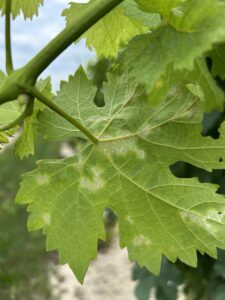
Figure 3. Downy mildew on the underside of a grape leaf.
Refer to the Commercial Grape Pest Control Recommendations for New Jersey for management options. Spotted lanternfly adults are now being reported in vineyards in southern NJ. Japanese beetles are actively feeding on foliage. Stink bugs have also been observed in vineyards in southern counties. Disease management continues to focus on downy mildew (Figure 3).
Blueberry: Spotted-wing drosophila trap captures remain high at an average of 52 males and 35 in Atlantic and Burlington Counties, respectively. Treatments for spotted-wing drosophila should continue on a 7-day schedule where susceptible fruit remain in the field. For management recommendations, refer to Commercial Blueberry Pest Control Recommendations for New Jersey. For weekly reports on blueberry pests and recommendations read the Rutgers Blueberry Bulletin.
What’s up with corn smut!
There have been numerous reports of corn smut throughout the state of New Jersey the past few weeks.
Corn smut (also called common smut), caused by Ustilago maydis, is found infecting corn throughout most of the world. In most years, corn smut is reported in New Jersey , but reports are limited to just a few plantings and just a few ears of corn. Corn smut gets its name from the sooty, black masses of teliospores that found on infected plants. Symptoms are tumor-like galls that vary in size from less than 1 cm to more than 30 cm in diameter. All meristematic tissues are susceptible to infection; and galls can develop on ears, tassels, stalks, shoots, and mid-ribs of infected plants (Pataky and Snetselaar, 2006). From the time of infection, it takes about 10 days for early symptoms to show up; followed up with a maturation of black spore masses within swollen galls about three weeks after infection (Figure 1).
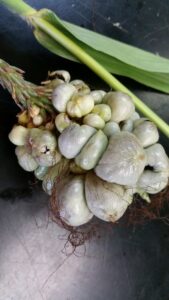
Figure 1. Corn smut.
The fungus can overwinter as teliospores in crop debris or the soil and remain viable for many years. It is thought that the teliospores (i.e. the black spores – it is estimated that up to 200 billion spores are produced in a medium-size gall!) are unimportant in the summer they are produced, but more importantly act to overwinter and cause infections the next growing season (Pataky and Snetselaar, 2006) .
There is no general agreement on weather conditions that are most favorable for common smut, although most reports indicate that common smut is prevalent following rainy, humid weather (Pataky and Snetselaar, 2006). Galls on leaves and stalks of seedlings often are observed following strong thunderstorms with heavy winds, especially when plants are injured by blowing soil (Pataky and Snetselaar, 2006). Factors that reduce the production of pollen or inhibit pollination also increase the occurrence of ear galls of common smut. Thus, hot, dry, drought-like conditions often cause asynchronous pollen production and silk emergence which results in poor pollination and common smut may be prevalent if U. maydis is readily disseminated to stigmas of unfertilized ovaries during or immediately following these hot, dry conditions (Pataky and Snetselaar, 2006). Thus, some associate the occurrence of ear galls with droughts although the droughts probably affect the prevalence of ear galls primarily by increasing the number of unpollinated ovaries with rapidly growing silks (Pataky and Snetselaar, 2006).
Although there has been a great amount of research in controlling corn smut with fungicides (c0nventional and biological), adjusting fertility, crop rotation, sanitation, and seed treatments, the best management practice for limiting losses due to corn smut are planting smut resistant corn varieties (Pataky and Snetselaar, 2006). Although, none are completely resistant to the pathogen.
Unfortunately, for much of New Jersey this summer the weather conditions (the extended drought-like conditions in July) followed by the heavy isolated rains leading most likely to poor pollination periods and timing of corn smut infections led to the situation we are seeing now. Growers with significant smut issues might consider removing and destroying smutted ears to reduce inoculum loads, plan on choosing sweet corn varieties with resistance next year, and changing irrigation practices to help reduce crop stress during pollination periods.
References:
Pataky, J. and Snetselaar, K. 2006. Common smut of corn (Syn. boil smut, blister smut). Plant Disease Profiles, The Plant Health Instructor. Volume 6. <doi.org/10.1094/PHI-I-2006-0927-01>
For more detailed information on corn smut, it’s biology, and history please see the link to the following article referenced above by Jerald Pataky and Karen Snetselaar at The Plant Health Instructor Website hosted by APS.
https://www.apsnet.org/edcenter/disandpath/fungalbasidio/pdlessons/Pages/CornSmut.aspx
