Tree Fruit Phenology Update
Tree fruit development across New Jersey continued to progress over the past week, and the impacts of the recent freeze event are now becoming more clearly defined. Across much of the state, significant injury to blossoms and young fruit has been confirmed, with many orchards reporting substantial crop loss. The extent of damage remains highly variable by location, elevation, variety, and phenological stage at the time of the freeze, with the most severe injury observed in low-lying areas and blocks that were at full bloom or petal fall.
At this stage, surviving fruitlets are becoming easier to identify, although some additional drop is still expected over the coming week. Growers are encouraged to continue evaluating blocks carefully before making final management decisions, as crop potential may continue to change.
In apples, early varieties such as ‘Pink Lady’ sustained significant injury in many locations. However, some later-developing blooms appear to have escaped the freeze, and limited fruit set is being observed from these later flowers. While this provides some promise in select blocks, overall yield potential remains extremely low across most orchards. Variability remains high even within individual blocks.
In pears, most varieties across the state were at or just past bloom during the freeze, and widespread crop loss has now been confirmed. In many orchards, little to no viable fruit remains, though isolated pockets of surviving fruit may still be present depending on site conditions.
Peach and nectarine varieties in southern counties, which were at petal fall to early shuck split during the freeze, experienced extensive crop loss in many orchards. In northern counties, where bloom was still ongoing at the time of the freeze, damage remains variable but is often substantial in more exposed locations.
Despite reduced crop potential, continued monitoring and management remain important, particularly in blocks with surviving fruit or where maintaining tree health and supporting return bloom for the 2027 season are priorities.
Apples
Apple Phenology Update
Apple phenology continued to progress across New Jersey over the past week, with most blocks now moving through bloom into petal fall. The impacts of the recent freeze event are now becoming more apparent, with significant injury observed in many orchards statewide. Early varieties in southern counties, such as ‘Pink Lady,’ sustained substantial damage where they were at full bloom during the freeze.
Later varieties and more northern regions show variable levels of injury depending on bloom stage and site conditions. In some blocks, later-developing blooms appear to have escaped damage and are setting limited fruit. Surviving fruitlets are becoming easier to identify, although some additional drop may still occur over the coming week.
As development continues into petal fall and early fruit set, this remains a critical period for disease management, particularly for fire blight, apple scab, powdery mildew, and cedar apple rust. Even in blocks with reduced crop, maintaining protection of foliage and any surviving fruit is essential for overall tree health and to support return bloom next season. Monitoring for early-season insect pests should also continue, with management decisions adjusted based on crop presence and block-specific conditions.
Phenology Dates by County (earliest varieties)
| County | Green Tip | Tight Cluster | Pink Bud | Bloom | Petal Fall |
| Cumberland | 3/22 | 3/28 | 4/3 | 4/8 | 4/17 |
| Gloucester | 3/22 | 3/28 | 4/3 | 4/8 | 4/17 |
| Burlington | 3/22 | 3/28 | 4/2 | 4/13 | 4/22 |
| Mercer | 3/22 | 3/28 | 4/2 | 4/13 | 4/22 |
| Middlesex | 3/22 | 4/1 | 4/4 | 4/14 | 4/22 |
| Monmouth | 3/22 | 4/1 | 4/4 | 4/14 | 4/22 |
| Hunterdon | 3/22 | 4/1 | 4/10 | 4/17 | 4/24 |
| Morris | 3/26 | 4/4 | 4/11 | 4/17 | 4/24 |
| Warren | 3/30 | 4/4 | 4/13 | 4/17 | 4/24 |
| Sussex | 3/31 | 4/10 | 4/14 | 4/18 | 4/24 |
| Bergen | 3/22 | 4/1 | 4/4 | 4/14 | 4/24 |
Apple Scab
Current Update using the Upper Deerfield Station
- ~91–94% ascospore maturity as of April 29–May 1
- ~62–63% cumulative ascospore discharge to date
- Forecasted to reach ~95–98% maturity by May 2–6
- Cumulative ascospore discharge forecasted to increase to ~73% by May 2–6
- Infection events occurred April 29–30 under sufficient wetting and favorable temperatures
- Limited infection risk is forecast over the next several days due to dry conditions
While primary scab season is nearing completion, remaining ascospores and recent infection events mean that protection should be maintained until discharge is complete and orchards are scouted for lesions.
Management Considerations
Fungicide programs should be maintained through petal fall and early fruit set, particularly in blocks where infection events occurred this week. However, as primary scab season nears completion and ascospore maturity approaches full discharge, growers should begin planning to wind down intensive scab programs.
One additional well-timed fungicide application over the next week may be sufficient to protect against any remaining ascospore release and recent infection events. Following this, programs can be adjusted based on scouting and the presence or absence of lesions.
Despite widespread freeze injury, protecting foliage remains critical for tree health and return bloom. Programs should continue to prioritize apple scab until primary season is complete, along with powdery mildew and cedar apple rust. Fire blight protection should continue where bloom or trauma blight risk remains.
Recommended Programs
- Final primary scab spray (next 5–7 days):
- Mancozeb or Captan + single-site fungicide (use reduced rate when tank mixing)
- Time this application ahead of any remaining wetting events to protect against final ascospore discharge
- Primary scab season is nearing completion — begin transitioning out of intensive spray programs
- One final fungicide application over the next week should be sufficient in most blocks to cover remaining ascospore discharge
- Recent infection events occurred April 29–30 — ensure coverage was adequate and consider follow-up where needed
- After this final application, shift to scouting for primary lesions and adjust programs accordingly
- Do not fully relax programs where foliage health is still a priority, especially in blocks with any remaining crop
- Powdery mildew remains active under dry conditions
- Do not tank mix Captan with oil due to phytotoxicity risk
Fireblight
Models
Fire blight risk remains present as we move through the end of bloom and into early post-bloom, particularly in blocks with open blossoms or where freeze injury may have created additional infection sites. Recent conditions included wetting events on April 29–30; however, risk has been relatively low over the past few days.
Forecasts indicate increasing risk heading into early next week, with Cougarblight values rising and infection potential (EIP) expected to increase by May 5–6 under warmer conditions. These conditions may support infection if bloom remains or if trauma events occur.
Given the current outlook, one to two additional bactericide applications may be warranted, particularly in blocks with a history of fire blight, open bloom, or high-value varieties. Applications should be timed ahead of forecasted rain events where possible.
Management Considerations
- Consider 1–2 additional sprays.
- Particularly important in blocks with open bloom, recent freeze injury, or known fire blight history
- Time applications ahead of forecasted wetting events
- Rotate bactericides.
- Streptomycin, Kasugamycin, and Oxytetracycline should be rotated to reduce resistance risk
- Kasumin is labeled through bloom/petal fall only
- Streptomycin and oxytetracycline may be used post-bloom (FireLine 45 allows only one post-bloom application)
- Monitor models closely.
- Use Cougarblight and EIP tools to guide timing
- Enter your last streptomycin application date to improve model accuracy
- Be aware of trauma blight risk.
- Freeze injury, wind, or hail can create entry points for infection even after bloom
- Plan for aggressive sanitation this season.
- With reduced crop in many blocks, this is an ideal year to focus on removing infected wood
- Prune out blighted shoots and cankers during dry conditions to reduce inoculum for future seasons
Monitor:
-
- NEWA models
- Weather/wetting events
- Phenology
Insect Update
Insect management programs should be adjusted this season based on reduced crop load in many orchards. In blocks with little to no fruit, many early-season insect pests will not require treatment; however, monitoring should continue, and management should be maintained where pests threaten tree health or next year’s crop.
- Ambrosia Beetle
- No new significant flight activity has been observed in recent days
- Peak flight period appears to have passed, though low-level activity may still occur
- Continue monitoring traps, particularly in stressed, freeze-damaged, declining, or newly planted blocks
- Freeze-injured trees may remain attractive, so risk is not fully eliminated
- No additional insecticide applications are needed in most blocks at this time unless activity resumes or trees are under stress
- Codling Moth (CM)
- Biofix has been set for southern New Jersey as of April 20, 2026
- In blocks with little to no crop, CM management programs can often be reduced or delayed, as the risk of economic injury is low; however, monitoring should continue.
- Mating disruption should remain in place where already deployed; do not remove dispensers, as they will continue to suppress populations
- Where Mating Disruption has been employed or there is a reduced insecticide program, supplemental Madex applications can be made at the timings listed below if threshold exceeds 5 or more moths per trap per week.
| Codling Moth Degree Day Timing | ||||||||
| Application and Insecticide Type | ||||||||
| County Area | Biofix | Rimon:
75-100DD + 14-17 days later
|
Intrepid
150 + 450 DD Diamides – Altacor, Voliam mixes: (150-200 DD) |
Madex
250 DD + every 7-9 days during brood hatch (later if first spray is an IGR) |
Standard Insecticides – Delegate, Avaunt, OP’s, carbamates, pyrethroids
250 DD + 550 DD
|
|||
| DD | 75 | 100 | 150 | 450 | 250 | 250 | 550 | |
| Southern | April 20 | 5/4 | 5/5 | 5/11 | Too far off | Too far off | Too far off | Too far off |
| Northern | NA | NA | NA | NA | NA | NA | NA | NA |
- Other Apple Insects
- In blocks with little to no crop, many early-season fruit-feeding insects will not require treatment at this time. Continue monitoring, and focus management on pests that impact tree health, terminal growth, or future crop potential.
- Plum curculio, tarnished plant bug, stink bugs, BMSB, TABM, and OBLR:
- In most blocks, treatment is not necessary where little to no fruit is present
- Mites:
- Continue to use standard thresholds through June
- Maintaining healthy foliage is important for return bloom next season
- Rosy apple aphid:
- Manage only in cases of severe infestation to avoid excessive leaf curling and shoot distortion
- Dogwood borer:
- Manage as needed in blocks with a history of infestation
Summary
- The recent freeze has resulted in widespread blossom and fruit loss across many orchards, with damage now becoming more clearly defined at the block level
- Some late-developing apple blooms have escaped injury and are setting limited fruit
- Apple scab season is nearing completion, with most ascospores matured and a large portion already discharged; one final well-timed fungicide application should be sufficient in most blocks
- Fire blight risk remains in blocks with open bloom or recent injury; 1–2 additional bactericide applications may be warranted based on model predictions and weather conditions
- Insect management programs can be reduced in many blocks due to low crop, but monitoring should continue and management maintained for pests that impact tree health
- Maintaining healthy foliage and overall tree vigor remains critical to support return bloom and production for the 2027 season
Pears
Pear Phenology Update
Pear development continued to progress across New Jersey over the past week, and the impacts of the recent freeze event are now becoming more clearly defined. Significant injury to blossoms and young fruit has been confirmed across much of the state, with many orchards reporting substantial crop loss.
Most European pear varieties were at full bloom to early petal fall during the freeze and have sustained widespread damage, particularly in low-lying or frost-prone areas. In many blocks, little to no viable fruit remains, though isolated pockets of surviving fruit may still be present depending on site conditions.
Asian pear varieties, which were generally more advanced at the time of the freeze, appear to have experienced even greater levels of injury in some locations. In northern counties, where bloom was still ongoing, damage remains variable but is often still substantial in exposed sites.
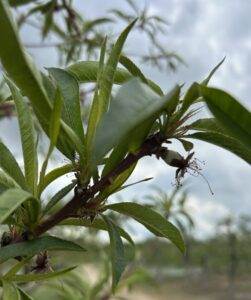
At this stage, surviving fruitlets are becoming easier to identify (Figure 2), although some additional drop may still occur over the coming week. Growers should continue to assess blocks carefully before making final management decisions.

Figure 1. Pear fruitlets cut to assess freeze injury—internal tissue appears viable; however, additional drop may occur. Salem County, NJ.
Despite reduced crop potential, maintaining disease management and overall tree health remains important, particularly to support return bloom and long-term productivity.
Pear Psylla
- Pear psylla activity remains low across much of southern New Jersey, with limited observations to date
- Some variability exists by block, though overall pressure remains light at this time
- Freeze-damaged orchards may be more susceptible to colonization as stressed trees can favor psylla buildup
Regional Observations:
- Gloucester County: None observed
- Salem County: Newly emerged Adults observed
- Burlington County: No activity observed to date
- Mercer County: No activity observed to date
As orchards move through petal fall and temperatures warm, psylla populations may increase gradually, particularly in blocks where adults are present. However, given the widespread crop loss this season, economic risk is reduced in many orchards.
Management Considerations
- In most blocks, immediate treatment is not necessary at this time
- Continue monitoring for adults, eggs, and early nymphs, especially in historically infested blocks
- Where management is needed, target newly hatched nymphs, which are the most susceptible stage
- Focus treatments on blocks with high historical pressure, active populations, or significant freeze stress
- Even with little to no crop, psylla should be managed where populations build to levels that may impact tree health, vigor, or lead to honeydew and sooty mold accumulation
Recommended Options
- Movento (IRAC 23) – excellent systemic control of psylla, scale, and aphids (apply with a spreading/penetrating adjuvant for best performance)
- Actara, Assail, Belay (IRAC 4A) – effective options for psylla control
- Centaur (IRAC 16) – targets immature stages
- Sivanto Prime (IRAC 4D) – effective, softer option with good activity
- Agri-Mek (IRAC 6) – strong option when applied with oil/adjuvant, especially for nymph control
With little to no fruit in many blocks, psylla management should be highly targeted rather than routine. Focus on monitoring and only treat where populations threaten tree health or where there is a history of significant infestation.
Pear Diseases
Fire Blight and Early Season Management
As pear orchards move through petal fall and into early post-bloom, the primary bloom infection period is largely complete. However, fire blight remains a concern, particularly in blocks with freeze injury, where damaged tissue and rapid regrowth increase susceptibility.
The recent freeze has created additional risk for trauma blight, as injured blossoms and developing shoots provide entry points for infection during periods of warm temperatures, wind, or rain. At the same time, widespread crop loss reduces the need for fruit-focused disease programs, shifting management emphasis toward protecting tree health and controlling shoot blight.
At Petal Fall and Post-Bloom:
- Continue monitoring forecasts using NEWA for fire blight risk, especially following storms or warm periods
- Discontinue streptomycin after petal fall (not labeled beyond this stage)
- Kasumin may be used up to petal fall only; do not apply afterward
- Focus on protecting actively growing shoots, particularly during warm, wet, or stormy conditions
- In high-risk situations, oxytetracycline (e.g., Mycoshield, FireLine) may be used post-bloom for shoot blight suppression
Management Considerations:
- Monitor closely for trauma events (hail, wind, heavy rain), which can trigger shoot blight infections
- Maintain heightened awareness in blocks with a history of fire blight or significant freeze injury
- Rapid shoot growth under warm conditions increases susceptibility—vigorous orchards are at higher risk
- With little to no crop in many blocks, focus management on tree health and reducing inoculum for future seasons
Fungicide Considerations (Post-Bloom)
- Maintain protectant fungicides (e.g., Mancozeb, Ziram) for pear scab and Fabraea leaf spot to protect foliage
- Use FRAC 3, 7, and premix fungicides (e.g., Inspire Super, Merivon, Luna products) where needed for foliar disease control
- Rotate FRAC groups to manage resistance and maintain program efficacy
- In blocks with little to no fruit, fungicide programs can often be reduced and focused on maintaining healthy foliage rather than fruit protection
Summary
- The recent freeze has resulted in widespread blossom and fruit loss across many New Jersey pear orchards, with damage now more clearly defined at the block level.
- Most orchards are now at petal fall to early post-bloom in southern counties, while northern counties have largely progressed through bloom with variable levels of injury.
- Asian pear varieties, which were more advanced at the time of the freeze, experienced greater levels of injury in many locations; in most blocks, little to no viable fruit remains.
- Pear psylla pressure remains low at this time; while populations may increase with warmer temperatures, most blocks do not require immediate treatment, though monitoring should continue—particularly in freeze-stressed or historically infested orchards.
- Insecticide applications can be reduced in many blocks due to low crop; where needed, target early nymph stages and focus on blocks with active populations or a history of pressure.
- Pear scab risk peaked during the April 25–27 infection period; current risk is declining, and one additional fungicide application is likely sufficient in most blocks to cover remaining primary infection.
- Fire blight risk remains a concern in blocks with freeze injury and actively growing shoots; 1–2 additional bactericide applications may be warranted depending on conditions and model predictions.
- With little to no crop in many orchards, management should shift toward maintaining healthy foliage, reducing inoculum, and supporting return bloom and productivity for the 2027 season.
- Continued scouting and monitoring of weather conditions, pest activity, and tree response will remain important over the next 7–10 days.
Peaches
Peach Phenology
Peach and nectarine development continued to progress across New Jersey over the past week, and the impacts of the recent freeze event are now becoming more clearly defined. Significant injury to blossoms and young fruit has been confirmed in many orchards, particularly in southern counties.
Most varieties in southern New Jersey were at shuck split during the freeze, a highly sensitive stage, and have sustained substantial crop loss, especially in low-lying or frost-prone areas. In many blocks, little to no viable fruit remains, though isolated pockets of surviving fruit may still be present depending on site conditions.
In northern counties, where bloom was still ongoing at the time of the freeze, damage remains variable but is often still significant in more exposed locations. Some blocks may retain limited crop depending on bloom stage and site protection.
At this stage, surviving fruitlets are becoming easier to identify, although additional drop may still occur over the coming week. Growers should continue to assess crop viability at the block level before making final management decisions.
Despite reduced crop potential, maintaining disease management and overall tree health remains important to support return bloom and long-term productivity for the 2027 season.
Petal Fall / Early Cover Disease Programs
Given the widespread crop loss in many orchards, disease management programs should be adjusted accordingly. With little to no fruit present in most blocks, emphasis should shift away from fruit protection and toward maintaining tree health and reducing inoculum for next season.
- Peach scab:
- In orchards without a history of high disease pressure, scab is generally not a concern in the absence of fruit
- In blocks with a history of scab, lesions can still develop on current-season shoots and serve as inoculum for next year
- In these situations, a reduced program may be warranted, with Captan applications timed ahead of significant rainfall events (e.g., ~2.5 lb/A)
- Bacterial spot:
- Maintain low-rate copper programs to protect foliage and reduce inoculum for future seasons
- Particularly important in blocks with a history of bacterial spot or under warm, wet conditions
- Avoid combining copper with captan, especially following extended cloudy or slow-drying conditions
- Rusty spot and brown rot:
- Not a concern in blocks with little to no fruit
- Fungicide applications targeting these diseases can be eliminated in most orchards this season.
Insect Update
Insect management programs in peaches and nectarines should be adjusted this season based on reduced crop load. In blocks with little to no fruit, many fruit-feeding pests will not require treatment; however, monitoring should continue, and management should focus on pests that impact tree health or future production.
Oriental Fruit Moth (OFM)
- OFM biofix has been set for April 7 in southern New Jersey and April 15 in northern counties
- Degree-day accumulations should continue to be tracked from biofix to time first-generation management
- In blocks with little to no fruit, OFM pressure will have limited economic impact; however, a well-timed application may still be beneficial to reduce populations, particularly in young blocks or orchards with historically high pressure
- Where treatment is warranted, first-generation control should be timed around 170–200 DD (base 45°F) after biofix
- A second treatment can be timed 10-14 days after petal fall where traps capture moths above threshold (>10) at 300-350 DD.
- Mating disruption should remain in place where already deployed; do not remove dispensers
| OFM 1st Generation Timing | |||
| Insecticide Type | |||
| County/Region | Degree Days
by 5/3 base 45 |
Conventional
170-200, 350-375 |
Diamide
100-150, 300-350 |
| Gloucester – Southern | 288 | 1st –past
2nd – 5/7-5/9 |
1st –past
2nd – 5/4-5/7 |
| Middlesex – Northern | 206 | 1st –4/30-5/2
2nd – |
1st – past
2nd – |
Scale
- Beneficial insects may help suppress populations in many blocks
- In orchards with a history of infestation, plan to target the crawler stage later in the season
- In severe infestations, materials such as Esteem or Centaur may be used
- Where scale is a recurring problem, an application of Centaur at petal fall or Movento between petal fall and shuck split should “clean up” problem blocks. Centaur is recommended at 34.5 ozs./ac and Movento should be applied at 6-9 ozs./ac. A penetrant must be included to Movento as per the product label. Movento will also control green peach aphid when used at this time.
- Continue monitoring historically infested blocks and planning for crawler management later in the season if populations persist.
Green Peach Aphid
- Continue scouting as terminals expand and colonies begin to establish
- Manage populations to prevent leaf curling and shoot distortion
- Treatment thresholds remain:
- Nectarines: 1 colony per tree
- Peaches: 2–3 colonies per tree
Lesser and Greater Peach Tree Borers
- Growers using mating disruption for borer control can begin placing dispensers around the end of April and should have them in place by mid-May.
- Even in orchards with little fruit, borers will need to be managed to maintain healthy tree stands for the next season. If this has been a historical pest in your orchard, mating disruption is recommended.
- Continue monitoring and manage as usual in problem blocks
Other Insects
- Plum curculio, tarnished plant bug, stink bugs, BMSB, Japanese beetle, TABM, and thrips: In most blocks with little to no fruit, treatment is not necessary
Recommended Options
- OFM / Leafrollers:
- Altacor, Asana, Delegate, Besiege, Voliam Flexi
- Lesser and Greater Peach Tree Borers
- Asana XL, Pounce 25WG
- Green Peach Aphid:
- Assail, Actara, Admire Pro
Summary
- The recent freeze has resulted in widespread blossom and fruit loss across many peach and nectarine orchards, with damage now clearly defined at the block level
- Most southern New Jersey orchards have little to no viable fruit remaining, while northern orchards show variable but often significant injury depending on bloom stage and site conditions
- Surviving fruitlets are becoming easier to identify, though additional drop may still occur over the coming week
- With minimal crop present, disease management programs can be significantly reduced, with emphasis shifting to maintaining foliage health and reducing inoculum for next season
- Fruit diseases such as brown rot and rusty spot are not a concern in most blocks this season
- Insect management programs can also be reduced; most fruit-feeding pests will not require treatment in blocks without crop
- Oriental fruit moth should still be monitored and may warrant a well-timed application in high-pressure or young blocks to reduce populations
- Green peach aphid and mites should be managed as needed to protect foliage and support return bloom
- Maintaining tree health and canopy development remains critical to support productivity for the 2027 season
- Continued scouting and monitoring of weather, pest activity, and tree response will be important over the next 7–10 days
Blueberries
Blueberry Phenology
Blueberries were observed in bloom throughout Atlantic and Burlington Counties. While the freeze event the week of April 20 had some impact on earlier blooming varieties, later-blooming acreage that did not have significant freeze damage is now hitting peak bloom (Draper, Elliott, etc.).
Insect Update
Scouting activities were conducted across 141 fields in Burlington and Atlantic Counties. Field evaluations focused on the presence of leafrollers, spongy moths, plum curculio, and thrips. There was a minor increase in plum curculio and thrips; however, due to the ongoing pollination period, the application of insecticides is not recommended at this stage.
IPM Data
| Leafroller | Spongy Moth | Plum Curculio | Thrips | |||||
| Avg | High | Avg | High | Avg | High | Avg | High | |
| 4/17 | 0.0649 | 2 | 0.0001 | 0.1 | 0.0686 | 2.5 | 0.5547 | 9 |
| 4/25 | 0.0801 | 0.8 | 0.0001 | 0.1 | 0.1156 | 3 | 1.0383 | 26 |
Trap Monitoring: Cranberry and cherry fruitworm traps were deployed and will be monitored on a weekly. Scale traps targeting Putnam and terrapin scale will be set up in the coming week to monitor for first-generation crawler emergence and to assist in optimizing treatment timing.
Grapes
Grape Phenology
Grape development across New Jersey has progressed under recent warm conditions, with most vineyards in southern counties moving through early shoot growth stages. In many areas, shoots are now between 1–6 inches, depending on variety and site conditions.
Damage is most apparent in low-lying or frost-prone sites, where primary shoots may have been injured or killed. In these situations, secondary buds are beginning to push (Figure 2) and may help compensate for some crop loss, though overall yield may still be reduced depending on the extent of primary bud injury.
At this stage, vineyards should be assessed for primary shoot viability and uniformity of growth. Blocks with uneven development may require adjustments in management timing over the coming weeks.
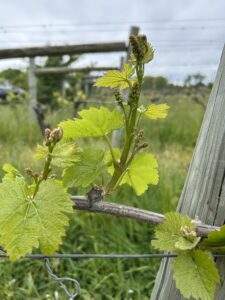
Figure 2. Grapevines with secondary bud break.
Diseases
- The most important disease to manage at this time is Phomopsis and Powdery Mildew.
- At 3″ growth start managing for Black Rot.
- Recommended materials can be found in the New Jersey Commercial Grape Production Guide.
Insect Update
- Insect pests to monitor are grape flea beetle, and climbing cutworms. Controls for these insects are rarely needed.
- The first generation flight of grape berry moth (GBM) was completed in April. Management of GBM will focus on controlling later generations when they migrate into fields after bloom.
- Spotted lanternfly nymphs have been observed in southern NJ vineyards (Figure 3). There is no need to control SLF at this time.

Figure 3. Spotted lanternfly nymphs on grapevines.
It’s also not too late to scout for and destroy SLF egg masses on posts and trunks.