Search Results for: spotted lanternfly

Virtual Statewide Commercial Tree Fruit Growers Twilight Meeting IV Harvest Season Update

Virtual Statewide Commercial Tree Fruit Growers Twilight Meeting IV

Harvest Season Update

Wednesday September 23, 2020

Online 6:00 PM – 7:30 PM

Statewide Tree Fruit Twilight Meeting IVClick here to register for the twilight meeting.

Password: fallfruit

NJDEP PESTICIDE RECERTIFICATION CREDITS ARE ANTICIPATED

If you wish to receive pesticide credits for this meeting, DEP regulations require you to upload a copy of a government issued photo ID and a copy of your pesticide applicator license prior to the meeting.

Click here to upload a government issued photo ID and pesticide license

Upload directions: If you click on the photo ID upload link using a smart phone/tablet you will have the option of simply taking a photo of your ID and uploading it directly into the system.  If you are using a computer you will need to scan or take a photo of your photo ID and upload the file using the directions at the upload link. If you need assistance uploading your documentation contact; Kimberley Crommelin kfrey@co.hunterdon.nj or Megan Muehlbauer muehlbauer@njaes.rutgers.edu to assist you in verifying your identity for NJDEP recertification credit purposes.

Please note: The files are uploaded into a secure Rutgers University digital folder that no one other than the session hosts (Megan Muehlbauer and Kimberley Crommelin) can view or access.


To Enter the Meeting: Click the link in the registration confirmation E-mail and select “join by browser-New” BE SURE TO KEEP VIDEO ON IF YOU WISH TO OBTAIN PESTICIDE CREDITS.


If you do not wish to receive pesticide credits, and would like to call into the meeting, dial USA Toll: +1-650-429-3300 Access code: 120 185 4274

PLEASE BE IN THE MEETING BY 6 PM AS IT WILL BEGIN PROMPTLY AT 6 PM!


Thank you very much for your willingness to cooperate!


Program

Hosted by: Megan Muehlbauer PhD. County Agent III Rutgers New Jersey Agricultural Experiment Station (NJAES) Cooperative Extension of Hunterdon County

Hemant Gohil PhD. County Agent III Rutgers (NJAES) Cooperative Extension of Gloucester County


6:00 PM – 6:20 PM Peach Tree Borer and Spotted Lanternfly Management

Anne Nielsen, PhD. Extension Specialist, Fruit Entomology, Rutgers University

Dean Polk, Fruit IPM Agent Rutgers NJAES


6:20 PM – 6:40 PM Herbicide Decisions for Fall Weed Management

Thierry Besancon, PhD. Extension Specialist, Weed Science, Rutgers NJAES


6:40 PM – 7:00 PM Peach Leaf Curl and Apple Scab Management in High Inoculum Orchards.

Norm Lalancette PhD, Extension Specialist Tree Fruit Pathology, Rutgers NJAES


7:00 PM – 7:30 PM New Jersey Pesticide Regulation and Safety Update

Patricia Hastings, Pesticide Safety Education Program Coordinator, Rutgers NJAES

Fruit IPM for September 2, 2020

Peach:

Peachtree Borers: The peachtree borer flight has peaked and most of the eggs have been laid and larvae emerged. [Read more…]

SLF: Current Management Recommendations in Vineyards

By Katarzyna Madalinska, Megan Muehlbauer, George Hamilton, and Anne L. Nielsen

Spotted lantern flies on a tree

Spotted lanternfly adults congregating on tree of heaven

Spotted lanternfly was first found in northern NJ in 2018. Since then, populations are rapidly increasing and will substantially surpass those seen in 2019. Management of this pest is critical as we are still in the exponential growth phase of the population. There has been a 1300% increase in nymphs reported this year, which will most likely reflect higher numbers of adult SLF from previous years. This means that pressure from SLF adults will be felt more intensely by more vineyards this year.

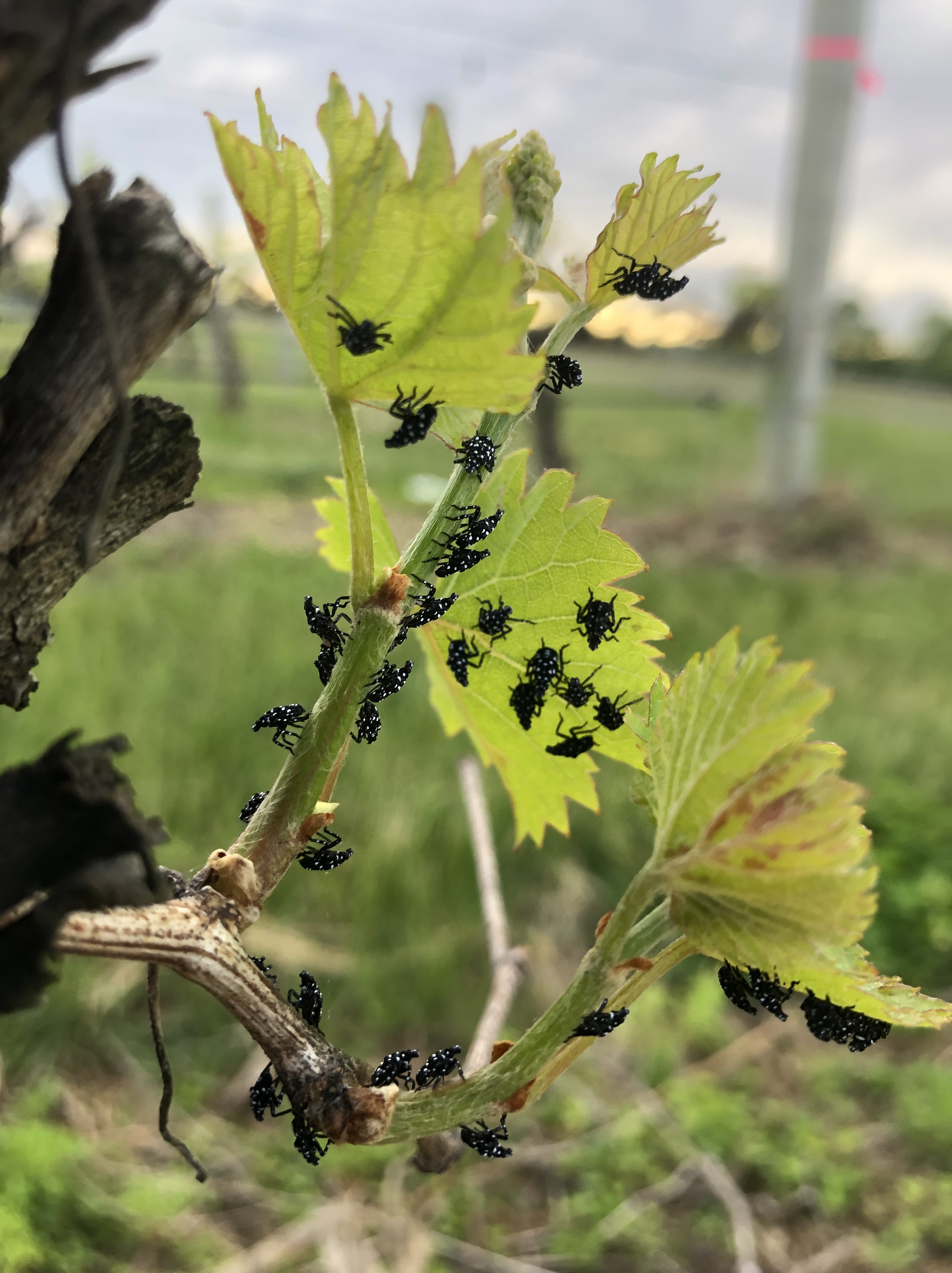
The predominant life stage of the spotted lanternfly (SLF) seen across New Jersey during this time of year is the adult stage. That does not mean you will not see juveniles as well, which can appear black with white spots or their last juvenile stage which are red with black and white spots. The adult stage will be present until first frost.

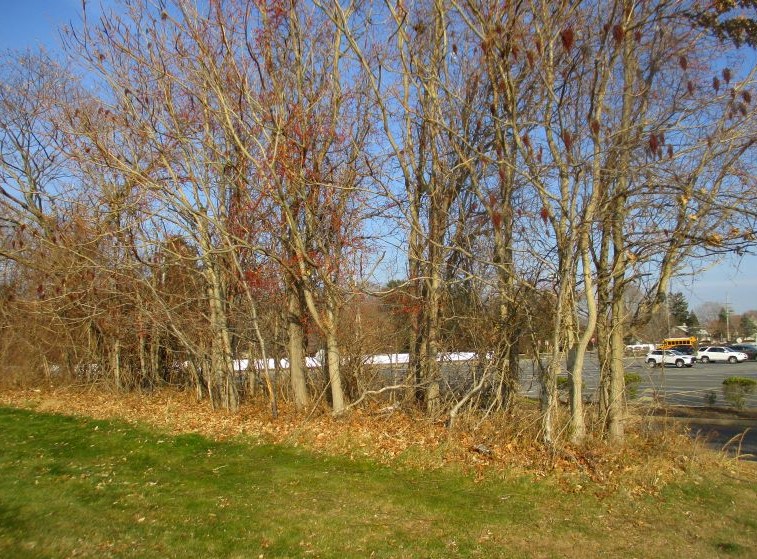
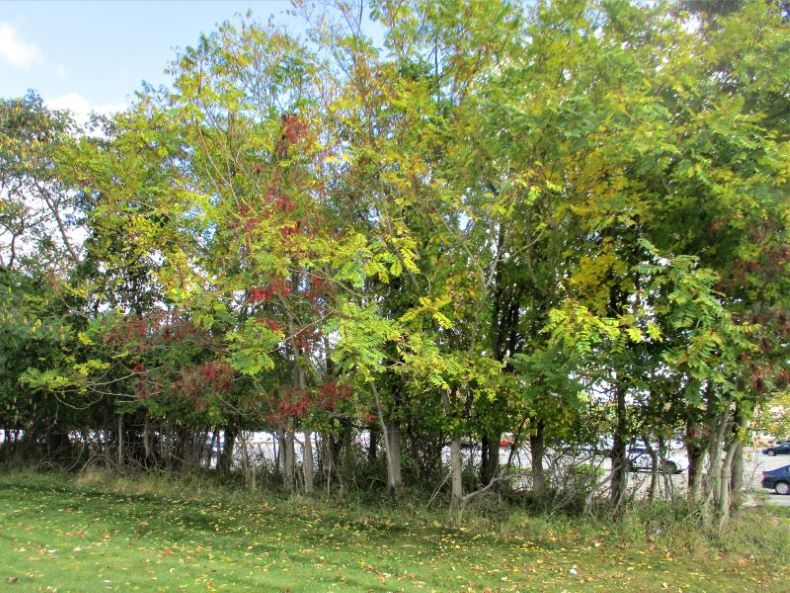
Our current understanding of SLF adult behavior may aid in targeting management in vineyards. Right now, adult SLF are congregating in large numbers on hardwood trees along hedgerows or in bordering woods. It can be useful to identify one or a few spots around your vineyard where large numbers of SLF are feeding. One option for action at this time could be to target these trees with a backpack sprayer

using an insecticide labeled for SLF control as well as labeled for the tree species being treated. This is expected to decrease populations in general before they start reproducing but MAY not result in a decrease of pressure within the vineyard. While adults may be observed in the vineyard, right now SLF movement into the vineyard is minimal and is expected to dramatically increase in September and October. During the period of predicted peak SLF feeding within vineyards (September and October), the vines are storing carbohydrates for winter and excessive feeding by SLF can decrease winter hardiness by 1.5oC.

Movement into the vineyard will occur across several weeks and a strong edge effect will occur. However, SLF do not discriminate between vines that have been harvested or not. The treatment threshold used in South Korea is 10 SLF per vine, however, a more conservative threshold may be warranted to reduce populations and injury to the vines. If you can identify the more vulnerable parts of your vineyard you can target your insecticide application in those areas. The key is the application of an insecticide with long residual activity. There are several effective options for insecticide application (see Table 1).

Insecticides and their application rates are broken down in the table below. Be mindful of allowable uses and PHI when choosing an insecticide. After harvest there is more flexibility in insecticides available for application. We recommend the use of insecticides with a longer residual activity such as Bridgade post-harvest.

Table 1. Effectiveness of Insecticides Against Spotted Lanternfly Adults. SLF activity derived from PSU extension and Leach et al. Crop Protection 2019 v. 24 DOI:10.1016/j.cropro.2019.05.027

Trade name Rate per acre Total Use Systemic, Contact, Ingestion PHI (days) REI (hrs) Days of activity Labeled for SLF? SLF activity
Malathion 8F 1.88 pt 1.88 pt C, I 3 36 3-7 Yes, 2(ee) Excellent
Baythroid XL 2.4-3.2 oz 12.8 C, I 3 12 No Good
Scorpion 35SL 5 fl oz (foliar) 20.9 oz S, C, I 1 12 <14 Yes, 2(ee) Exc.
Brigade 10WSB 8-16 oz. 16 oz C, I 30 12 21 Yes, 2(ee) Exc.
Mustang Maxx 0.8EC 4 fl. oz. 24 oz C, I 1 12 <7 Yes, 2(ee) Good
Actara 25WDG 3.5 oz 7 oz. S, C, I 5 12 <21 Yes, 2(ee) Exc.
Assail 30SG 5.2 oz 2/yr S, C, I 3 48 0 Yes, 2(ee) on nymphs only Good
Carbaryl 4L 2 qt 10 qt C, I 7 12 <14 No Exc.
Avaunt 30DG 6 oz 2/yr C, I 7 12 0 Yes, 2(ee) Fair
Admire Pro 1.4 fl oz 2.8 oz C, I 0 12 <7 No Good
Belay 4-6 oz (foliar) 1/yr S, C, I 0/30 12 No Good/Excellent
Prepared by PennState  with modifications by Anne Nielsen


There are several reasons to manage adult SLF in September and October during peak movement.

  1. Adults feed on the canes, cordon, and trunk of grape vines. Excessive feeding has been shown to lower winter hardiness by >1.5°C.
  2. SLF females lay egg masses in October. Killing females prior to egg laying will decrease population growth the following year.

In October, female SLF prefer to lay egg masses on a relatively smooth surface that is positioned horizontally.  Within a vineyard, egg masses may be laid on posts, farm equipment, and the grape vines themselves. When looking for egg masses on your vines, be sure to examine any layers of peeling bark on the trunk or canes. However, if many egg masses are present in your vineyard, there are substantially more in any bordering wooded areas. Currently, we feel that management against the nymphs in the spring is more effective than targeting egg masses with an insecticide.


Fruit IPM for August 25, 2020

Stink Bugs Apples and Peaches: Populations are little changed since last week, although slightly lower in most areas. Hot spots are starting to show up to 3% damage in southern county apples.  Hot spots also exist in Morris and Middlesex Counties. In order to prevent damage growers need weekly BMSB effective materials, especially on the block edges that have woods borders. The most effective materials for apples include: Danitol, Declare, Endigo, Lambda-Cy, Lannate (short residual), Leverage, Mustang Maxx, Proaxis, Renounce, Tombstone, Voliam Flexi and Warrior II. [Read more…]

Fruit IPM for August 19, 2020

Peach:

Stink Bugs Apples and Peaches: BMSB populations are becoming quite high in several northern locations. These populations have the potential to do serious damage to apples where populations are high. Growers with high BMSB populations should consider weekly insecticide applications and/or supplemental border applications with BMSB effective insecticides. [Read more…]

Fruit IPM for August 12, 2020

Peach:

Stink Bugs Apples and Peaches: BMSB populations are generally low and little changed since last week. However, hatching egg masses are present statewide. Therefore populations can increase in the near future. As the peach season comes to a close, BMSB has the potential to be more of a problem in apples. [Read more…]