Search Results for: corn borer

IPM Update 5/30/18

Sweet Corn

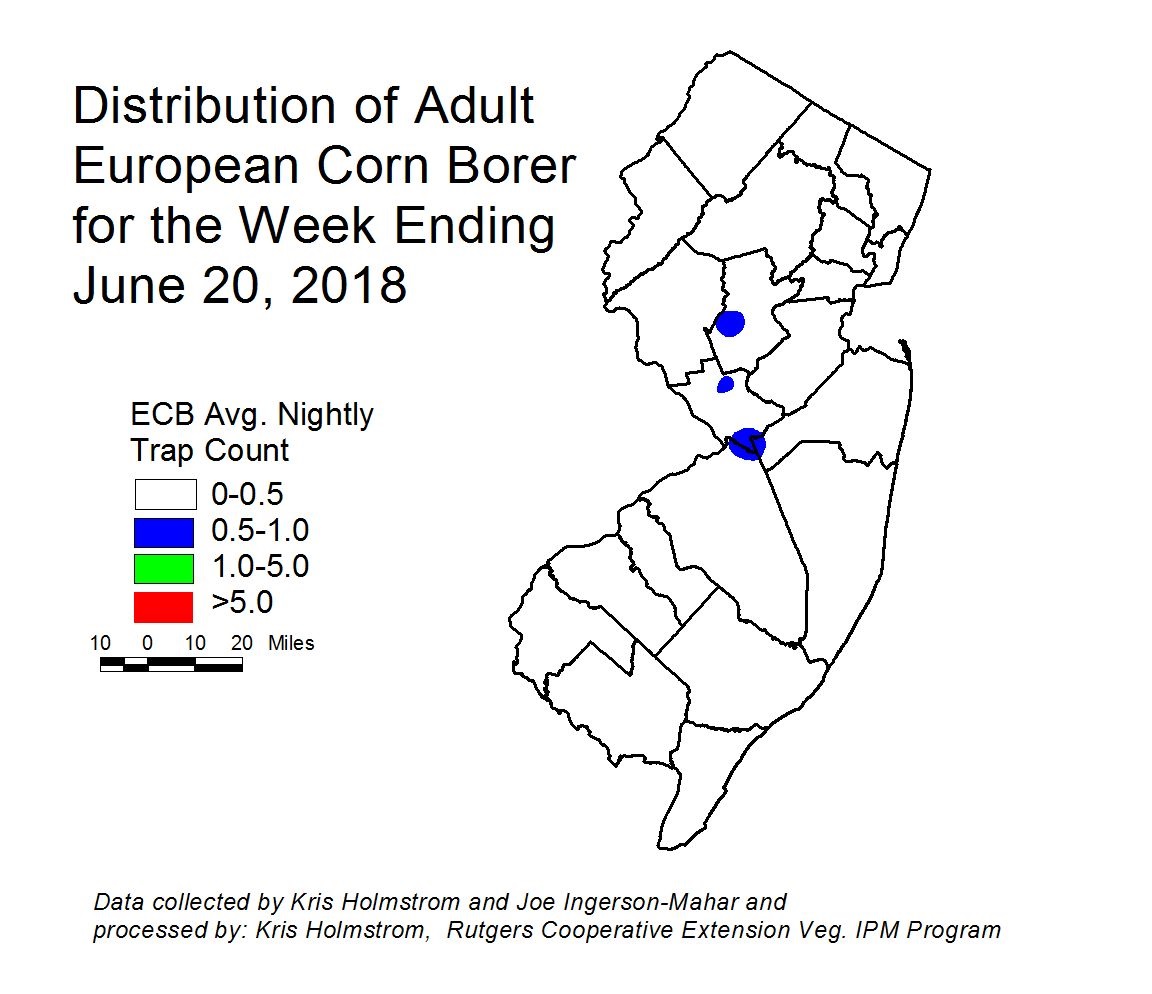
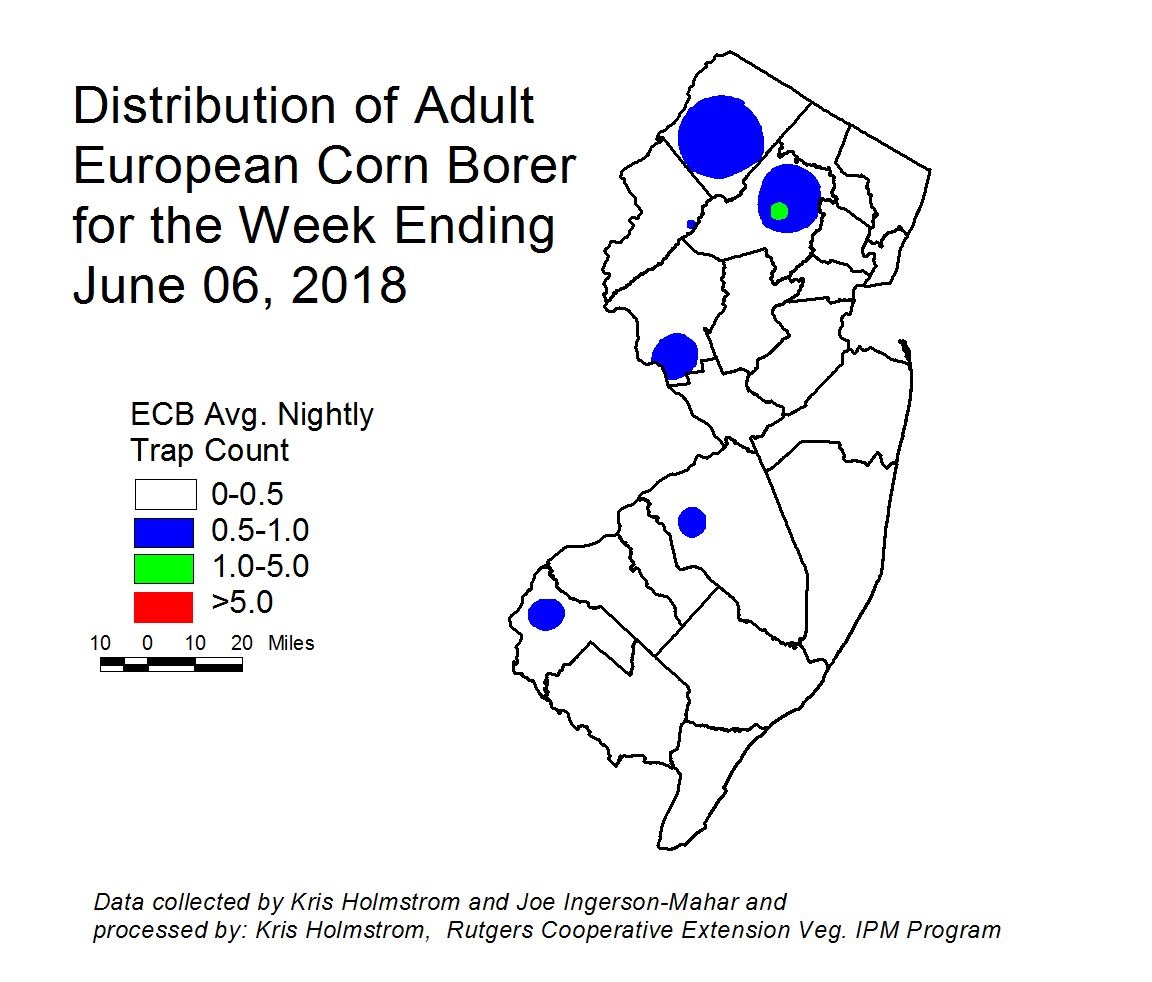
Increasing numbers of European corn borer (ECB) moths have been captured this past week, but still relatively few moths overall.  At present, the highest activity is on the Cumberland-Atlantic border, with minor concentrations in Salem and northern Burlington counties (see ECB map). As early sweet corn plantings progress through whorl and pre-tassel stages, feeding from this pest may be detectable.  Look for the characteristic “shot-hole” type of feeding (photo at right) and consider treating when infested plants exceed 12% in a 50 plant sample.


The highest nightly trap catches of ECB for the week ending 5/30/18 are as follows:

East Vineland   2 Centerton   1 Eldora   1
Allentown   1 Cinnaminson   1 Medford   1
Belvidere   1 Crosswicks   1 South Branch   1
Califon   1 Denville   1 Woodstown   1

[Read more…]

IPM Update 5/23/18

Sweet Corn

The black light trap network is nearly complete at this time.  To date, no corn earworm (CEW) have been captured.  Increasing numbers of European corn borer (ECB) moths have been captured this past week, although numbers are still quite low.  At present, the highest activity is in portions of northern Burlington and northwestern Ocean counties (see ECB map).  This pest poses little threat at this time, as the earliest sweet corn plants are only just reaching suitable size to support larvae.

The highest nightly trap catches of ECB for the week ending 5/23/18 are as follows:

Allentown   1 Dayton   1 New Egypt   1
Centerton   1 Jobstown   1
Croswicks   1 Medford   1

[Read more…]

IPM Update 5/16/18

Sweet Corn

IPM Program personnel are currently finishing deployment of the black light trap network in New Jersey.  At present, we are approximately 70% operational and have begun to monitor traps.  To date, no corn earworm (CEW) have been captured.  The low numbers of European corn borer (ECB) moths that have been caught do not allow us to produce a map image.  As numbers increase, look for population maps of ECB, CEW and CEW catches from pheromone traps in this weekly publication.

The highest nightly trap catches of ECB for the week ending 5/15/18 are as follows:

Allentown          1              New Egypt          1

Crosswicks          1              Pennington        1

European corn borer egg mass on a pepper leaf.

[Read more…]

Veg IPM Update: Week Ending 9/27/17

Sweet Corn
European corn borer (ECB) catches have again fallen to levels too low to register a map image.  This pest is not much of a threat at this point, with most remaining plantings in silk.  ECB feeding in less mature NJ sweet corn plantings is nearly non-existent now.  Sprays for fall armyworm and corn earworm will manage any ECB larvae at this time.  [Read more…]

Veg IPM Update: Week Ending 9/20/17

Sweet Corn
European corn borer (ECB) catches are still very low, but enough adults were caughted this week to register a map image.  This pest is not much of a threat at this point, with most remaining plantings in silk.  ECB feeding in less mature NJ sweet corn plantings is nearly non-existent now.  Sprays for fall armyworm and corn earworm will manage any ECB larvae at this time.  [Read more…]

Veg IPM Update: Week Ending 9/13/17

Sweet Corn
European corn borer (ECB) catches remain too low to register a map image.  This flight has been extremely low and very spotty.  ECB feeding in NJ sweet corn plantings is nearly non-existent now.  What remains has been overshadowed by fall armyworm (FAW) feeding.  Check 5 plants each in 10 random locations for a 50 plant sample.  Look  for “shot-hole” injury, and  consider treating when the number of infested (from ECB or FAW) plants in a 50 plant sample exceeds 12%.  Once plants hit full tassel, ECB larvae will move downward on the stalk and re-enter the plant near the area where ears are forming.  This can result in direct injury to the ear.  For growers who still have corn that has yet to silk, consider an insecticide application at the full tassel stage to target ECB larvae as they migrate downward.  This application can eliminate larvae that have escaped any earlier insecticide applications. [Read more…]