Search Results for: corn borer

Vegetable IPM Update 7/01/20

Sweet Corn

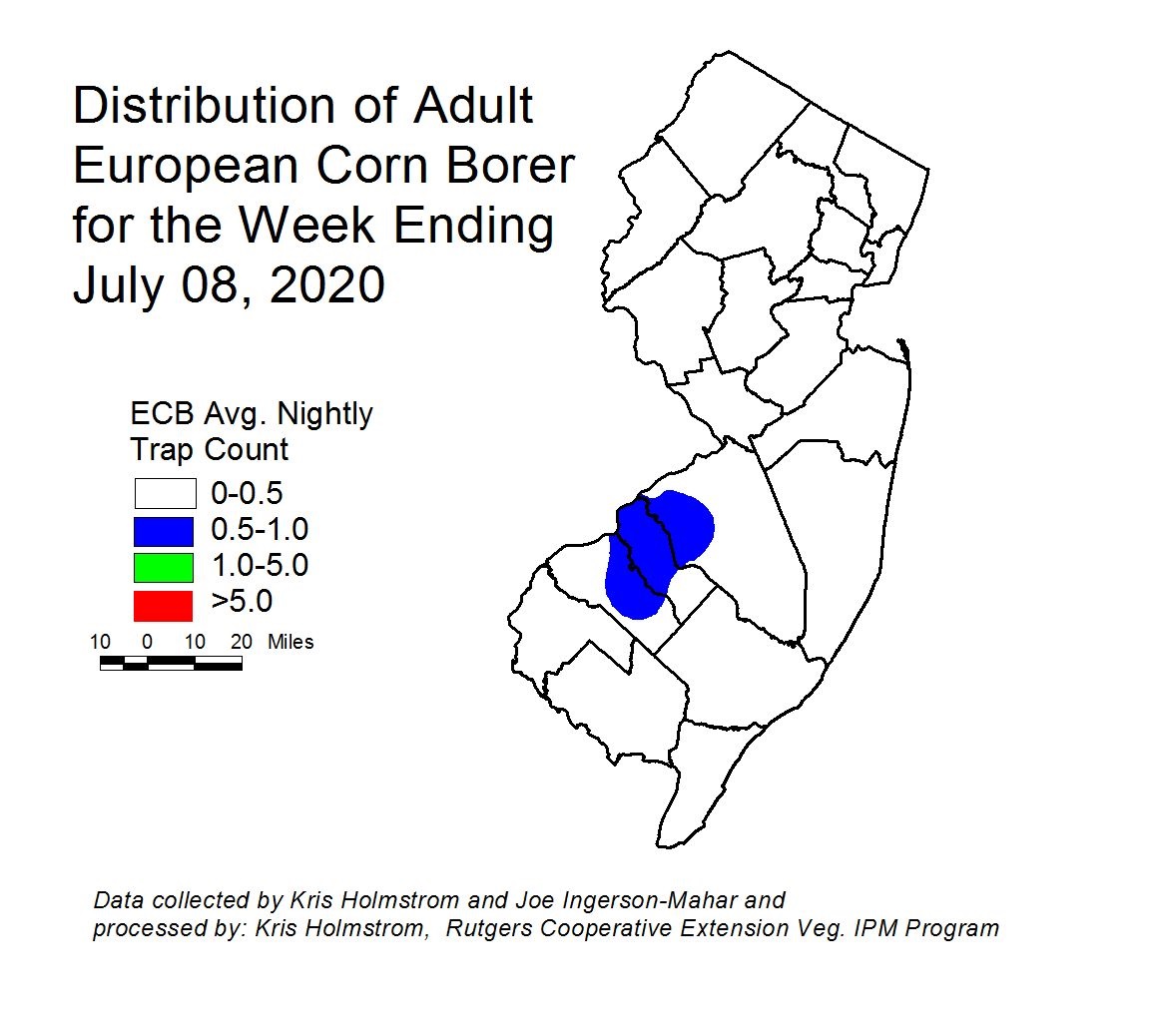
European corn borer (ECB) moth catches have remained steady at very low levels over the past week.   At this time, activity is highest in Gloucester and Camden counties (see ECB map at left).  Catches are widely dispersed.   Above threshold (12%) larval infestations continue into the northern counties.  Larval infestations should be expected to continue for another week or so.


The highest nightly trap catches of ECB for the week ending 7/01/20 are as follows:

Medford   2 Elm   1 Springdale   1
Blairstown   1 Long Valley   1 Tabernacle   1
Downer   1 New Egypt   1
Eldora   1 Port Colden   1


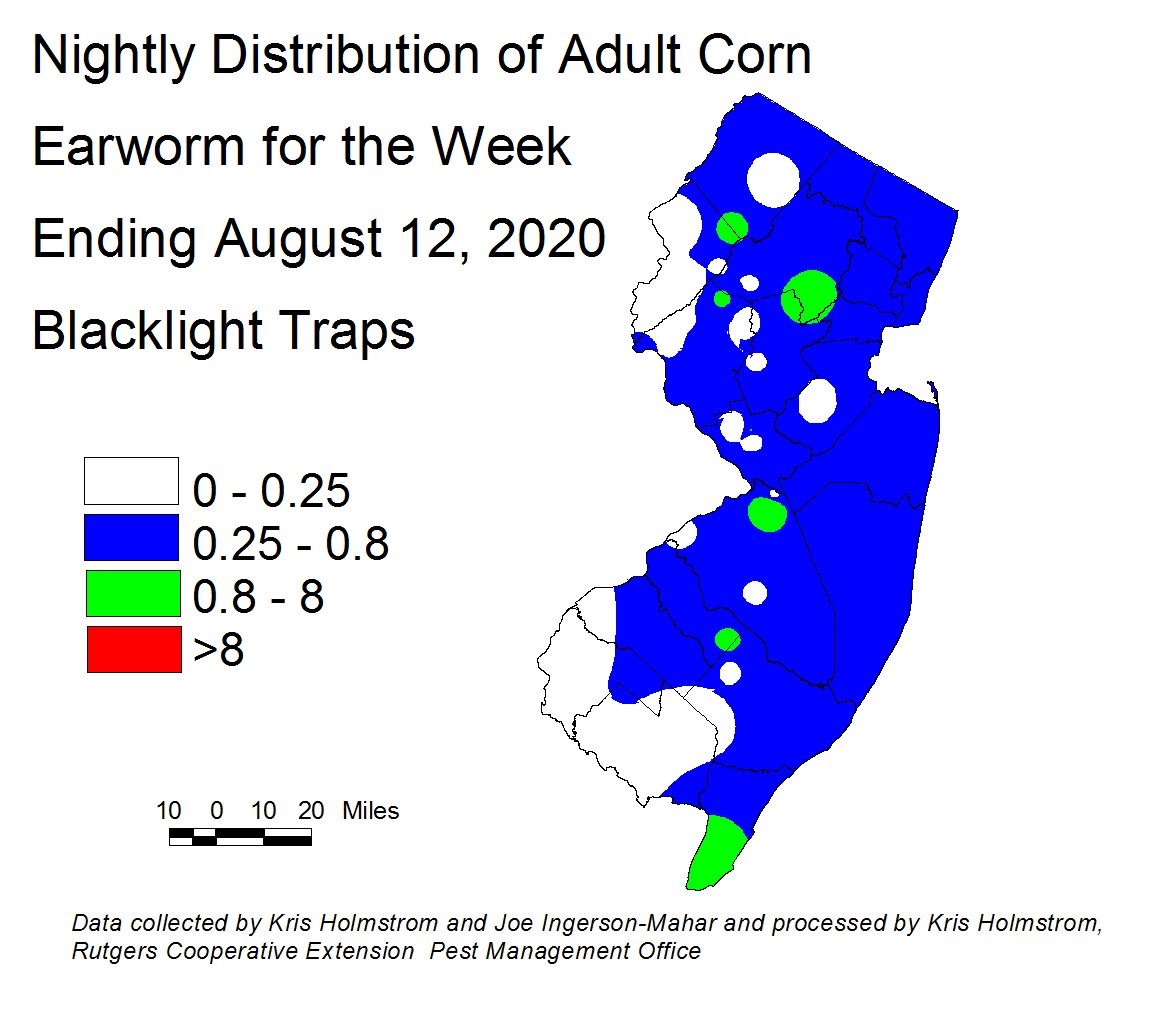
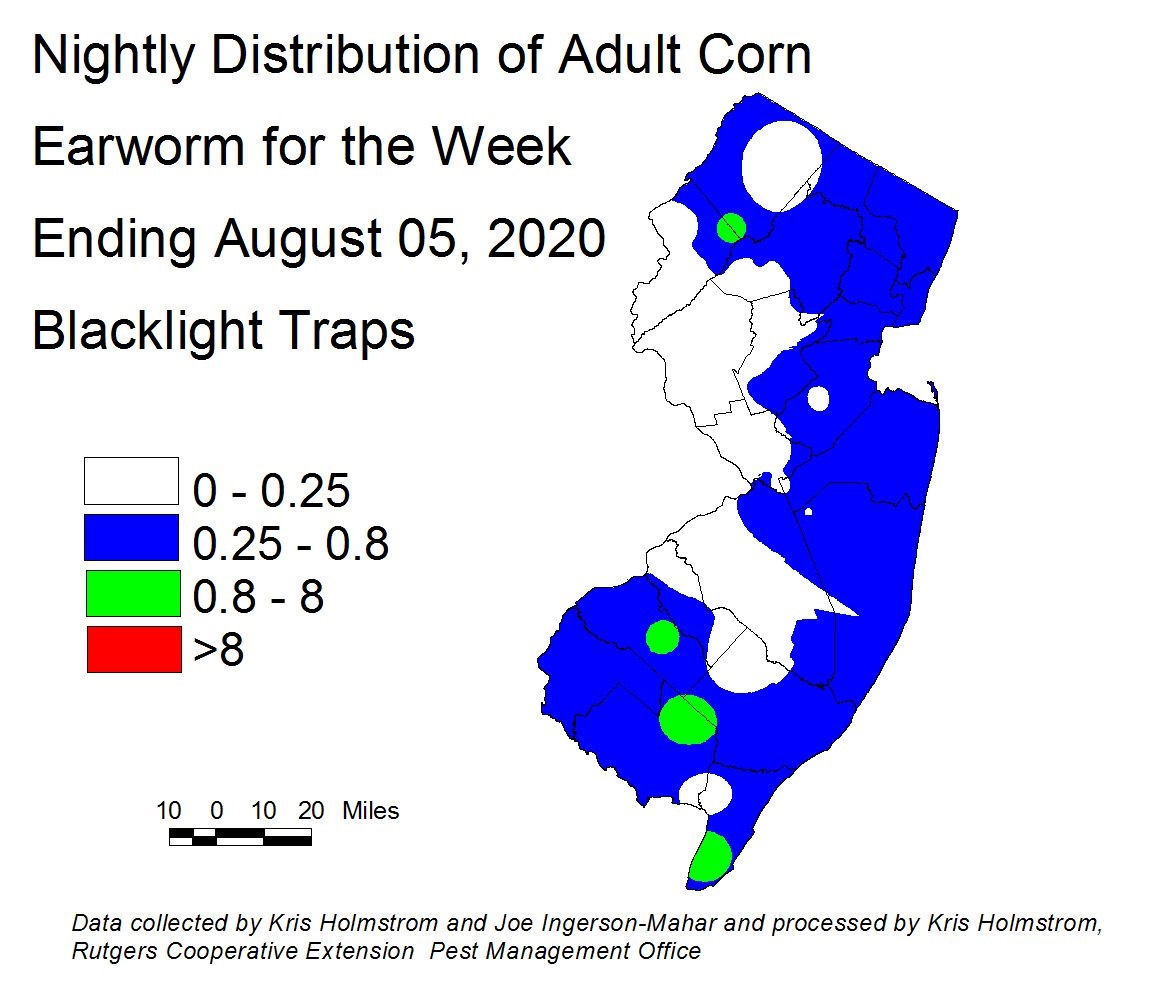
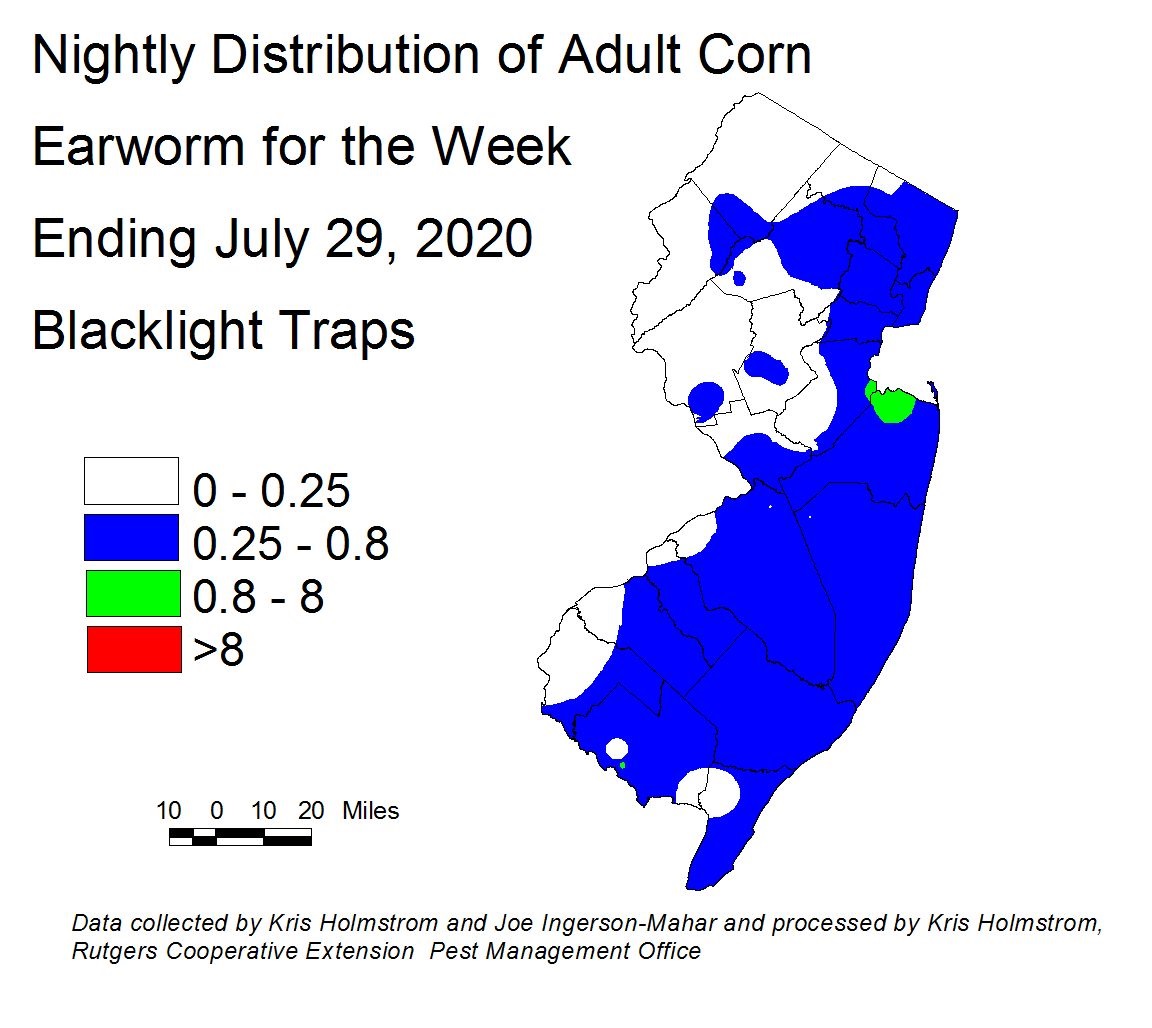
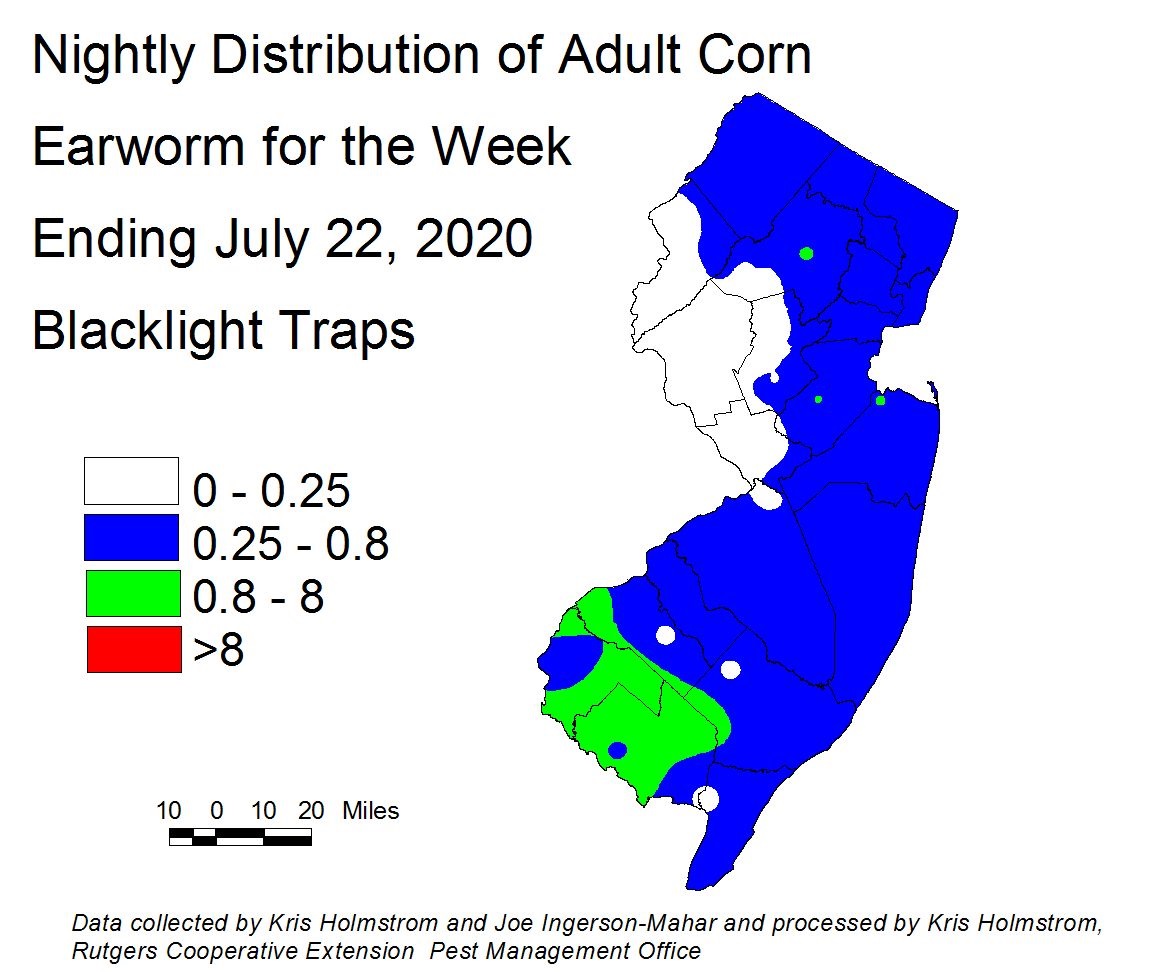
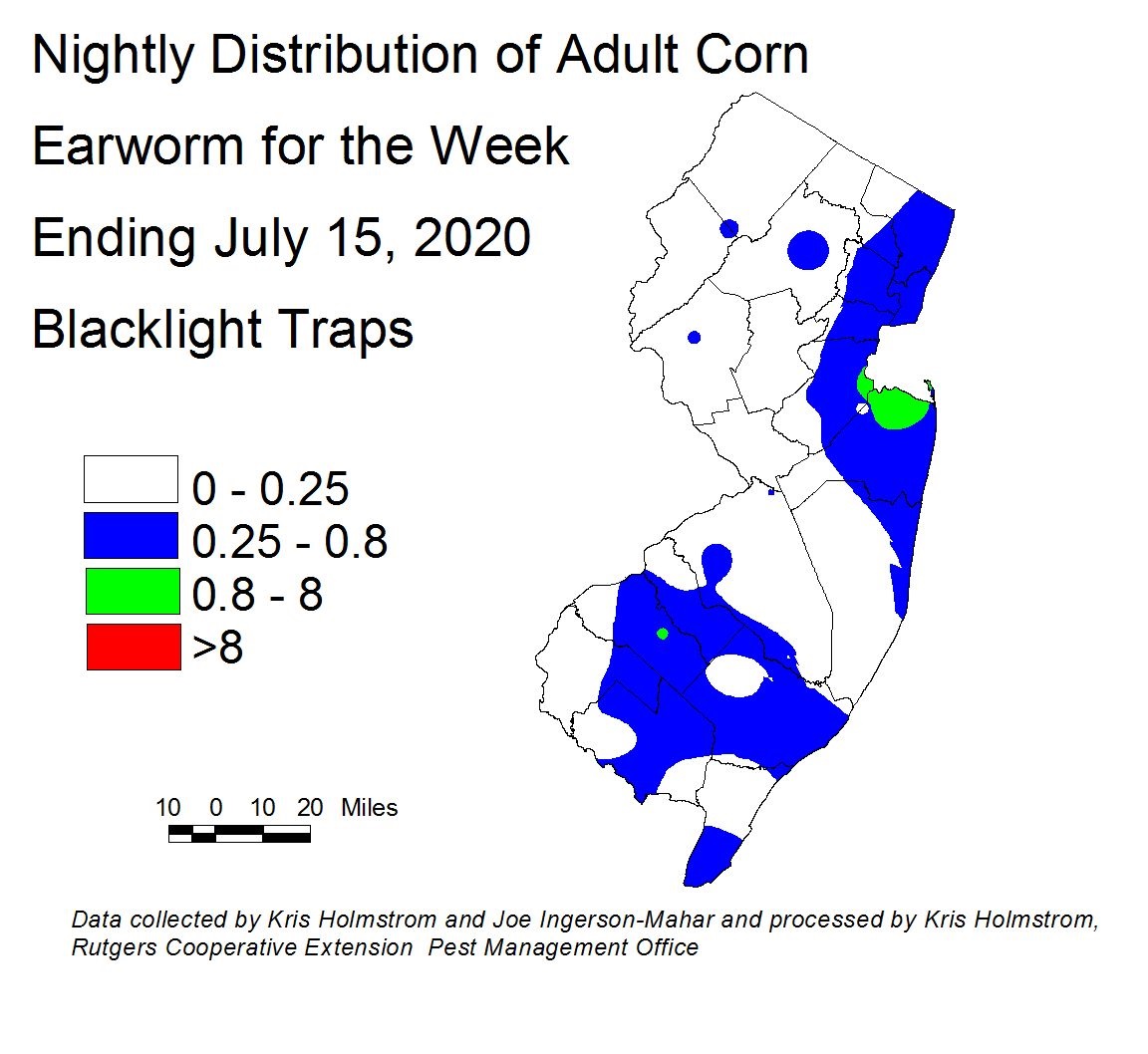
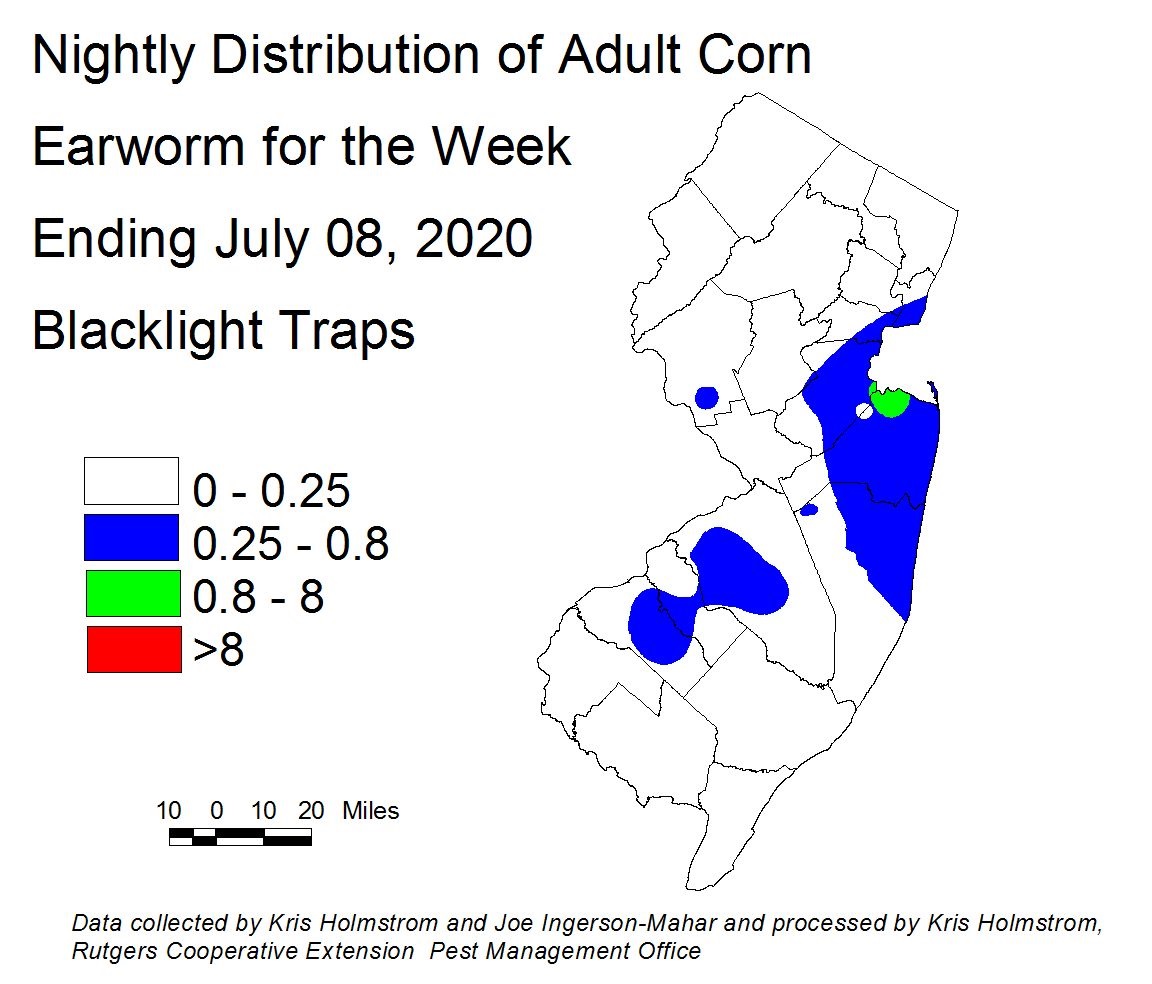
Corn earworm (CEW) moth captures stayed largely unchanged in blacklight traps this past week.   This lingering population is somewhat heavier than normal for this time of year, and silking corn will need protection from this pest.  Blacklight catches were highest overall along the coast (see map at left).

The highest nightly trap catches of CEW in black light traps for the week ending 7/01/20 are as follows:

Matawan   4 Eldora   1 Pedricktown     1
Allentown   1 Elm      1 Sergeantsville   1
Cinnaminson   1 Green Creek   1 Springdale   1
Downer   1 Milltown   1 Tabernacle   1

[Read more…]

IPM Update 6/24/20

Sweet Corn

European corn borer (ECB) moth catches have declined somewhat over the past week.   At this time, activity is highest in Gloucester County and along the Cape May/Cumberland bay shore (see ECB map at left).  Catches are widely dispersed.   Larval infestations above 20% continue into the northern counties this past week.  Larval infestations should be expected to continue for approximately another 2 weeks.


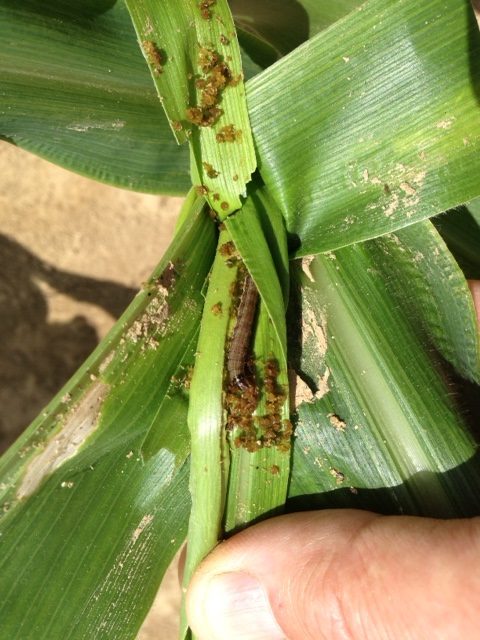
As always, look for the characteristic “shot-hole” type of feeding (photo below at right) and consider treating when infested plants exceed 12% in a 50 plant sample.  As plantings proceed to the pre-tassel stage, ECB larvae may be found in emerging tassels (see photo at left).  It is a good idea to treat individual plantings as they move into the full tassel/first silk stage one time.  This eliminates any ECB larvae that have emerged with the tassels as they begin to move down the stalk to re-enter near developing ears.

Useful insecticides for this particular application include synthetic pyrethroids (IRAC Grp 3), spinosyns (including OMRI approved Entrust) IRAC Grp 5), and diamides such as Coragen (IRAC Grp 28) or materials such as Besiege which include the active ingredient in Coragen.  Synthetic pyrethroids alone should NOT be used for corn earworm (CEW) protection on silking corn.  Control with these materials is very inconsistent.

The highest nightly trap catches of ECB for the week ending 6/24/20 are as follows:

Downer   2 Eldora   1 Milltown   1
Blairstown   1 Farmingdale   1 Port Colden   1
Cinnaminson   1 Lawrenceville   1 Springdale   1
Denville   1 Matawan   1 Tabernacle   1


Corn earworm (CEW) moth captures increased slightly in blacklight traps this past week.   As early plantings are now in the silk stage, they will need protection from this pest.  Blacklight catches sere highest overall along the coast (see map at left).

The highest nightly trap catches of CEW in black light traps for the week ending 6/24/20 are as follows:

Matawan   2 Elm   1 New Egypt   1
Bellemeade   1 Green Creek   1 Sergeantsville   1
Crosswicks   1 Hillsborough   1 Springdale   1
Eldora   1 Milltown   1 Tabernacle   1

[Read more…]

IPM Update 6/17/20

Sweet Corn

European corn borer (ECB) moth catches increased somewhat over the past week although higher numbers were recorded in a relatively low number of locations.  At this time, activity is highest in Gloucester and central  Morris counties (see ECB map at left).  Catches remain widely dispersed.   Larval infestations into the 30+% range were detected as far north as Morris County this past week.  As moth catches begin to fall, larval development and damage increase.  We expect that these infestation rates will continue to climb for the next 1-2 weeks in many parts of the state.


Look for the characteristic “shot-hole” type of feeding (photo below at right) and consider treating when infested plants exceed 12% in a 50 plant sample.  As plantings proceed to the pre-tassel stage, ECB larvae may be found in emerging tassels (see photo at left).  It is a good idea to treat individual plantings as they move into the full tassel/first silk stage one time.  This eliminates any ECB larvae that have emerged with the tassels as they begin to move down the stalk to re-enter near developing ears.

Useful insecticides for this particular application include synthetic pyrethroids (IRAC Grp 3), spinosyns (including OMRI approved Entrust) IRAC Grp 5), and diamides such as Coragen (IRAC Grp 28) or materials such as Besiege which include the active ingredient in Coragen.  Synthetic pyrethroids alone should NOT be used for corn earworm (CEW) protection on silking corn.  Control with these materials is very inconsistent.

The highest nightly trap catches of ECB for the week ending 6/17/20 are as follows:

Eldora   2 Crosswicks   1 Medford   1
Allentown  1 Denville   1 New Egypt   1
Blairstown   1 Downer   1 Springdale   1
Cinnaminson   1 Elm   1 Tabernacle   1


Increased catches of corn earworm (CEW) moths were recorded this past week.   As early plantings proceed to full tassel and on to silk, they will need protection from this pest.  Blacklight catches (see map at left) were scattered, but higher in locations than the previous week.

The highest nightly trap catches of CEW in black light traps for the week ending 6/17/20 are as follows:

Matawan   3 Clinton   1 Hackettstown   1
Asbury   1 Downer   1 Hillsborough   1
Bellemeade   1 Eldora   1 New Egypt   1
Cinnaminson   1 Green Creek   1 Springdale   1

[Read more…]

IPM Update 6/10/20

Sweet Corn

European corn borer (ECB) moth catches have declined over the past week despite increasing temperatures.  At this time, activity is highest near the Hunterdon/Warren County border, although this is still a low level population (see ECB map at left).  The number of traps registering moderate catches remains low, and catches are widely dispersed.  Another week of trapping will clarify whether this decrease in activity signifies the end of the first flight.  A number of corn plantings are now in whorl through tassel stages and able to support ECB larvae.  Larval infestations as high as 12% were detected as far north as Hunterdon County this week.  As moth catches fall, larval development and damage increase.  We expect that with a few more warm days, these infestation rates will climb quickly in many parts of the state.


Look for the characteristic “shot-hole” type of feeding (photo below at right) and consider treating when infested plants exceed 12% in a 50 plant sample.  As plantings proceed to the pre-tassel stage, ECB larvae may be found in emerging tassels (see photo at left).  It is a good idea to treat individual plantings as they move into the full tassel/first silk stage one time.  This eliminates any ECB larvae that have emerged with the tassels as they begin to move down the stalk to re-enter near developing ears.

Useful insecticides for this particular application include synthetic pyrethroids (IRAC Grp 3), spinosyns (including OMRI approved Entrust) IRAC Grp 5), and diamides such as Coragen (IRAC Grp 28) or materials such as Besiege which include the active ingredient in Coragen.  Synthetic pyrethroids alone should NOT be used for corn earworm (CEW) protection on silking corn.  Control with these materials is very inconsistent.

The highest nightly trap catches of ECB for the week ending 6/10/20 are as follows:

Allamuchy   1 Crosswicks   1 Milford   1
Blairstown   1 Denville   1 Milltown   1
Califon   1 Downer   1 Springdale   1
Chester   1 Eldora   1 Tabernacle   1


Widely scattered, but slightly increased catches of corn earworm (CEW) occurred this past week.   As the earliest plantings (mainly in the south) proceed to full tassel and on to silk, even this low population can present a limited threat.

The highest nightly trap catches of CEW in black light traps for the week ending 6/10/20 are as follows:

Califon   1 Downer   1 Green Creek   1
Dayton   1 Georgetown   1 Tabernacle   1

[Read more…]

IPM Update 6/03/20

Sweet Corn

Increasing numbers of European corn borer (ECB) moths have been captured over the past week, although overall numbers remain low.  At this time, activity is highest in central Morris County and western Burlington County (see ECB map at left).  The number of traps registering moderate catches is fairly low, and catches are widely dispersed.  Overall, this year’s population is late, and whether numbers increase much or not remains an open question.  Early corn is now in whorl or pre-tassel stage and able to support ECB larvae.  It is time to begin scouting corn in these advanced growth stages.


Look for the characteristic “shot-hole” type of feeding (photo below at right) and consider treating when infested plants exceed 12% in a 50 plant sample.  As plantings proceed to the pre-tassel stage, ECB larvae may be found in emerging tassels (see photo at left).  It is a good idea to treat individual plantings as they move into the full tassel/first silk stage one time.  This eliminates any ECB larvae that have emerged with the tassels as they begin to move down the stalk to re-enter near developing ears.

Useful insecticides for this particular application include synthetic pyrethroids (IRAC Grp 3), spinosyns (including OMRI approved Entrust) IRAC Grp 5), and diamides such as Coragen (IRAC Grp 28) or materials such as Besiege which include the active ingredient in Coragen.  Synthetic pyrethroids alone should NOT be used for corn earworm (CEW) protection on silking corn.  Control with these materials is very inconsistent.

The highest nightly trap catches of ECB for the week ending 6/03/20 are as follows:

Denville   2 Clinton   1 Milford   1
Asbury   1 Downer   1 Oldwick   1
Bellemeade   1 Eldora   1 South Branch   1
Califon   1 Medford   1 Springdale   1


Widely scattered, and low catches of corn earworm (CEW) occurred this past week.   While there was an increase in activity over the previous week, this pest does not pose a threat to sweet corn that has not yet reached the silk stage.

The highest nightly trap catches of CEW in black light traps for the week ending 6/03/20 are as follows:

Chester   1 Eldora   1 Milltown   1 Oldwick   1
Crosswicks   1 Elm   1 Morristown   1

[Read more…]

IPM Update 5/27/20

Sweet Corn

A few European corn borer (ECB) moths have been captured over the past week, though they are too few in number to generate a map image.  While some early corn is now in whorl stage and able to support ECB larvae, adult numbers do not indicate a significant threat as of this week.  We expect numbers to increase over the next 2-3 weeks, and will post maps and management suggestions as this occurs.

The highest nightly trap catches of ECB for the week ending 5/27/20 are as follows:

Asbury   1 Denville   1 Milltown   1
Bellemeade   1 Eldora   1 Springdale   1
Califon  1 Hillsborough   1 Tabernacle   1
Clinton   1 Milford   1

Two corn earworm (CEW) moths were captured this week (Eldora, Cape May County and Port Colden, Warren County) in blacklight traps.  It is possible that these individuals overwintered locally, but in any case, they pose no threat to sweet corn at this time.

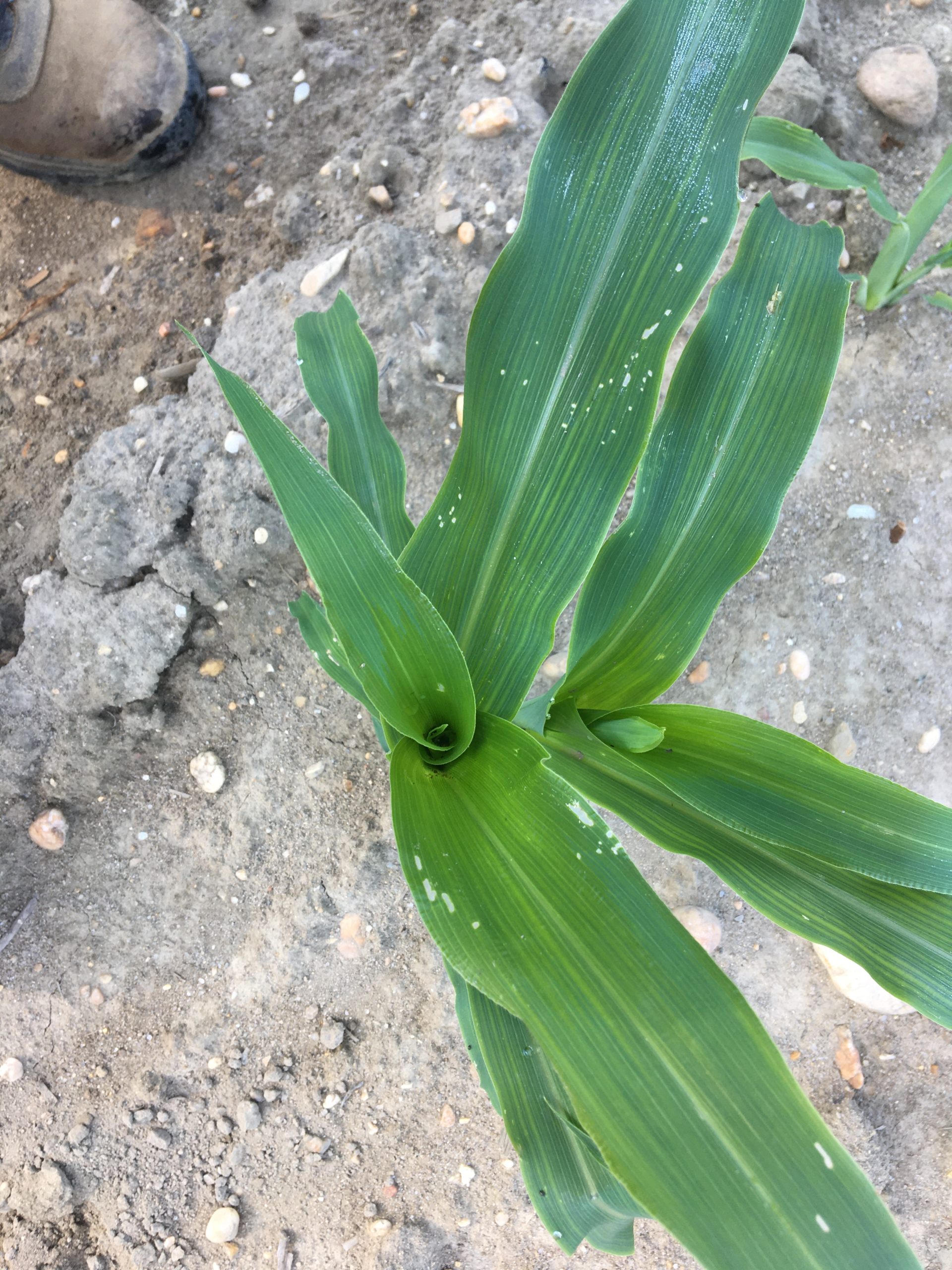
SlugThere have been fields of seedling stage sweet corn exhibiting signs of slug injury this past week (streaks on leaves with tissue eaten away, but leaving one layer of epidermal tissue).  Generally the slugs responsible for this injury are a smaller species than the one in the photo at left.   Additionally, corn stem weevils have been discovered this week causing holes in leaves similar to those bill bugs make, but without the linear pattern across the leaf as with bill bug – see photo at right.  The former (slugs) have been found in northern counties on heavier soil for the most part, while the corn stem weevil injury is occurring in Cape May County.  Slug injury Leafgenerally decreases as weather warms and the soil surface dries.  In rare instances of prolonged cool, wet weather, an application of slug bait may be warranted to limit injury to small plants.  In this case, damage should be found on the majority of plants, with slug-favorable weather in the forecast.  Corn stem weevil can sometimes causing severe damage from feeding on leaves and stems of seedlings. Adults are small, 1/8-3/16 inch, brown or black mottled. They hide during daylight beneath plants  or under debris on the soil surface. In recent years, they have been active only in May and June.  Consider an application of a labeled pyrethroid for beetle control in corn if injury is present on 12% or more seedlings.  For insecticide recommendations, see the Sweet Corn section of the 2020 Commercial Vegetable Production Guide.

[Read more…]