Search Results for: corn borer

Vegetable IPM Update 8/12/20

Note:  Cucurbit downy mildew has now been identified on cucumber in southern and northern NJ.  See the pumpkin and winter squash section below for more information.


Sweet Corn

European corn borer (ECB) adults remain very low, and no map will appear in this edition.

The highest nightly trap catches of ECB for the week ending 8/12/20 are as follows:

Califon   1 Farmingdale   1
Cinnaminson   1 Medford   1
Downer   1 Tabernacle   1


Fall armyworm (FAW)
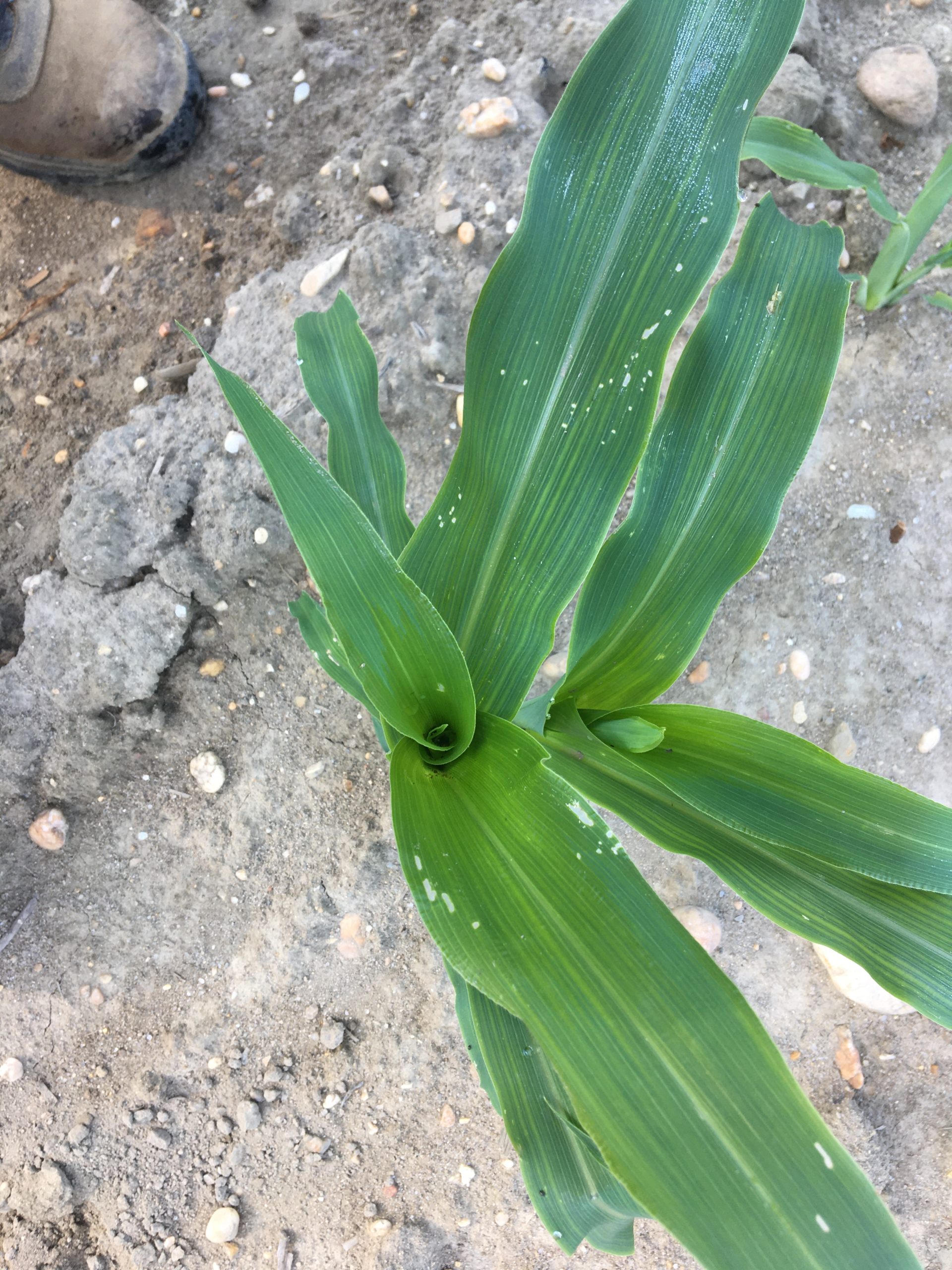
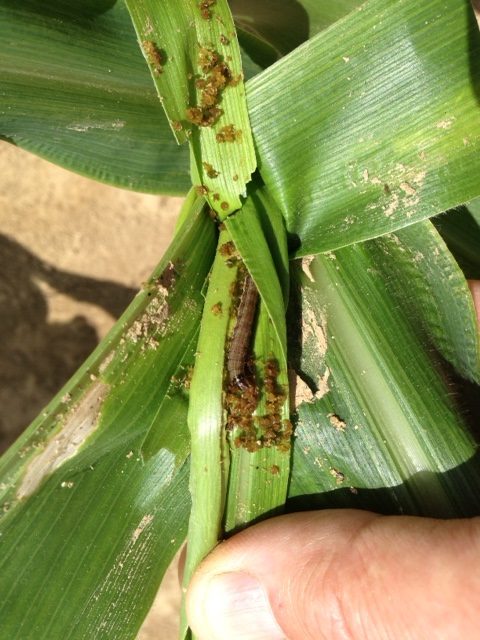
larval infestations continue, although at low to moderate levels around the state, with infestations as high as 26% in Cape May County.   FAW could increase dramatically in the late summer, resulting in significant injury to whorl and even seedling stage corn.  Injury from newly hatched larvae shows up as “window panes” or areas where leaf tissue has been eaten down the the lower epidermis (see photo at far left).  This injury leads down into the whorl.  As larvae gain size, they begin to consume leaf tissue in its’ entirety, creating ragged holes and lots of droppings (see photo at near left).  FAW can be tough to manage because it is resistant to synthetic pyrethroid insecticides (IRAC 3A) and because larvae are often covered by their own droppings, making contact with the insecticide more difficult.  Treat when 12% or more plants exhibit FAW injury alone, or in combination with ECB injury.


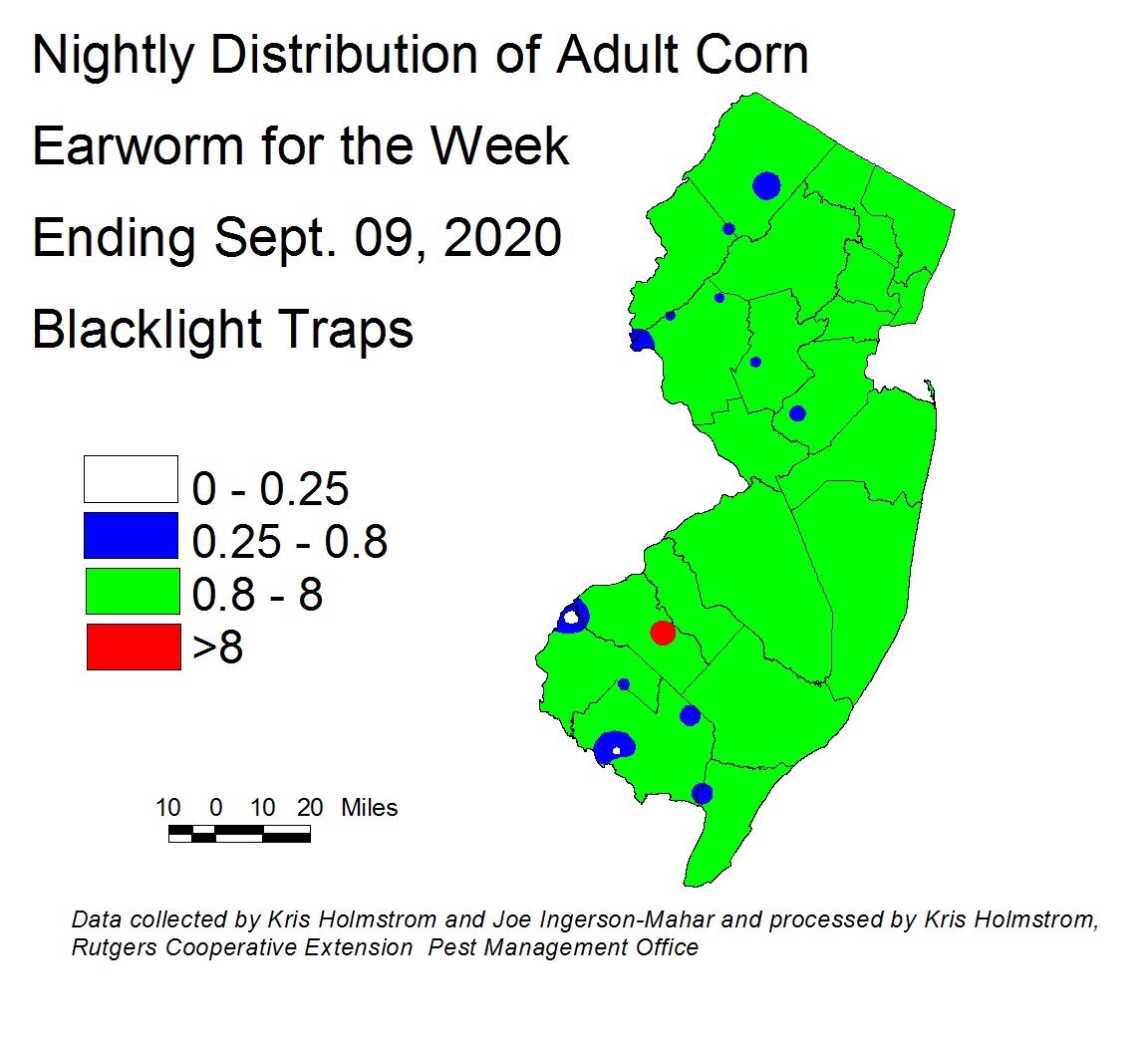
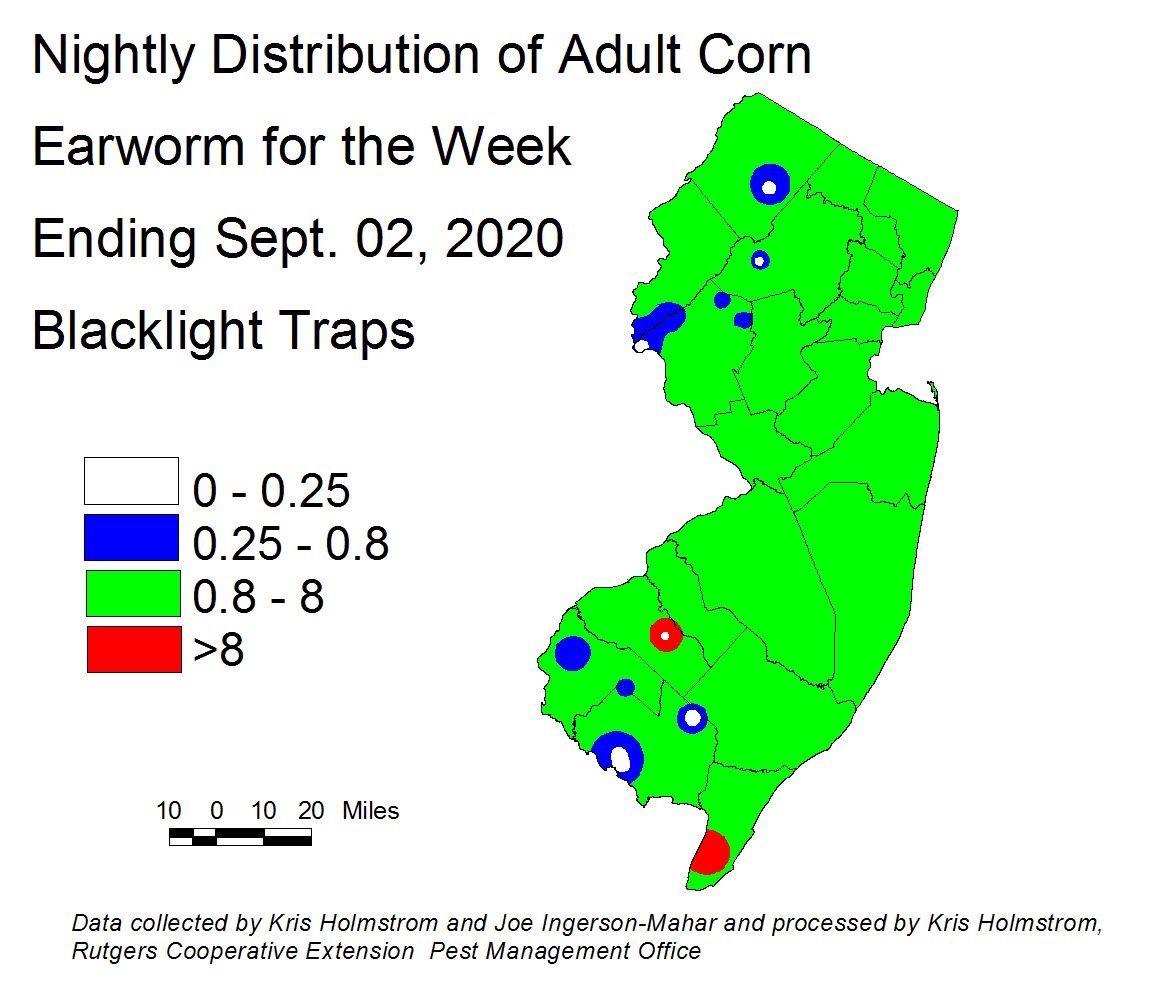
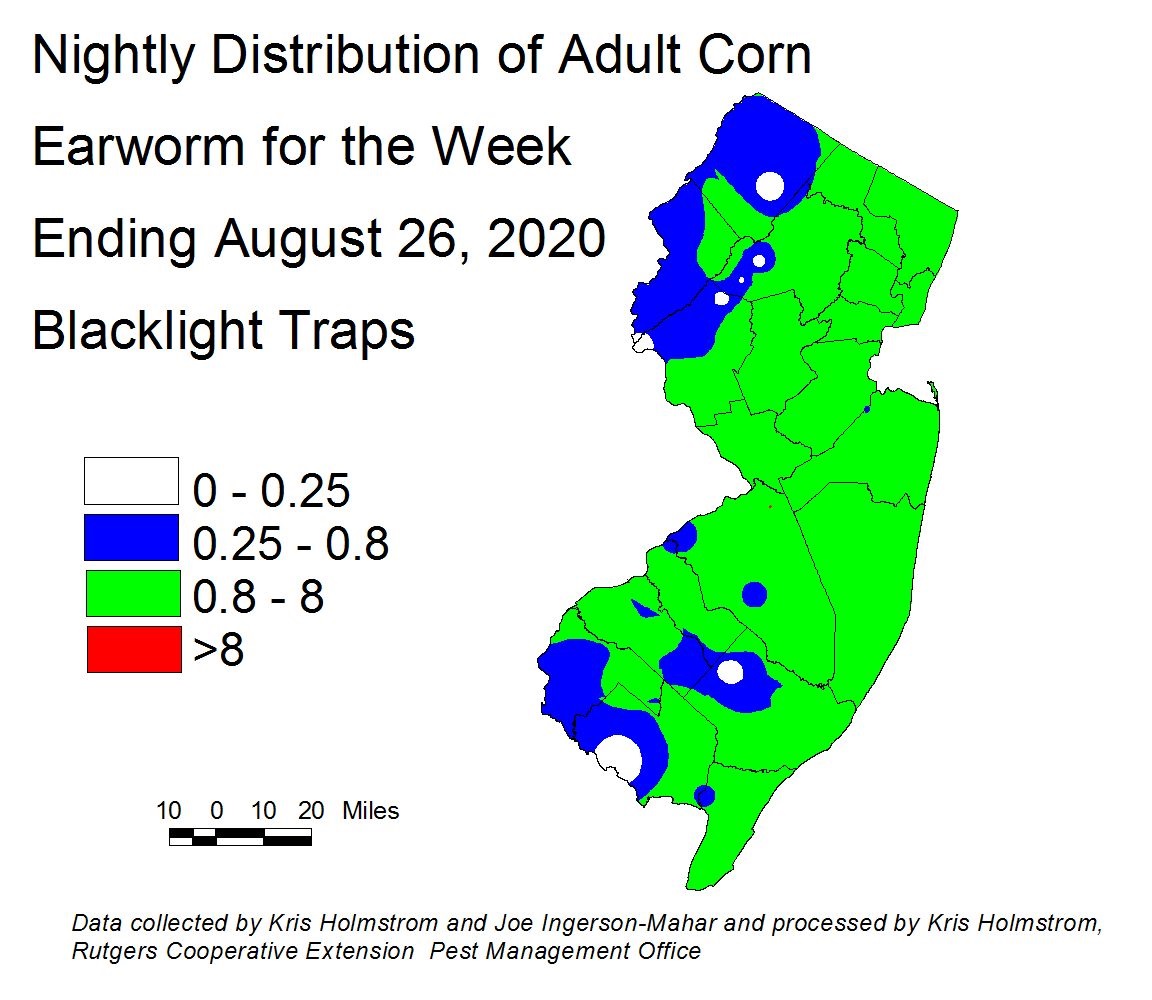
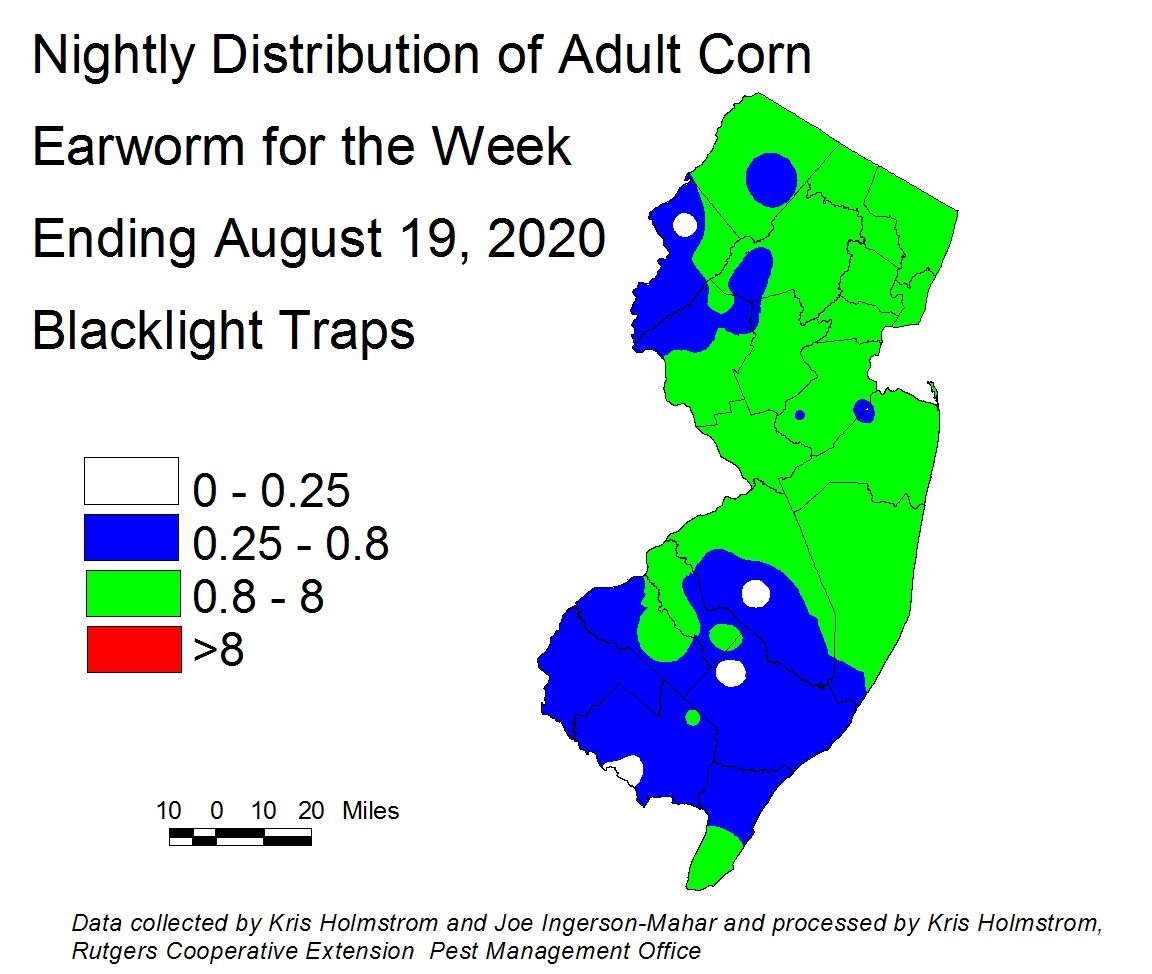
Corn earworm (CEW) moth captures are increasing gradually in blacklight traps.  This moderate mid-Summer population poses a significant risk to silking corn.  Catches remain somewhat variable (see map at left), with blue areas on this map representing a 4-5 day spray schedule.  Note that there is disagreement between blacklight and pheromone trap maps with regard to the southwestern counties.  See pheromone trap information below.


The highest nightly trap catches of CEW in black light traps for the week ending 8/12/20 are as follows:

Morristown   3 Green Creek   2 Farmingdale   1
Allamuchy   2 Bellemeade   1 New Egypt   1
Califon   2 Downer   1 Old Bridge   1
Georgetown   2 Elm   1 Princeton   1

[Read more…]

Vegetable IPM Update 8/05/20

Note: Due to the disruption caused by tropical storm Isaias, IPM technicians were unable to reach a number of blacklight and pheromone traps in the southern counties.  Maps in this edition are representations of data from contributing traps.

Sweet Corn

European corn borer (ECB) adults remain very low, with only a few traps in the southern counties catching individuals consistently.  Numbers are low and isolated such that no map will appear in this edition.

The highest nightly trap catches of ECB for the week ending 8/05/20 are as follows:

Cinnaminson   1 Medford   1
Downer   1 South Branch   1
Green Creek   1


Fall armyworm (FAW) larval infestations are persisting at generally low levels around the state.   FAW could increase dramatically in the late summer, resulting in significant injury to whorl and even seedling stage corn.  Injury from newly hatched larvae shows up as “window panes” or areas where leaf tissue has been eaten down the the lower epidermis (see photo at far left).  This injury leads down into the whorl.  As larvae gain size, they begin to consume leaf tissue in its’ entirety, creating ragged holes and lots of droppings (see photo at near left).  FAW can be tough to manage because it is resistant to synthetic pyrethroid insecticides (IRAC 3A) and because larvae are often covered by their own droppings, making contact with the insecticide more difficult.  Treat when 12% or more plants exhibit FAW injury alone, or in combination with ECB injury.


Corn earworm (CEW) moth captures have remained steady in blacklight traps this past week.  This moderate mid-Summer population poses a significant risk to silking corn.  Blacklight catches were highest overall along the Atlantic coast (see map at left), with blue areas on this map representing a 4-5 day spray schedule.


The highest nightly trap catches of CEW in black light traps for the week ending 8/05/20 are as follows:

Allamuchy   2 Downer   1 Georgetown   1
Bellemeade   1 East Vineland   1 Green Creek   1
Crosswicks   1 Farmingdale   1 Hillsborough   1
Denville   1 Flanders   1 Matawan   1

[Read more…]

Vegetable IPM Update 7/29/20

Sweet Corn

European corn borer (ECB) adults continue to be very low, although a few traps in Cape May and Burlington counties have shown initial signs of a second flight.  Numbers are low and isolated such that no map will appear in this edition.

The highest nightly trap catches of ECB for the week ending 7/29/20 are as follows:

Eldora   2 Downer   1
Cinnaminson   1 Medford   1


Fall armyworm (FAW) larval infestations are generally low, but IPM technicians report more frequent occurrences in the central counties.   This is the time of the summer when FAW can show up, resulting in significant injury to whorl and even seedling stage corn.  Injury from newly hatched larvae shows up as “window panes” or areas where leaf tissue has been eaten down the the lower epidermis (see photo at far left).  This injury leads down into the whorl.  As larvae gain size, they begin to consume leaf tissue in its’ entirety, creating ragged holes and lots of droppings (see photo at near left).  FAW can be tough to manage because it is resistant to synthetic pyrethroid insecticides (IRAC 3A) and because larvae are often covered by their own droppings, making contact with the insecticide more difficult.  Treat when 12% or more plants exhibit FAW injury alone, or in combination with ECB injury.


Corn earworm (CEW) moth captures have remained largely unchanged in blacklight traps this past week.  This moderate mid-Summer population poses a significant risk to silking corn.  Blacklight catches were highest overall along the Atlantic coast (see map at left), with blue areas on this map representing a 4-5 day spray schedule.


The highest nightly trap catches of CEW in black light traps for the week ending 7/29/20 are as follows:

Denville  2 Crosswicks   1 Hackettstown   1
Jones Island   2 East Vineland   1 Medford   1
Matawan   2 Elm   1 New Egypt   1
Allamuchy   1 Green Creek   1 Tabernacle   1

[Read more…]

Vegetable IPM Update 7/22/20

Sweet Corn

European corn borer (ECB) adults continue to be very low, and no map will appear in this edition.

The highest nightly trap catches of ECB for the week ending 7/22/20 are as follows:

Allamuchy   1 Crosswicks   1
Denville   1
Cinnaminson   1 Downer   1


Fall armyworm (FAW) larval infestations are light and widely scattered.   This is the time of the summer when FAW can show up, resulting in significant injury to whorl and even seedling stage corn.  Injury from newly hatched larvae shows up as “window panes” or areas where leaf tissue has been eaten down the the lower epidermis (see photo at left).  This injury leads down into the whorl.  As larvae gain size, they begin to consume leaf tissue in its’ entirety, creating ragged holes and lots of droppings (see photo at right).  FAW can be tough to manage because it is resistant to synthetic pyrethroid insecticides (IRAC 3A) and because larvae are often covered by their own droppings, making contact with the insecticide more difficult.  Treat when 12% or more plants exhibit FAW injury alone, or in combination with ECB injury.


Corn earworm (CEW) moth captures increased in blacklight traps this past week.   Although the increased numbers do not represent a large influx, they do pose an elevated risk to silking corn.  Blacklight catches were highest overall along the Delaware Bay (see map at left), with blue areas on this map representing a 4-5 day spray schedule.


The highest nightly trap catches of CEW in black light traps for the week ending 7/22/20 are as follows:

Centerton   2 Cinnaminson   1 New Egypt   1
Allamuchy   1 East Vineland   1 Old Bridge   1
Bellemeade   1 Elm   1 Pedricktown   1
Cedarville   1 Jones Island   1 Springdale   1

[Read more…]

Vegetable IPM Update 7/15/20

Sweet Corn

European corn borer (ECB) adults have all but disappeared over the past week, and no map will appear in this edition.    Larval infestations are sparse now, as the last corn plantings to be exposed to ECB in the whorl now have entered the silk stage.

The highest nightly trap catches of ECB for the week ending 7/15/20 are as follows:

Califon   1 Eldora   1
Cinnaminson   1 Old Bridge   1
Crosswicks   1 Tabernacle   1

Fall armyworm (FAW) has declined, and larval infestations are no longer evident in the northern counties.  There are still low infestations in Cape May County, and moths are being captured there as well as near the Burlington/Camden County border.  This is the time of the summer when FAW can show up, resulting in significant injury to whorl and even seedling stage corn.  Injury from newly hatched larvae shows up as “window panes” or areas where leaf tissue has been eaten down the the lower epidermis (see photo at left).  This injury leads down into the whorl.  As larvae gain size, they begin to consume leaf tissue in its’ entirety, creating ragged holes and lots of droppings (see photo at right).  FAW can be tough to manage because it is resistant to synthetic pyrethroid insecticides (IRAC 3A) and because larvae are often covered by their own droppings, making contact with the insecticide more difficult.  Treat when 12% or more plants exhibit FAW injury alone, or in combination with ECB injury.

Corn earworm (CEW) moth captures remained steady at reasonably low levels in blacklight traps this past week.   Despite these lower counts,  silking corn continues to require protection from this pest.  Blacklight catches remain highest overall along the coast (see map at left).

The highest nightly trap catches of CEW in black light traps for the week ending 7/15/20 are as follows:

Matawan   5 Denville   1 Farmingdale   1
Centerton   1 Downer   1 Jones Island   1
Clinton   1 East Vineland  1 Medford   1
Crosswicks   1 Elm   1 Milltown   1

[Read more…]

Vegetable IPM Update 7/08/20

Sweet Corn

European corn borer (ECB) moth catches have fallen to very low levels over the past week.   Remaining activity is highest in Gloucester and Camden counties (see ECB map at left).  Threshold (12%+) level larval infestations are declining now, as the last corn plantings to be exposed to ECB in the whorl now are entering the silk stage.  Larval infestations should decline sharply until the second flight appears.


The highest nightly trap catches of ECB for the week ending 7/08/20 are as follows:

Cinnaminson   1 Georgetown   1
Downer   1 Long Valley   1
Eldora   1 New Egypt   1
Elm   1 Springdale   1

Fall armyworm (FAW) larvae have appeared in low numbers in fields in Cape May County, as well as in Hunterdon and Morris counties.  This pest seems to have arrived last week some time, and has since subsided somewhat.  This is the time of the summer when FAW can show up, resulting in significant injury to whorl and even seedling stage corn.  Injury from newly hatched larvae shows up as “window panes” or areas where leaf tissue has been eaten down the the lower epidermis (see photo at left).  This injury leads down into the whorl.  As larvae gain size, they begin to consume leaf tissue in its’ entirety, creating ragged holes and lots of droppings (see photo at right).  FAW can be tough to manage because it is resistant to synthetic pyrethroid insecticides (IRAC 3A) and because larvae are often covered by their own droppings, making contact with the insecticide more difficult.  Treat when 12% or more plants exhibit FAW injury alone, or in combination with ECB injury.

Corn earworm (CEW) moth captures have declined in blacklight traps this past week.   Despite lower moth levels,  silking corn continues to require protection from this pest.  Blacklight catches remain highest overall along the coast (see map at left).

The highest nightly trap catches of CEW in black light traps for the week ending 7/08/20 are as follows:

Matawan   2 Medford   1
Cinnaminson   1 Milltown   1
Downer   1 New Egypt   1
Farmingdale   1 Sergeantsville 1

[Read more…]