Peach: Bacterial Spot: Copper formulations should be used starting at petal fall to suppress bacterial spot. Generally we recommend starting at 0.5 ozs metallic copper and gradually lowering the rate as the season progresses. The rate applied will depend on the formulation. Dr. Lalancette published a chart listing common copper formulations and rates for peach […]
Continue reading...May 21, 2024 Andy Wyenandt
Identifying and controlling common leaf spot in strawberry
Strawberry leaf spot, caused by the soil-borne fungal pathogen, Mycosphaerella fragariae, can infect leaves, petioles, runners, fruit stalks (pedicels), and berry caps or calyxes. Small, dark purple to reddish-purple, round spots, 1/8 to 1/4 inch in diameter (3 to 6 millimeters), appear on the upper leaf surfaces. The center of the spots soon become tan or […]
Continue reading...May 20, 2024 Tim Waller
Nursery Update 5/20/24 – Red-headed flea beetle and flathead borer ADULT emergence, Boxwood blight, bagworms, more
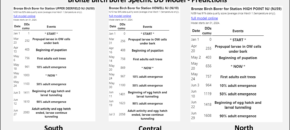
Please note: The Rutgers Nursery and Green Industry Working Group is working to deliver regular pest and disease updates throughout the season. These will be in addition to important alerts, critical topics, and pesticide credit opportunities. This tool is made for you, the commercial agriculture business, so please let us know if there are particular […]
Continue reading...May 20, 2024 Andy Wyenandt
NEWA Disease and Insect Forecasting System
Since 2011 the vegetable working group has teamed up with Cornell University’s NEWA to bring tomato and potato late blight and early blight forecasting to vegetable growers throughout New Jersey. Over 50 weather stations from Sussex to Cape May County now offer disease as well as insect forecasting services for numerous important pests.
Continue reading...May 19, 2024 Kate Brown
Beat the Heat: Recognize Signs of Heat Illness
Several types of heat-related illnesses can affect workers and symptoms may be non-specific. When a worker is performing physical labor in warm environments, any unusual symptom may be a sign of heat illness. The chart below from OSHA outlines symptoms and signs that may indicate heat stress. Note that common signs and symptoms include muscle pain, […]
Continue reading...May 19, 2024 Andy Wyenandt
Identifying and controlling Botrytis in high tunnel and greenhouse tomato production
Botrytis, or gray mold, caused by the fungus, Botrytis cinerea, can cause significant losses in high tunnel and greenhouse tomato production if not controlled properly. The pathogen can rapidly spread during periods when structures are closed and when relative humidity remains high for long periods of time. This often occurs when outside weather remains cool […]
Continue reading...