Organic Farm Advisory

The Plant & Pest Advisory serves NJ growers by reporting on important pests and recommending responses that are grounded in reproducible trials.

Articles in this section contain information helpful to the NJ commercial organic grower.
Sharing organic practice trial results between land-grant universities is a cost effective way to create a common knowledge base built on the strengths of individual programs. In the sidebar, find institutions with programs in organic agriculture which augment knowledge developed at the Rutgers New Jersey Ag Experiment Station.

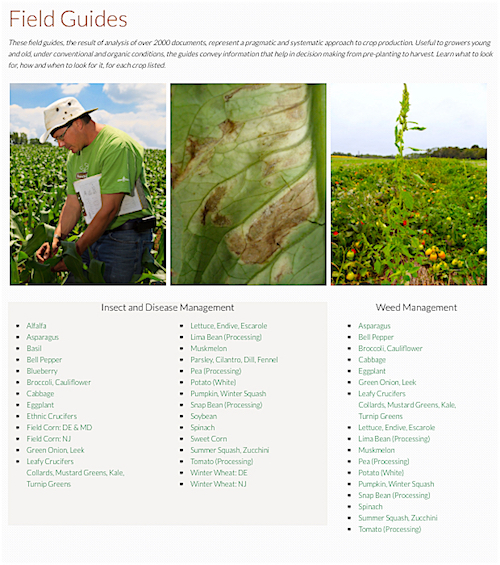
Rutgers Cooperative Extension Field Guides: These concise guides help with decision making from pre-planting to harvest. For each crop listed, learn what pests to proactively look for as the season progresses, how to look for them, and when to take action.

Field Guide List

IPM Update 5/08/19

Sweet Corn

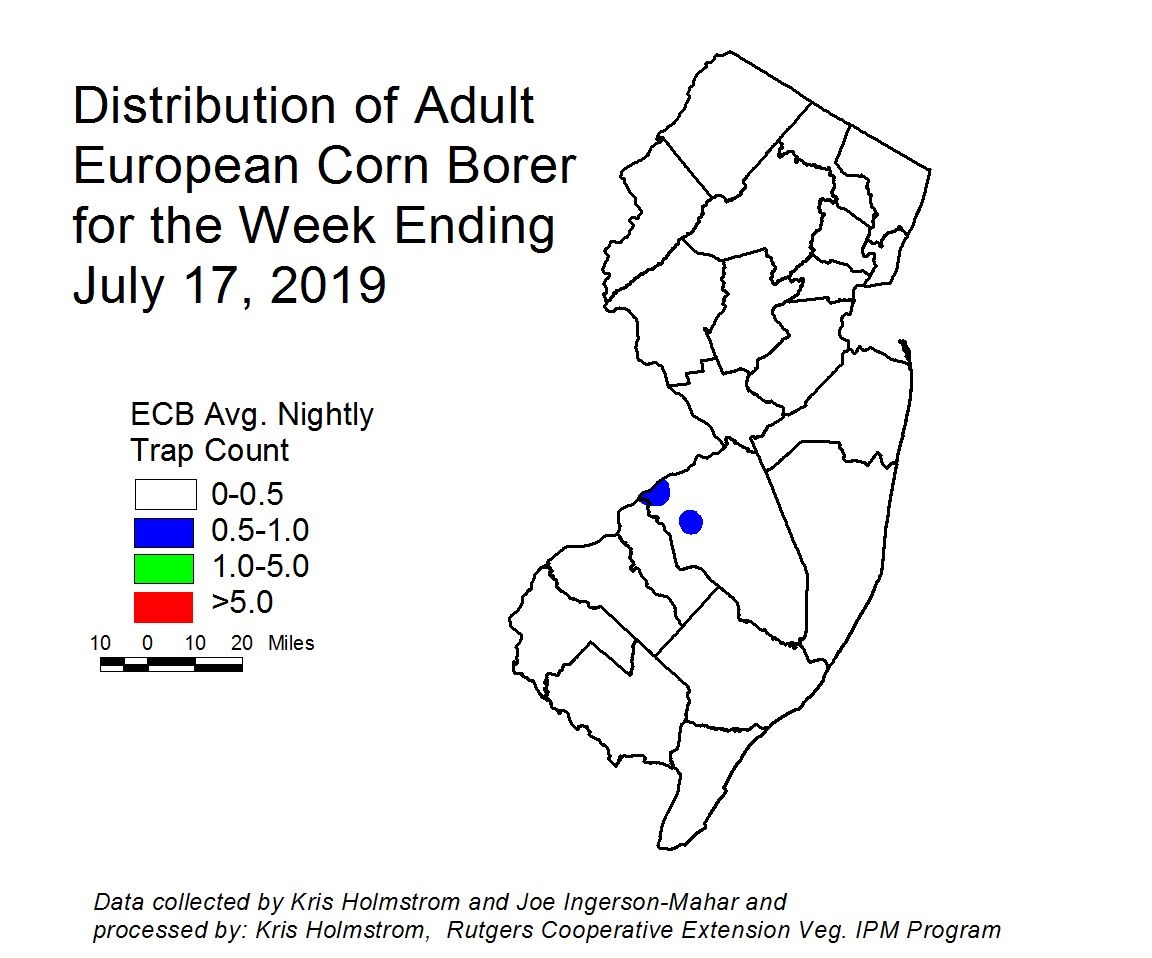
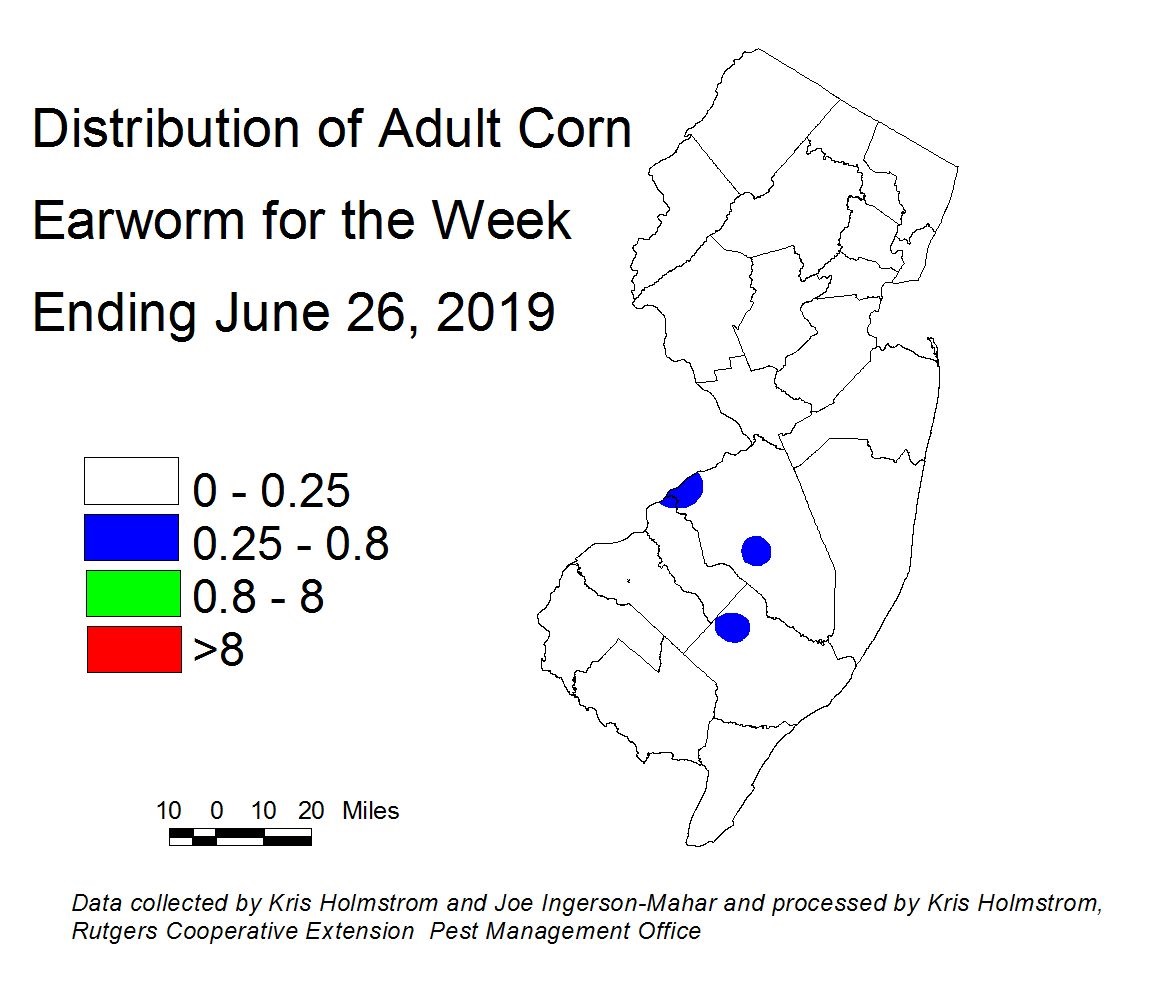
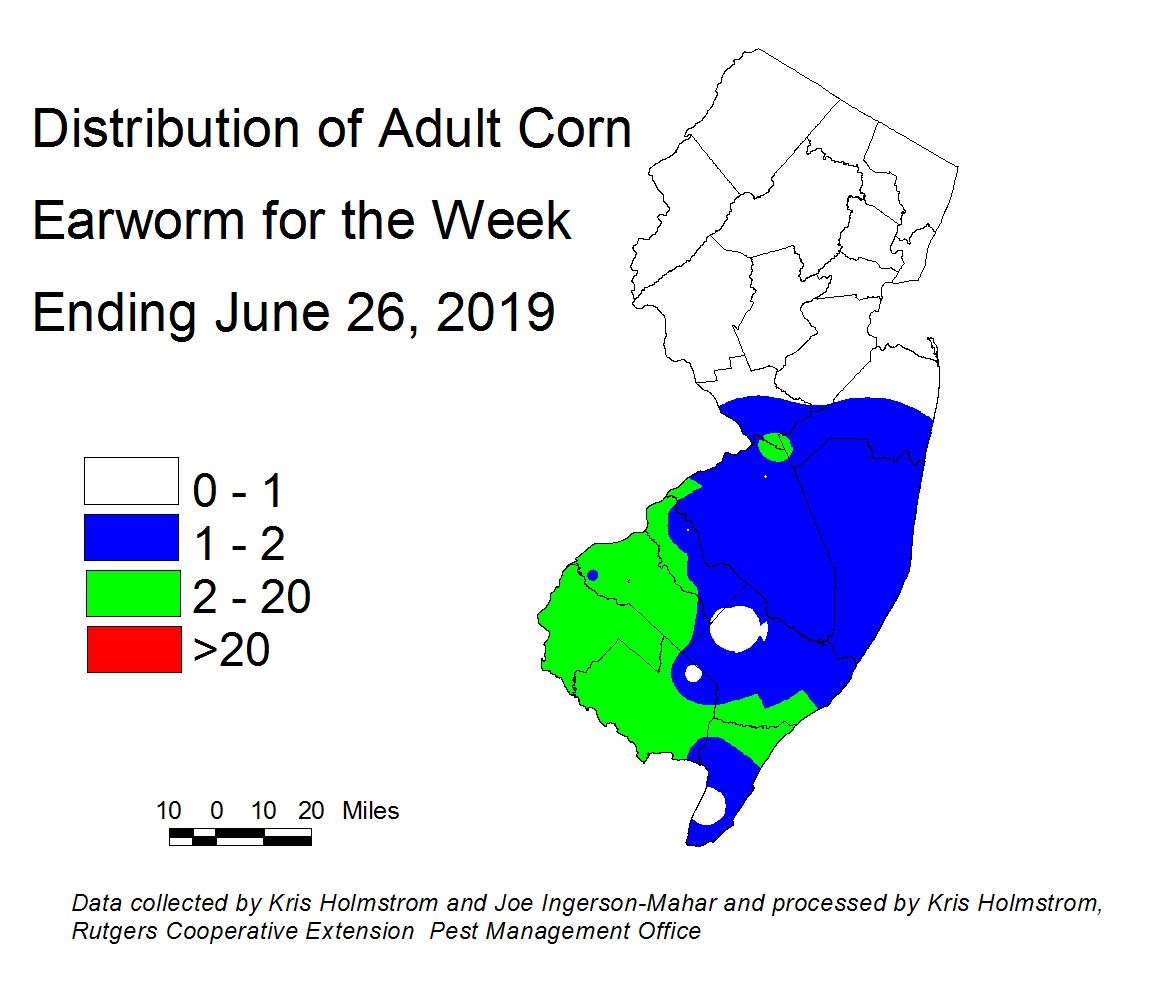
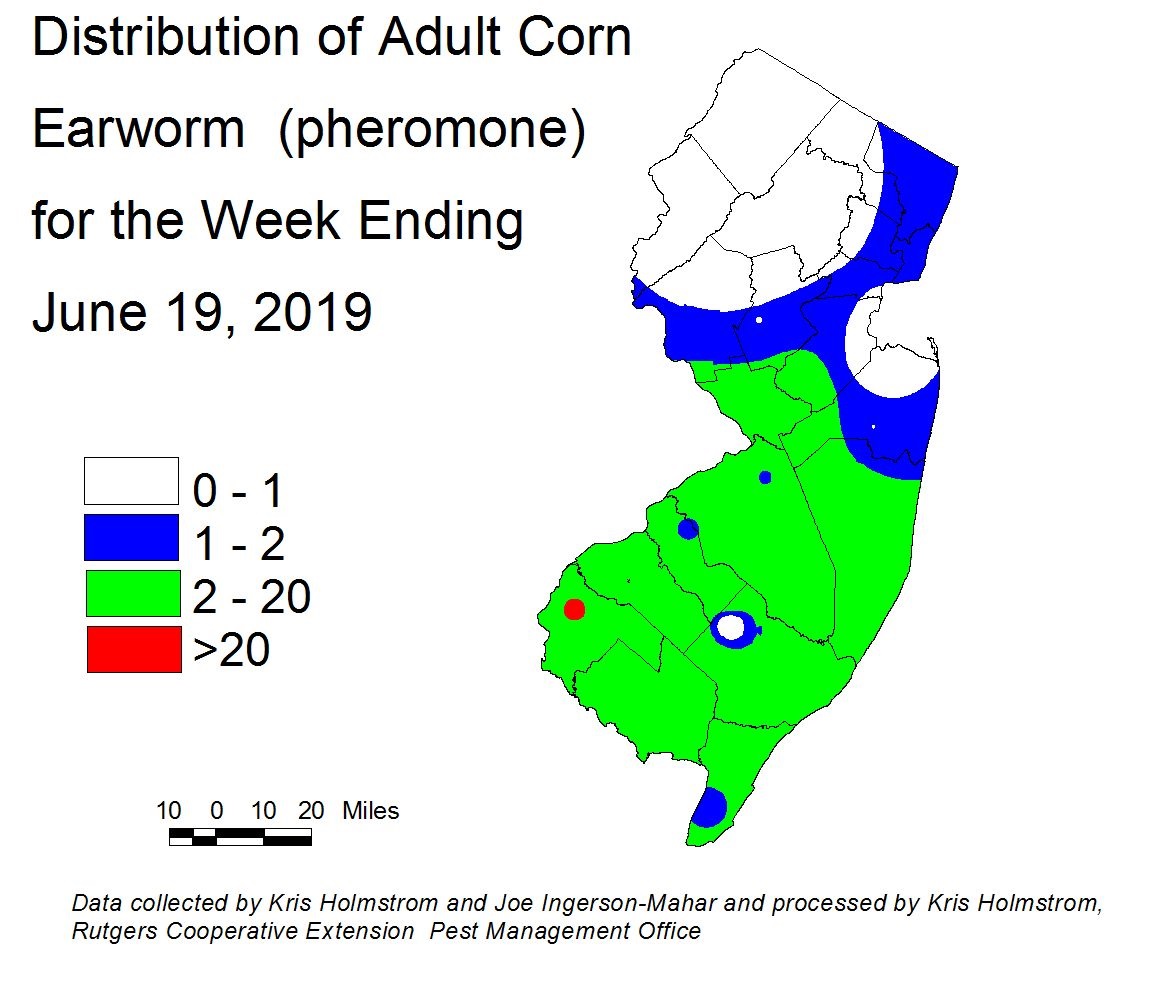
IPM Program personnel are currently finishing deployment of the black light trap network in New Jersey.  At present, we are approximately 80% operational and have begun to monitor traps.  To date, no corn earworm (CEW) have been captured.  The low numbers of European corn borer (ECB) moths that have been caught do not allow us to produce a map image.  As numbers increase, look for population maps of ECB, CEW and CEW catches from pheromone traps in this weekly publication.  The Vegetable IPM Program is expanding the use of CEW pheromone traps to include central and northern counties this year.  The resulting full-state maps will include interpretive information.

The highest nightly trap catches of ECB for the week ending 5/08/19 are as follows:

Georgetown   1              Woodstown   1

Hillsborough   1

European corn borer egg mass on a pepper leaf.

[Read more…]

Allium leaf miner update: 09/20/19

Allium Leaf Miner

Allium leaf miner (ALM) feeding/egglaying scars were detected in chives and scallions near Princeton (Mercer Co.), NJ on Friday of this week.  This indicates that the second (fall) flight of these flies is now underway, and damage is occurring.

Allium leafminer oviposition scars on onion

Photo: Sabrina Tirpak. Allium leafminer oviposition scars on onion

Growers should consider initiating the control method of their choice at this time.  Affected crops include chives, scallions, garlic, onions and leeks.

Floating row covers, kept on until the second flight ends will help minimize access to plants.  Insecticide applications targeting adults may be helpful as well, although frequency of applications is uncertain.  Spinosyn materials (Radiant, Entrust (OMRI approved)), pyrethroids (Mustang Maxx, Warrior), and pyrethrin materials (Pyganic (OMRI approved)), neonicotinoids (Scorpion, Venom) and the insect growth regulator Trigard are labeled for miner control.

Adult activity and observations of feeding will be reported on in the IPM Update as they occur.  At this time, all growers should respond to the second adult generation.  We will attempt to identify the end of the second flight so that growers know when the risk of infestation has abated.


Veg IPM Update: Allium leaf miner 04/10/19

Allium Leaf Miner

Allium leaf miner (ALM) feeding was detected in one commercial planting of chives near Lawrenceville, NJ on Tuesday of this week.  Degree-day accumulations at this site were 46.5, base 50 F as of Tuesday.  Sticky traps at this same site yielded no flies.  Additionally, trap and inspection sites at Milford (Hunterdon Co. (garlic)), and Oldwick (Hunterdon Co. (garlic and chives)), had neither feeding signs nor flies on sticky cards.

Allium leafminer oviposition scars on onion

Photo: Sabrina Tirpak. Allium leafminer oviposition scars on onion

Within the week, another monitoring site near Hackettstown (Warren Co.) will be added.    Reasonable spring weather that we are now experiencing is conducive to the development of the first adult generation.  Growers should consider initiating the control method of their choice at this time.  Affected crops include chives, scallions, garlic, onions and leeks.

Floating row covers, kept on until the first flight ends will help minimize access to plants.  Insecticide applications targeting adults may be helpful as well, although frequency of applications is uncertain.  Spinosyn materials (Radiant, Entrust (OMRI approved)), pyrethroids (Mustang Maxx, Warrior), and pyrethrin materials (Pyganic (OMRI approved)), neonicotinoids (Scorpion, Venom) and the insect growth regulator Trigard are labeled for miner control.

Adult activity and observations of feeding will be reported on in the IPM Update as they occur.  At this time, all growers should respond to the onset of the first adult generation.  We will attempt to identify the end of the first flight so that growers know when the risk of infestation has abated.


Register Now for the North Jersey Commercial Vegetable and Fruit Grower Meetings

North Jersey Commercial Vegetable Growers Meeting

February 28, 2019

North Jersey Commercial Fruit Growers Meeting

March 7, 2019

Hunterdon County Complex

314 State Rt. 12, Building #1

Flemington, NJ 08822

For registration and program details contact Cynthia Triolo at 973-285-8306 or ctriolo@co.morris.nj.us

SAVE THE DATE!

North Jersey Commercial Vegetable Grower Meeting

February 28, 2019

&

North Jersey Commercial Fruit Grower Meeting

March 7, 2019


Hunterdon County Complex

314 State Route 12, Bldg. #1

Flemington, New Jersey 08822

8:30 am – 4:00 pm

Detailed program and registration details forthcoming


Questions? Please contact: Cynthia Triolo (Morris County Cooperative Extension) at 973.285.8306 or ctriolo@co.morris.nj.us

Or

Kim Frey (Hunterdon County Cooperative Extension) at 908-788-1339 or kfrey@co.hunterdon.nj.us

Spotted Lanternfly Basics Webinars

In conjunction with the New York State IPM Program and the Department of Agriculture and Markets, the Northeastern IPM Center will host a collection of webinars, titled “Spotted Lanternfly Basics.” Each webinar will focus on, and be tailored to, a specific commodity group:

Spotted Lanternfly Basics for Grape and Apple Industries (Feb. 26, 2019, 1:00 p.m.). Registration link: https://cornell.zoom.us/webinar/register/WN_d_3KfxQ9SuKHyhk6pM7NCA

Spotted Lanternfly Basics for Hops, Berry, and Vegetable Growers (Feb. 26, 2019, 10:00 a.m.). Registration link: https://cornell.zoom.us/webinar/register/WN_ONViZLocSBCOKIv-sjoZVg

Spotted Lanternfly Basics for Christmas Tree Growers (Mar. 4, 2019, 10:00 a.m.). Registration link: https://cornell.zoom.us/webinar/register/WN_7eehVeBvSBOgM3aTXOtaew

Spotted Lanternfly Basics for Nursery, Greenhouse, and Landscape Industries (Mar. 4, 2019, 1:00 p.m.). Registration link: https://cornell.zoom.us/webinar/register/WN_u5mYQOHMSESWFcNoftt2Nw

All webinars will follow a similar format that covers spotted lanternfly biology, identification, and hosts, monitoring and management strategies, and a regulatory update. While the content may be relevant to audiences throughout the Northeast, management practices covered will be specific to New York. Participants will be encouraged to ask questions.

For more information and registration links, go to:

http://neipmc.org/go/mYey