Articles in this section contain information helpful to the NJ commercial organic grower.
Sweet Corn
Note: Traps in some portions of southern New Jersey were not serviced over the past week. The impact of this will be addressed in individual sweet corn pest sections.
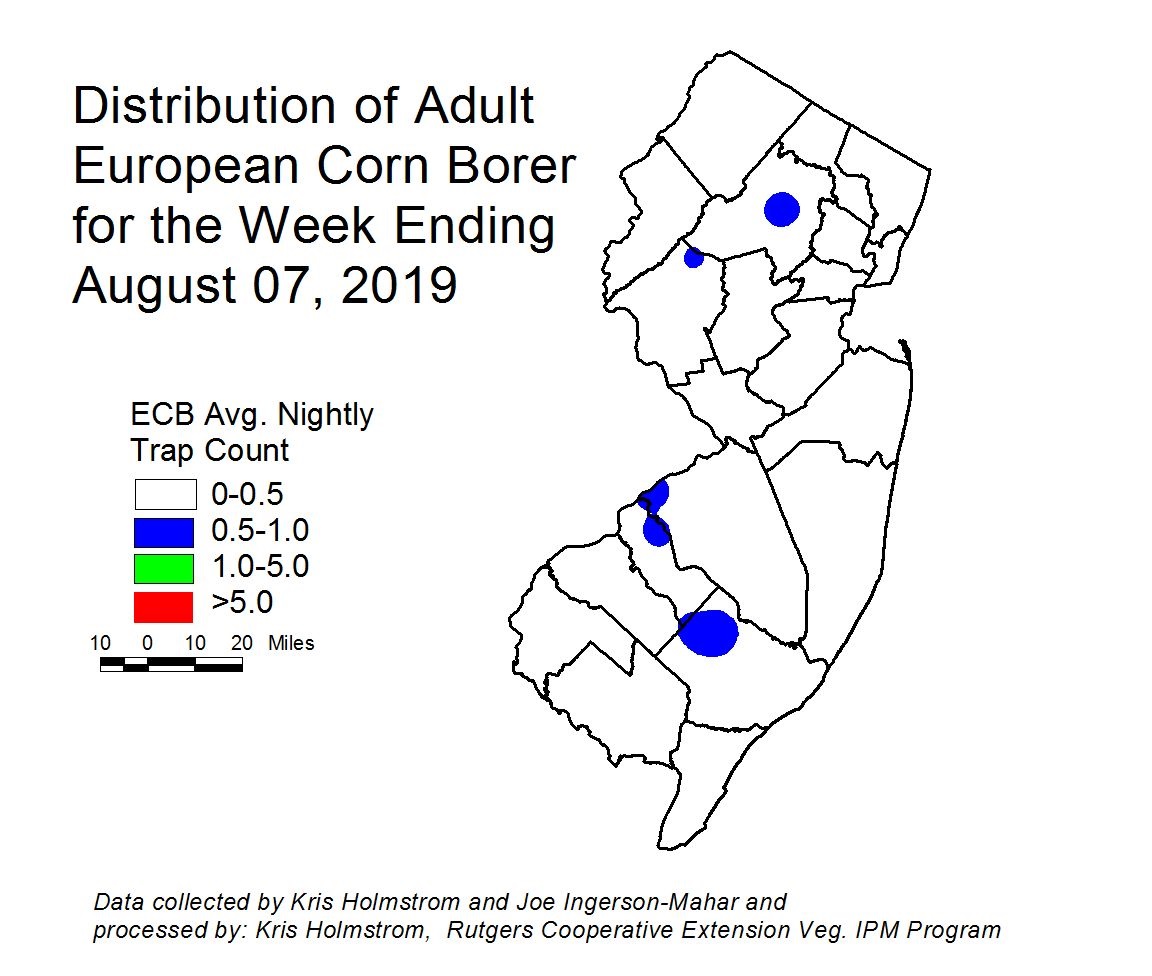
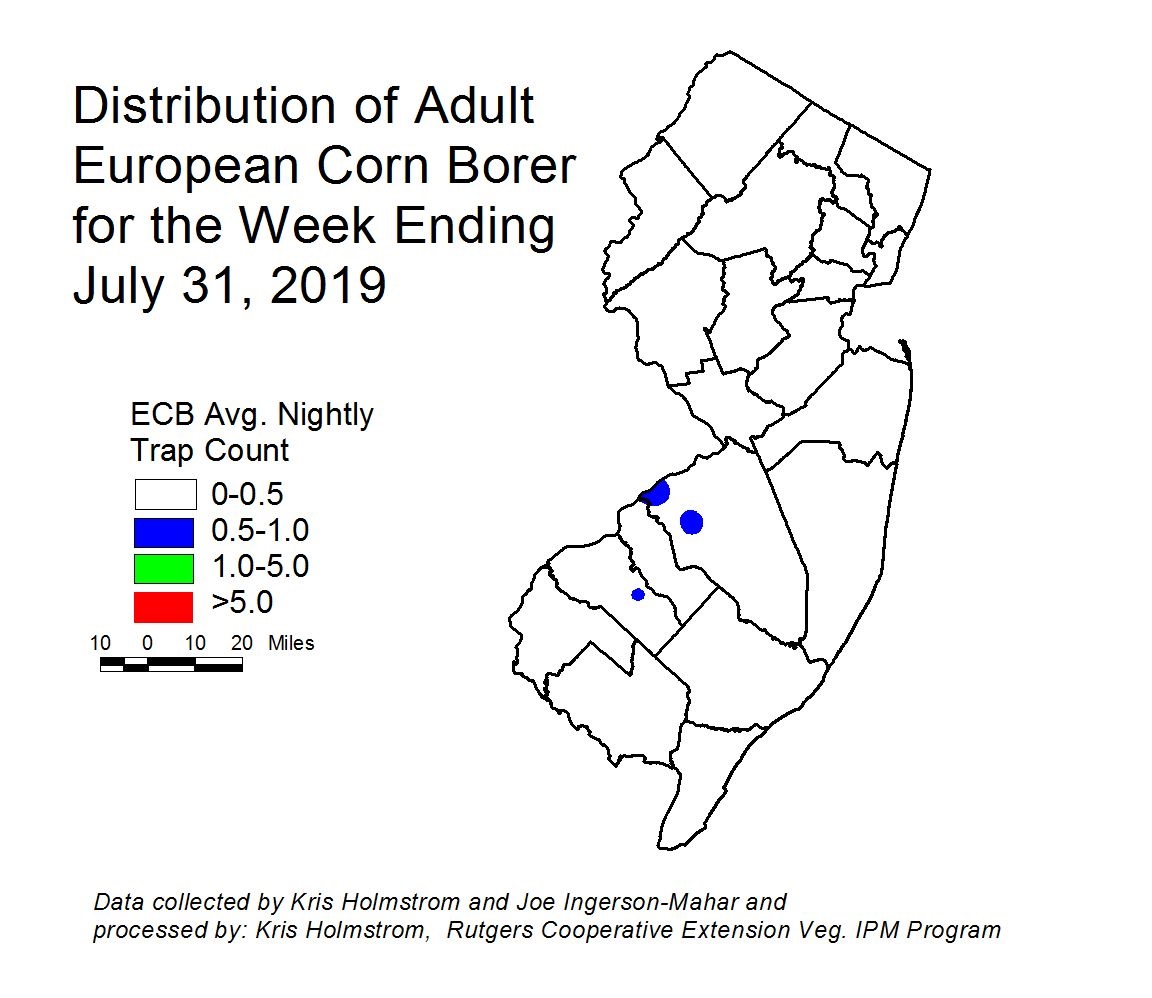
European corn borer (ECB) moth captures have decreased generally over the past week and no map will appear in this addition. Feeding in late season whorl and pretassel corn in northern NJ has increased, with some plantings exceeding the 12% threshold. This week, unsprayed sweet corn in the sentinel plots (Providence) at Snyder Farm in Hunterdon County had 47% ECB infested ears, despite little indication of adult activity in the area. Most of these larvae were in the tips of ears, which underscores the importance of the silk spray schedule in not only controlling CEW, but ECB that move from tassel to ear during the silk period. In combination with fall armyworm (FAW) feeding, action thresholds have been exceeded in all areas of the state.
Growers should continue to scout whorl and pre-tassel stage plantings weekly and consider treating when infested plants exceed 12% in a 50 plant sample. As plantings proceed to the pre-tassel stage, ECB larvae may be found in emerging tassels. It is a good idea to treat individual plantings as they move into the full tassel/first silk stage one time. This eliminates any ECB larvae that have emerged with the tassels as they begin to move down the stalk to re-enter near developing ears.
Useful insecticides for this particular application include synthetic pyrethroids (IRAC Grp 3), spinosyns (including OMRI approved Entrust) IRAC Grp 5), and diamides such as Coragen (IRAC Grp 28) or materials such as Besiege which include the active ingredient in Coragen. Synthetic pyrethroids alone should NOT be used for corn earworm (CEW) protection on silking corn. Control with these materials is very inconsistent.
The highest nightly black light trap catches of ECB for the week ending 8/28/19 are as follows:
| Downer 3 | Hillsborough 1 | South Branch 1 |
| Califon 1 | Milltown 1 | |
| Denville 1 | Sergeantsville 1 |
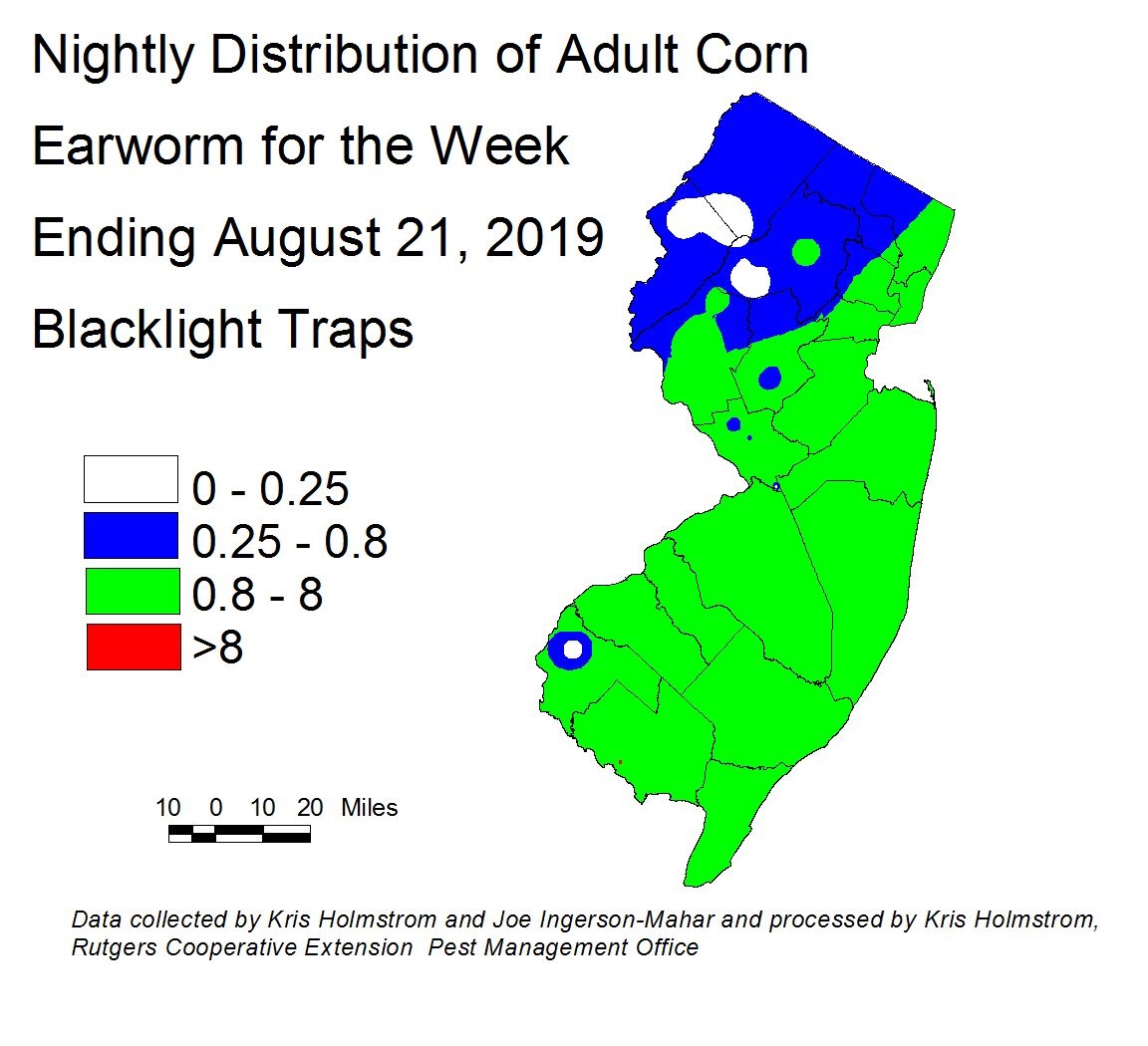
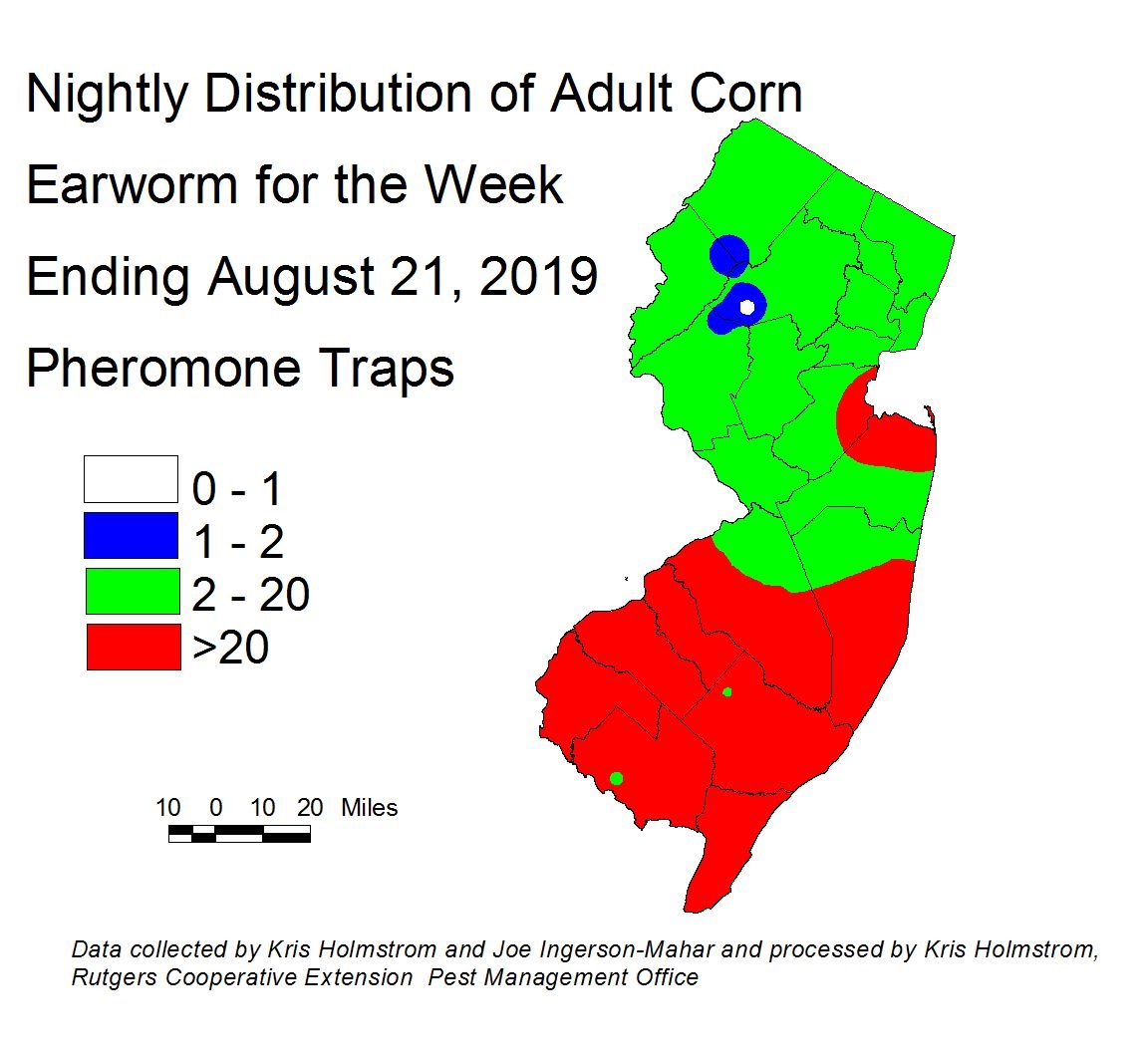
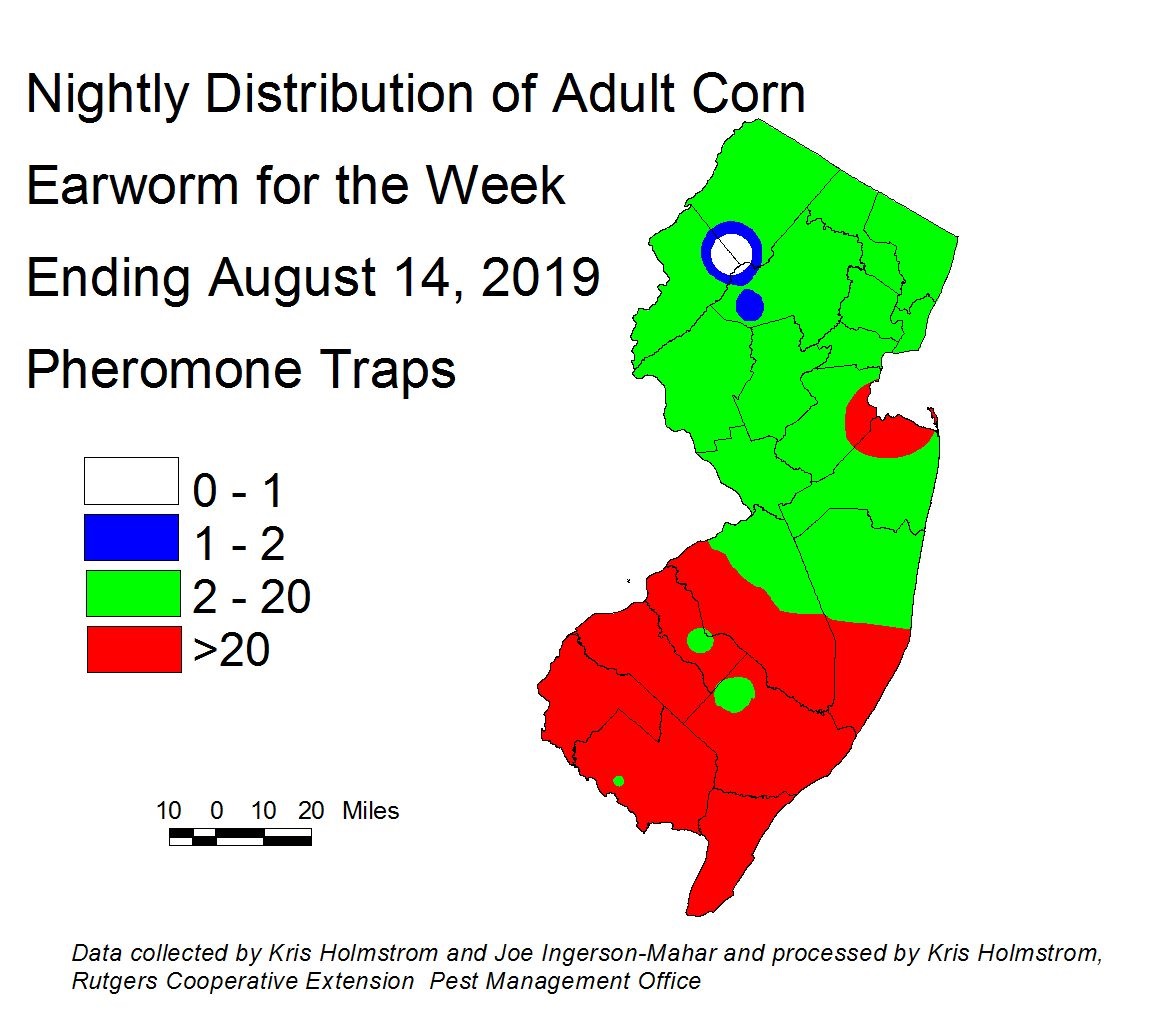
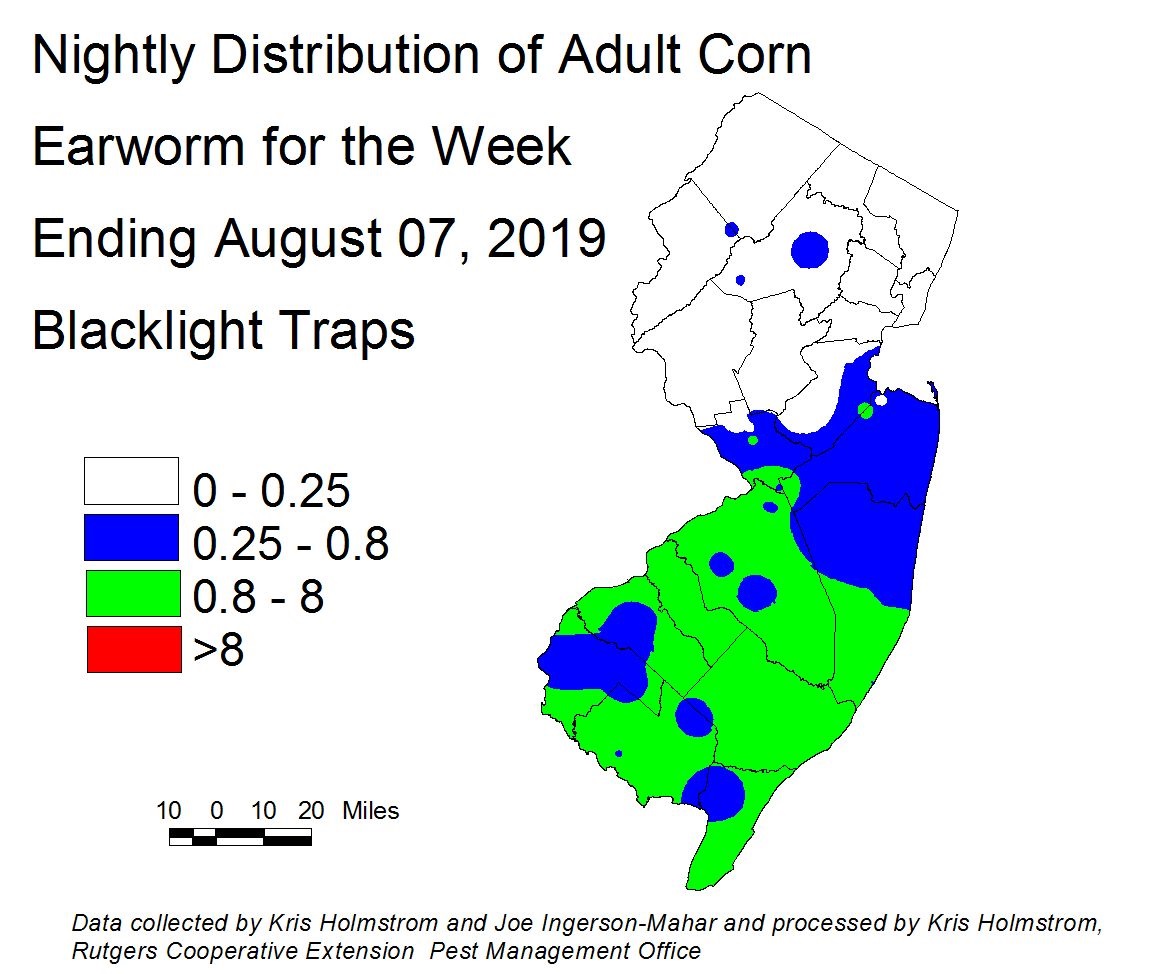
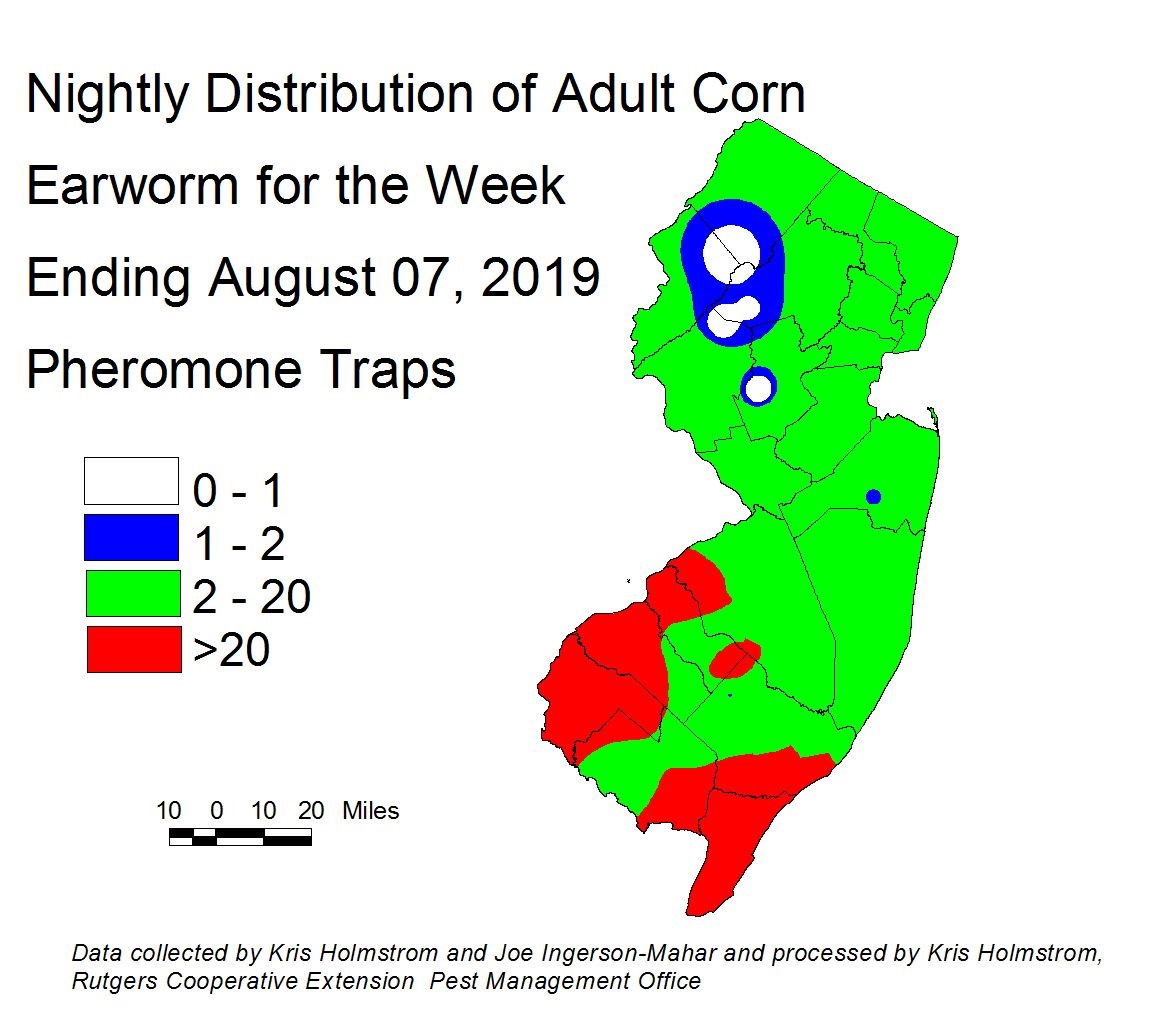
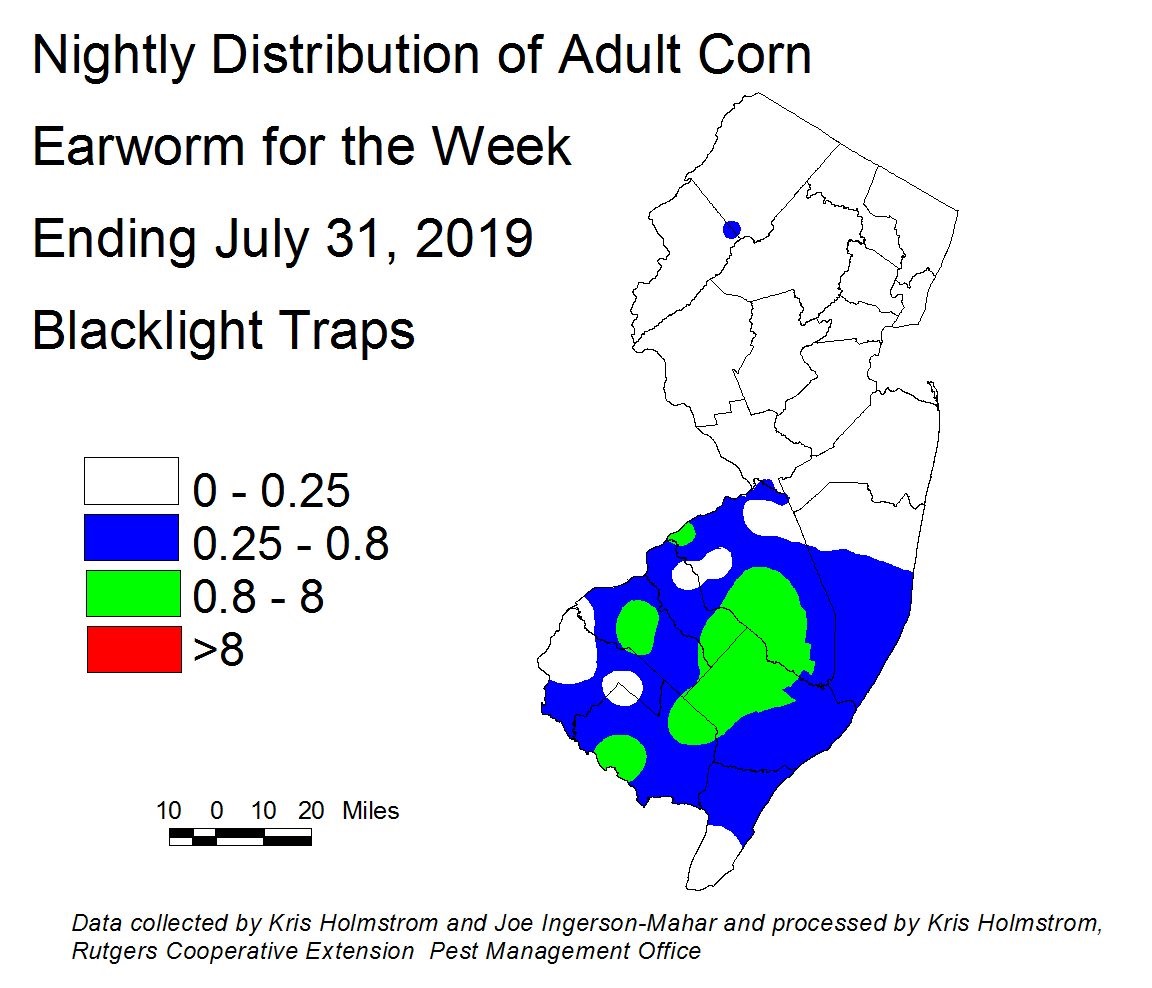
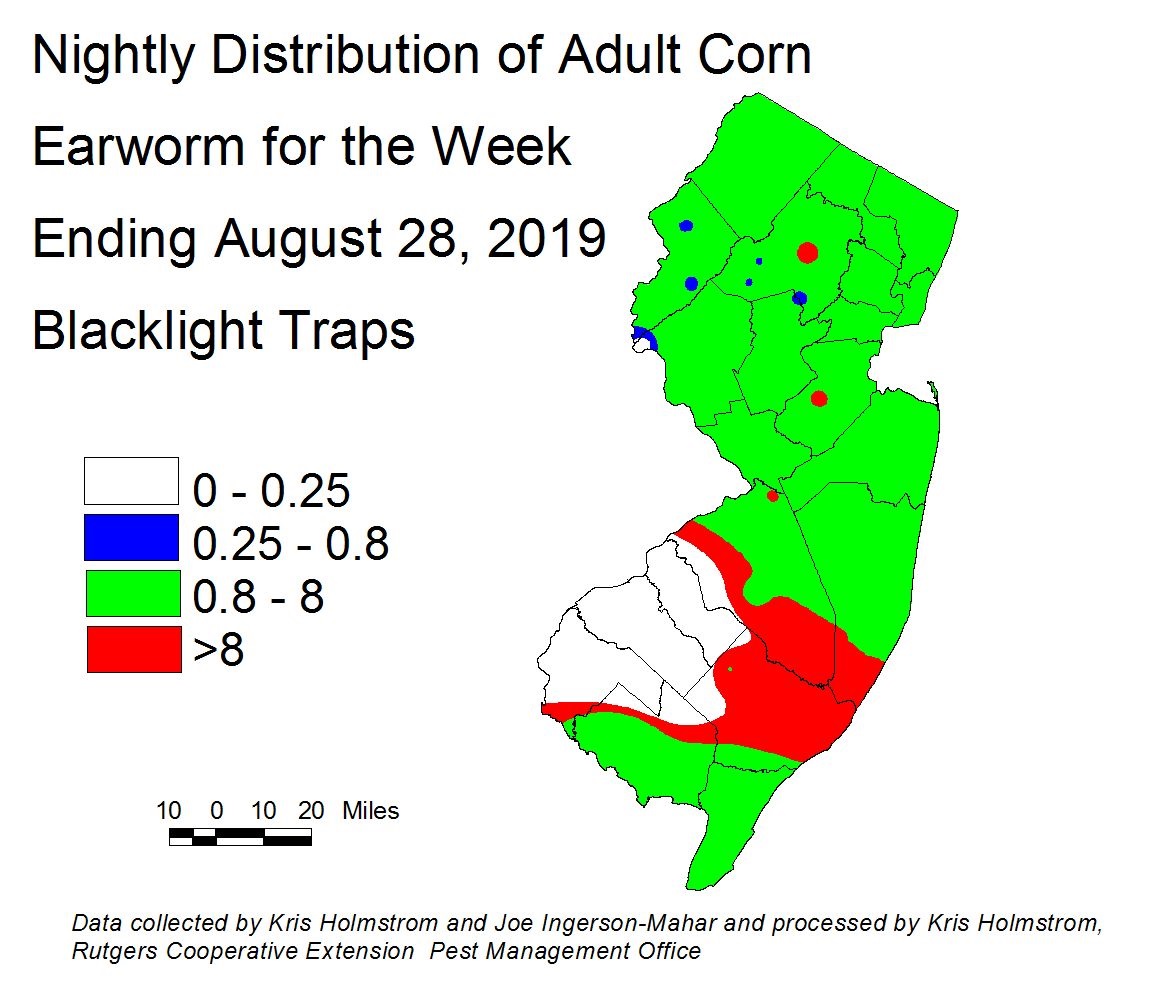 Corn earworm (CEW) moth catches increased dramatically beginning late last week in all traps. Overall, CEW numbers now represent a sizeable late summer migratory influx. While moth counts declined somewhat with cool night temperatures since the weekend, we are still experiencing high activity. The white area in southwestern NJ on the blacklight map (left) should be considered to be solidly in the 3-day silk spray schedule zone. We are missing trap data in that area, but activity should be similar to surrounding areas. There continue to be some exceptionally high catches in southern NJ pheromone traps this past week (see pheromone trap map below at right). There are now economically damaging populations of this pest throughout the state, and all areas are at extreme risk of crop injury if strict silk spray schedules are not observed. Red areas on the on the pheromone trap map indicate a 3-day silk
 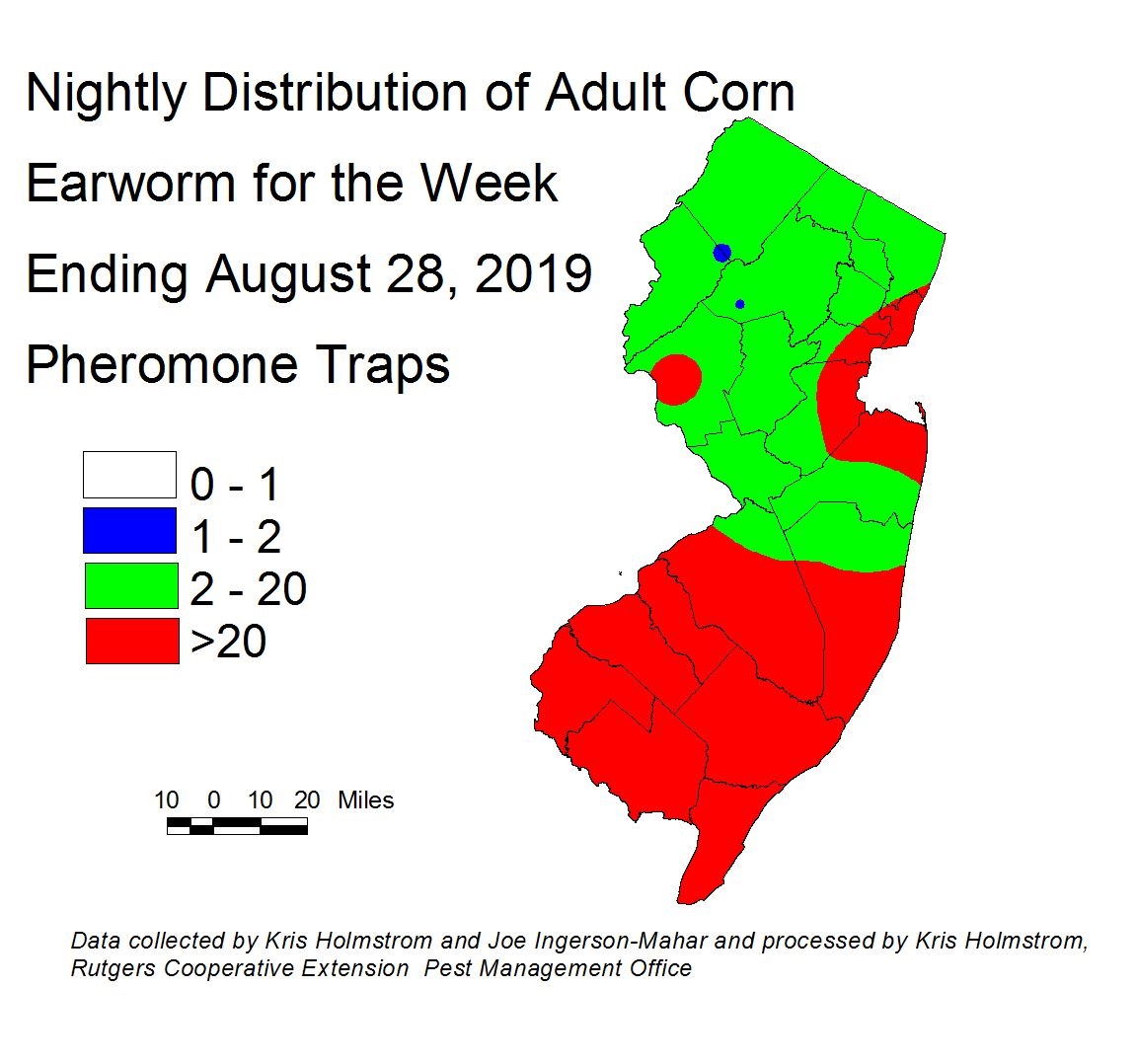 spray schedule, while green indicates a 4-5 day silk spray schedule. Blue areas represent a 5-6 day schedule, and white areas are 6-7 day. Taken together, blacklight and pheromone traps are indicating 3-day silk spray schedules throughout the state. There are far fewer CEW pheromone traps than blacklights, and the resulting map has much broader color bands as a result. It should also be noted that the pheromone traps are much more sensitive than blacklights. Therefore, the number of moths caught in pheromone traps required to generate a specific spray interval is much higher than the number caught in blacklight traps. It must be stressed that there is high variability in these catches, and growers should consult with their IPM practitioner on recommended spray schedules.