Did you know that according to the 2019 State Agriculture Overview for NJ, 3,900 acres of peaches yielded 5/tons per acre at a value of over $25.6 million dollars? Or that 3,500 acres of peppers were harvested in 2019, with a value of $45.8 million dollars? Or that 9,300 acres of harvested blueberries were valued at $85.3 million dollars in 2019? And in 2018, NJ ranked 4th nationwide in cranberry and peach production, and third in bell peppers?
Organic Farm Advisory
The Plant & Pest Advisory serves NJ growers by reporting on important pests and recommending responses that are grounded in reproducible trials.
 Articles in this section contain information helpful to the NJ commercial organic grower.
Sharing organic practice trial results between land-grant universities is a cost effective way to create a common knowledge base built on the strengths of individual programs. In the sidebar, find institutions with programs in organic agriculture which augment knowledge developed at the Rutgers New Jersey Ag Experiment Station.
Rutgers Cooperative Extension Field Guides: These concise guides help with decision making from pre-planting to harvest. For each crop listed, learn what pests to proactively look for as the season progresses, how to look for them, and when to take action.
July 17, 2020 Andy Wyenandt
Vegetable Disease Update – 7/17/20
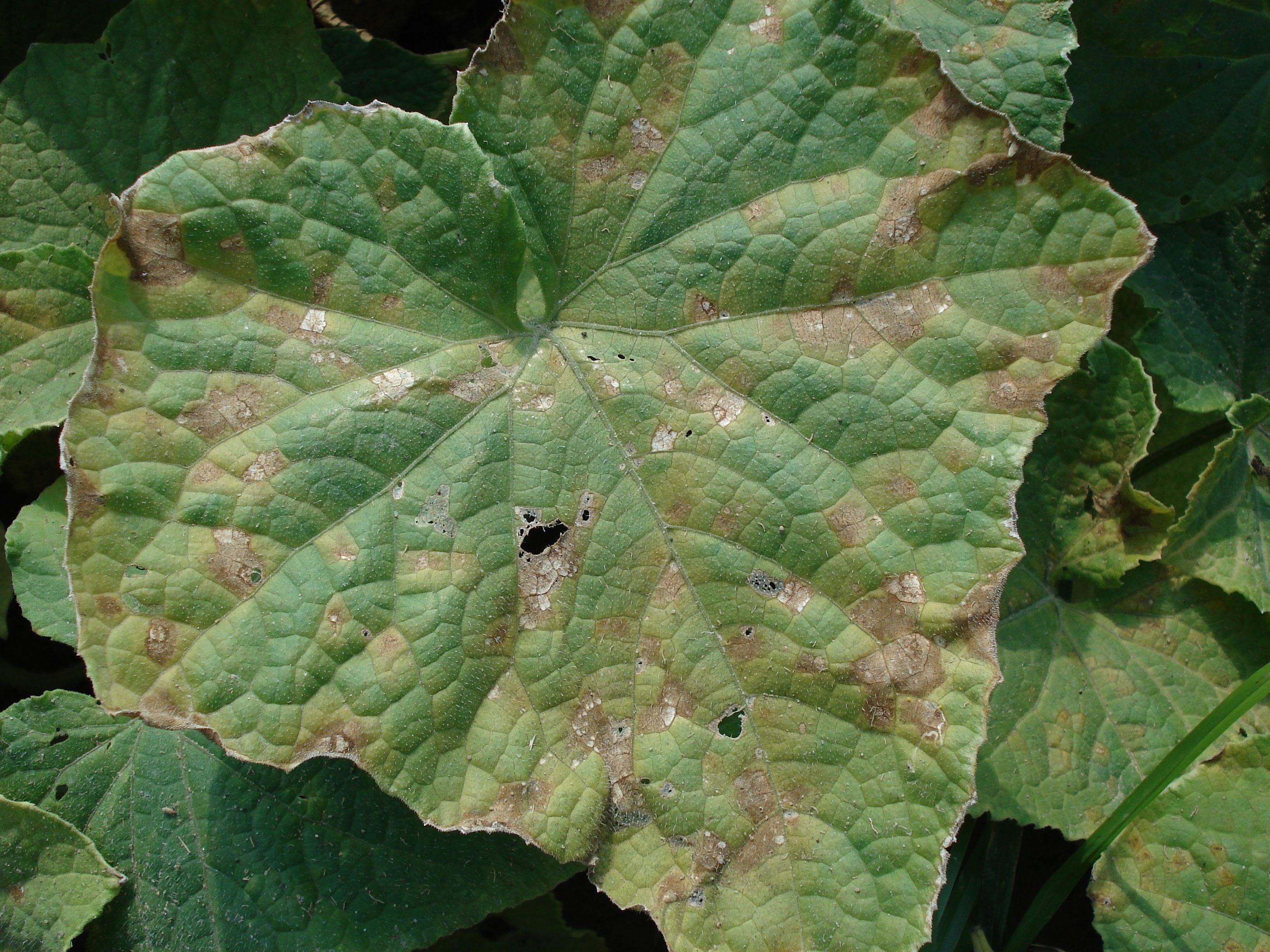
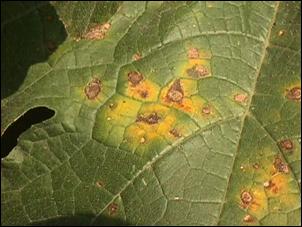
- Cucurbit downy mildew has been reported on cucumber in southern New Jersey. This is the first report in the state this growing season. There have been no reports of CDM in other cucurbit crops in the region to date. For a review of CDM control please click here. To track the progress of CDM on your phone or PC please visit the CDM forecasting website.
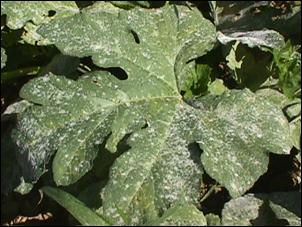
- Cucurbit powdery mildew (CPM) season is here. For a review of CPM control strategies please click here.
- All cucurbit plantings that are no longer in production should be destroyed immediately after the last harvest by mowing or with herbicide to reduce the risk of harboring of CDM, CPM, and virus.
- Virus has been reported in summer squash plantings.
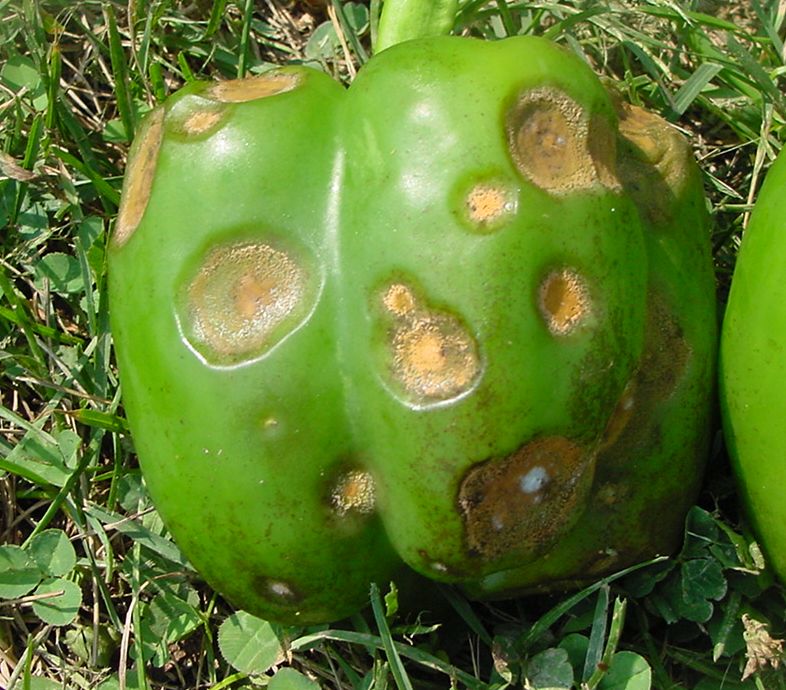
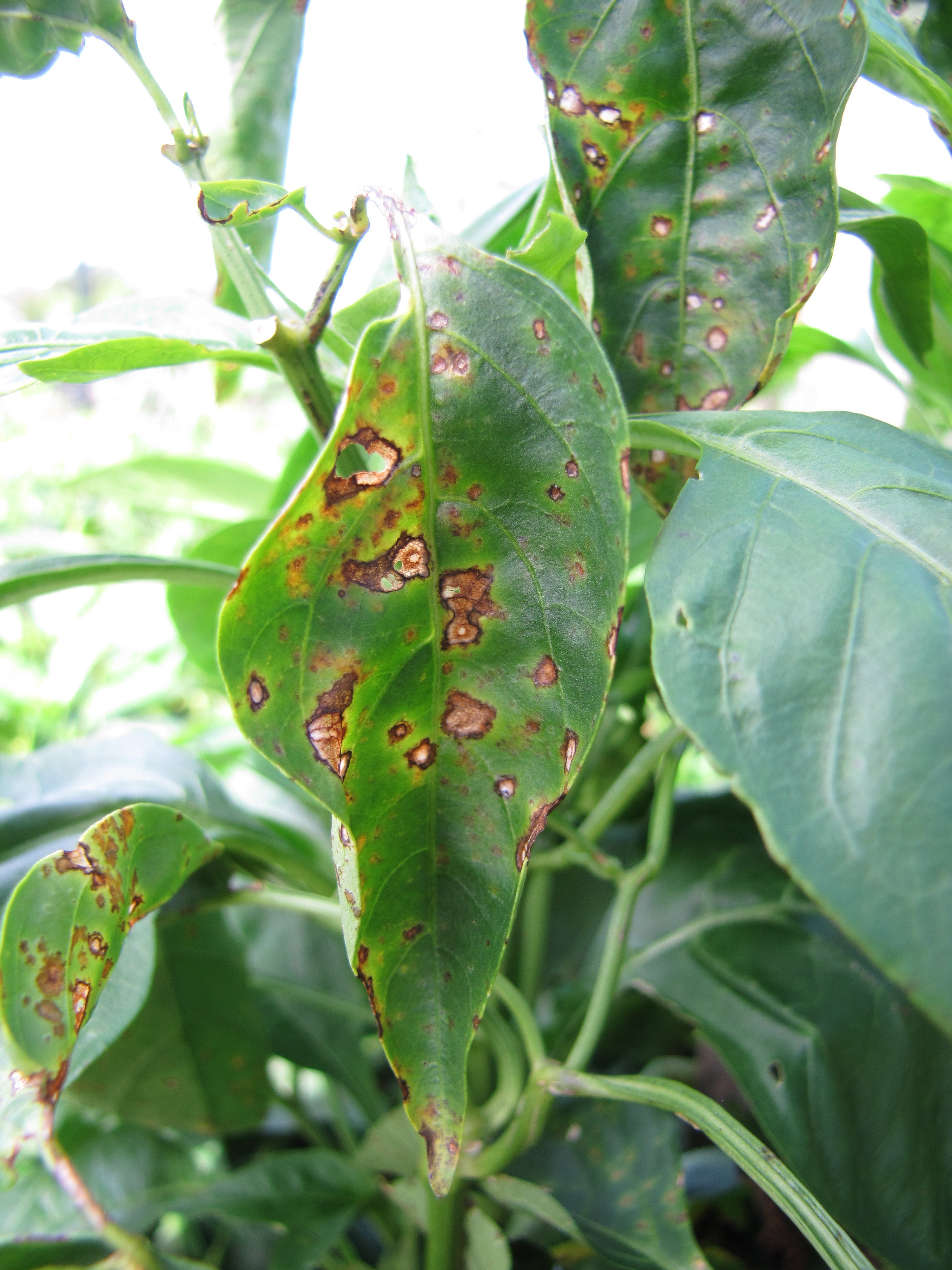
- Pepper anthracnose has been reported in southern New Jersey and is a serious problem in all bell and non-bell peppers, especially in fields with a history of the disease. For more information on controlling pepper anthracnose please click here.
- No reports of Late blight in region. To track the progress of Late blight in the US please click here.
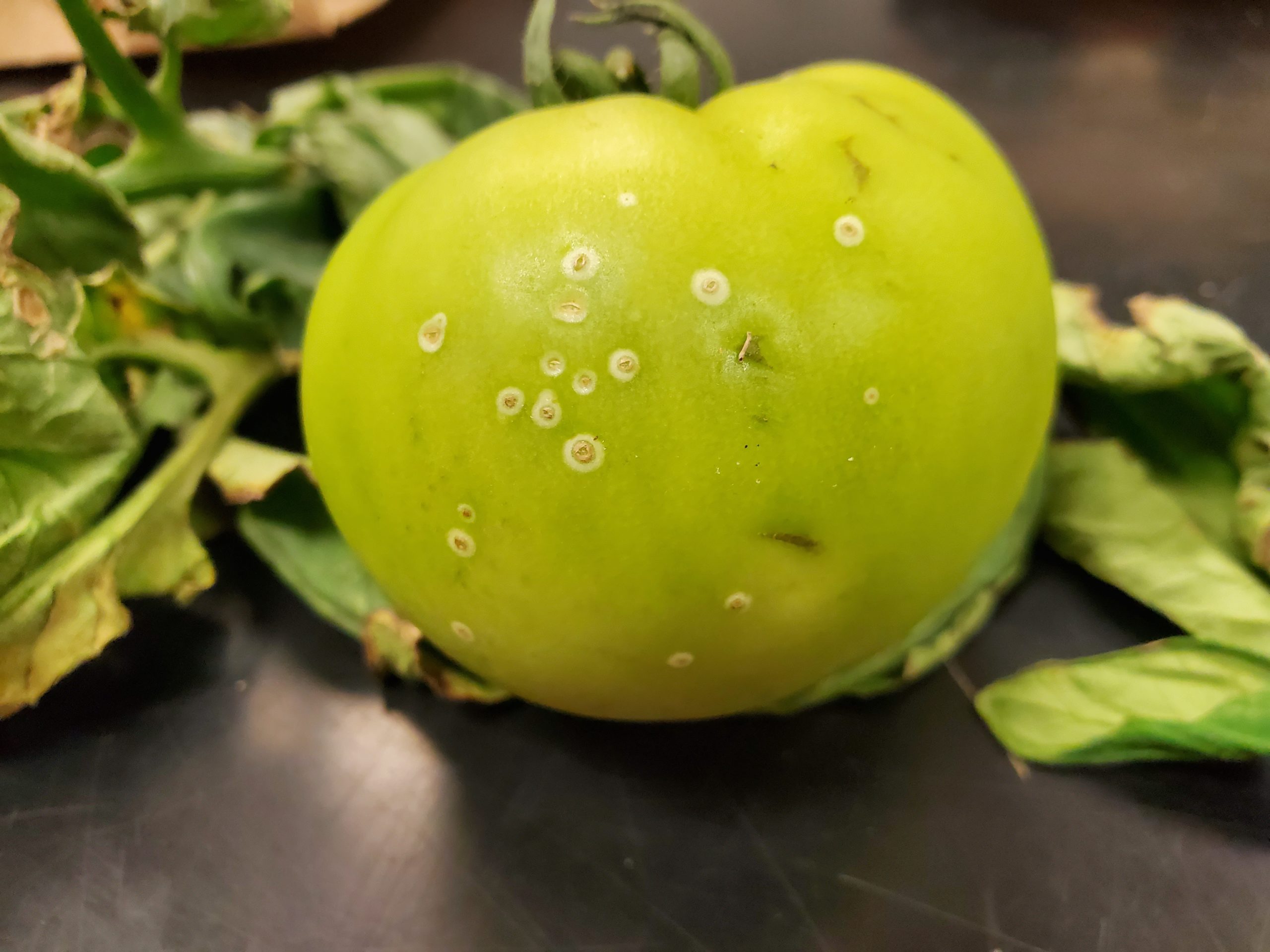
- Collar rot caused by Alternaria has been reported again in tomato this week in New Jersey. It is the same pathogen that causes Early blight in tomato. Tomato growers who have not switched to more specific fungicides for Early blight and anthracnose fruit rot control should consider doing so. For more information from NCSU please click here.
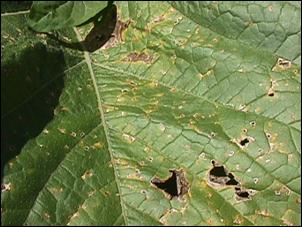
- Heavy infections of Angular leaf spot have been reported in summer squash this week. Look for angular lesions delimited by leaf veins and ‘shotholes’ in infected leaves that develop after periods of hot, dry weather.
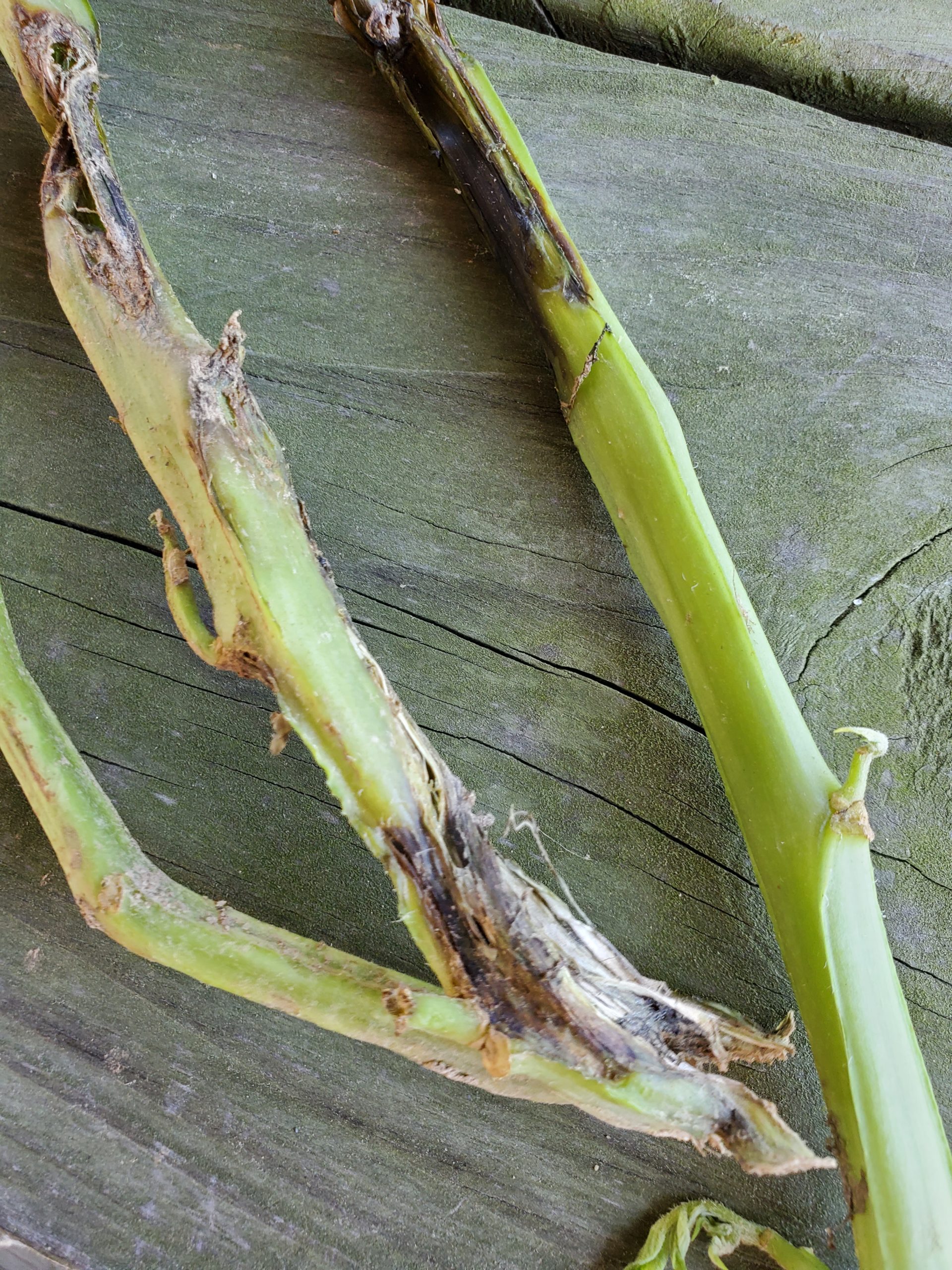
- Aerial stem rot has been reported on potato in southern New Jersey. The pathogen is an opportunistic bacterium in the field which infects vines that have been damaged by wind and heavy rains.
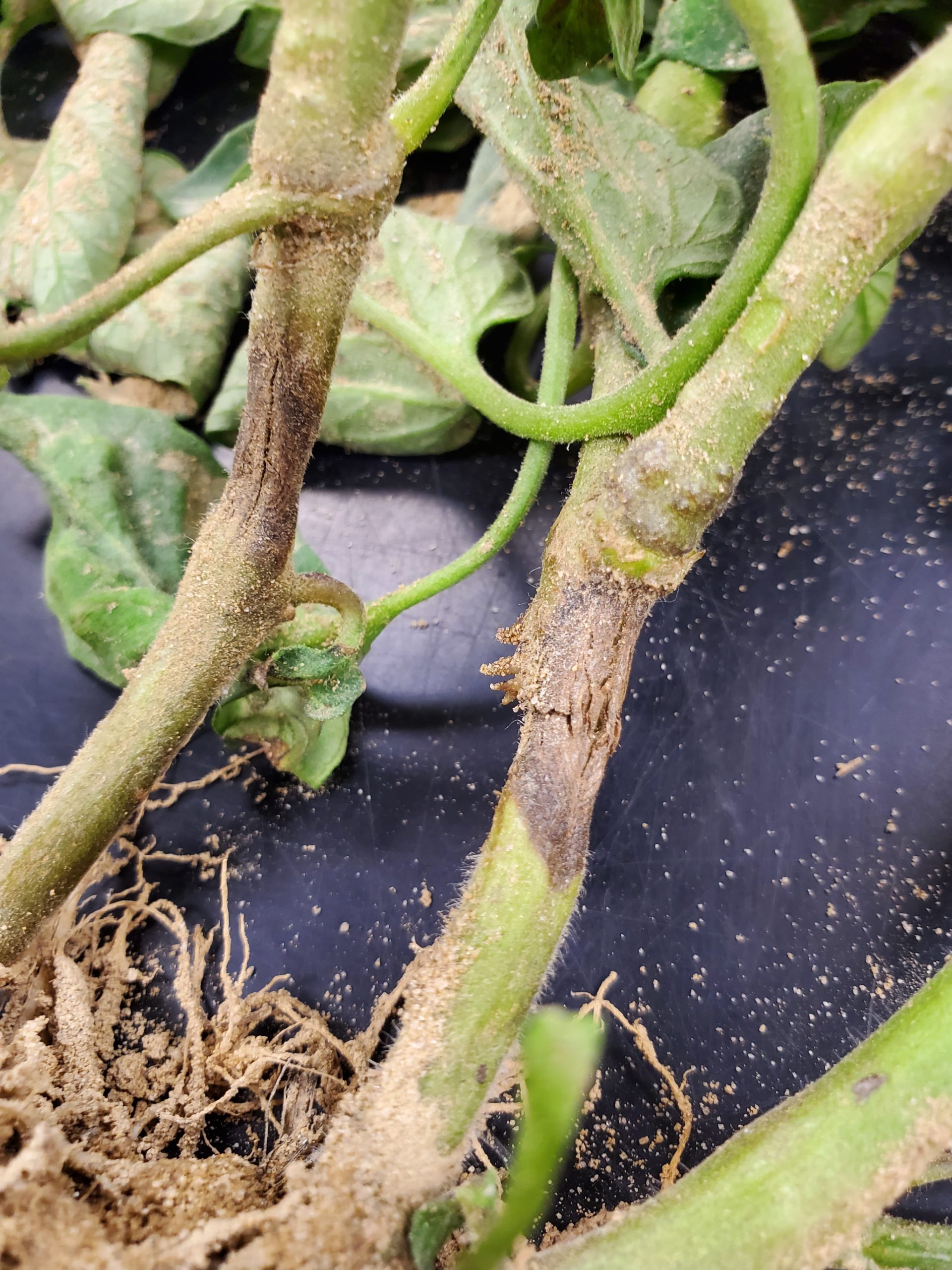
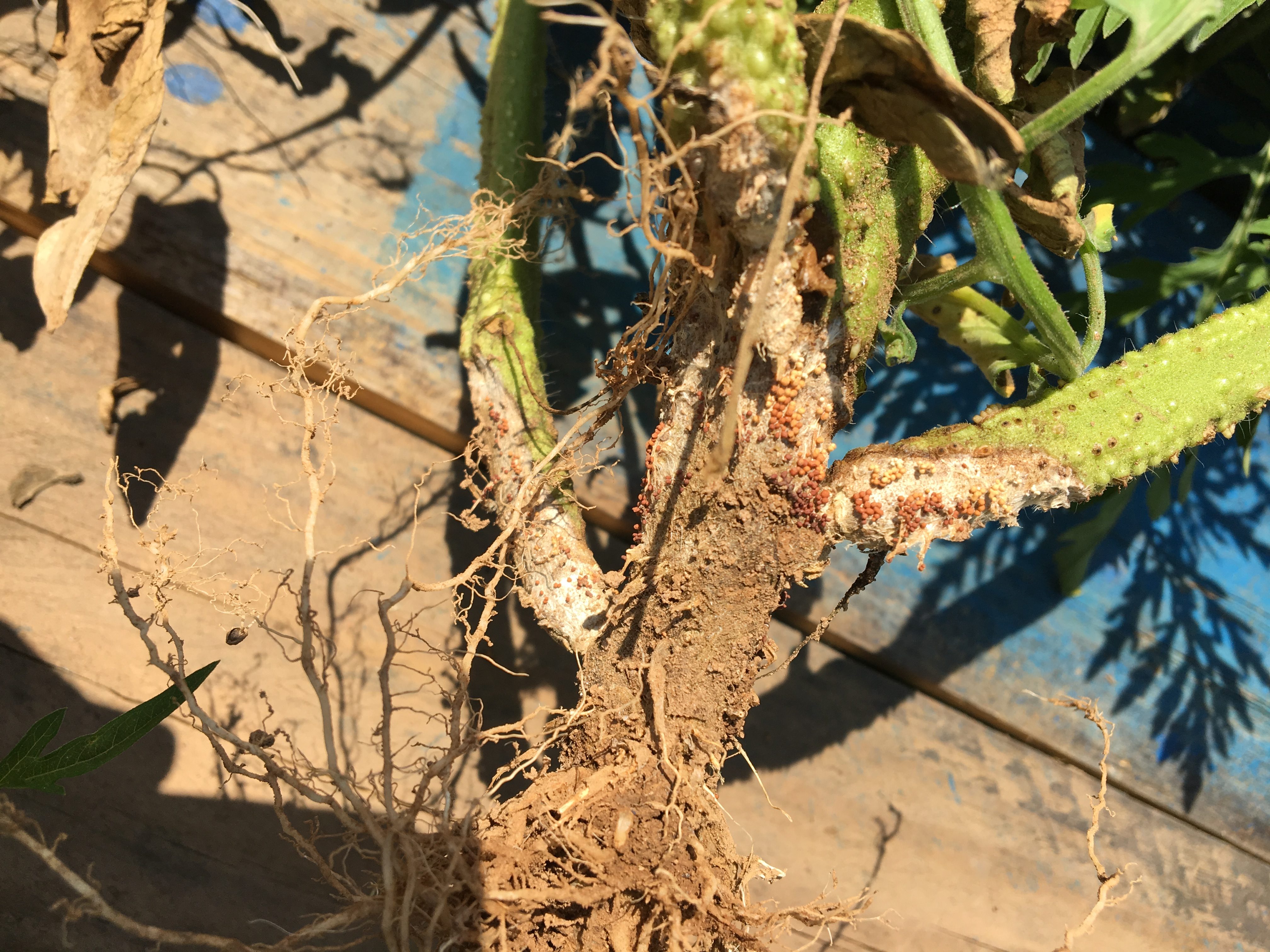
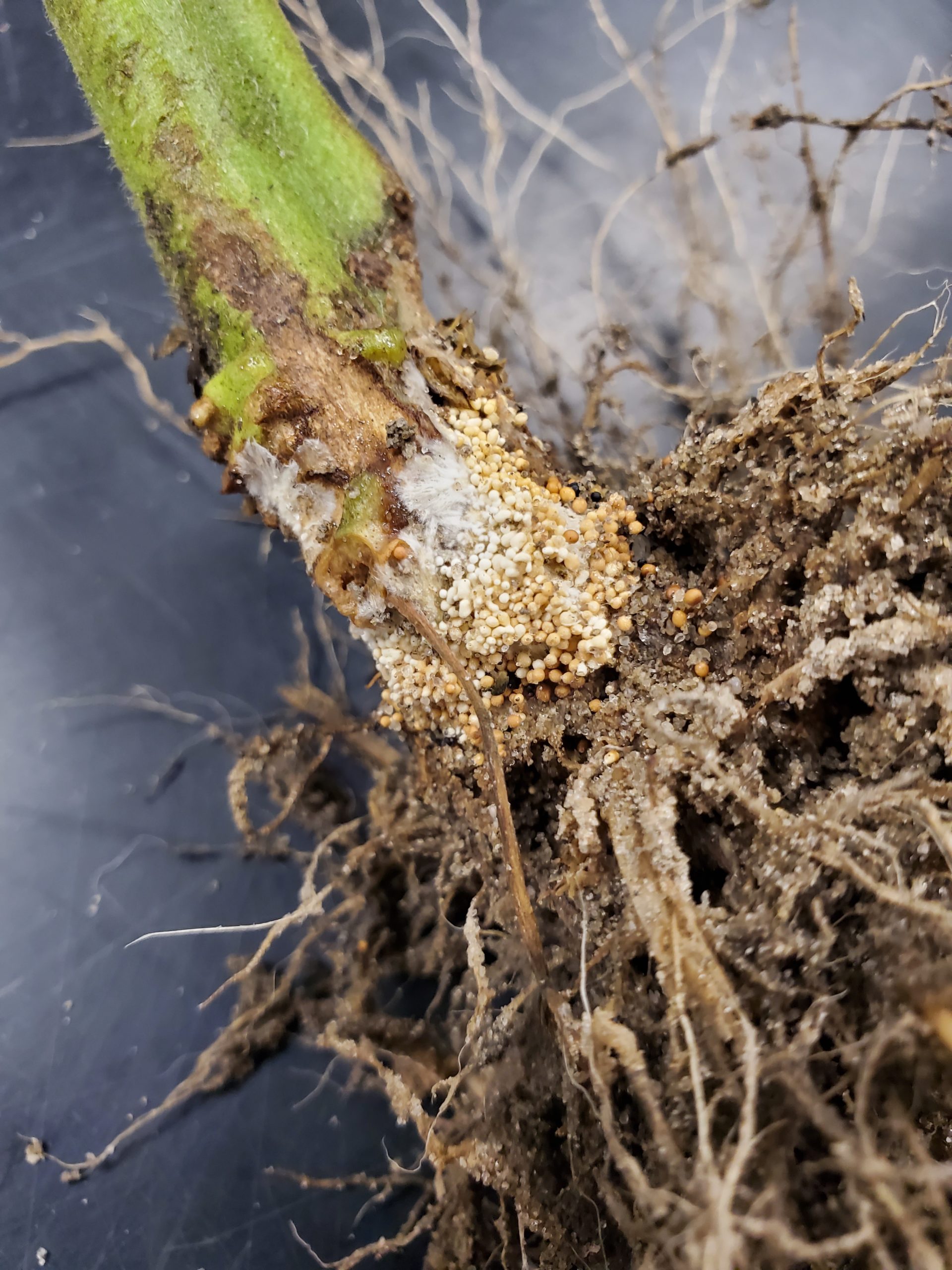
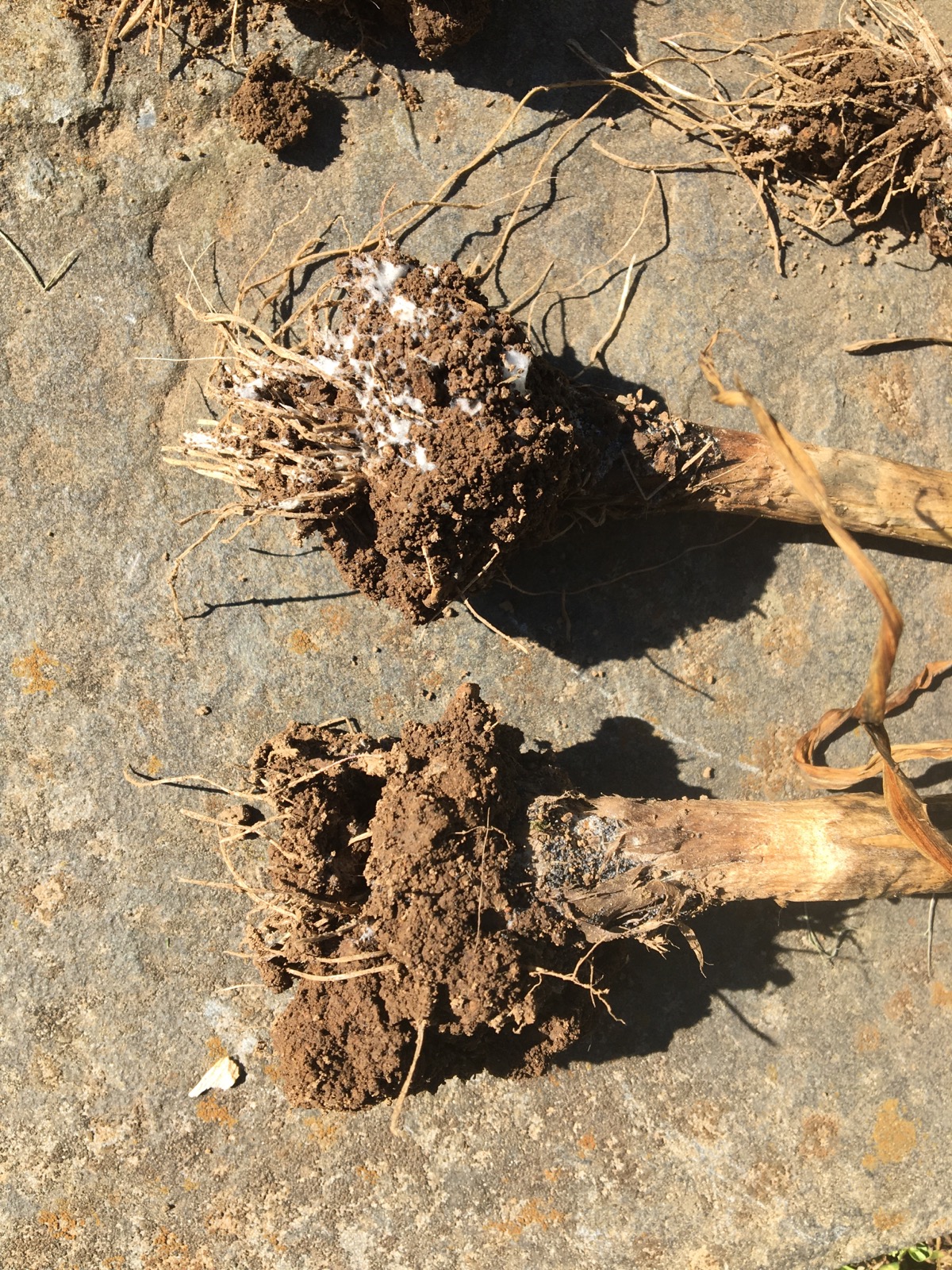
- There have been a few reports of Southern blight (Sclerotinia rolfsii) on tomato and pepper. Southern blight is much more common in vegetable areas south of the state where summer temperatures remain hotter (above 90°F) for longer periods of time. Like white mold, caused by Sclerotinia sclerotiorum, it can survive in the soil for many years. Symptoms of Southern blight include infection at the base of the stem at the soil-line. The resulting infection will girdle the plant causing wilt and death. The fungus will produce white, cottony mycelium and very small, spherical sclerotia which are often have a white to tannish, brown color as they mature. For more information on Southern blight from NCSU please click here.
- Rhizoctonia root and crown rot has been reported on sugar beet in southern New Jersey. For more information from the University of Idaho please click here.
- Bacterial leaf spot has been reported in pepper. For more information on BLS and copper resistance please click here.
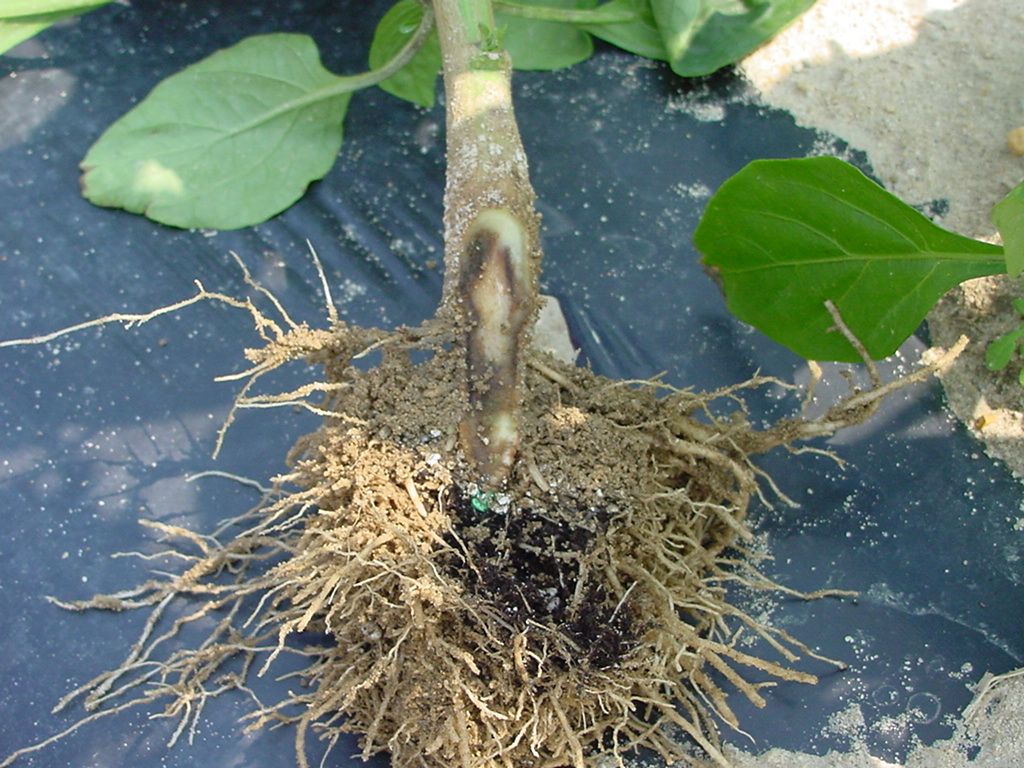
- Phytophthora blight has been reported in pepper and cucurbit crops. For more information please click here.
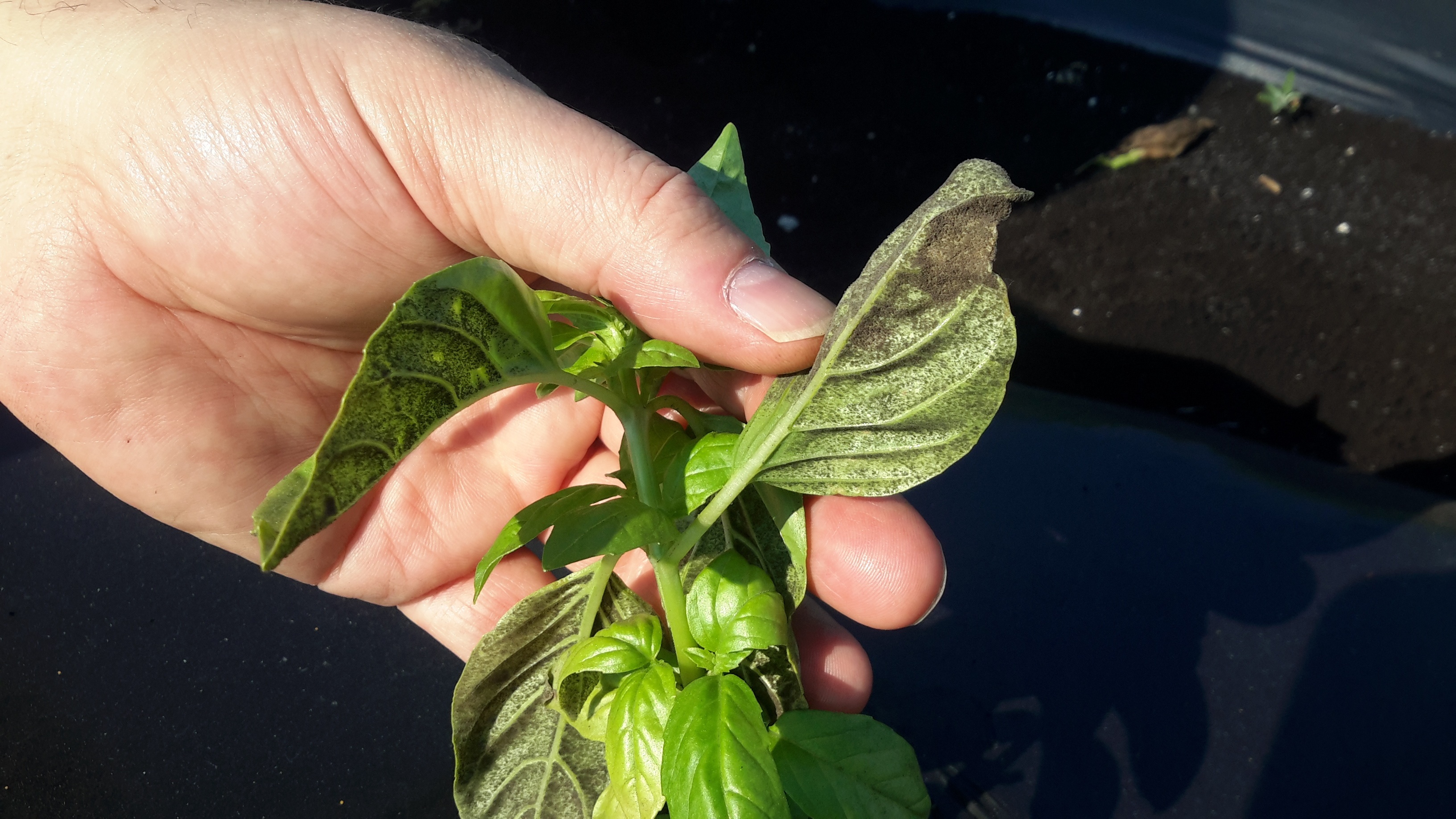
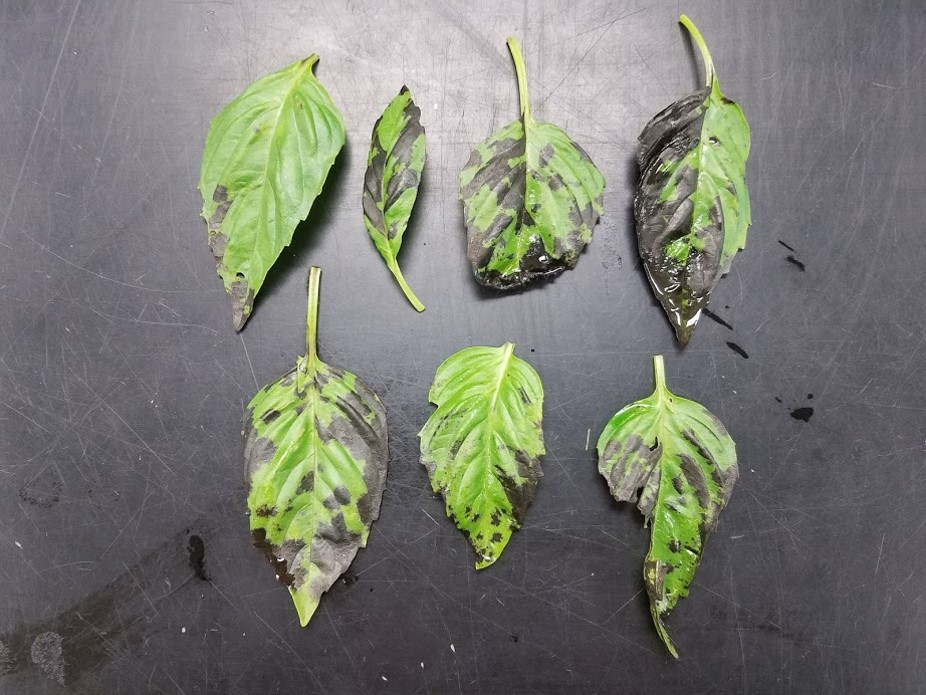
- Basil downy mildew (BDM) has been reported in southern New Jersey on BDM susceptible sweet basil. All growers are encouraged to initiate preventative fungicide programs on DMR and non-DMR basil. For control options and to follow the progress of BDM in the US on your phone or PC please click here.
- Downy mildew has been reported in kale seedlings in a hydroponic greenhouse in PA. As a note, kale and related crops should be scouted on a regular basis. For more information on downy mildew in brassica crops from UMASS-Amherst please click here.
- Bacterial canker has been reported in fresh-market tomato. For a review of bacterial canker in tomato please see report by Dr. Sally Miller at The Ohio State University by clicking here.
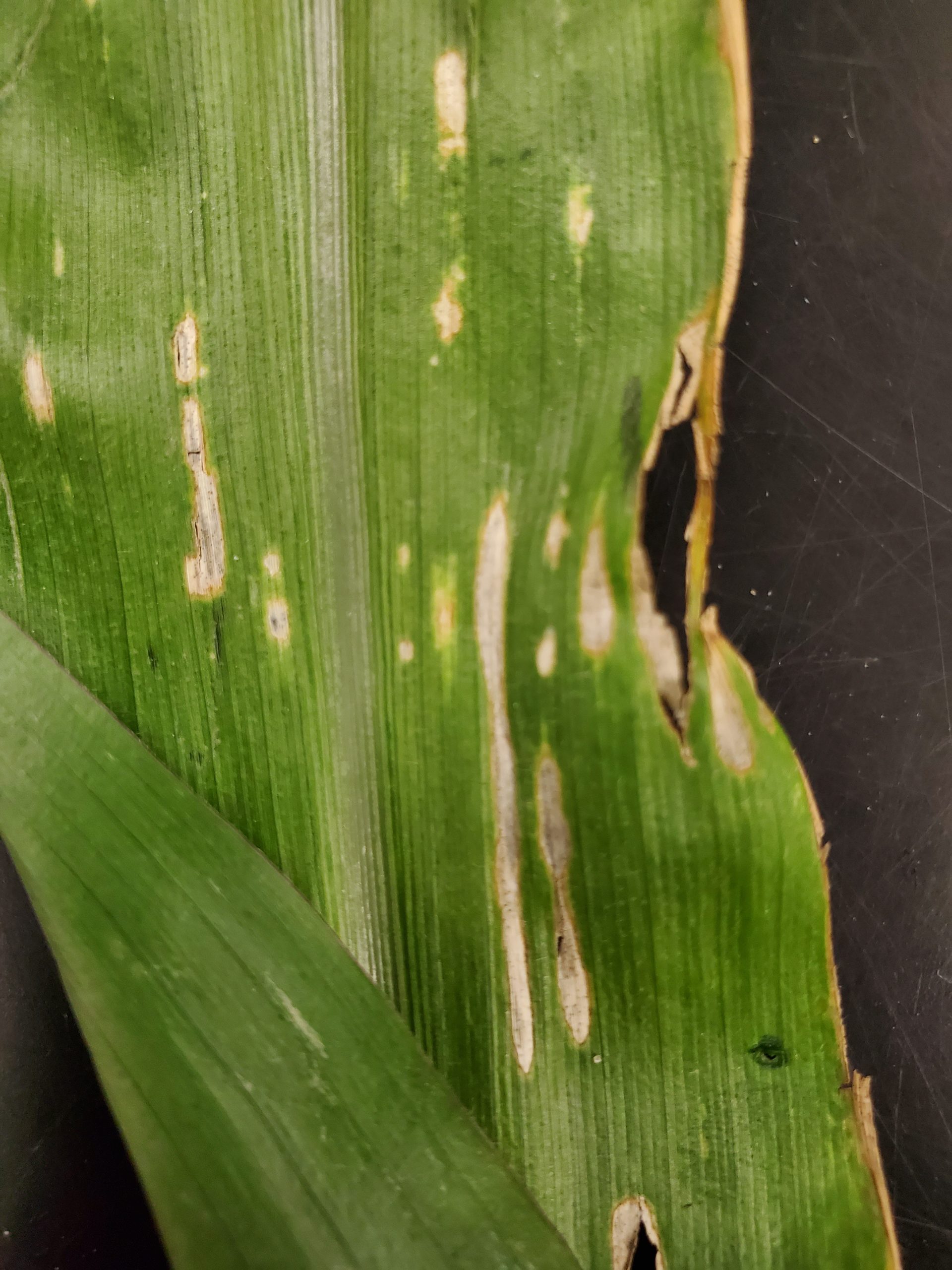
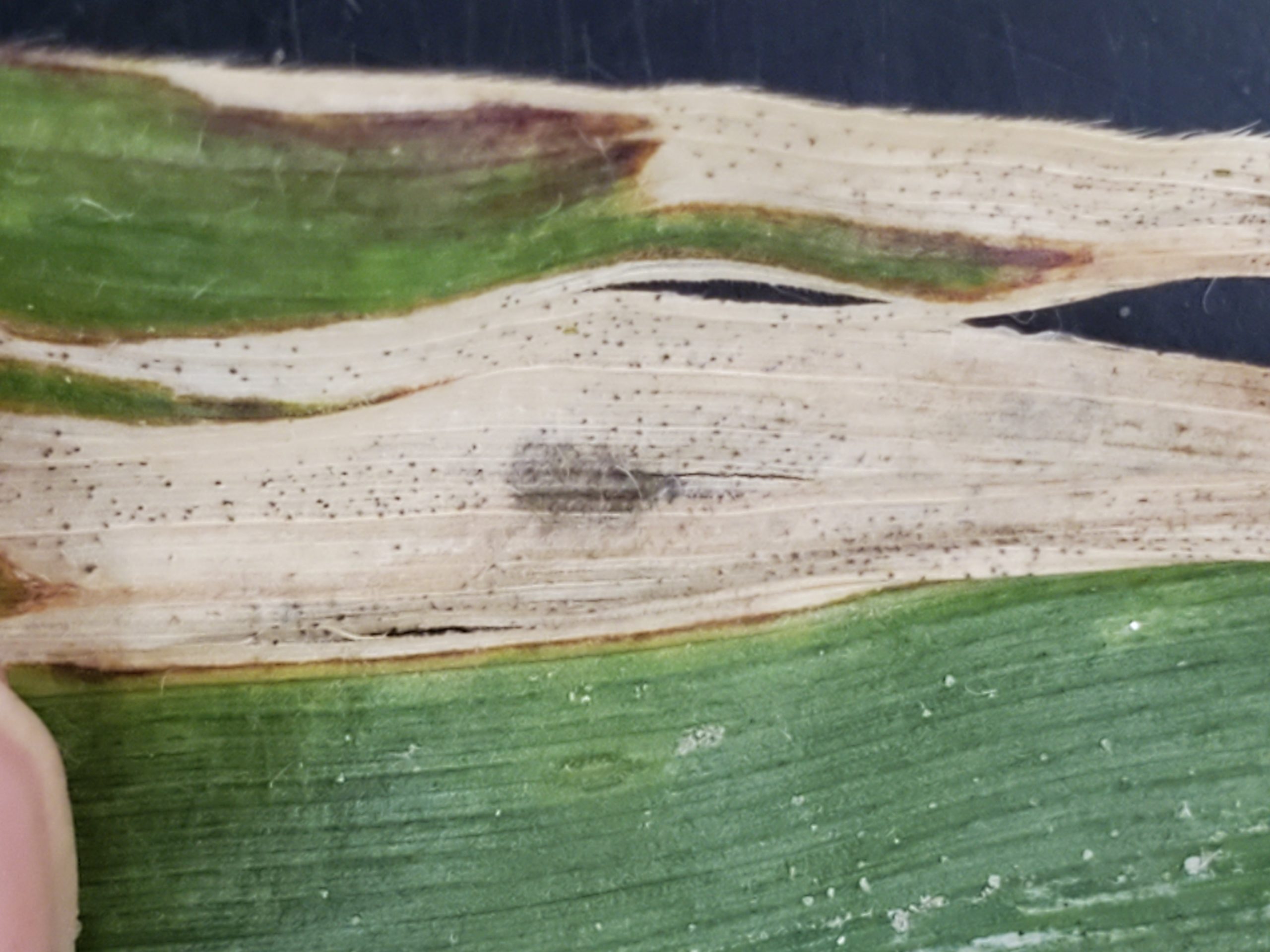
- Diplodia leaf streak, a fungal disease, was identified in sweet corn this past week. Symptoms include the development of numerous pycnidia which produce conidia within the lesions on infected corn leaves. For nice reviews, please see report by Dr. Kiersten Wise and colleagues from the University of Kentucky and report by Dr. Steve Johnson at the University of Maine.
- White mold, caused by Stromatina cepivorum, has been reported in garlic. For more information, please see report by Crystal Stewart and Frank Hay from Cornell University.
- Bacterial leaf spot has been reported in sweet basil. BLS of sweet basil is a relatively new disease of basil in the US. The bacterium has a large host range and can survive and overwinter in the soil on infested plant debris. Disease development is favored by hot, humid, rainy weather. Periods of hot, dry weather will help mitigate disease development.
- With the on and off again heavy rains we have been getting, along with warmer weather, all growers should consider applying at-transplanting fungicides for root rot control. Please click here to see these articles.
- For a quick review on managing fungicide resistance development using tank mixes and fungicide rotations, and information on FRAC group 4, FRAC group 7, and FRAC group 3 and FRAC group 11 fungicides please click on hyperlinks.
- For more information on the control of the diseases mentioned above please see The 2020/2021 Commercial Vegetable Production Recommendations Guide which is available for free online! With many county offices running reduced hours or being closed this is the easiest way to obtain the newest recommendations.
July 15, 2020 Kris Holmstrom and Joe Ingerson-Mahar
Vegetable IPM Update 7/15/20
Sweet Corn
European corn borer (ECB) adults have all but disappeared over the past week, and no map will appear in this edition. Larval infestations are sparse now, as the last corn plantings to be exposed to ECB in the whorl now have entered the silk stage.
The highest nightly trap catches of ECB for the week ending 7/15/20 are as follows:
| Califon 1 | Eldora 1 |
| Cinnaminson 1 | Old Bridge 1 |
| Crosswicks 1 | Tabernacle 1 |
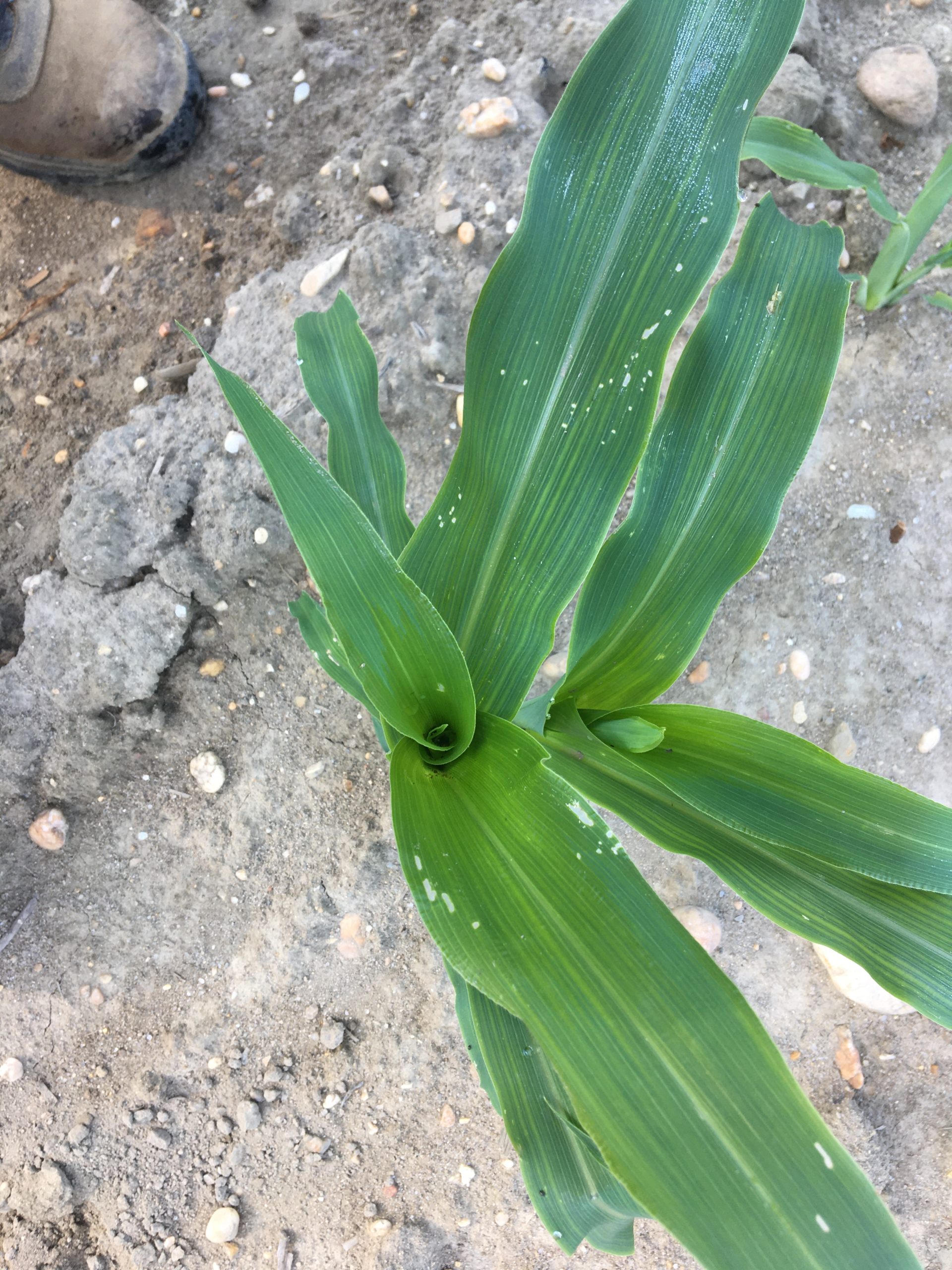 Fall armyworm (FAW) has declined, and larval infestations are no longer evident in the northern counties. There are still low infestations in Cape May County, and moths are being captured there as well as near the Burlington/Camden County border. This is the time of the summer when FAW can show up, resulting in significant injury to whorl and even seedling stage corn. Injury from newly hatched larvae shows up as “window panes” or areas where leaf tissue has been eaten down the the lower epidermis (see photo at left). This injury leads down into the whorl. As larvae gain size, they begin to consume leaf tissue in its’ entirety, creating ragged holes and lots of droppings (see photo at right). FAW can be tough to manage because it is resistant to synthetic pyrethroid insecticides (IRAC 3A) and because larvae are often covered by their own droppings, making contact with the insecticide more difficult. Treat when 12% or more plants exhibit FAW injury alone, or in combination with ECB injury.
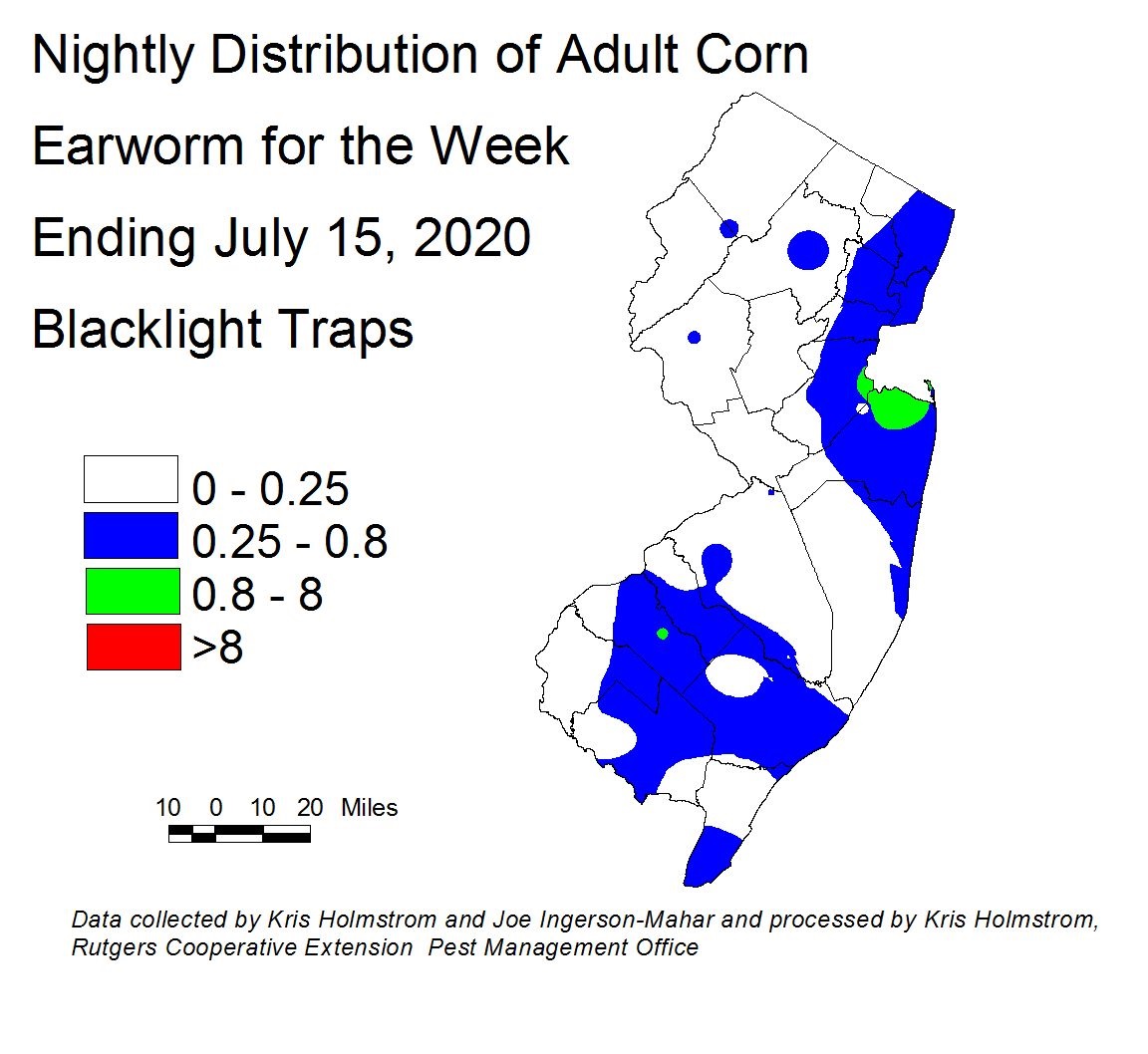 Corn earworm (CEW) moth captures remained steady at reasonably low levels in blacklight traps this past week. Despite these lower counts, silking corn continues to require protection from this pest. Blacklight catches remain highest overall along the coast (see map at left).
The highest nightly trap catches of CEW in black light traps for the week ending 7/15/20 are as follows:
| Matawan 5 | Denville 1 | Farmingdale 1 |
| Centerton 1 | Downer 1 | Jones Island 1 |
| Clinton 1 | East Vineland 1 | Medford 1 |
| Crosswicks 1 | Elm 1 | Milltown 1 |
July 8, 2020 Kris Holmstrom and Joe Ingerson-Mahar
Vegetable IPM Update 7/08/20
Sweet Corn
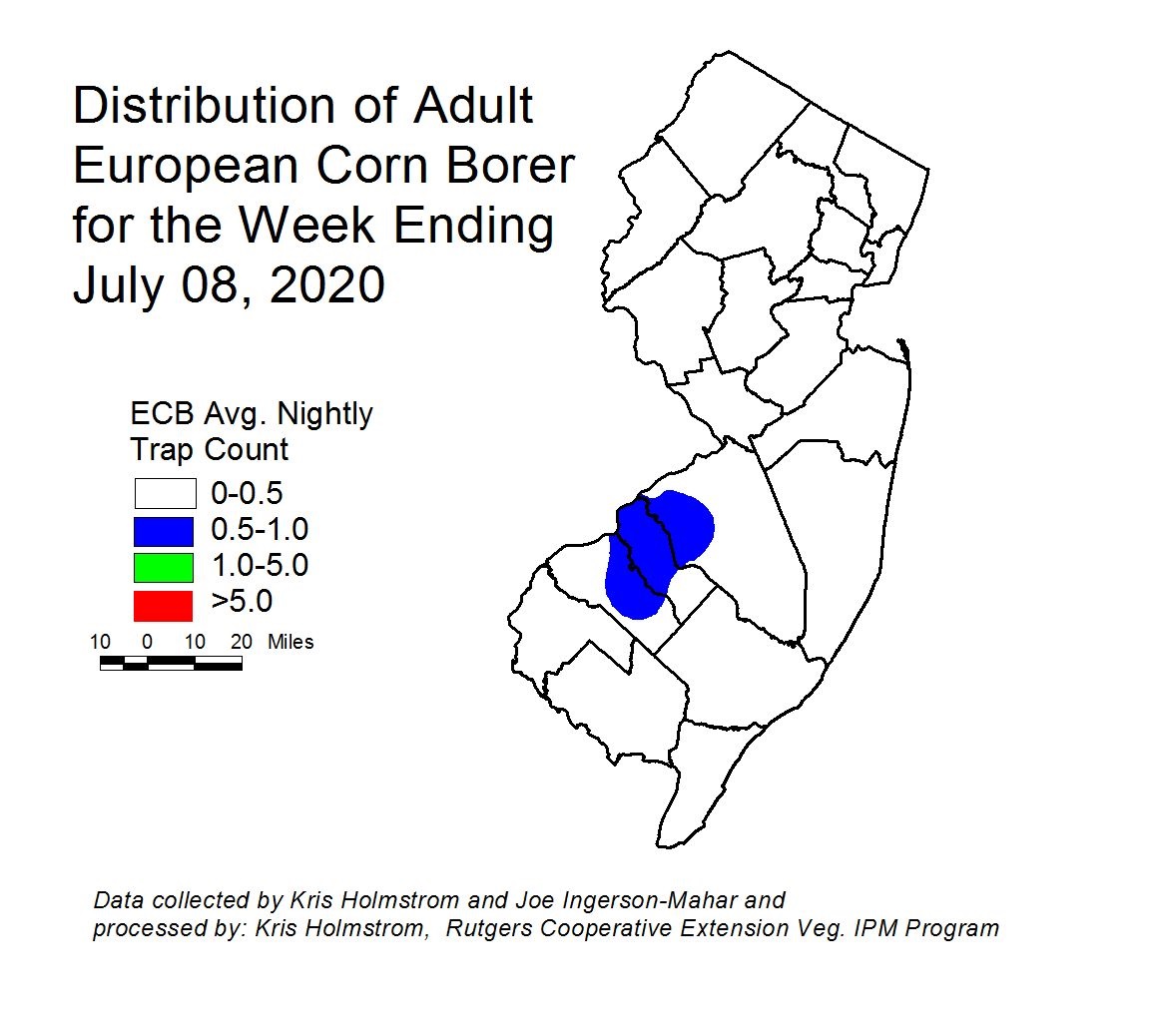 European corn borer (ECB) moth catches have fallen to very low levels over the past week. Remaining activity is highest in Gloucester and Camden counties (see ECB map at left). Threshold (12%+) level larval infestations are declining now, as the last corn plantings to be exposed to ECB in the whorl now are entering the silk stage. Larval infestations should decline sharply until the second flight appears.
The highest nightly trap catches of ECB for the week ending 7/08/20 are as follows:
| Cinnaminson 1 | Georgetown 1 |
| Downer 1 | Long Valley 1 |
| Eldora 1 | New Egypt 1 |
| Elm 1 | Springdale 1 |
Fall armyworm (FAW) larvae have appeared in low numbers in fields in Cape May County, as well as in Hunterdon and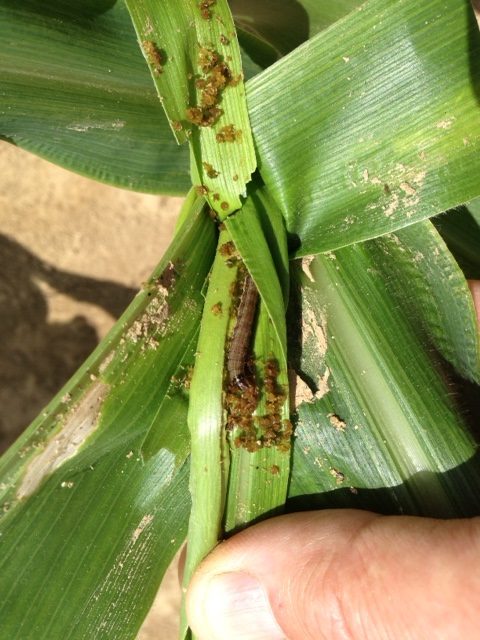 Morris counties. This pest seems to have arrived last week some time, and has since subsided somewhat. This is the time of the summer when FAW can show up, resulting in significant injury to whorl and even seedling stage corn. Injury from newly hatched larvae shows up as “window panes” or areas where leaf tissue has been eaten down the the lower epidermis (see photo at left). This injury leads down into the whorl. As larvae gain size, they begin to consume leaf tissue in its’ entirety, creating ragged holes and lots of droppings (see photo at right). FAW can be tough to manage because it is resistant to synthetic pyrethroid insecticides (IRAC 3A) and because larvae are often covered by their own droppings, making contact with the insecticide more difficult. Treat when 12% or more plants exhibit FAW injury alone, or in combination with ECB injury.
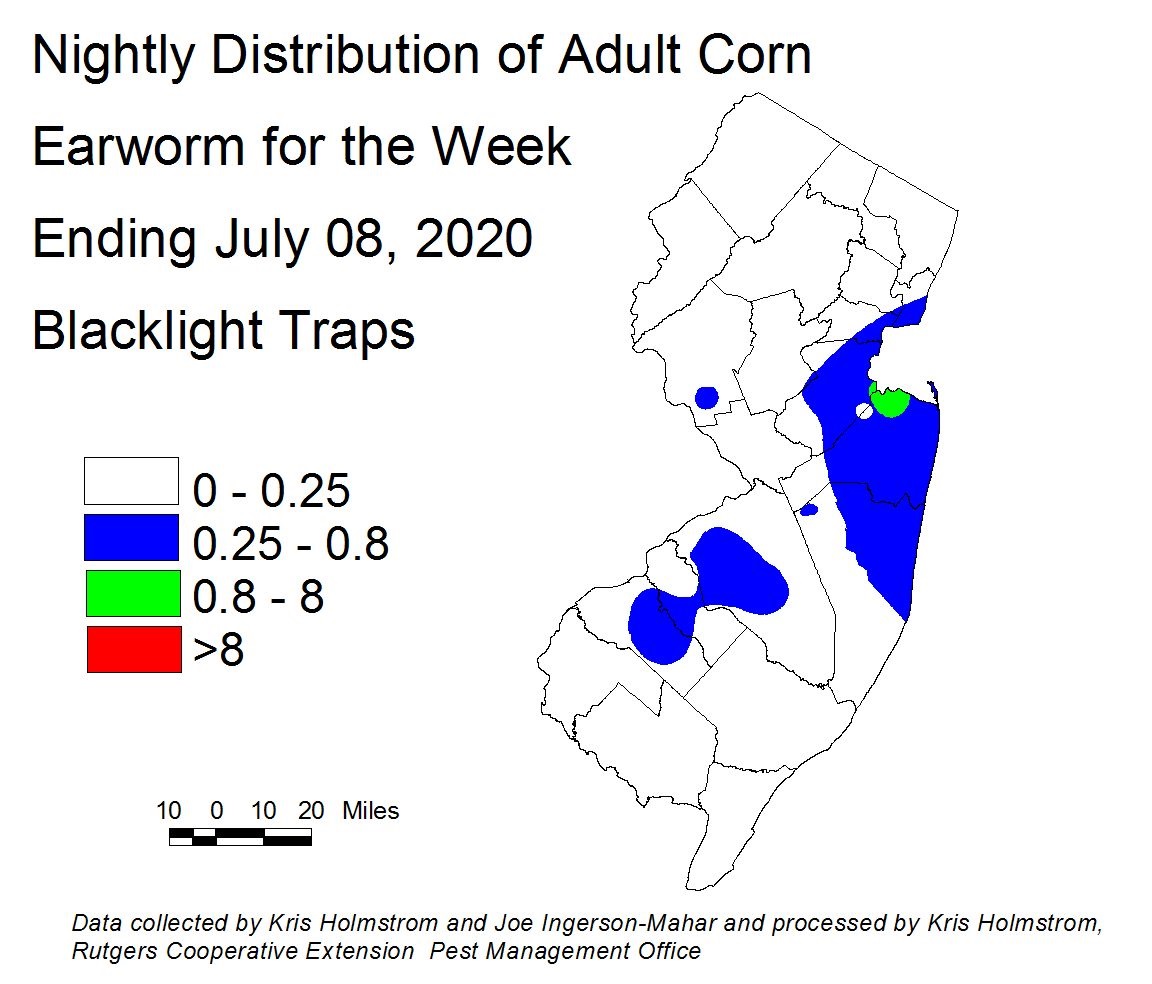 Corn earworm (CEW) moth captures have declined in blacklight traps this past week. Despite lower moth levels, silking corn continues to require protection from this pest. Blacklight catches remain highest overall along the coast (see map at left).
The highest nightly trap catches of CEW in black light traps for the week ending 7/08/20 are as follows:
| Matawan 2 | Medford 1 |
| Cinnaminson 1 | Milltown 1 |
| Downer 1 | New Egypt 1 |
| Farmingdale 1 | Sergeantsville 1 |
July 8, 2020 Andy Wyenandt
Vegetable Disease Update – 7/8/20
- Cucurbit downy mildew has been reported on cucumber in southern New Jersey. This is the first report in the state this growing season. For a review of CDM control please click here. To track the progress of CDM on your phone or PC please visit the CDM forecasting website.
- Cucurbit powdery mildew season is here. For a review of CPM control strategies please click here.
- No reports of Late blight in region. To track the progress of Late blight in the US please click here.
- Aerial stem rot has been reported on potato in southern New Jersey. The pathogen is an opportunistic bacterium in the field which infects vines that have been damaged by wind and heavy rains.
- There have been a few reports of Southern blight (Sclerotinia rolfsii) on tomato and pepper. Southern blight is much more common in vegetable areas south of the state where summer temperatures remain hotter (above 90°F) for longer periods of time. Like white mold, caused by Sclerotinia sclerotiorum, it can survive in the soil for many years. Symptoms of Southern blight include infection at the base of the stem at the soil-line. The resulting infection will girdle the plant causing wilt and death. The fungus will produce white, cottony mycelium and very small, spherical sclerotia which are often have a white to tannish, brown color as they mature. For more information on Southern blight from NCSU please click here.
- Collar rot caused by Alternaria has been reported on processing tomato in New Jersey. It is the same pathogen that causes Early blight in tomato. Tomato growers who have not switched to more specific fungicides for Early blight and anthracnose fruit rot control should consider doing so. For more information from NCSU please click here.
- Bacterial wilt has been reported in tomato in New Jersey.
- Rhizoctonia root and crown rot has been reported on sugar beet in southern New Jersey. For more information from the University of Idaho please click here.
- Bacterial leaf spot has been reported in pepper. For more information on BLS and copper resistance please click here.
- Pepper anthracnose is a serious problem in all bell and non-bell peppers, especially in fields with a history of the disease. For more information on controlling pepper anthracnose please click here.
- Phytophthora blight has been reported in pepper and cucurbit crops. For more information please click here.
- Basil downy mildew (BDM) has been reported in southern New Jersey on BDM susceptible sweet basil. All growers are encouraged to initiate preventative fungicide programs on DMR and non-DMR basil. For control options and to follow the progress of BDM in the US on your phone or PC please click here.
- Downy mildew has been reported in kale seedlings in a hydroponic greenhouse in PA. As a note, kale and related crops should be scouted on a regular basis. For more information on downy mildew in brassica crops from UMASS-Amherst please click here.
- Bacterial canker has been reported in fresh-market tomato. For a review of bacterial canker in tomato please see report by Dr. Sally Miller at The Ohio State University by clicking here.
- Diplodia leaf streak, a fungal disease, was identified in sweet corn this past week. Symptoms include the development of numerous pycnidia which produce conidia within the lesions on infected corn leaves. For nice reviews, please see report by Dr. Kiersten Wise and colleagues from the University of Kentucky and report by Dr. Steve Johnson at the University of Maine.
- White mold, caused by Stromatina cepivorum, has been reported in garlic. For more information, please see report by Crystal Stewart and Frank Hay from Cornell University.
- Angular leaf spot has been reported in summer squash. Look for angular lesions delimited by leaf veins and ‘shotholes’ in infected leaves that develop after periods of hot, dry weather.
- Bacterial leaf spot has been reported in sweet basil. BLS of sweet basil is a relatively new disease of basil in the US. The bacterium has a large host range and can survive and overwinter in the soil on infested plant debris. Disease development is favored by hot, humid, rainy weather. Periods of hot, dry weather will help mitigate disease development.
- With the on and off again heavy rains we have been getting, along with warmer weather, all growers should consider applying at-transplanting fungicides for root rot control. Please click here to see these articles.
- For a quick review on managing fungicide resistance development using tank mixes and fungicide rotations, and information on FRAC group 4, FRAC group 7, and FRAC group 3 and FRAC group 11 fungicides please click on hyperlinks.
- For more information on the control of the diseases mentioned above please see The 2020/2021 Commercial Vegetable Production Recommendations Guide which is available for free online! With many county offices running reduced hours or being closed this is the easiest way to obtain the newest recommendations.
July 2, 2020 Michelle Infante-Casella
Governor Signs Permit Extension Act: NJDEP Water Certifications Extended 1 Year

Governor Murphy signed The Permit Extension Act (A3919/S2346) this week, which extends certain permits during the COVID-19 emergency. Agricultural Certifications issued by the DEP are included in this extension, so any Agricultural Certification which expired on or after March 9, 2020 will be extended.
Any complete new, renewal or modification application already submitted to the DEP will continue to be reviewed and issued for the full five-year term.
Any Certification holder who received the first renewal reminder which contained the pre-filled application form does not need to do anything at this time. The DEP will forward you a new pre-filled application once the extension period is over.
“COVID-19 extension period” means the period beginning March 9, 2020 and continuing for as long as a public health emergency, pursuant to the “Emergency Health Powers Act,” P.L.2005, c.222 (C.26:13-1 et seq.), or a state of emergency, pursuant to P.L.1942, c. 251 (C.App.A.9-33 et seq.), or both, that has been declared by the Governor in response to COVID-19, is in effect.
Please be advised that annual water diversion reports were required to be submitted to the DEP by February 28, 2020 and are not extended due to the passage of this Bill. The DEP is issuing reminders to those who failed to submit this information in accordance with their Certification. Continue to log diversion amounts and submit your reports in accordance with the deadlines in your Certification.
Rutgers Cooperative Extension is working very closely with the DEP’s Bureau of Water Allocation & Well Permitting to resolve any ongoing issues and concerns. The Bureau is aware that many renewal applications are awaiting the Ag Agent review and signature. With the extension act, these renewal applications are being extended as mentioned above.
Some RCE Offices remain closed or with minimal access at this time. Call your local Rutgers Cooperative Extension office for specific information. In addition, during the month of July, staff in the NJ Department of Agriculture and the NJ DEP personnel are furloughed, and response times will be slowed, so please be patient during these challenging times.