 Articles in this section contain information helpful to the NJ commercial organic grower.
Sweet Corn
Fall armyworm (FAW) infestations in whorl stage plantings in northern and central counties have dropped to very low levels. This may not be the case in southern counties. Growers are advised to check whorl and seedling stage corn plantings weekly for signs of FAW. Consider treating if infestation rates exceed 10%. This pest is capable of significant injury to sweet corn plants, resulting in severe stunting and failure to produce viable ears. Note that growers of Attribute II type genetically engineered corn are unlikely to see damage from FAW.
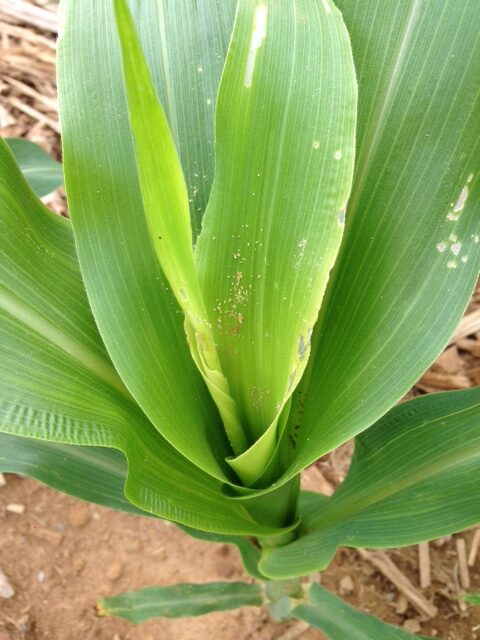
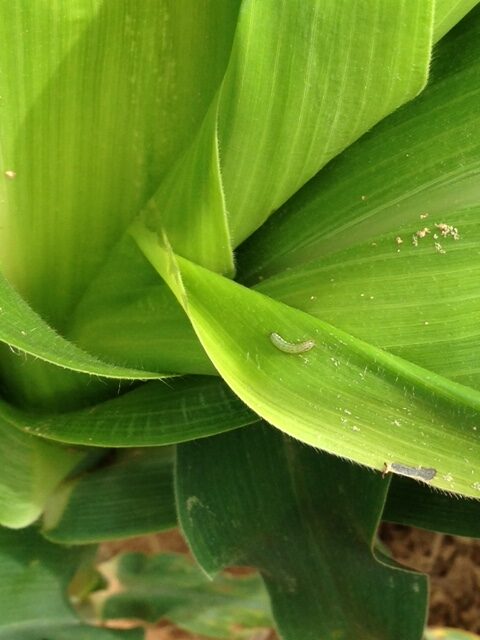 Newly hatched FAW larvae cause holes and scratches on leaves that are similar to European corn borer (ECB) feeding, except that they tend to be more concentrated and always lead down into the whorl (see photos at left). As the larvae grow, the feeding becomes more destructive, with large ragged holes and obvious droppings deposited in the whorl (see photo at right).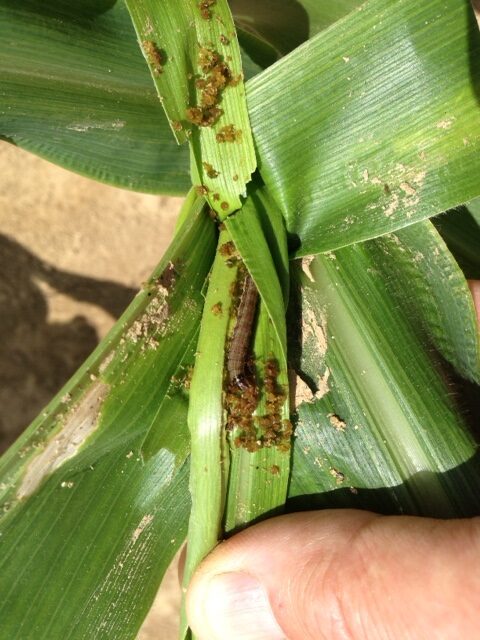
We will provide updates on new FAW appearances and severity as reports come in. FAW are resistant to synthetic pyrethroids. Effective sprays should include IRAC grp. 5 (spinosyns) or IRAC grp. 28 (diamides). The carbamate (IRAC grp. 1A) Lannate is also still effective. Sufficient water should be used in the applications to allow the solution to penetrate the layer of droppings that may have formed above the caterpillar.
