Communicating the Value of COVID-19 Vaccines With Your Farm Employees

CDC COVID-19 Vaccine Posters available in multiple languages – “Vaccines (shots) are one of the tools we have to fight the COVID-19 pandemic.”

In an effort to increase participation in the COVID-19 vaccination program among farm workers, the Centers for Disease Control (CDC), through the national Extension Foundation, is working with Cooperative Extension across the country to help spread the word about the importance of getting vaccinated. Rutgers Cooperative Extension Director Brian Schilling has enlisted a team of County Agents and Specialists to answer the call from the CDC to participate in this EXCITE program. Through a variety of communications channels we will be providing informational posters and other educational materials in several appropriate languages that you can hand out or post in locations where your workers can easily read them (like on or near your Worker Protections Standards bulletin boards or in your labor camps).

“Vaccines (shots) are one of the tools we have to fight the COVID-19 pandemic” posters from the CDC are now available on the COVID-19 page of the Rutgers NJAES On-Farm Food Safety website <https://onfarmfoodsafety.rutgers.edu/covid-19-information/> with the direct links to these multiple language editions:

You can also share this Spanish language video <https://wecandothis.hhs.gov/un-rayo-de-esperanza> from the US Dept. of Health and Human Services with your workers to help explain where they can get more information about COVID-19 vaccines. There are several other informational videos available at https://wecandothis.hhs.gov/filter/format/Video, as well as posters/fliers from https://wecandothis.hhs.gov/filter/format/Poster%20%E2%80%93%20Flyer (mostly English), and factsheets at https://wecandothis.hhs.gov/filter/format/Fact%20Sheet.

EXCITE PNG

Nursery and Landscape Pest Scouting Guide: 150-250 Growing Degree-days and Boxwood Blight Risk ( currently = low risk )

Nursery and Landscape Pest Scouting Guide 150-250 GDD50:

Please print or download these resources (click on them)

Remember:

  • To determine your local growing degree-days, please review this postObtaining your local growing degree-day information”
  • The information provided in the downloads gives scouting GDD50 ranges (in growing degree days, base 50F) for specific insect pests harming nursery crop production and maintenance. It is important to note that these GDD50 are not exact, rather provide a range of GDD and subsequent calendar dates that can be used to scout for, and treat for, insect pests.
  • This document supports scouting, it does not replace it. Keeping good notes on pest development will help dial in scouting and treatment efforts at your local level.
  • Forecasting predictions (GDD50 accumulation) for calendar dates of multiple regions of New Jersey (S,N,C) are provided.
  • If you need more information, OR you are regularly seeing specific pest development stages at growing degree-days different than those listed here, please contact Tim Waller at twaller@njaes.rutgers.edu

GREAT RESOURCE from Steve Rettke:Landscape Pest Notes: Some Early Spring Insects/Mites”


Projected GDD50 accumulation as of 4/15/2021
Region Location 4/15/21 1-Apr 1-May 1-Jun 1-Jul Aug. 1st
Southern Upper Deerfield (NJ50) 141 75 230 636 1314 2156
Central Howell / Freehold (NJ10) 94 67 165 513 1135 1929
Northern High Point (NJ59) 50 21 56 268 721 1327
Forecast: NOAA NCEP Coupled Forecast System model version 2 (CFSv2) forecast system (3.5 months) (USPEST.ORG)


Pest Scouting – Growing Degree-day Ranges (150-250 GDD50)
CROP TYPE Common Name Scientific Name GDD Min (50F) GDD Max (95F) Reference Developmental / Target Stage
Malus, Prunus, many Eastern tent caterpillar Malacosoma americanum 90 190 2 Larvae treatment before tents apparent (near 150-GDD50)
Elm, Service berry Woolly elm aphid Eriosoma americana 121 246 2 (6) Control target
Conifer Hemlock woolly adelgid Adelges tsugae 150 150 RU Eggs and 10% hatch
Conifer Spruce spider mite Oligonychus ununguis 150 175 4 1st egg hatch
Conifer Spruce needleminer Endothenia albolineana 150 200 4 1st larvae active
Conifer Balsam gall midge Paradiplosis tumifex 150 300 4 Adults laying eggs
Witchhazel, River birch Spiny witchhazel gall aphid Hamamelistes spinosus 171 6 Control target
Birch Birch leafminer Fenusa pusilla  190 290 RU Larvae (1st generation)
Conifer Spruce spider mite Oligonychus ununguis 190 363 RU Immatures/Adults
Honeylocust Honeylocust pod gall midge Dasineura gleditchiae 192 229 RU Larvae
Holly Holly leafminer Phytomyza ilicis 192 290 RU Egg hatch
Holly *Native holly leafminer Phytomyza ilicicola 192 298 2 Egg hatch
Rhododendron Rhododendron borer Synanthedon rhododendri 192 298 2 Typical treatment window
Larch Larch sawfly Pristophora erichsonii 192 299 2 Typical treatment window
Andromeda Andromeda lacebug Stephanitis takeyai 192 303 RU Adults
Rhododendron Rhododendron gall midge Clinodiplosis rhododendri 192 363 RU Larvae
Willows, Cottonwood, Poplar Imported willow leaf beetle Plagiodera versicolora 192 448 RU Larvae/Adults
Privet Privet thrips Dendrothrips ornatus 192 618 2 Typical treatment window
Lilac, ash, privet, many Lilac / Ash Borer Podosesia syringae 200 299 RU Adults – 1st Treatment
Spruce Spruce budworm Choristoneura fumiferana 200 300 5 Larvae
Elm Elm leafminer Fenusa ulmi 215 240 5 Adult emergence
Wild and cultivated roses Roseslug sawfly Endelomyia aethiops 230 6 Egg hatch / early instars
Deciduous, many Hawthorn lacebug Corythucha cydoniae 239 363 RU Nymphs/Adults
Conifer Arborvitae leafminer Argyresthia thuiella 245 360 RU Larvae Treatments
Prunus American plum borer Euzophera semifuneralis 245 440 5 Adult flight, egg laying
Boxwood Boxwood mites Eurytetranychus buxi 245 600 RU All Stages
Lilac Lilac leafminer Caloptilia syringella 246 363 5 Larvae Treatments
Holly Holly leafminer Phytomyza ilicis 246 448 RU Larvae Treatment
Yew Taxus mealybug Dysmicoccus wistariae 246 618 RU Adults/Crawlers
Conifer Pine sawflies (Red-headed) Neodiprion lecontei 246 1388 RU Larvae (1st generation)
Boxwood Boxwood leafminer Monarthropalpusi flavus 249 6 Adult emergence
Conifer Eastern spruce gall adelgid Adelges abietis 250 310 5 egg hatch, galls begin forming (not a control target)
References RU Rutgers Cooperative Extension – IPM Notes
2 http://ccetompkins.org/resources/using-growing-degree-days-for-insect-management
3 https://extension.psu.edu/ipm-basics-for-christmas-trees#section-2
4 https://www.canr.msu.edu/ipm/agriculture/christmas_trees/gdd_of_conifer_insects
5 https://www.agriculture.nh.gov/publications-forms/documents/landscape-pests.pdf
6 https://extension.umd.edu/ipm/pest-predictive-calendar-landscapenursery
7 https://www.canr.msu.edu/ipm/agriculture/christmas_trees/gdd_of_landscape_insects


Boxwood Blight risk-model information, considerations, and links:

Boxwood Blight Risk Assessment as of 4/15/2021
Region Location CODE 15-April 16-April 17- April 18-April 19-April
Southern Upper Deerfield NJ50 Low  Very Low  Very Low  Very Low  Very Low 
Central Howell / Freehold NJ10 Low  Very Low  Very Low  Very Low  Very Low 
Northern High Point NJ59 Very Low  Very Low  Very Low  Very Low  Very Low 
Please check your local boxwood blight risk at (https://uspest.org/risk/boxwood_app)


Considerations:

Become a Boxwood Blight Advocate to receive quarterly updates (through the Horticultural Research Institution)

Preparing Orchards Against the Frost – Low Tech Strategies

Frost is common in the north-eastern US, however, frost events during bloom, specifically in orchard crops can be economically devastating. Often the cause is a few hours of temperatures below the injury threshold temperature for the developing buds as cooler nights result in the rapid loss of thermal energy. Fortunately, there are several passive methods or low-tech strategies, that can help maintain a slightly higher orchard floor temperature, has the potential to prevent substantial crop loss. [Read more…]

Eastern Tent Caterpillar: The Landscape Harbinger of Spring

Throughout much of NJ during this week, the growing degree days (GDD) will be increasing consistently. By the end of the week, many areas will exceed 90 GDD, which means the eastern tent caterpillars will begin to hatch. Not all eggs will hatch at once since a staggered hatching period will potentially increase survival rates if the weather happens to cool again.

The photographs of the eastern tent caterpillar’s life cycle included in this blog were all taken during the spring of 2016 at the same site in Freehold, NJ. They are placed in chronological order covering a time span of 10 weeks from 1st egg hatch on 3/23/16 to late pupation on 6/2/16. In 2016, central NJ experienced a relatively warm early spring that enabled the speedy first hatching.

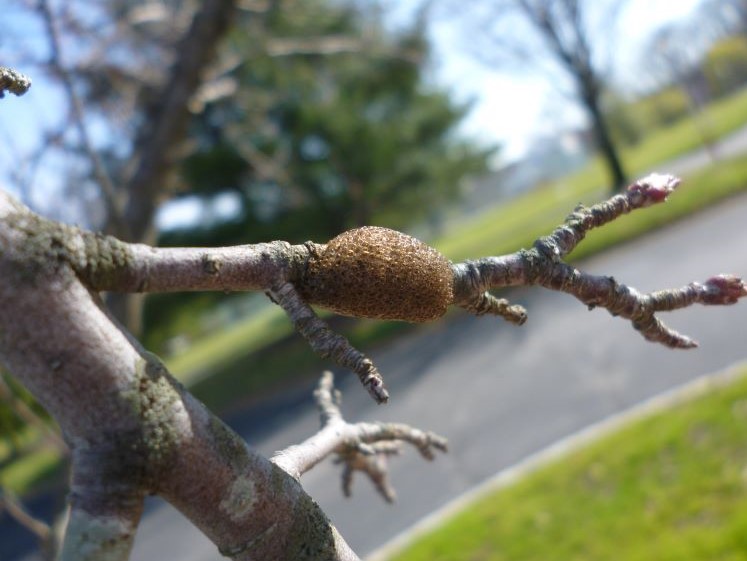
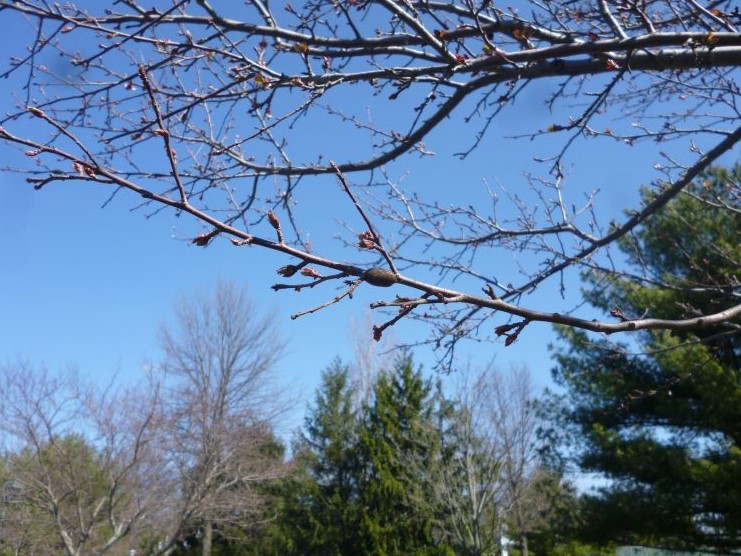
Date: 3/23/16 (No hatch). Do you see it? One inch long Tent Cat egg mass overwinters encircling 2-3 year old twigs. (Photo Credit: Steven K. Rettke, Rutgers Coop. Ext.)

Date: 3/23/16 (No Hatch). Close-up of the Tent Cat egg mass. It has the appearance & feel of styrofoam. (Photo Credit: Steven K. Rettke, Rutgers Coop. Ext.)


[Read more…]

Nursery Pest Scouting Guide: 60-150 Growing Degree-days & Boxwood Blight Information

Pest Scouting:

Please print or download the two resources of this post (click on them)

The information provided in the downloads gives scouting ranges (in growing degree days, base 50F) for specific insect pests harming nursery crop production and maintenance. Additionally, forecasting predictions (GDD50 accumulation) for calendar dates of multiple regions of New Jersey (S,N,C) are provided.

To determine your local growing degree-days, please review this postObtaining your local growing degree-day information”

Scouting Ranges:

  • This document supports scouting, it does not replace it. Keeping good notes on pest development will help dial in scouting and treatment efforts at your local level.
  • It is important to note that these GDD50 are not exact, rather provide a range of GDD and subsequent calendar dates that can be used to scout for, and treat for, insect pests.
  • The pests listed here will be listed again in future scouting range announcements as they undergo further developmental life stages or are vulnerable to management options.
  • If you need more information, OR you are regularly seeing specific pest development stages at growing degree-days different than those listed here, please contact Tim Waller at twaller@njaes.rutgers.edu

GREAT RESOURCE from Steve Rettke:Landscape Pest Notes: Some Early Spring Insects/Mites”


Projected GDD50 accumulation as of 3/29/2021
Region Location April 1st May 1st June 1st July 1st August 1st
Southern Upper Deerfield (NJ50) 75 185 591 1269 2111
Central Howell / Freehold (NJ10) 61 142 490 1111 1906
Northern High Point (NJ59) 24 30 242 695 1301
Forecast: NOAA NCEP Coupled Forecast System model version 2 (CFSv2) forecast system (3.5 months) (USPEST.ORG)


Pest Scouting – Growing Degree-day Ranges  (60-150 GDD50) 
CROP TYPE Common Name Scientific Name GDD Min (50F) GDD Max (95F) Reference Developmental / Target Stage
Many Southern red mite Oligonychus ilicis 69 157 RU Spring hatch
Conifer Eastern pine shoot borer Eucosma gloriola 75 200 4 1st adults active
Malus, Prunus, many Eastern tent caterpillar Malacosoma americanum 90 190 2 Larvae treatment before tents apparent
Many Gypsy moth Lymantria dispar 90 448 RU Larvae treatment (early instars)
Conifer Cooley spruce gall adelgid Adelges cooleyi 90 180 4 1st adults active – Douglas fir
Conifer Balsam twig aphid Mindarus abietinus 100 150 4 Stem mothers present (control target)
Conifer Pine engraver (Ips bark beetle) Ips spp. 100 150 4 1st adults active
Conifer European pine sawfly Neodiprion sertifer 100 195 4 1st larvae active
Pieris Andromeda lace bug Stephanitis takeyai 115 279 RU Nymphs (1st generation)
Azalea Azalea lace bug Stephanitis pyrioides 118 372 RU Nymphs (1st generation)
Conifer Larch casebearer Coleophora laricella 120 150 4 Egg hatch
Conifer Nantucket pine tip moth Rhyacionia frustrana 121 448 RU 1st generation egg hatch
Birch Birch leafminer Fenusa pusilla 123 290 RU Adults – egg laying
Many Gypsy moth Lymantria dispar 145 200 4 Egg hatch, 1st larvae
Holly Holly leaf miner Phytomyza ilicis 147 265 RU Adults – egg laying
Many Cankerworms, inch-worms, loopers (many) 148 290 2 Larvae treatment
Lilac, ash, privet, many Lilac / Ash Borer Podosesia syringae 148 299 2 Adult flight
Yews, Rhododendrons, many Black Vine Weevil Otiorhynchus sulcatus 148 400 2 Pupation / Adult emergence
Dogwood, many Dogwood Borer Synanthedon scitula 148 700 2 Adult activity
Conifer Spruce spider mite Oligonychus ununguis 150 175 4 1st egg hatch
Conifer Spruce needleminer Endothenia albolineana 150 200 4 1st larvae active
Conifer Balsam gall midge Paradiplosis tumifex 150 300 4 Adults laying eggs
References RU Rutgers Cooperative Extension – IPM Notes
2 http://ccetompkins.org/resources/using-growing-degree-days-for-insect-management
3 https://extension.psu.edu/ipm-basics-for-christmas-trees#section-2
4 https://www.canr.msu.edu/ipm/agriculture/christmas_trees/gdd_of_conifer_insects
5 https://www.agriculture.nh.gov/publications-forms/documents/landscape-pests.pdf
6 https://extension.umd.edu/ipm/pest-predictive-calendar-landscapenursery
7 https://www.canr.msu.edu/ipm/agriculture/christmas_trees/gdd_of_landscape_insects


Boxwood Blight risk-model information, considerations, and links:

Boxwood Blight Risk Assessment as of 3/29/2021
Region Location CODE 29-Mar 30-Mar 31-Mar 1-Apr 2-Apr
Southern Upper Deerfield NJ50 Very Low  Very Low  Very Low  Very Low  Very Low 
Central Howell / Freehold NJ10 Very Low  Very Low  Very Low  Very Low  Very Low 
Northern High Point NJ59 Very Low  Very Low  Very Low  Very Low  Very Low 
Please check your local boxwood blight risk at (https://uspest.org/risk/boxwood_app)


Considerations:

Become a Boxwood Blight Advocate to receive quarterly updates (through the Horticultural Research Institution)

Landscape Pest Notes: Some Early Spring Insects/Mites

The accumulation of heat units (Growing Degree Days (GDD)) is increasing rapidly across many areas of New Jersey as we soon enter into the early weeks of April. If past histories or present-day monitoring indicate the need for interventions, then the best control windows for an increasing number of insect/mite pests are beginning to occur. The following is an incomplete listing of a handful of some of our early season landscape pests that may need to be scouted & possibly controlled. The insect/mite pests included here are: Hemlock Rust Mites; White Pine Weevils; Native Holly Leafminers; European Pine Sawflies; Honeylocust Spider Mites; White Pine Aphids; and Eastern Spruce Gall Adelgids.

Inspecting plant

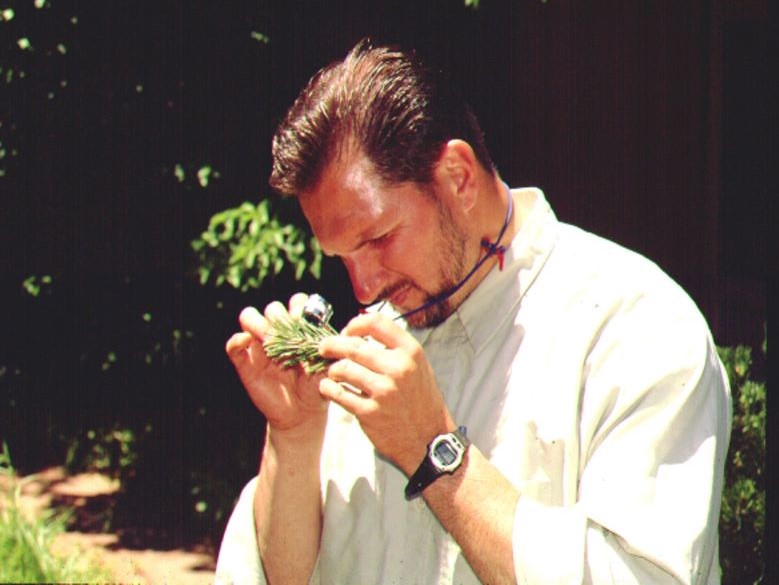
As our landscapes start  to “wake-up” with warming temperatures, the insect & mite pests will begin activity. (Photo Credit: Steven K. Rettke, Rutgers Coop. Ext.)

Person spraying for pests

When monitoring indicates controls are warranted, then pesticides can prevent early spring pests from building-up. (Photo Credit: Steven K. Rettke, Rutgers Coop. Ext.)


[Read more…]