Vegetable Crops Edition

Seasonal updates and alerts on insects, diseases, and weeds impacting vegetable crops. New Jersey Commercial Vegetable Production Recommendations updates between annual publication issues are included.
 
Subscriptions are available via EMAIL and RSS.
 
Quick Links:

NJ Commercial Vegetable Production Recommendations

Rutgers Weather Forecasting - Meteorological Information important to commercial agriculture.

NJ Ag & Health Urge Use of Free COVID-19 Testing For Farm Workers

Earlier this week, NJ Secretary of Ag Douglas Fisher released this attached letter, co-signed by Dept of Health Commissioner Judith Persichilli, urging all growers with farm labor to take advantage of opportunities to help protect your employees from COVID-19.

As the letter states,

“One program that is being implemented FREE OF CHARGE for all farms is a COVID-19 testing and education program through Federally Qualified Health Centers (FQHCs) and local health departments. Along with free testing, the program provides education and other related support services. [Read more…]
Vegetable IPM Update 7/15/20

Sweet Corn

European corn borer (ECB) adults have all but disappeared over the past week, and no map will appear in this edition.    Larval infestations are sparse now, as the last corn plantings to be exposed to ECB in the whorl now have entered the silk stage.

The highest nightly trap catches of ECB for the week ending 7/15/20 are as follows:

Califon   1 Eldora   1
Cinnaminson   1 Old Bridge   1
Crosswicks   1 Tabernacle   1

Fall armyworm (FAW) has declined, and larval infestations are no longer evident in the northern counties.  There are still low infestations in Cape May County, and moths are being captured there as well as near the Burlington/Camden County border.  This is the time of the summer when FAW can show up, resulting in significant injury to whorl and even seedling stage corn.  Injury from newly hatched larvae shows up as “window panes” or areas where leaf tissue has been eaten down the the lower epidermis (see photo at left).  This injury leads down into the whorl.  As larvae gain size, they begin to consume leaf tissue in its’ entirety, creating ragged holes and lots of droppings (see photo at right).  FAW can be tough to manage because it is resistant to synthetic pyrethroid insecticides (IRAC 3A) and because larvae are often covered by their own droppings, making contact with the insecticide more difficult.  Treat when 12% or more plants exhibit FAW injury alone, or in combination with ECB injury.

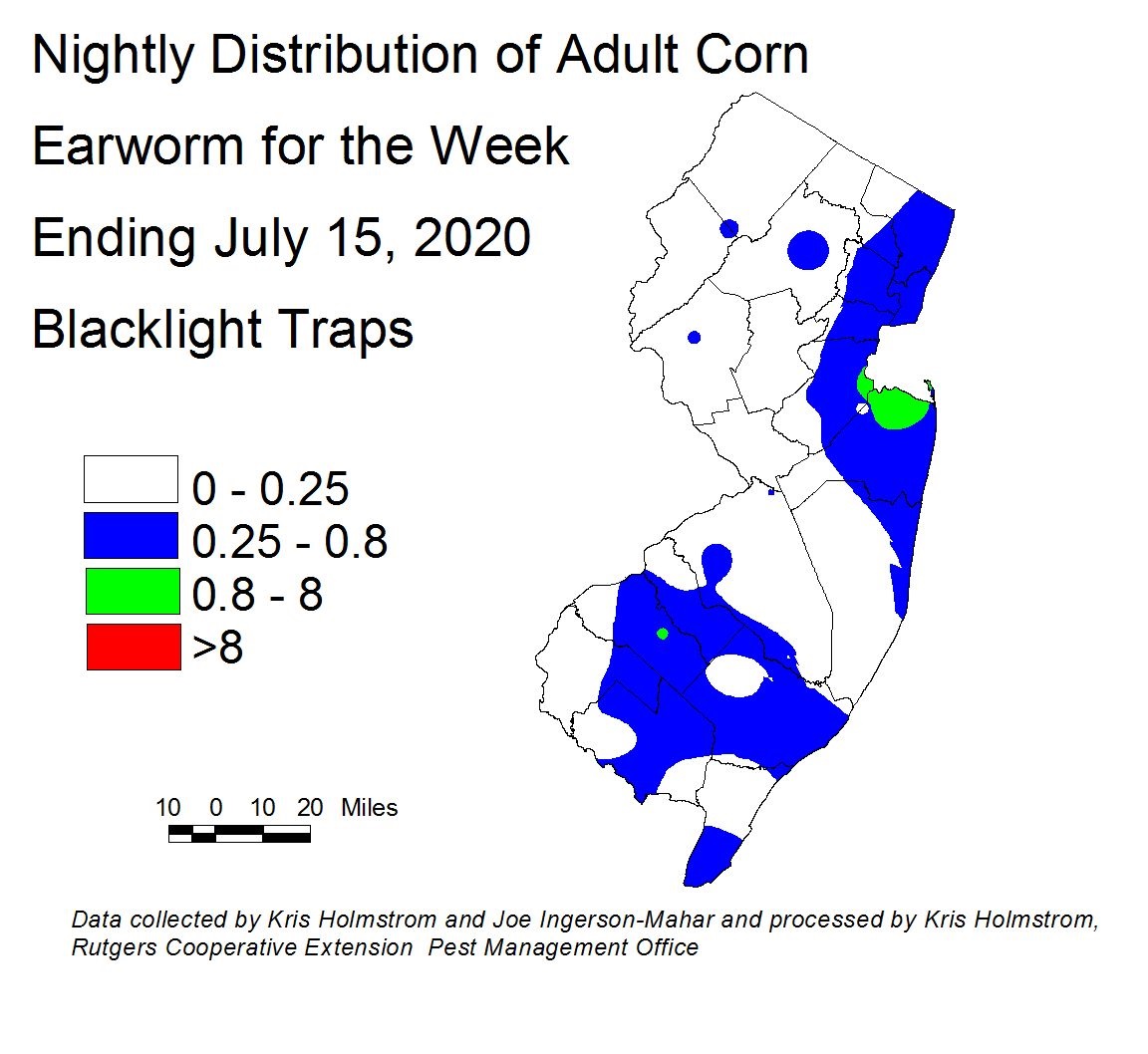
Corn earworm (CEW) moth captures remained steady at reasonably low levels in blacklight traps this past week.   Despite these lower counts,  silking corn continues to require protection from this pest.  Blacklight catches remain highest overall along the coast (see map at left).

The highest nightly trap catches of CEW in black light traps for the week ending 7/15/20 are as follows:

Matawan   5 Denville   1 Farmingdale   1
Centerton   1 Downer   1 Jones Island   1
Clinton   1 East Vineland  1 Medford   1
Crosswicks   1 Elm   1 Milltown   1

[Read more…]

Worker Protection Standard: Videos for Annual Training of Workers and Handlers

Use Rutgers NJAES Worker Protection website loaded with “Quick-Connect” With EPA’s short term WPS training exemptions for COVID-19,  provide your workers and handlers access to videos they can watch without being disturbed as an alternative to large group training,  These videos can be viewed on a computer or even a cell phone. Make sure that […]

EPA Releases Guidance on Pesticide Safety Training Requirements During COVID-19

Agricultural workers and pesticide handlers directly support the nation’s agricultural production and food supply and EPA is committed to ensuring they are protected from workplace hazards. EPA has released guidance regarding the annual pesticide safety training requirements outlined in the Agricultural Worker Protection Standard (WPS) that offers flexibility during the COVID-19 public health emergency. The […]

Revised New Jersey Pesticide Regulations — NOW POSTED ONLINE!

The final revisions to the New Jersey Department of Environmental Protection (NJDEP) pesticide regulations at N.J.A.C. 7:30 for the Pesticide Control Code were adopted on April 6, 2020.  Public comments received on NJDEP’s proposed revisions to the regulations were addressed and published in the final rule adoption.  The April 6, 2020 rule amendments to the […]

Vegetable IPM Update 7/08/20

Sweet Corn

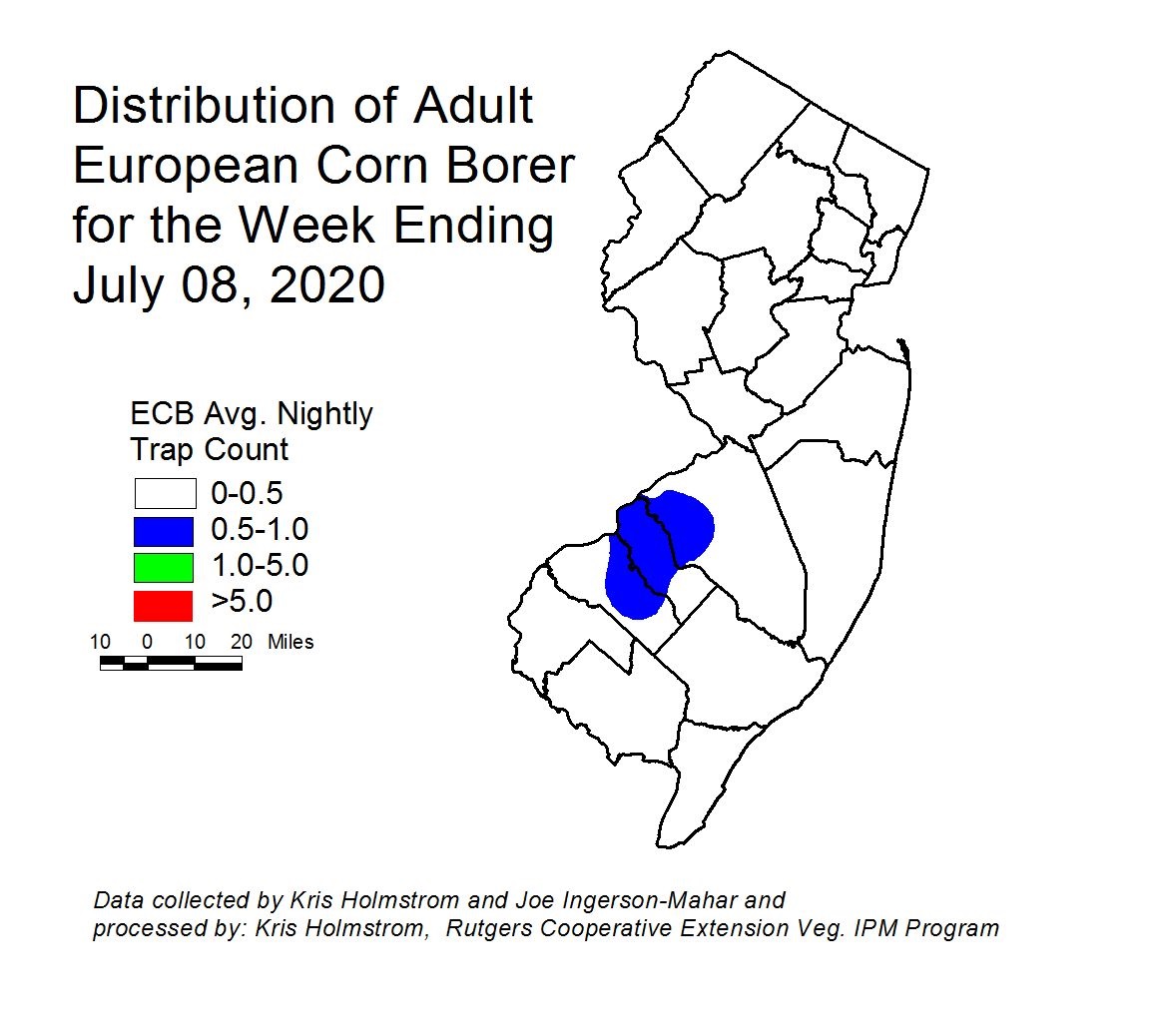
European corn borer (ECB) moth catches have fallen to very low levels over the past week.   Remaining activity is highest in Gloucester and Camden counties (see ECB map at left).  Threshold (12%+) level larval infestations are declining now, as the last corn plantings to be exposed to ECB in the whorl now are entering the silk stage.  Larval infestations should decline sharply until the second flight appears.


The highest nightly trap catches of ECB for the week ending 7/08/20 are as follows:

Cinnaminson   1 Georgetown   1
Downer   1 Long Valley   1
Eldora   1 New Egypt   1
Elm   1 Springdale   1

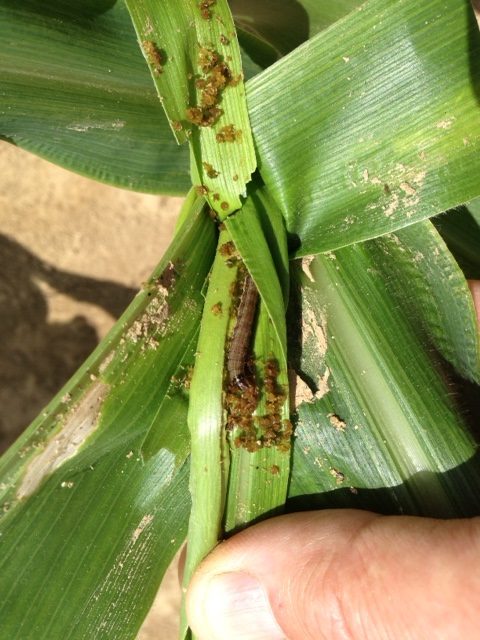
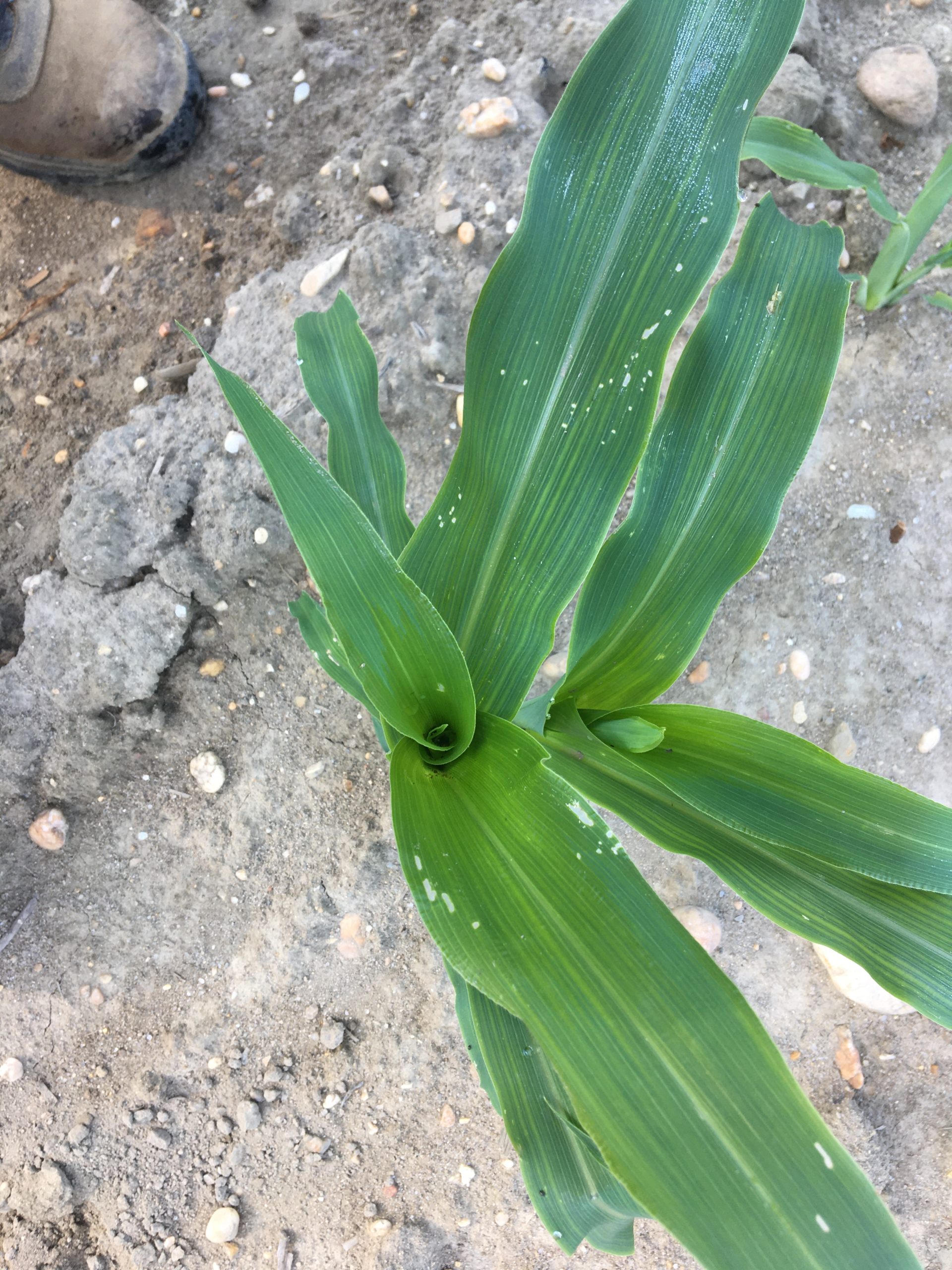
Fall armyworm (FAW) larvae have appeared in low numbers in fields in Cape May County, as well as in Hunterdon and Morris counties.  This pest seems to have arrived last week some time, and has since subsided somewhat.  This is the time of the summer when FAW can show up, resulting in significant injury to whorl and even seedling stage corn.  Injury from newly hatched larvae shows up as “window panes” or areas where leaf tissue has been eaten down the the lower epidermis (see photo at left).  This injury leads down into the whorl.  As larvae gain size, they begin to consume leaf tissue in its’ entirety, creating ragged holes and lots of droppings (see photo at right).  FAW can be tough to manage because it is resistant to synthetic pyrethroid insecticides (IRAC 3A) and because larvae are often covered by their own droppings, making contact with the insecticide more difficult.  Treat when 12% or more plants exhibit FAW injury alone, or in combination with ECB injury.

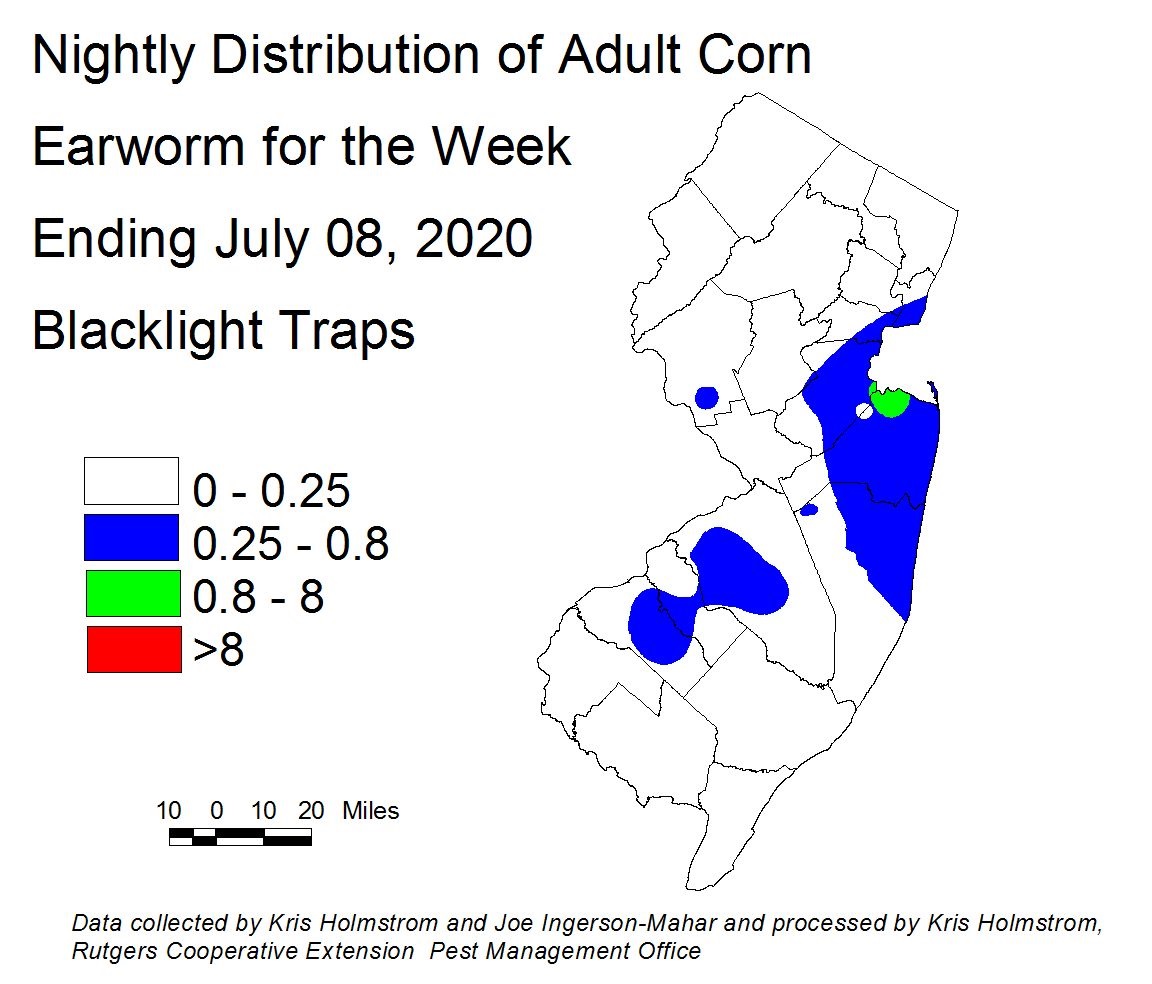
Corn earworm (CEW) moth captures have declined in blacklight traps this past week.   Despite lower moth levels,  silking corn continues to require protection from this pest.  Blacklight catches remain highest overall along the coast (see map at left).

The highest nightly trap catches of CEW in black light traps for the week ending 7/08/20 are as follows:

Matawan   2 Medford   1
Cinnaminson   1 Milltown   1
Downer   1 New Egypt   1
Farmingdale   1 Sergeantsville 1

[Read more…]