Transplants that are not allowed to harden-off for a few days outside prior to setting in the field may suffer significantly. It is important to expose all transplants to some normal weather conditions before transplanting so they can become acclimated to light intensity as well as the wind and other field conditions. [Read more…]
Vegetable Crops Edition
Seasonal updates and alerts on insects, diseases, and weeds impacting vegetable crops. New Jersey Commercial Vegetable Production Recommendations updates between annual publication issues are included.
Subscriptions are available via EMAIL and RSS.
Quick Links:
 NJ Commercial Vegetable Production Recommendations
Rutgers Weather Forecasting - Meteorological Information important to commercial agriculture.
June 6, 2021 Andy Wyenandt
Vegetable Disease Update – 6/6/21
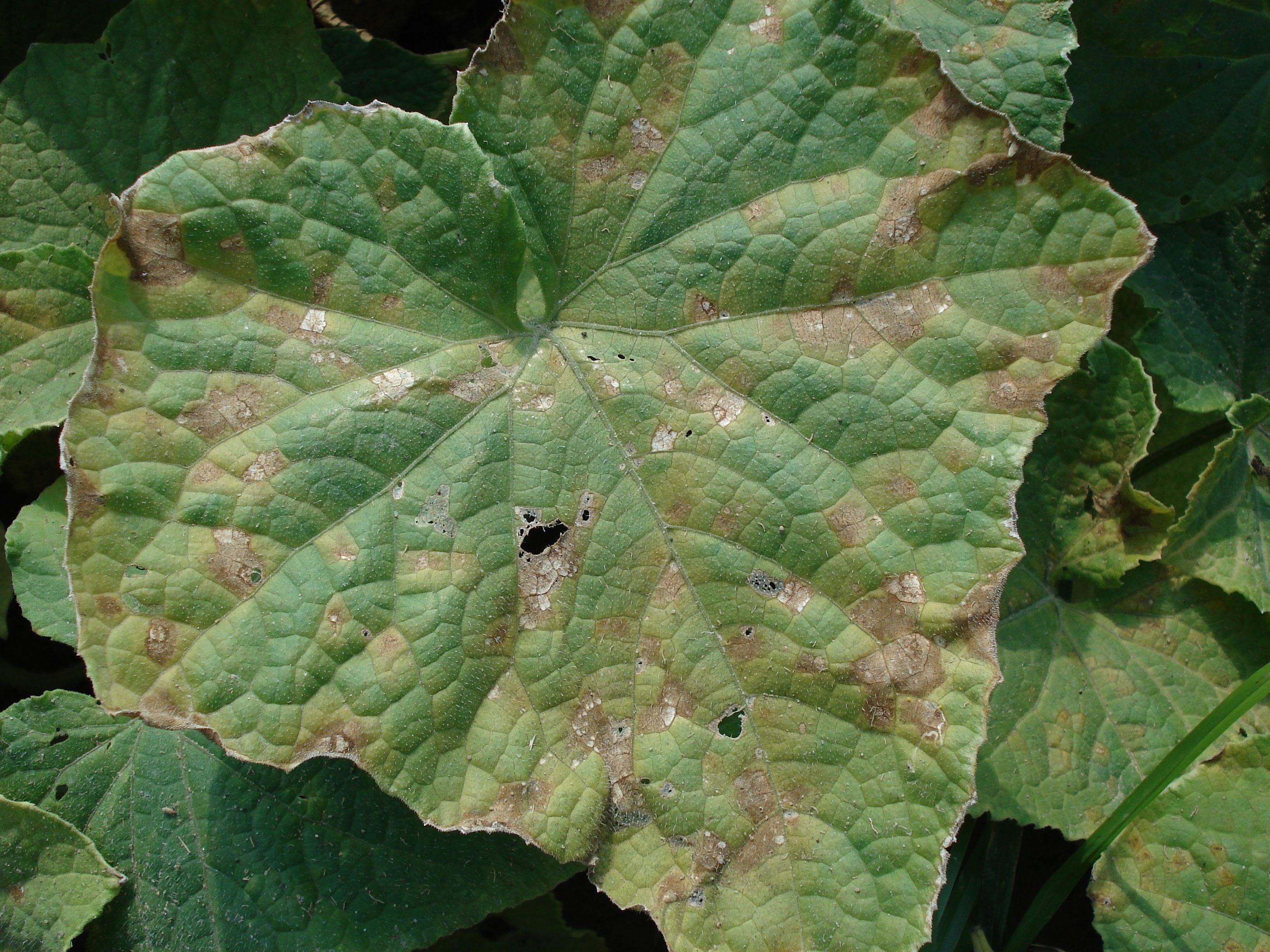
- Cucurbit downy mildew has been reported as far north as South Carolina on cucumber and cantaloupe in Georgia. To track the progress of CDM please visit the CDM forecasting website.
- No reports of Late blight in the region. To track the progress of Late blight in the US please click here.
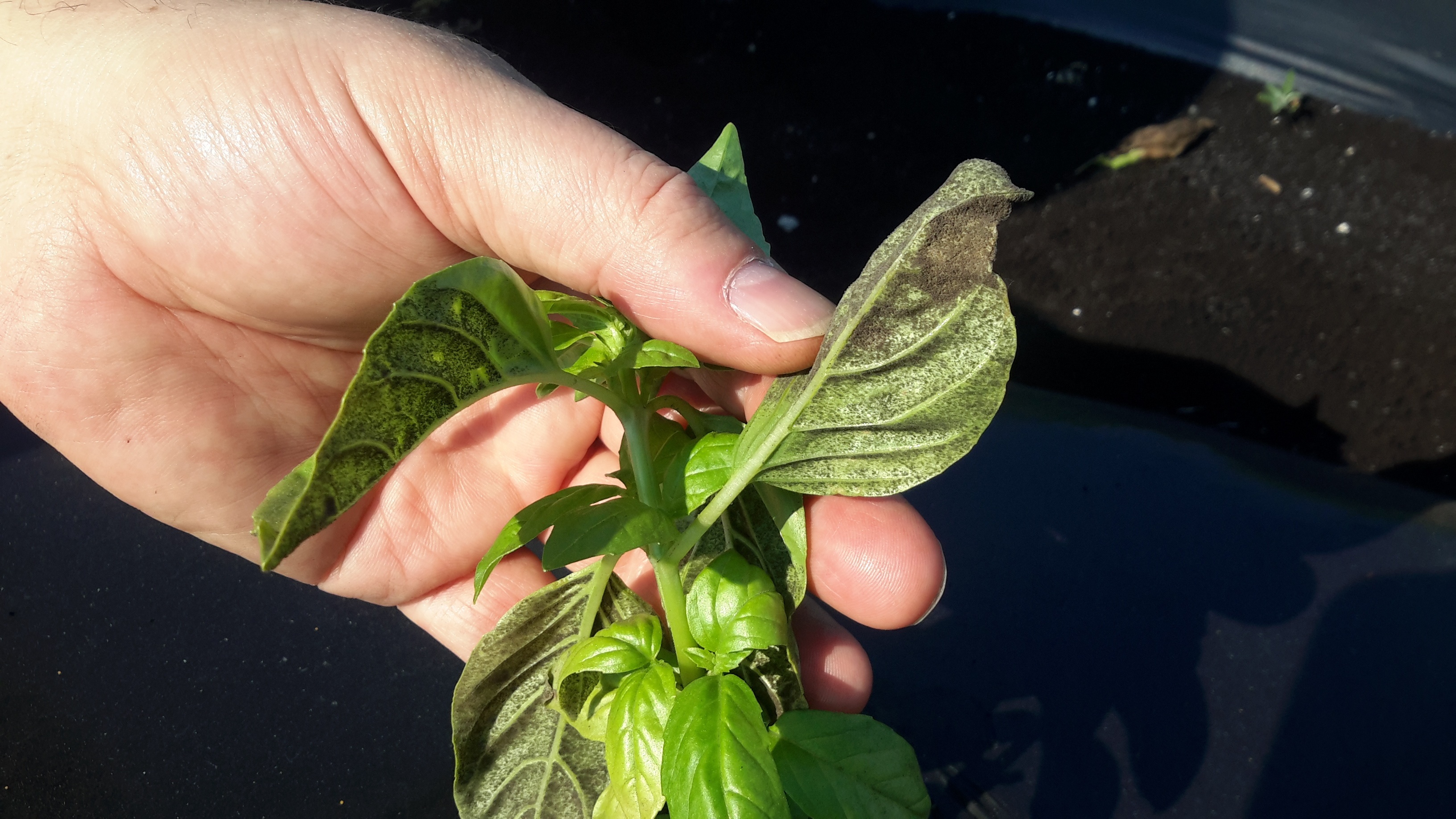
- Basil downy mildew has been reported in sweet basil from a homeowners garden in southern New Jersey. This is the first report of BDM this growing season. All basil growers are encouraged to scout their plantings on a daily basis. For more information on controlling BDM please click here. To follow the progress of BDM in the US please click here.
- Rhizoctonia and Pythium root rot have been reported in pepper. For a review of identifying and controlling root rots please click here.
- Sand blasting has been reported on a number of leafy green and other crops these past few weeks. Injury from sand blasting predisposes plants to bacterial infections. Remember, all bacteria need a wound or a natural opening, such as a stomata, to gain entry into the plant. Fields with extensive injury need to be scouted regularly, and most likely will need to be sprayed regularly with a copper fungicide or disinfectant-type product to help mitigate infection and spread.
- For a review on how to avoid sunscald injury on transplanted crops please click here.
- With the on and off again heavy rains we have been getting, along with warmer weather, all growers should consider applying at-transplanting fungicides for root rot control. Please click here to see these articles.
- The 2020/2021 Commercial Vegetable Production Recommendations Guide is available for free online! With many county offices running reduced hours or being closed this is the easiest way to obtain the newest recommendations.
- For a quick review on managing fungicide resistance development using tank mixes and fungicide rotations, and information on FRAC group 4, FRAC group 7, and FRAC group 3 and FRAC group 11 fungicides please click on hyperlinks.
June 5, 2021 Andy Wyenandt
Cucurbit Powdery and Downy Mildew: A Tale of Two Pathogens
Cucurbit powdery and downy mildew are two important pathogens of cucurbit crops throughout the mid-Atlantic region. Each disease has the ability to cause significant losses and can often show up in cucurbit plantings at the same time during the production season making control difficult. Its important for growers to remember that each pathogen belongs to a different group of fungi (powdery mildew – the ascomycetes and downy mildew – oomycetes) which means that different classes of fungicides (i.e., different FRAC codes) are needed for the proper control of each disease. Thus, at any time of the growing season growers may have three choices: control one or the other, or control both at the same time. Before we get to control options, lets take a look at each one, and what has changed during the past few years.
Cucurbit powdery mildew
Up until 2004, cucurbit powdery was considered the most destructive disease in cucurbit production, that all changed with the re-emergence of cucurbit downy mildew. Cucurbit powdery mildew (CPM), in past years, was thought to be caused by two different pathogens, Podosphaera xanthii (formerly Sphaerotheca fuliginea) or Golovinomyces chicoracearum var. chicoracearum (formerly Erysiphe cichoracearum), with the former being reported more in the US and worldwide. In general, E. cichoracearum was more commonly found during cooler weather, with P. xanthii preferring hotter weather. What is the importance of knowing which species is present? Knowing which species are present, or more prevalent in the overall population of the pathogen will have important impacts in breeding programs, control strategies, and fungicide resistance management strategies. In 2019, researchers from IL and NY conducted a survey of CPM isolates collected from 6 different cucurbit hosts from around the US. The survey, with the use of morphological characterization and genotyping-by-sequence (GSB) methods and analysis, determined that 100% of the CPM isolates collected in the US were Podosphaera xanthii. Virulence testing with a subset of samples determined that there were some differences in the ability to cause disease, which was not unexpected. Cucurbit powdery mildew is an obligate parasite, and like cucurbit downy mildew, must have a living host in order to survive the winter, or importantly, as in the case of powdery mildew produce chasmothecia which allow the pathogen to overwinter. The production of chasmothecia shows the pathogen is reproducing sexually which gives rise to genetic diversity in the CPM population which can lead to differences in virulence as well as fungicide resistance development. Cucurbit powdery mildew is known to produce chasmothecia in different regions of the US, and has been observed in New Jersey in some years. The role of clasmothecia production and if it allows overwintering in NJ (and elsewhere) is not well understood. In general, CPM moves up the east coast each spring as cucurbit crops are planted up the coast, eventually reaching the mid-Atlantic region sometime in the early to mid summer making preventative fungicide applications necessary. The fungicides that have been used to control the pathogen in southern regions may greatly impact efficacy and control strategies in our region because of potential fungicide resistance development. Importantly, there are a number of cucurbit crops with very good genetic resistance to CPM. These varieties can help delay disease onset and may help reduce fungicide input and should be considered as a part of any disease management plan, especially in organic production systems.
Cucurbit downy mildew
As mentioned earlier, in 2004, cucurbit downy mildew (CDM) re-emerged in the US with a vengeance causing significant losses in cucurbit production. In most years prior to this, concern for CDM control was minimal, since the pathogen arrived late in the growing season (in more northern regions), or the pathogen caused little damage, or never appeared. After 2004, with significant losses at stake, and with very few fungicides labeled for its proper control, CDM became a serious threat to cucurbit production. Importantly, at the time, cucumber varieties with very good levels of CDM resistance were no longer resistant, suggesting a major shift in the pathogen population. Research done over the past 15 years has led to a better understanding of the pathogen. Recent research has determined that the CDM falls into two separate clades: Clade I and Clade II. Some CDM (Pseudoperonospora cubensis) isolates fall into Clade I which predominately infect watermelon, pumpkin, and squash, where CDM isolates in Clade II predominately infect cucumber and cantaloupe. Research suggests that isolates in Clade II can quickly become resistant to specific fungicides (NCSU). Most cucumber varieties are resistant to Clade 1 isolates, but there is no resistance currently available for Clade 2 isolates. For pickling cucumber the varieties, Citadel and Peacemaker, are tolerant to clade 2 isolates. For slicing cucumbers, the varieties SV3462CS and SV4142CL are tolerant to Clade 2 isolates. All organic and greenhouse growers are encouraged to use tolerant varieties since chemical control options are very limited (NCSU). An extended list of cucumber varieties with CDM resistance from the University of Florida can be found here. For the past decade, researchers from around the US have been closely monitoring and forecasting the progress of CDM through a website hosted by NCSU. The CDMpipe website is currently in the process of an upgrade and will now be hosted by Penn State University. All cucurbit growers are encouraged to sign up to the CDMpipe website to help them know what cucurbit crops are being infected (and where) and to follow the forecasting to know where the pathogen may move to next. As a note, in recent years, CDM control with certain fungicides has varied significantly depending on the cucurbit host and geographic region. This is extremely important since two clades of the pathogen are potentially present (affecting host range) as well as having a potential impact on control strategies. How do you know which clade may be present on your farm? Follow the reports. If CDM is mostly present in cucumber crops as it works its way up the east coast, then you are most likely to see it infect cucumber and melon on your farm first. Scout your fields regularly, especially if CDM is in the immediate region. Pay very close attention to symptom development and on what cucurbit crop(s) you see it on, this is especially important if you grow more than one cucurbit crop. Like CPM, once CDM arrives in the region preventative fungicide applications will be necessary.
Fungicide resistance development in CPM and CDM
Fungicide resistance development in cucurbit powdery mildew is well documented. In the mid-Atlantic region, resistance has been reported in FRAC code 3 (DMI fungicides – Nova, Rally), 7 (SDHIs – boscalid), 11 (strobilurins – Quadris, Pristine), 13 (quinoxyfen – Quintec), and U6 (cyflufenamid -Torino). All of these fungicides have a high risk for resistance development because of their specific modes of action. Other currently labeled fungicides for CPM control, such as fluopyram (Luna, FRAC code 7) and metrafenone (Vivando, FRAC code 50) are also at risk for fungicide resistance development. All cucurbit growers are strongly encouraged to rotate as many different fungicides with different modes of action (i.e., from different FRAC codes) to help reduce the chances for fungicide resistance development. Growers are also strongly encouraged to scout fields on a regular basis to help determine any loss of fungicide efficacy. If loss of efficacy is present, the grower should avoid using that particular fungicide (FRAC code). The good news for CPM control, there are a number of fungicides with different modes of action in different FRAC codes and the grower has a number of options to chose from. All growers should follow use recommendations on labels and avoid overusing one mode of action, even if it works well.
Loss of efficacy in the control of CDM has also been documented in FRAC code 4 (mefenoxam), FRAC code 11 fungicides (azoxystrobin), and FRAC code 43 (fluopicolide). Importantly, most fungicides labeled for the control of CDM are at-risk for resistance development because of the specific modes of action. These include Ranman (cyazofamid, FRAC code 21), Gavel/Zing! (zoxamide, 22), Tanos/Curzate (cymoxanil, 27), Previcur Flex (propamocarb HCL, 28), Forum/Revus (dimethomorph, 40), Zampro (ametoctradin, 45), and Orondis (oxathiapiprolin, 49). Importantly, just like with CPM control, there are a number of CDM fungicides with different modes of action in different FRAC codes that the grower has a number of options to chose from. Again, all growers should follow use recommendations on labels and avoid overusing one mode of action, even if it works well. As with CPM, If loss of efficacy is present, the grower should avoid using that particular fungicide (FRAC code) for CDM control.
Growers should remember that fungicides specifically labeled for CPM control won’t control CDM, and fungicides labeled for CDM control won’t control CPM. Therefore, following disease monitoring and forecasting website, scouting fields, paying close attention to host crops, choosing varieties with CDM or CPM resistance, and following proper fungicide resistant management guidelines remain critically important for successful CPM and CDM control.
For more information please see the 2020/2021 Mid-Atlantic Commercial Vegetable Production Recommendations.
For more information on cucurbit downy mildew control please click here.
For more information on cucurbit powdery mildew control please click here.
References:
North Carolina State University
https://content.ces.ncsu.edu/cucurbit-downy-mildew
University of Florida
https://edis.ifas.ufl.edu/pp325
June 3, 2021 Rick VanVranken
NJ Secretary of Ag Fisher Addresses Governor’s Executive Order #243
NJ Governor Murphy signed Executive Order #243 rescinding EO#107 which requires employers to accommodate tele-work options for employees, and also lifts indoor mask mandates and 6ft social distancing requirements for vaccinated employees working indoors in businesses not open to public. Secretary of Agriculture Douglas Fisher has provided a summary of the changes that may impact agriculture operations. The full text of his letter is attached here.
June 2, 2021 Kris Holmstrom and Joe Ingerson-Mahar
Vegetable IPM Update 6/02/21
Sweet Corn
Attention sweet corn growers! Please take a few moments to complete this survey. Rutgers IPM personnel expect to participate in grant funded research guided by grower responses. See the brief description below. Thank you for your help!
Corn Earworm Management in Sweet Corn Needs Assessment Survey
Dr. Kelly Hamby, Associate Professor/Extension Specialist with the Department of Entomology at University of Maryland, is leading a team of researchers, including Rutgers IPM staff, who have developed a survey to prioritize research and extension efforts for improving corn earworm management in sweet corn throughout the Northeast. We appreciate your participation in this survey and will use results to develop a grant proposal to try to get federal funding to address these needs.
Survey link: https://ume.qualtrics.com/jfe/form/SV_9vRh1xHnDp4KEaa
Low numbers of European corn borer (ECB) moths continue to be captured in parts of the state. Cool temperatures over the past weekend have likely suppressed activity, and warmer weather in the upcoming week may trigger a modest rebound. The highest adult activity is currently around the Atlantic-Camden County border (see map at right). Whorl corn is the primary target for egg laying, and injury as high as 16% of plants infested has been found up to northern Monmouth County this week. Feeding levels should rise over the next 3 weeks.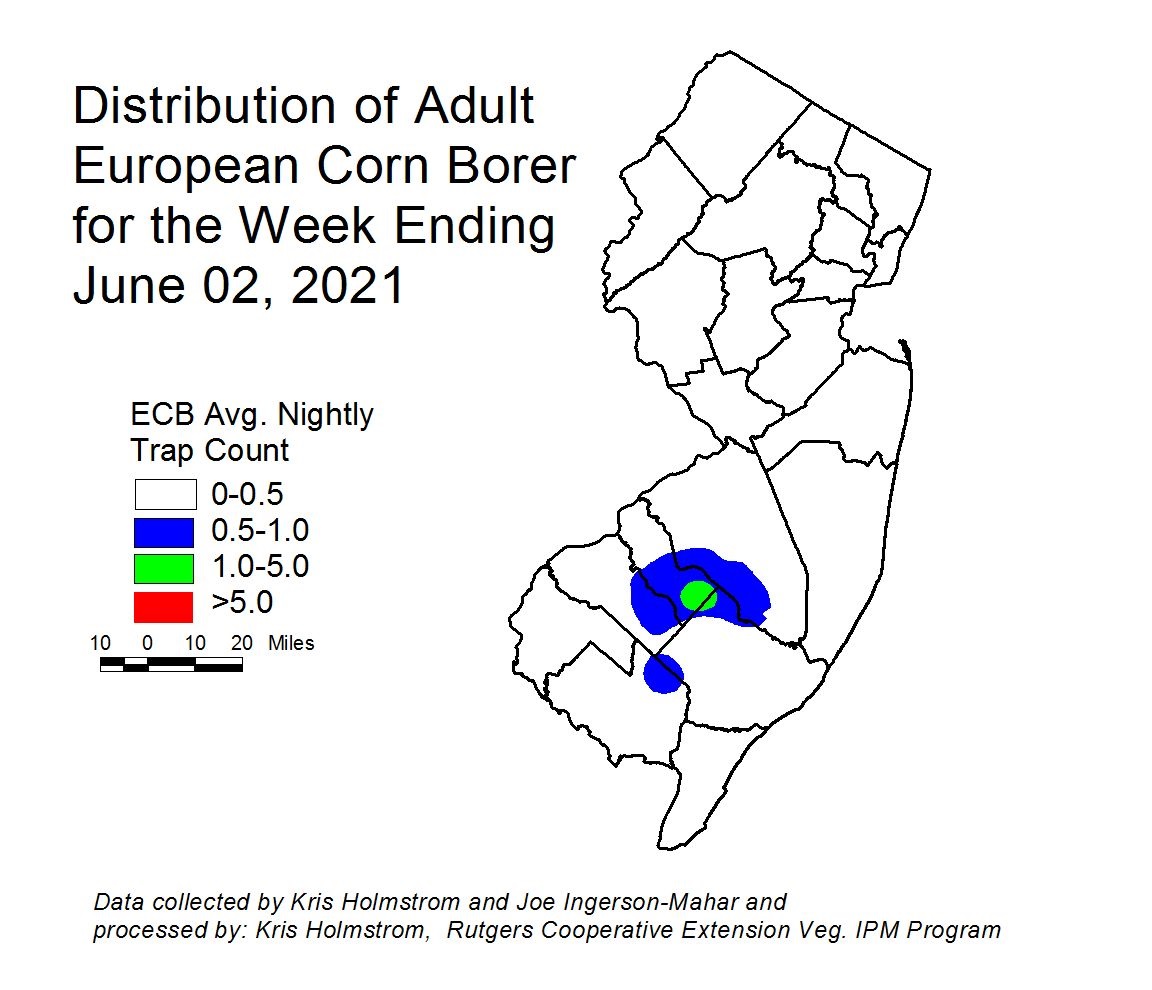
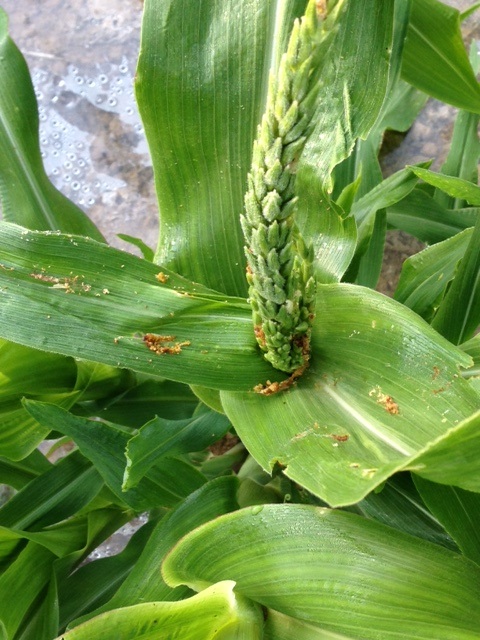 Look for the characteristic “shot-hole” type of feeding (photo below at right) and consider treating when infested plants exceed 12% in a 50 plant sample. As plantings proceed to the pre-tassel stage, ECB larvae may be found in emerging tassels (see photo at left). It is a good idea to treat individual plantings as they move into the full tassel/first silk stage one time. This eliminates any ECB larvae that have emerged with the tassels as they begin to move down the stalk to re-enter near developing ears.
Useful insecticides for this particular application include synthetic 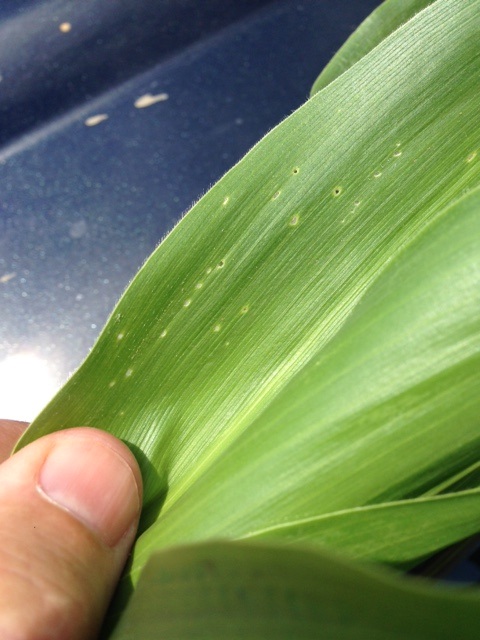 pyrethroids (IRAC Grp 3), spinosyns (including OMRI approved Entrust) IRAC Grp 5), and diamides such as Coragen or Vantacor (IRAC Grp 28) or materials such as Besiege which include the active ingredient in Coragen. Synthetic pyrethroids alone should NOT be used for corn earworm (CEW) protection on silking corn. Control with these materials is very inconsistent.
The highest nightly trap catches of ECB for the week ending 6/02/21 are as follows:
| Elm 2 | Denville 1 | Pedricktown 1 |
| Asbury 1 | Medford 1 | Sergeantsville 1 |
| Clinton 1 | Milford 1 | Tabernacle 1 |
| Dayton 1 | New Egypt 1 | Woodstown 1 |
June 2, 2021 Andy Wyenandt
Basil downy mildew confirmed in southern New Jersey – ALERT 6/2/21
Basil downy mildew has been confirmed in a home owners garden in Atlantic County in southern New Jersey. This is the first report of BDM in the state and region this growing season and about three weeks earlier than last year. All basil growers are encouraged to scout their fields or greenhouses on a daily basis. [Read more…]