By, Michelle Infante-Casella and Meredith Melendez, Agricultural Agents
Farm marketers can learn from recent behaviors observed in supermarkets and other food outlets as we start the produce season in New Jersey. Besides facilitating social distancing and having employees and customers wear masks and other protective gear, farm owners and workers can help ease shopping anxiety by pre-bagging items.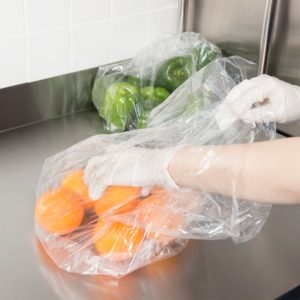
To date there is no scientific evidence to support the transmission of COVID-19 through food, but customer buying patterns have shown that packaged produce is selling better than loose produce. Customers are fearful of virus transmission from many different sources regardless of the science. Most people are very suspicious when touching every object around them whether it be door handles, shopping carts, checkout counters, credit card machines and also on the list – loose fruits and vegetables on shelves that may have been handled by other people. These fears are certainly understandable.
Some food stores are reporting bagged items are selling faster than loose items. The public sentiment is wrapped produce has a barrier that acts as a safety measure against contamination. Produce items in pre-packaged containers, such as bagged lettuces, bagged broccoli, bagged cucumbers, bagged peppers, packaged tomatoes and other items wrapped in plastic have increased in sales over their unpackaged counterparts. In addition, items in highest demand tend to be more shelf-stable produce like potatoes, apples, onions, unpeeled carrots, winter squashes and cabbage.
The media has been publicizing milk dumping from tanker trucks, in-season produce fields being plowed, and issues with food distribution across the country due to issues from COVID-19. Consumers are questioning many issues right now. Is the U.S. food supply safe? Will there be enough food to go around? Will the food stores be closing? Is it safe to buy fresh produce? Should I worry when I see empty store shelves?
To ensure a domestic food supply in the future, it is more important than ever for customers to buy local and US farm products. This is a message the entire agriculture industry can share with the public.
Some questions about food and COVID-19 can be answered by reading the U.S. Food & Drug Administration’s website https://www.fda.gov/food. This is also a good site to send your customers to help answer their questions. Resources specific for the agricultural community are listed on the Rutgers On-Farm Food Safety COVID-19 website.
In summary, farm market proprietors may want to keep produce displays well stocked with plenty of bagged and packaged produce items. This will also help facilitate having customers in the market for shorter periods. Customers can just pick up bags and go rather than pick through a pile and taking extra time to bag their own items. In addition, pricing bags ahead of time, that don’t need to be weighed, can also quicken check out times. Shoppers are in a hurry to get in and out of stores to ease fears of potential virus transmission. Making it as easy as possible to help facilitate shopping and check out may go a long way to lessen customer anxiety in current times. Keep engaged with customers for suggestions on what they may need from your market.
Farmers and farm markets will be playing a major role in food distribution and food security in the near future and beyond. Thank you to all farmers, farm workers, and other essential workers in this time of crisis.

