Fruit Crops Edition - Cranberry Section

Seasonal updates on diseases, insects, weeds impacting small fruit (blueberry, cranberry, and wine grape). Fruit Pest Alerts are also available via this category feed.
 
Subscription is through the general Fruit feed available via EMAIL and RSS.

Carolina redroot control in cranberry with Callisto® herbicide

Figure 1. Carolina redroot infestation in cranberry bog

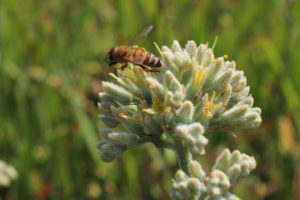
Carolina redroot (Lachnanthes caroliniana), a native plant of New Jersey Pine Barrens, has becoming an increasingly troublesome weed for cranberry production across the state (Figure 1). Carolina redroot is a perennial herbaceous weed species belonging to the Haemodoraceae family. It competes for nutritional resources during the cranberry growing season, and its rhizome serve as a feeding resource for wintering waterfowl that can cause severe uprooting damages of cranberry vines when bogs are flooded. Carolina redroot blooms after cranberry and its flower is very attractive to pollinators (Figure 2) at a time when insecticides may be applied to cranberry bogs. Additionally, the desiccated seed head of Carolina redroot can be picked up by harvesting equipment and broken in small pieces that will be difficult to eliminate during fruit processing.
Invasive species

Figure 2. Carolina redroot is very attractive for pollinators… at a time when insecticides may be applied!


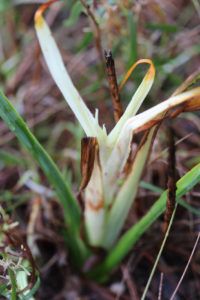
Studies have been conducted at Rutgers since 2017 to screen various herbicides that can properly control or suppress Carolina redroot without injuring cranberry. In greenhouse screenings, Callisto® 4SC (mesotrione) has provided good control of Carolina redroot while maintaining excellent crop safety. Callisto is a systemic herbicide that will cause bleaching of weed leaves by indirectly inhibiting the biosynthesis of carotenoid that protect chlorophyll from photodegradation. Cranberry is highly tolerant because it is capable of rapidly metabolizing the mesotrione. Callisto will not kill Carolina redroot outright, but will weaken it and stunt it, preventing the formation of the floral stem (Figure 3). We are still evaluating if continued annual use of Callisto for two or three years will completely eliminate Carolina redroot.
Bee pollinating flower

Figure 3. Bleaching and stunting of Carolina redroot floral stem following Callisto applied at 4 fl oz/A

Spot application: ideally, Carolina redroot should be controlled before it starts colonizing large areas of a cranberry bogs. Therefore, scouting and mapping is a crucial and necessary step to detect early infestation that be treated with spot application of Callisto. We obtained in 2019 a 24(c) Special Local Need label for spot application of Callisto at rates that will help controlling perennial weeds such as Carolina redroot. We recommend mixing 3.2 teaspoons of Callisto per gallon of water and add crop oil concentrate (COC) at 1% v:v or 2.5 tablespoon per gallon of water. This rate will allow to spray up to 15 gallons of solution per acre while not exceeding the maximum labeled rate of 8 fl oz per acre and per application.
Stunted plant

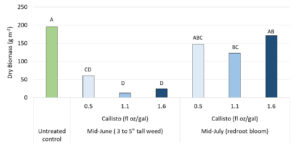
Figure 4. Reduction of Carolina redroot biomass with spot application of Callisto at three different rates and two different timings of application

At this rate and if Callisto is applied when Carolina redroot emerge above cranberry canopy in early to mid-June, we observed a reduction of Carolina redroot biomass by 70% at the end of the season. Higher rate will not significantly increase Carolina redroot suppression and later application in mid-July will not be effective (Figure 4). Spot applications will be sprayed with a backpack or hand-held sprayer that needs to be properly calibrated. Calibration of hand sprayers is determined by the walking speed of the applicator and the discharge rate from the nozzle along with the concentration of the material in the tank. Use great care in spot-treating. The difference between an 8-oz application and an 80-oz application is only seconds on the trigger. Spot treatments made to runoff will exceed the maximum application rate.
Stunted plant

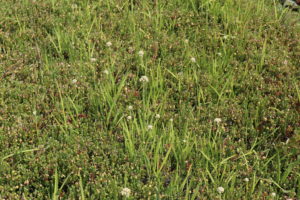
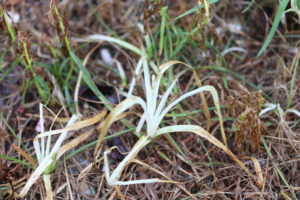
Figure 5. Annual sedge control with Callisto applied at 4 fl oz/A

Broadcast application: in bogs where Carolina redroot has colonized large areas, chemigation using irrigation sprinklers or boom application should be considered for broadcasting Callisto.  Callisto can be applied at up to 8 fl oz per acre per application, but we observed bleaching and stunting of Carolina redroot floral stem with Callisto at a 4 fl oz/A rate applied with a regular boom. If chemigating, we recommend Callisto to be applied at 8 fl oz/A. Always use a COC adjuvant at 1% v:v. All application should be made when Carolina redoot leaves emerge from cranberry canopy but before the on-start of bloom because COC adjuvant may injure cranberry flowers and reduce pollination. A second application at 8 fl oz/A can eventually be applied after cranberry bloom to help suppressing Carolina redroot. Callisto will also help controlling sedges or rushes (Figure 5). Callisto applications cannot exceed 2 per acre per year and a maximum of 16 fl oz per acre per year.

 

Insect Pest Management During Bloom

Cranberries are starting to bloom. If insects have been effectively managed prior to bloom, we recommend no sprays at this time. A reminder: when bees are present your only choices of insecticides are insect growth regulators (IGRs) such as Intrepid 2F or Bt products such as DiPel.

During bloom we recommend monitoring insect populations using pheromone traps. Pheromone traps should be used particularly to monitor activity of Sparganothis fruitworm and blackheaded fireworm, two key pests in New Jersey.

Degree-day model for Sparganothis fruitworm

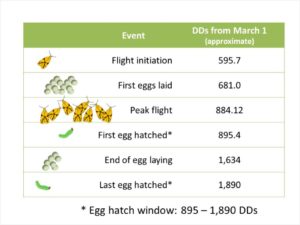
Figure 1 shows life history benchmarks of interest for Sparganothis fruitworm and associated degree-day (DD) estimates from March 1(Shawn Steffan, USDA-ARS/University of Wisconsin-Madison). Flight initiation is predicted around 595 DD, at a lower temperature threshold of 50°F. Based on this model, Sparganothis has accumulated (starting April 15) 521 DD, meaning that flight should start in about 3 days in our region.

Sparganothis fruitworm degree-day model

Fig. 1. Sparganothis fruitworm degree-day model

Sparganothis Fruitworm Degree-Day Update: as of June 01, 2020

As we approach bloom, Sparganothis fruitworm, spotted fireworm, and blackheaded fireworm adults will start to emerge. Growers need to start monitoring for Sparganothis adults using pheromone traps. As in previous years, I will be tracking the activity of Sparganothis adults using a degree-day model we developed in collaboration with Dr. Shawn Steffan from University of Wisconsin-Madison/USDA-ARS. Based on our degree-day model for Sparganothis, flight initiation is expected at around 596 DD (using March 1 as biofix; see chart). As of June 01, Sparganothis has accumulated 345 DD (using April 15 as biofix). Last year, at around this time, Sparganothis had already accumulated 529 DD. This means we are about one week behind from last year. This indicates that flight activity has not started and will not start until about 10-11 days from now. Growers are advised to place pheromone traps for monitoring this pest by the end of this week or, at the latest, by early next week.

Sparganothis fruitworm degree-day model

Sparganothis fruitworm degree-day model

Efficacy of Old and New Insecticides on Cranberry Insect Pests

Four insecticides have recently been registered in cranberries. There are:
Cormoran. This insecticide from ADAMA is a mix of Rimon (novaluron) and Assail (acetamiprid). The cranberry use rate is 9-12 fl oz/acre and the label lists several insect pests including leafhoppers, blackheaded fireworm, cranberry blossomworm, Sparganothis fruitworm, and spotted fireworm. This insecticide has provided good control on leafhopper nymphs in our research trials (Table 1). This toxicity against leafhoppers is most likely due to Assail since Rimon has no toxic effects on leafhoppers. Rimon is an insect growth regulator (chitin inhibitor) that has potential toxicity on honeybee brood when foraging bees pick up residues from the field and take them back to the hive. Thus, care needs to be taken when using this product pre-bloom.

Exirel (cyantraniliprole). This insecticide from FMC has a use rate of 10-20.5 fl oz/acre and the label lists Sparganothis fruitworm, blackheaded fireworm, and cranberry fruitworm as target pests. In our insecticide trials, this product has provided excellent control of caterpillars (“worms”) (Table 1). Exirel belongs to the same class of insecticide as Altacor (diamides). I recommend using these insecticides in rotation with Intrepid and Delegate for the control of lepidopteran pests.

Table 1. Efficacy of Registered Cranberry Insecticides (New Insecticides in Bold)

Insecticide Sparganothis Fruitworm Spotted Fireworm Blackheaded Fireworm Leafhoppers Toadbugs Bee Toxicity
Altacor +++ +++ +++
Assail + ++ ++ +++ +++ xx
Exirel +++ +++ +++ x
Closer +++ ++ xx
Cormoran + ++ ++ +++ +++ xx
Confirm +++ +++ +++
Delegate +++ +++ +++ xxx
Diazinon +++ +++ +++ +++ +++ xxx
Imidan ++ ++ ++ ++ ++ xxx
Intrepid +++ +++ +++
Lorsban +++ +++ +++ +++ +++ xxx
Rimon + ++ ++ xx
Sevin +++ +++ +++ +++ +++ xxx

+++ Excellent control, ++ Moderate-to-Good control, + Poor control, – No control; x = bee toxicity

Movento (spirotetramat). This insecticide from Bayer Crop Sciences has a use rate of 8-10 fl oz/acre in cranberries. The label lists cranberry tipworm and leafhoppers as targets. In our insecticide trials, this product has provided excellent control against cranberry tipworm. However, cranberry tipworm has not been a pest problem of cranberries in New Jersey. It provides some control against leafhopper nymphs (Movento inhibits lipid metabolism so it works best against immature insects); however, the label says to not apply until after petal fall. Because Movento has limited use in New Jersey cranberries, I did not include it in Table 1.

Closer (sulfoxaflor). This insecticide from Corteva (former DowAgrosciences) has a use rate of 2.75-5.75 fl oz/acre in cranberries. The label lists leafhoppers as target pests. In our insecticide trials, Closer has shown good-to-excellent leafhopper control (Table 1). This product cannot be used when bees are active (between 3 days prior to bloom and until after petal fall).

Last “Ask the Ag Agent” Webinar Tonight at 7:00PM

The last springtime Rutgers Cooperative Extension, “Ask the Ag Agent” weekly 1-hour sessions for farmers will take place tonight 5/27/20 at 7:00PM. We realize the season is well underway and most farmers are out in the fields. With the regular sessions ending for now, please reach out to your local County Agricultural Agent at anytime for assistance. We are open for business, and as times have changed we have changed with them.

This last online webinar/call in event will begin promptly at 7:00PM with an open forum to discuss ag-related questions about production, marketing, regulations and any other topics farmers wish to discuss.

Thank you to all who joined each week over the past two months and thank you to the Ag Agents and Extension Specialists who have participated. Bill Bamka, Stephen Komar, Meredith Melendez and Michelle Infante-Casella created and hosted this forum one week after the State of NJ went into lockdown and it has been quite the journey. Please join us for one last session for spring. All are welcome.

To access via WebEx on a computer go to https://go.rutgers.edu/rc9n3kxt

Join by phone
+1-650-429-3300 USA Toll
Access code: 799 743 872 # and then # again to join

10 Best Management Practices to Avoid Herbicide Drift 

The last few weeks have been very windy, and we already received numerous calls from specialty crops growers inquiring about the risk of herbicide drift or investigating if observed crop damages may be the result of herbicide drift.

Blueberry flowers

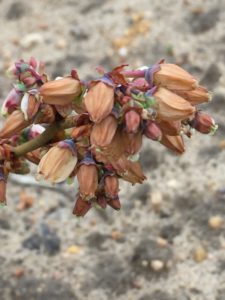
Fig.1 Paraquat drift on blueberry flowers

Why does it seem like crops are more affected by herbicide drift in the spring? Well, mostly because this is the time when newly planted crops develop new shoots or reproductive structures that may be very sensitive to herbicide drift (Figure 1). This is also the time of the year when most postemergence herbicide are applied to control emerged weeds and subsequent new flushes. When both events coincide and if weather conditions favor herbicide drift, this could lead to disastrous injury on sensitive non target crops!

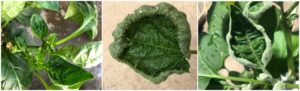
Drift is defined as physical movement of an herbicide through air, at the time of application or soon thereafter, to any site other than that intended. It can be particle drift from fine herbicide spray droplets that can travel over long distances during period of high wind. High wind speed, low relative humidity, high temperatures, small droplet size, and spray boom maintained high above the ground are factors that increase the risk of particle drift. Depending on the herbicide, application and weather conditions, fine droplets can travel up to several miles! It can also be vapor drift which results from the ability of an herbicide to vaporize and mix freely with air. Volatility of any herbicidal substance is characterized by its vapor pressure. The higher the vapor pressure of a substance, the greater its tendency to volatilize (Table 1). However, other factors such as herbicide formulation and weather conditions will influence volatility. Some herbicides classified as growth regulators (2,4-D, dicamba, triclopyr or clopyralid) are well known for the higher risk of vapor drift associated with their use when herbicide formulation and/or weather conditions increase volatility (Figure 3).

Herbicide Vapor Pressure (mmHg)
Glyphosate IPA 1.58 x 10⁻⁸
Glyphosate Ammonium Salt 6.75 x 10⁻⁸
2,4-D DMA <1.0 x 10⁻⁷
2,4-D Acid 1.4 x 10⁻⁷
Atrazine 2.9 x 10⁻⁷
2,4-D BEE 2.4 x 10⁻⁶
2,4-D EHE 3.6 x 10⁻⁶
Trifluralin 1.1 x 10⁻⁴
Clomazone 1.4 x 10⁻⁴
Table 1 Vapor Pressures for 2,4-D Formulations and Several Commonly Used Herbicides. Abbreviations: IPA, isopropylamine; DMA, dimethylamine; BEE, butoxyethyl ester; EHE, 2-ethylhexyl ester.

So, there are a few things that you need to consider reducing the risk of potentially expansive damages to sensitive crops:

  1. Select nonvolatile or low volatility herbicides to minimize the risk of vapor drift. Growth regulator herbicides such as 2,4-D, MCPA or triclopyr can be formulated as ester or amine salt. The ester formulation is notorious for its volatility; therefore, always use these herbicides formulated as amine salt to reduce the risk of vapor drift. Other herbicides than growth regulators have high vapor pressure that makes them prone to vapor drift (clomazone, trifluralin, EPTC), but either should be soil incorporated or are formulated in a way (micro-encapsulation) that will limit the risk of vapor drift.

    Beet plant

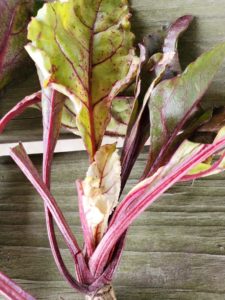
    Fig. 2 New growth chlorosis on beet. A WSSA group 27 herbicide (“bleacher”) was applied preemergence at planting in a neighboring corn field and drifted to the beet field because of high wind.

  2. Carefully read the herbicide label. The product label will provide information regarding when it is not safe to apply the product based on various parameters such as wind speed, temperature, humidity. You may also find information buffer requirement when spraying near sensitive downwind plants or information on the type of nozzle you must use for a specific herbicide.
  3. Select nozzles that produce the large size droplets while providing adequate coverage at the intended application rate and pressure. You can also select specifically designed drift-reduction nozzles (for example, drift-guard or air induction types) operate at lower pressure (15 to 30 psi) and produce large droplets that will have less potential for drift. A good source of information on droplet characteristics and operating pressure for various nozzle types is the TeeJet nozzle catalog (https://www.teejet.com/CMSImages/TEEJET/documents/catalogs/cat51a_us.pdf).
  4. Use low application pressure and drive at low speed when applying herbicides. Herbicide drift will increase with application pressure and speed…
  5. Keep the boom stable and the nozzles close to the soil as this will minimize herbicide drift but also potential injury to the crop on which herbicide is applied. You may want to consider using a shielded boom when spraying herbicide that are prone to drift or may injure your crop. Keep in mind that postemergence herbicide will provide optimal weed control when applied timely with regards to weed development. If the weeds are too tall (see the maximum weed size for each weed species on the label), then it’s too late to spray!

    Damaged crops

    Fig. 3 Damages to pepper (left), cucumber (center), and eggplant (right) caused by dicamba herbicide applied at 1/1000 of the labeled rate on soybean.

  6. Mix spray additives recommended by the label to reduce the production of fine spray droplets. Avoid tank mix ammonium sulfate with volatile herbicides as ammonium sulfate increases volatility. You can also consider the use of drift retardants that reduce drift by increasing the viscosity or surface tension of a spray solution. However, research shows that while some drift retardants may help under some conditions, the prevention of herbicide drift should primarily rely on nozzle selection, boom height, application pressure, and environmental conditions.
  7. Do not apply herbicides when wind is blowing toward sensitive plants or when wind speed exceeds 10 mph. Ideal spray conditions are when wind speed is between 3 and 10 mph. Low winds (< 3 mph) tend to be unpredictable and variable in direction and may indicate conditions that help the development of a temperature inversion. Applying any herbicide when wind speed exceeds 10 mph may result in catastrophic consequences for neighboring sensitive vegetable or horticultural crops (Figure 2).
  8. Do not apply herbicides when temperature inversion occurs. Inversions occur when warm light air rises upward into the atmosphere and heavy cool air settles near the ground, preventing the mixing of air layers. Temperature inversion will cause small-suspended droplets to form a concentrated cloud that can move long distances (up to several miles). Typically, temperature inversions start at dusk and break up with the sunrise because of vertical air mixing. To confirm the presence of an inversion, air temperature should be measured carefully at two heights out of the direct sun: 6 to 12 inches above the ground or the top of a nearly closed-crop canopy, and at a height of 8 to10 feet above the surface to be sprayed. When the temperature at the higher level is greater than the temperature at the lower level, an inversion exists. The greater the temperature difference between the two levels, the more intense the inversion, and the more stable the lower atmosphere. To test for sure, you can use smoke by burning a small amount of dry vegetation to see if the smoke dissipates or hangs low to the ground. If the smoke hangs in the air together then moves off slowly without dissipating, it indicates that a temperature inversion exists and that you do not want to spray as  long as the temperature inversion persists. Usually, temperature inversion will dissipate when temperature rises 3 degrees or more above the morning low, or when the wind speed increases to more than 3 mph.
  9. Spray when temperatures remain below 80°F to minimize vaporization and droplet evaporation. This will minimize vapor drift but also help with weed control by avoiding that spray droplets evaporate before reaching the target…
  10. Leave a buffer zone between treated fields and sensitive plants. Herbicide labels may specify the width of the buffer zone. The buffer zone will allow larger droplets to settle before reaching sensitive plants. The buffer zone may not be effective in settling small droplets.

Remember that all herbicides are capable of drift, no exception.

When spraying a pesticide, you have a moral and legal responsibility to prevent it from drifting and contaminating or damaging neighboring crops and sensitive areas. Always monitor weather conditions and their evolution carefully when spraying an herbicide. Overall, do not spray if all conditions are not suitable, and stop spraying if conditions change and become unsuitable.