Fruit Crops Edition - Blueberry Section

Seasonal updates on diseases, insects, weeds impacting small fruit (blueberry, cranberry, and wine grape). Fruit Pest Alerts are also available via this category feed.
 
Subscription is through the general Fruit feed available via EMAIL and RSS.

Fruit IPM for 6/21/17

Grape:

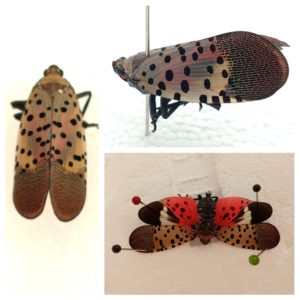
Grape Berry Moth (GBM): The timing for second generation treatments in Gloucester County and surrounding areas will be on 6/21 to 6/22. Grape berry moth is the most common insect in NJ vineyards that will directly damage the fruit (See Figure 1.) This timing is for the use of Intrepid, Altacor, and Delegate. If you are using other products like Danitol, Baythroid, Brigade, or Imidan, then you can make the application a few days later. This timing is calculated for 810 degree days (base 47) after wild grape bloom, which was May 16.

[Read more…]

Fruit IPM Update for 6/14/17

Blueberry:

General Insect Control and New and Renewed Labels: Late last week we obtained the Section 24C renewal for the high rate of Gowan Malathion 8F. The specifics of the label renewal are as follows: [Read more…]

Fruit IPM Update for 6/8/17

Peach:

Tufted Apple Budmoth (TABM): The second TABM flight is well underway. Adults started to emerge in northern counties on 5/16 and in southern counties on 5/1. Although this has been a minor pest, this might be changing. Trap counts in northern counties are historically high, and indicate higher than normal populations. Timings are outlined below for anyone who had high populations last year.


Conventional,

Diamides


Conventional,

Diamides

Intrepid, Rimon Bt
County Area AM EM EM EM
Southern 3rd-6/11-12; 4th 6/15-16 6/12-15 6/12-15 6/12-15
Northern 1st-6/10-13; 2nd 6/18-19 6/14-16 6/13-19 6/16-18

[Read more…]

Fruit IPM Update for June 1, 2017

Peach:

Tufted Apple Budmoth (TABM): The first of 2 flights of tufted apple budmoth have started. Adults started to emerge in northern counties on 5/16 and in southern counties on 5/1. Although this has been a minor pest, timings are outlined below for anyone who had high populations last year.


Conventional,

Diamides


Conventional,

Diamides

Intrepid, Rimon Bt
County Area AM EM EM EM
Southern 1st-past; 2nd-6/3-6/5 5/31-6/3 5/30-6/5 6/3-6/5
Northern 1st-6/9-6/11 6/12-6/15 6/11-6/26 6/15-6/25

[Read more…]

Fruit IPM Update for 5/24/17

Peach

Tufted Apple Budmoth (TABM): The first of 2 flights of tufted apple budmoth have started. Adults started to emerge in northern counties on 5/16 and in southern counties on 5/1. Although this has been a minor pest, timings are outlined below for anyone who had high populations last year. [Read more…]

Controlling a Noxious Weed of Blueberry Plantations

With favorable weather conditions for germination and growth during the last few days, some of the summer weeds have started to emerge, including one of the most troublesome weeds in our blueberry plantations! Field bindweed (Convolvulus arvensis) is an aggressive rhizomatous perennial vine that belongs to the morningglory family. It spreads by seeds and by a deep, extensive root system. Reports indicate that seeds can persist in soil for up to 60 years, and that roots can grow up to 30 feet deep.

Field bindweed identification

Field bindweed trails prostrate along the ground until it comes in contact with other plants or structures. Stems will then rotate in a circular patter until it makes contact with a solid structure (overhead irrigation pipes, trees, blueberry bushes, other weed species, etc.), then it will wrap around the structure as it grows.

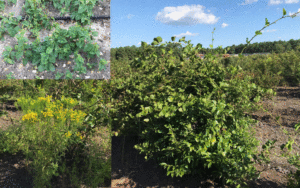
Seedlings (picture 1) emerged in spring.  Cotyledons are square to kidney-shaped. Young leaves are alternate, bell-shaped with nearly parallel leaf margins and generally rounded tips. Leaf bases are lobed. No cotyledons are present when young plants emerge directly from the rhizome. When juvenile stems are broken, they exude a milky sap. On mature plants, leaves are arranged opposite along the stem and are arrow shaped. Lobes at the base of the leaf point away from the petiole. Stems are smooth to slightly hairy.

Flowers (picture 2) are present from June to September and are trumpet shaped, pink to white in color. Field bindweed has two leaf bracts that grow from ½ to 1 inch below the flower, and is a key identification characteristic.  Flowering is indeterminate, so flowers will continue to develop along growing stems until first frost

Field bindweed control

Mowing will not help to control field bindweed because the plant is growing prostrate on the ground (Picture 3). Cultivation may help to reduce bindweed growth and control it over the time but has to be repeated at frequent intervals. Once cultivated, it will usually take 2 weeks to the plant to regenerate fully functional above-ground vegetation, meaning that cultivation has to be repeated every 7 to 10 days.  Consistency in cultivating bindweed-infested soils will promote the progressive depletion of carbohydrates stored in the root system by not allowing the plant to move back carbohydrates produced in the leaves to the roots. It is critical that NO timing be missed or be late! One single missed tillage can negate all the effort expended up to that point. Expect to continue the effort for 4 to 6 months! Success may require more time if the effort was not started when carbohydrate reserves in the weed were low at the start of the process.

Herbicides can be used to control field bindweed in nursery or mature plantations as long as NO herbicide is allowed to contact crop green bark, wounded trunk, leaves, or suckers. Applications of glyphosate containing herbicides (like Roundup) are effective as long as the herbicide is applied on plants that are actively growing and have flowers in late spring/early summer and late summer/early fall. Spring or fall applications may be more effective than applications made during mid-summer. Spot‑apply the higher percentage solution on the label of the product you use and thoroughly wet the foliage up to the drip point.

Repeated applications will be necessary, as the root system on this plant can be so immense that insufficient herbicide is absorbed with a single application.  Use repeated applications, but allow the plant to grow and produce flowers before each subsequent application.  More translocated herbicide will be moved to the root system when the plant is flowering than when vegetatively growing.