When: May 17 (Tuesday) @ 4 – 7 pm
Where: Duffields Farmers Market, 280 Chapel Heights Rd #9355, Sewell, NJ 08080
Approved Pesticide credits: CORE (1 credit) 1A, PP2, 10 (5 credits each) [Read more…]
Rutgers Cooperative Extension
Seasonal updates on diseases, insects, weeds impacting small fruit (blueberry, cranberry, and wine grape). Fruit Pest Alerts are also available via this category feed.
Subscription is through the general Fruit feed available via EMAIL and RSS.
When: May 17 (Tuesday) @ 4 – 7 pm
Where: Duffields Farmers Market, 280 Chapel Heights Rd #9355, Sewell, NJ 08080
Approved Pesticide credits: CORE (1 credit) 1A, PP2, 10 (5 credits each) [Read more…]
Damage from freezing weather now can significantly reduce yields of certain fruits and vegetables that are in the flowering stage.
Please see the link below for more information:
When: May 4 (Wed) @ 4 PM
Where: Tomasello Winery: 225 N White Horse Pike, Hammonton, NJ 08037
Frank Salek Memorial Lecture, Sponsored by the Outer Coastal Plain Vineyard Association. Dennis Rak, owner of the Double A Vineyard Nursery will talk on ‘Grapevine Grafting: Fundamentals of Why and How’
Pesticide Recertification Credits: CORE (1 credit), PP2 (5 credit), 1 A (5 credit) [Read more…]
When: April 12 (Tuesday) @ 4 – 7 pm
Where: Summit City Orchards: 500 University Blvd. Glassboro, NJ 08028
Approved Pesticide credits: 1A, PP2, 10 (5 credits each)
Schedule
Field visit (in a bus) to a peach block. Field Demonstration and discussion on different rootstocks (Daniel Ward and Lewis DeEugenio), Comments on Orchard Soil Fumigation (Lewis DeEugenio), Observations of bud development in different peach varieties during frost nights (Hemant Gohil), and Field Observations from the IPM Program (Dave Schmitt).
Return to above address in the bus. Light fare will be served.
Indoor presentations: Fundamentals of Tree Fruit Nutrition and Orchard Soil Fertility (Joseph Heckman), Organic Weed Management in the Orchard (Thierry Besancon), Insect-pests Updates in Orchards (Anne Nielsen), Updates on Early Season Disease Control (Norman Lalancette), Coming Changes in the Structure of Fruit IPM Programming (Dean Polk)
7:00 pm Pesticide re-certification credits application and Adjourn
Light fare will be provided. Please call Joan Medany jmedany@co.gloucester.nj.us or call 856-224-8030 if you are planning to attend. If an additional assistance is needed, please contact Hemant Gohil (Program Organizer) at 856-224-8029 prior to the meeting.
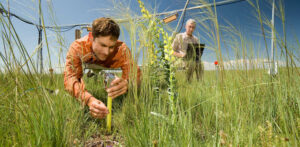
USDA – ARS and the Weed Science Society of America (WSSA) are co-hosting 10 webinars on weed science and research. Beginning April 5, presentations will be given by ARS weed science research experts.
The webinars will occur every Tuesday from 2-3p.m. Eastern Time (ET) and include an interactive Q&A session.
April 5
ARS Weed Science: Past, Present, and Future: Steve Duke, Principal Scientist at the National Center for Natural Products Research at the University of Mississippi, Steve Young, National Program Leader – Weeds and Invasive Pests, WSSA Representatives and ARS Administrators
Meeting Information:
Zoom Meeting Link
Webinar ID: 831 3320 1055
Passcode: 825921
Please download and import the following iCalendar (.ics) files to your calendar system.
April 12
Integrated Weed Management in Cropping Systems: Marty Williams, Ecologist at the Global Change and Photosynthesis Research Unit in Urbana, IL
April 19
Non-Crop Systems: Advancements in Weed Biocontrol Tools: Melissa Smith, Research Ecologist at the Invasive Plant Research Laboratory in Fort Lauderdale, FL
April 26
New Technology for Weed Identification and Control: Steven Mirsky, Research Ecologist at the Sustainable Agricultural Systems Laboratory in Beltsville, MD
May 3
Role of Plant Physiology in Weed-Crop Competition: Dave Horvath, Research Plant Physiologist at the Sunflower and Plant Biology Research Unit in Fargo, ND
May 10
Molecular Basis for Controlling Invasive Plants: Matt Tancos, Research Plant Pathologist at the Foreign Disease-Weed Science Research Unit in Fort Detrick, MD
May 17
Addressing Herbicide Resistance with Alternative Chemistries: Scott Baerson, Molecular Biologist at the Natural Products Utilization Research Unit in Oxford, MS
May 24
Spread and Distribution of Invasive Plants: John Madsen, Research Biologist at the Invasive Species and Pollinator Health Unit in Albany, CA
May 31
Climate Change Effects on Weeds and Management: Dana Blumenthal, Ecologist at the Rangeland Resources & Systems Research Unit in Fort Collins, CO
June 7
Restoration for Managing Invasive Plants: Roger Sheley, Ecologist at the Range and Meadow Forage Management Research Unit in Burns, OR
New Jersey Department of Agriculture has issued a notice concerning open burning due to colder spring overnight temperatures presently forecasted for areas of New Jersey from March 22 through April 5th, 2022, which could adversely affect fruit, vegetable, and floriculture crops in bloom or near bloom around the state. For details read below the links.
Note: The NJDEP and New Jersey Forest Fire Service caution all farmers and agriculture businesses with respect to the use of open burning in high wind velocity conditions. Please take note that farmers are encouraged to utilize smudge pots is warming as necessary during higher wind conditions. Use of open burning when wind velocity is greater than 5mph is strictly prohibited, may contribute to wildfire risk, and can carry significant penalties. [Read more…]
