WASHINGTON, Aug. 28, 2020–U.S. Department of Agriculture (USDA) Farm Service Agency (FSA) reminds farmers and ranchers that the deadline to apply for the Coronavirus Food Assistance Program (CFAP) is Sept. 11, 2020. This program provides direct relief to producers who faced price declines and additional marketing costs due to COVID-19.
“FSA offers several options for farmers and ranchers to apply for CFAP, including a call center where employees can answer your questions and help you get started on your application,” said Richard Fordyce, Farm Service Agency administrator. “With only two weeks before the deadline, now is the time to check out the resources on our website and contact the call center or your local office for your last-minute questions.”
Over 160 commodities are eligible for CFAP, including certain non-specialty crops, livestock, dairy, wool, specialty crops, eggs, aquaculture, and nursery crops and cut flowers. All eligible commodities, payment rates, and calculations can be found on farmers.gov/cfap.
Customers seeking one-on-one support with the CFAP application process can call 877-508-8364 to speak directly with a USDA employee ready to offer general assistance. This is a recommended first step before a producer engages the team at the FSA county office at their local USDA Service Center.
Producers have several options for applying to the CFAP program by the Sept. 11 deadline:
- Using an online portal, accessible at farmers.gov/cfap. This allows producers with secure USDA login credentials, known as eAuthentication, to certify eligible commodities online, digitally sign applications, and submit directly to the local USDA Service Center.
- Completing the application form using our CFAP Application Generator and Payment Calculator found at farmers.gov/cfap. This Excel workbook allows customers to input information specific to their operation to determine estimated payments and populate the application form, which can be printed, then signed, and submitted to their local USDA Service Center.
- Downloading the AD-3114 application form from farmers.gov/cfap and manually completing the form to submit to the local USDA Service Center by mail, electronically, or by hand delivery to an office drop box. In some limited cases, the office may be open for in-person business by appointment. Visit farmers.gov/coronavirus/service-center-status to check the status of your local office.
Go to Farmers.gov/CFAP
USDA Service Centers can also work with producers to complete and securely transmit digitally signed applications through two commercially available tools: Box and OneSpan. Producers who are interested in digitally signing their applications should notify their local service centers when calling to discuss the CFAP application process. You can learn more about these solutions at farmers.gov/mydocs.
All other eligibility forms, such as those related to adjusted gross income and payment information, can be downloaded from farmers.gov/cfap/apply. For existing FSA customers, these documents are likely already on file.
All USDA Service Centers are open for business, including some that are open to visitors to conduct business in person by appointment only. All Service Center visitors wishing to conduct business with FSA, Natural Resources Conservation Service or any other Service Center agency should call ahead and schedule an appointment. Service Centers that are open for appointments will pre-screen visitors based on health concerns or recent travel, and visitors must adhere to social distancing guidelines. Visitors are also required to wear a face covering during their appointment. Our program delivery staff will be in the office, and they will be working with our producers in the office, by phone and using online tools. More information can be found at farmers.gov/coronavirus.
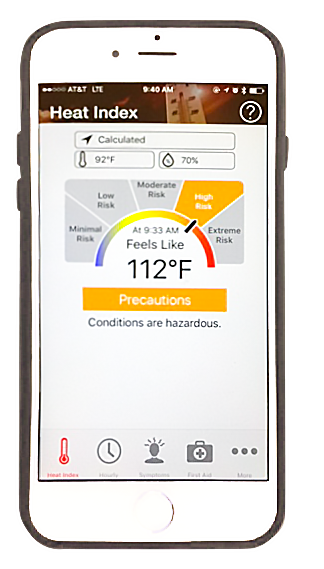 When you’re working in the heat, safety comes first! With the OSHA-NIOSH Heat Safety Tool, you have vital safety information available whenever and wherever you need it – right on your mobile phone – for planning outdoor work activities based on how hot it feels throughout the day. Featuring real-time heat index and hourly forecasts, specific to your location, as well as occupational safety and health recommendations from OSHA and NIOSH.
