EPA Announces 2020 Dicamba Registration Decision

header

Today, U.S. Environmental Protection Agency (EPA) Administrator Andrew Wheeler announced that EPA is approving new five-year registrations for two dicamba products and extending the registration of an additional dicamba product. All three registrations include new control measures to ensure these products can be used effectively while protecting the environment, including non-target plants, animals, and other crops not tolerant to dicamba.

“With today’s decision, farmers now have the certainty they need to make plans for their 2021 growing season,” said EPA Administrator Andrew Wheeler. “After reviewing substantial amounts of new information, conducting scientific assessments based on the best available science, and carefully considering input from stakeholders we have reached a resolution that is good for our farmers and our environment.”

Through today’s action, EPA approved new registrations for two “over-the-top” (OTT) dicamba products—XtendiMax with VaporGrip Technology and Engenia Herbicide—and extended the registration for an additional OTT dicamba product, Tavium Plus VaporGrip Technology. These registrations are only for use on dicamba-tolerant (DT) cotton and soybeans and will expire in 2025, providing certainty to American agriculture for the upcoming growing season and beyond.

To manage off-site movement of dicamba, EPA’s 2020 registration features important control measures, including:

  • Requiring an approved pH-buffering agent (also called a Volatility Reduction Agent or VRA) be tank mixed with OTT dicamba products prior to all applications to control volatility.
  • Requiring a downwind buffer of 240 feet and 310 feet in areas where listed species are located.
  • Prohibiting OTT application of dicamba on soybeans after June 30 and cotton after July 30.
  • Simplifying the label and use directions so that growers can more easily determine when and how to properly apply dicamba.

The 2020 registration labels also provide new flexibilities for growers and states. For example, there are opportunities for growers to reduce the downwind spray buffer for soybeans through use of certain approved hooded sprayers as an alternative control method. EPA also recognizes and supports the important authority FIFRA section 24 gives the states for issuing locally appropriate regulations for pesticide use. If a state wishes to expand the federal OTT uses of dicamba to better meet special local needs, the agency will work with them to support their goals.

This action was informed by input from state regulators, grower groups, academic researchers, pesticide manufacturers, and others. EPA reviewed substantial amounts of new information and conducted assessments based on the best available science, including making Effect Determinations under the Endangered Species Act (ESA). With this information and input, EPA has concluded that these registration actions meet Federal Insecticide, Fungicide and Rodenticide Act (FIFRA) registration standards. EPA believes that these new analyses address the concerns expressed in regard to EPA’s 2018 dicamba registrations in the June 2020 U.S. Court of Appeals for the Ninth Circuit. Further, EPA concluded that with the control measures now required on labels, these actions either do not affect or are not likely to adversely affect endangered or threatened species.

To view the final registration of the dicamba products, visit docket EPA-HQ-OPP-2020-0492 at www.regulations.gov.

Background

The United States is the world’s leading soybean producer and second-leading soybean exporter and also serves as the world’s third-largest cotton producer and the leading cotton exporter. Today, there are limited cost-effective options to control herbicide-resistant weeds affecting these commodities. In 2018, approximately 41 percent of U.S. soybean acreage was planted with dicamba-tolerant (DT) seed and almost 70 percent of U.S. cotton acreage was planted with DT seed in 2019. Relative to alternative herbicide programs, postemergence dicamba may reduce weed control costs for some growers, possibly by as much as $10 per acre, or over five percent of net operating revenue, not accounting for all measures growers will have to take to control off-field movement of dicamba.

Following reports of damage resulting from the off-site movement of dicamba, EPA amended the dicamba registration labels in 2017 and in 2018. In June 2020, the U.S. Court of Appeals for the Ninth Circuit vacated the registrations for three dicamba products: XtendiMax with VaporGrip Technology, Engenia Herbicide, and DuPont FeXapan Herbicide. As a result of the Court’s decision, EPA issued cancellation orders outlining limited circumstances under which existing stocks of the three affected products could be distributed and used until July 31, 2020.


Reflex 2SL received a 24(c) SLN label for transplanted peppers and tomatoes

Regulation

A 24(c) Special Local Needs label has been recently approved for New Jersey for use of Reflex herbicide for Control of Weeds in Transplanted Tomatoes and Transplanted Peppers. The use of Reflex 2SL is legal ONLY if a waiver of liability has been completed on the Syngenta website (https://www.syngenta-us.com/labels/indemnified-label-login).

Reflex is a selective preemergence herbicide for broadleaf weed control with both soil and foliar activity, but it is only labeled for preemergence use in transplanted peppers and tomatoes. The active ingredient in Reflex is fomesafen, a PPO inhibitor and the only herbicide in this family labeled for peppers and tomatoes. Broadleaved weeds are the main targetted species of this herbicide, that also activity on nutsedge. Expect excellent control of pigweed, (including Palmer amaranth), common ragweed, nightshade, and  common purslane, acceptable control of common lambsquarters, morningglories and galinsoga, and suppression of field bindweed and nutsedge at the rate labeled for transplanted tomatoes and peppers. Use of a surfactant will improves postemergence control of susceptible annual broadleaf weeds. Note that annual grasses and some annual broadleaf weeds, including spurred anoda or horseweed, will NOT be controlled by Reflex 2SL.
[Read more…]

NJDEP Notice on Dicamba registrations (XtendiMax, Engenia, FeXapan)

State of New Jersey Dept. of Environmental Protection


The NJDEP Pesticide Program would like to share an important message from USEPA, included below, along with some key points about how the Ninth Circuit US Court of Appeals’ June 3, 2020, vacatur of three pesticide product registrations (containing dicamba as an active ingredient) impacts New Jersey’s regulated community.

  • As of June 3, 2020 sales, distribution and purchasing is prohibited for the 3 pesticide products: XtendiMax with vapor grip technology, Engenia, and FeXapan, based on the cancellation of the registrations by USEPA.
    • Distribution by the registrant, or anyone other than the registrant, is permitted only for the purposes of proper disposal (i.e. returning the product to the registrant or a registered establishment).
  • Use of existing stocks of any of the 3 products previously purchased by licensed growers and commercial applicators is permitted until July 31, 2020 and must be consistent with the previously-approved product label.
    •    USEPA includes an assessment of the risks from the use of existing stocks in the June 8th final cancellation order provided below.
    •    Nothing precludes users from stopping use prior to the July 31, 2020 deadline.
  • Distribution, sale, or use of the 3 products must be consistent with the USEPA Final cancellation order dated June 8, 2020.  Activities inconsistent with the order are considered a violation of FIFRA.
  • Where USEPA’s cancellation order allows for the continued use of existing stock until July 31, 2020, NJDEP will maintain the registrations for the 3 products until that time.  Notice will be provided to registrants for the termination of the product registrations, as applicable.

Final Cancellation Order for Three Dicamba Products (PDF) (12 pp, 10 MB)

Command 3 ME Label Change for Lima Beans

FMC Corporation, Rutgers University and the New jersey Department of Environmental Protection collaborated on labeling Command 3ME for use on lima beans through the release of a 24(c) Special Local Need Label. The label is available online at https://www.cdms.net/ldat/ld324024.pdf.

In the past, the Command 3ME label allowed use in lima beans, but this use was removed a couple of years ago. This new labeling essentially restores the previous use pattern. This labeling only applies to FMC’s brand of Command.

Command 3ME can be applied at 4 to 6 fluid ounces immediately after seeding, with the lower rate recommended for coarse-textured soils. This low rate does not provide control of pigweed species or most broadleaf weeds (including Palmer amaranth), rather it provides early-season weed suppression that allows for improved control with cultivation. This label also allows for planting lima beans 60 days after application in a preceding crop. This allows use for Command use in peas and planting lima beans at least 60 days later.

Currently, Command 3ME received a 24(c) SLN label for use on lima beans only in New Jersey, Delaware, Maryland, and Virginia.

Carolina redroot control in cranberry with Callisto® herbicide

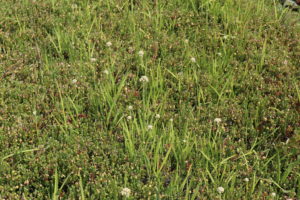
Figure 1. Carolina redroot infestation in cranberry bog

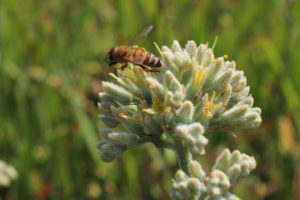
Carolina redroot (Lachnanthes caroliniana), a native plant of New Jersey Pine Barrens, has becoming an increasingly troublesome weed for cranberry production across the state (Figure 1). Carolina redroot is a perennial herbaceous weed species belonging to the Haemodoraceae family. It competes for nutritional resources during the cranberry growing season, and its rhizome serve as a feeding resource for wintering waterfowl that can cause severe uprooting damages of cranberry vines when bogs are flooded. Carolina redroot blooms after cranberry and its flower is very attractive to pollinators (Figure 2) at a time when insecticides may be applied to cranberry bogs. Additionally, the desiccated seed head of Carolina redroot can be picked up by harvesting equipment and broken in small pieces that will be difficult to eliminate during fruit processing.

Invasive species

Figure 2. Carolina redroot is very attractive for pollinators… at a time when insecticides may be applied!


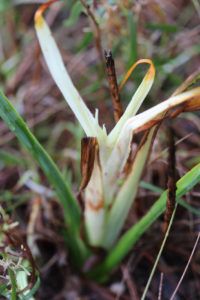
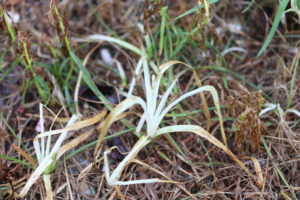
Studies have been conducted at Rutgers since 2017 to screen various herbicides that can properly control or suppress Carolina redroot without injuring cranberry. In greenhouse screenings, Callisto® 4SC (mesotrione) has provided good control of Carolina redroot while maintaining excellent crop safety. Callisto is a systemic herbicide that will cause bleaching of weed leaves by indirectly inhibiting the biosynthesis of carotenoid that protect chlorophyll from photodegradation. Cranberry is highly tolerant because it is capable of rapidly metabolizing the mesotrione. Callisto will not kill Carolina redroot outright, but will weaken it and stunt it, preventing the formation of the floral stem (Figure 3). We are still evaluating if continued annual use of Callisto for two or three years will completely eliminate Carolina redroot.

Bee pollinating flower

Figure 3. Bleaching and stunting of Carolina redroot floral stem following Callisto applied at 4 fl oz/A

Spot application: ideally, Carolina redroot should be controlled before it starts colonizing large areas of a cranberry bogs. Therefore, scouting and mapping is a crucial and necessary step to detect early infestation that be treated with spot application of Callisto. We obtained in 2019 a 24(c) Special Local Need label for spot application of Callisto at rates that will help controlling perennial weeds such as Carolina redroot. We recommend mixing 3.2 teaspoons of Callisto per gallon of water and add crop oil concentrate (COC) at 1% v:v or 2.5 tablespoon per gallon of water. This rate will allow to spray up to 15 gallons of solution per acre while not exceeding the maximum labeled rate of 8 fl oz per acre and per application.

Stunted plant

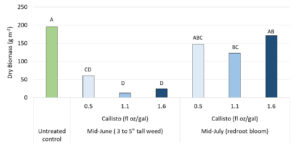
Figure 4. Reduction of Carolina redroot biomass with spot application of Callisto at three different rates and two different timings of application

At this rate and if Callisto is applied when Carolina redroot emerge above cranberry canopy in early to mid-June, we observed a reduction of Carolina redroot biomass by 70% at the end of the season. Higher rate will not significantly increase Carolina redroot suppression and later application in mid-July will not be effective (Figure 4). Spot applications will be sprayed with a backpack or hand-held sprayer that needs to be properly calibrated. Calibration of hand sprayers is determined by the walking speed of the applicator and the discharge rate from the nozzle along with the concentration of the material in the tank. Use great care in spot-treating. The difference between an 8-oz application and an 80-oz application is only seconds on the trigger. Spot treatments made to runoff will exceed the maximum application rate.

Stunted plant

Figure 5. Annual sedge control with Callisto applied at 4 fl oz/A

Broadcast application: in bogs where Carolina redroot has colonized large areas, chemigation using irrigation sprinklers or boom application should be considered for broadcasting Callisto.  Callisto can be applied at up to 8 fl oz per acre per application, but we observed bleaching and stunting of Carolina redroot floral stem with Callisto at a 4 fl oz/A rate applied with a regular boom. If chemigating, we recommend Callisto to be applied at 8 fl oz/A. Always use a COC adjuvant at 1% v:v. All application should be made when Carolina redoot leaves emerge from cranberry canopy but before the on-start of bloom because COC adjuvant may injure cranberry flowers and reduce pollination. A second application at 8 fl oz/A can eventually be applied after cranberry bloom to help suppressing Carolina redroot. Callisto will also help controlling sedges or rushes (Figure 5). Callisto applications cannot exceed 2 per acre per year and a maximum of 16 fl oz per acre per year.


Important Update on Registration of Low-Volatility Dicamba Herbicides

On June 3, 2020, the U.S. Court of Appeals for the Ninth Circuit issued a ruling that vacates current U.S. registrations of of three dicamba herbicides, XtendiMax (Bayer), Engenia (BASF) and FeXapan (Corteva). The Court ruled in favor of a petition challenging the EPA’s 2018 registration decision. The ruling comes after a group of environmental organizations filed a petition with the Court challenging the U.S. Environmental Protection Agency’s . Other dicamba-containing products are not concerned by this ruling.

The subsequent action by the EPA provides, among other things, that “growers and commercial applicators may use existing stocks that were in their possession on June 3, 2020, the effective date of the Court decision. Such use must be consistent with the product’s previously-approved label, and may not continue after July 31, 2020.”

Click here for the EPA’s full order – see page 11 for key details.

The EPA’s order addresses the use, sale, and distribution of existing stocks of  low-volatility dicamba products impacted by the Court’s ruling.