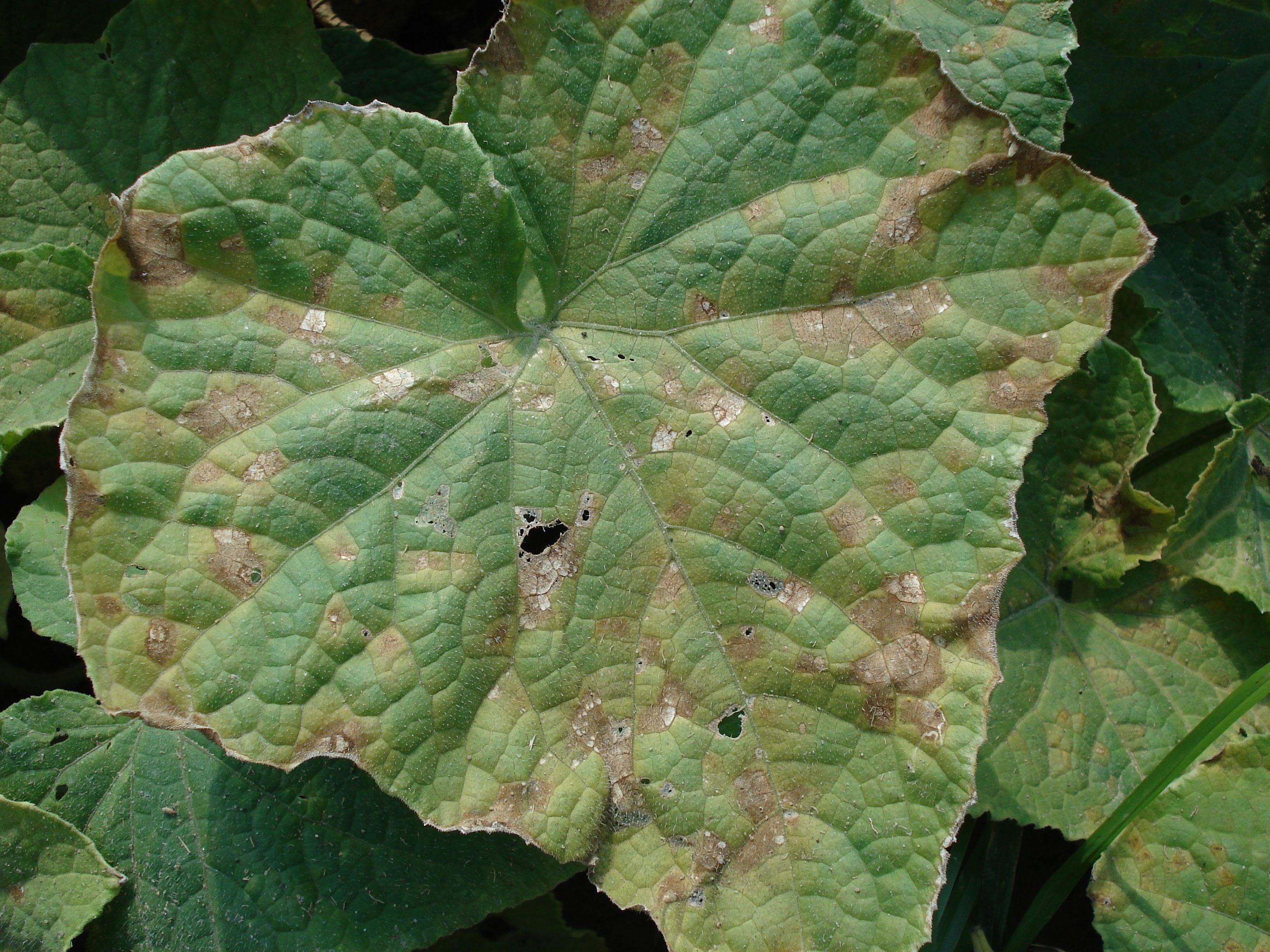
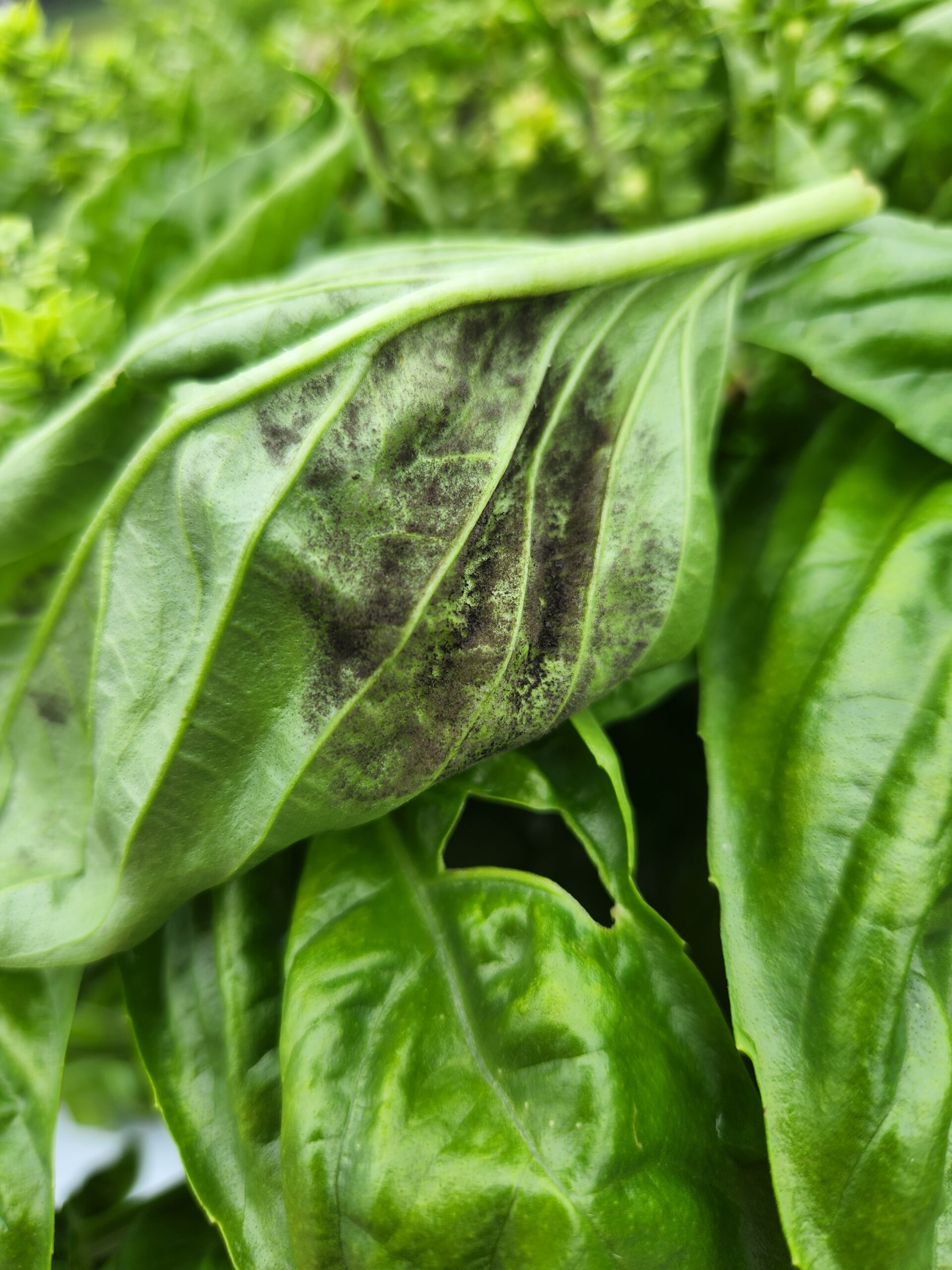
- Cucurbit downy mildew has been reported ONLY on cucumber in southern, central, and northern New Jersey. For more information on CDM control please click here. To follow the progress of CDM in the US please click here.
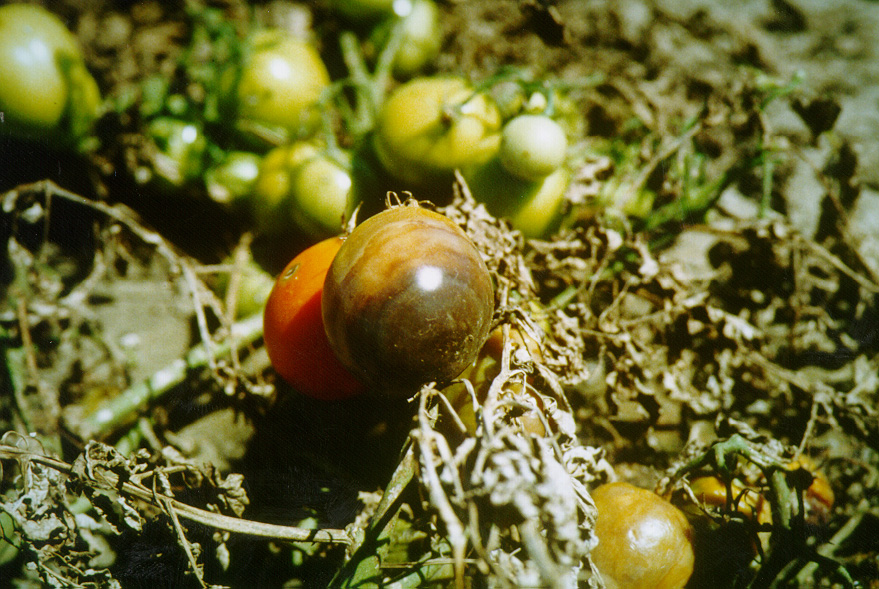
- The foliar and fruit rot phase of Buckeye rot in tomato has been reported.
- There have been no reports of Late blight in potato or tomato in the region to date. To follow the progress of Late blight in the US please click here.
- Viruses in pepper and tomato have been reported at an unusually high rate this summer.
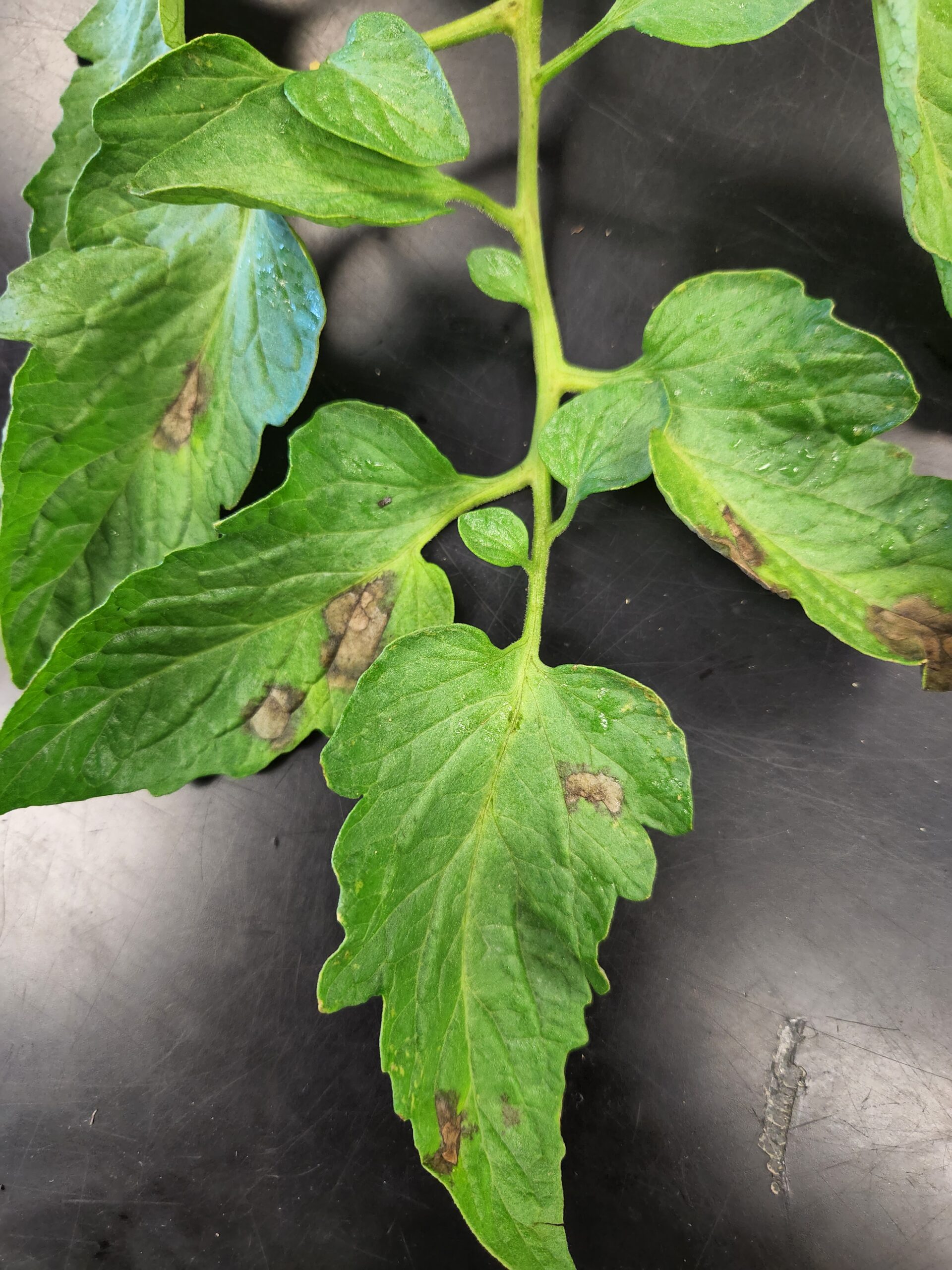
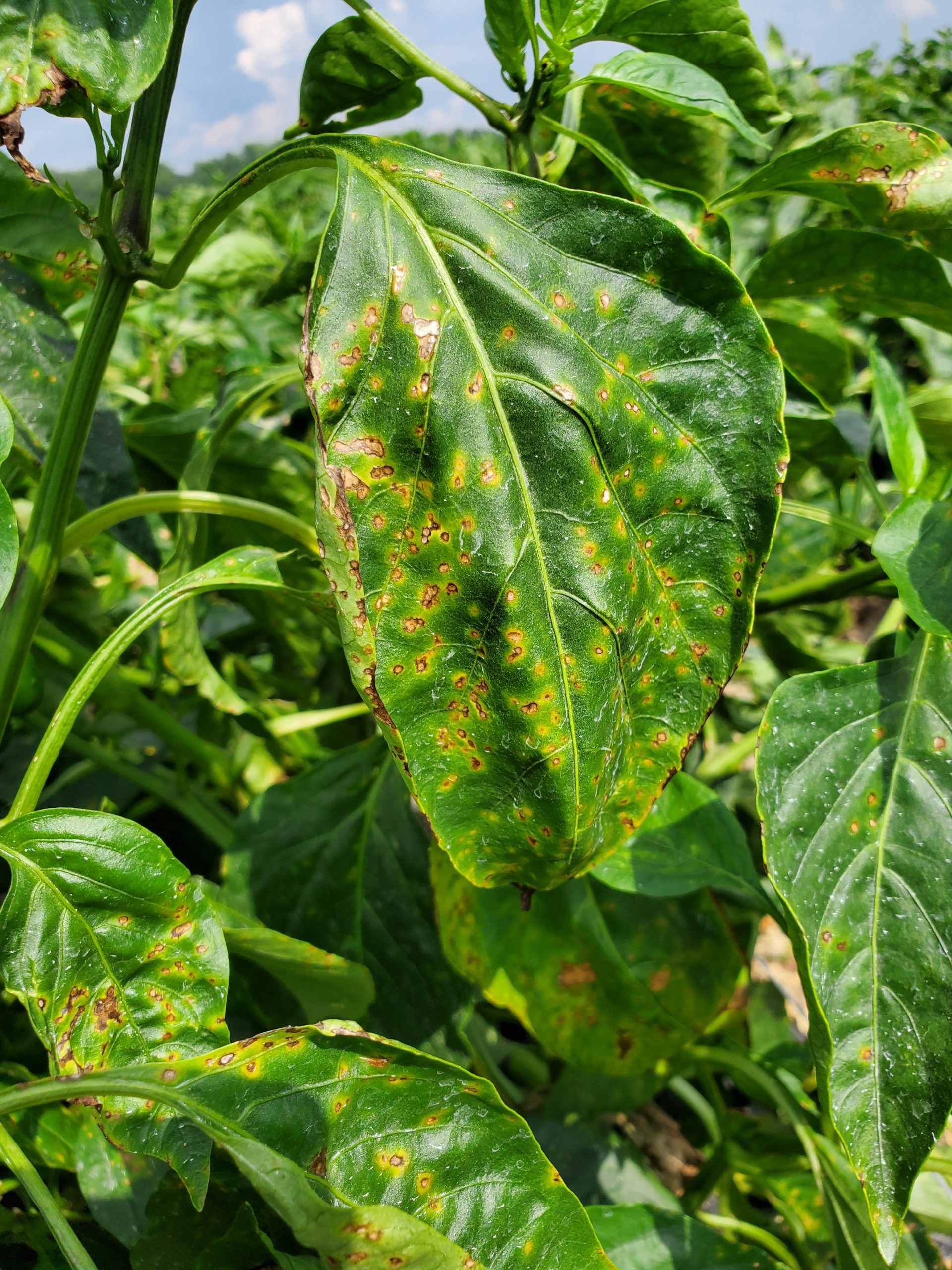
- Bacterial leaf spot is being reported in pepper and tomato. More more information on BLS control please click here. Rutgers is still surveying tomato and pepper fields throughout the state to help determine the makeup of the bacterial population and for copper resistance development!
- Basil downy mildew has been confirmed in New Jersey. All basil growers are encouraged to scout on a daily basis. To track and report BDM occurrence please click here. For information on the control of BDM in the greenhouse or the field please click on the hyperlinks.
- Phomopsis leaf blight has been reported in annual strawberry. For more information please see this Extension publication by Louws et al. at NCSU.
- Collar rot has been reported in tomato. Please click here for more information.
- Rhizoctonia root rot has been reported in summer squash. Click here for more information.
- White mold has been reported in tomato and Southern blight in pepper in southern new Jersey this past week. Click here for more information.
- Powdery mildew has been reported in cucurbit crops. For more information on the control of CPM please click here.
- Bacterial canker has been reported in tomato. For more information on diagnosing important tomato diseases please click here.
- Phytophthora blight has been reported on pepper. For more information please click here.
- The 2022/2023 Commercial Vegetable Production Recommendations Guide is available for free online or for sale in hardcopy form at many County offices.
- For a quick review on managing fungicide resistance development using tank mixes and fungicide rotations, and information on FRAC group 4, FRAC group 7, and FRAC group 3 and FRAC group 11 fungicides please click on hyperlinks.
August 8, 2022 Andy Wyenandt
Vegetable Disease Update: 08-08-22
July 29, 2022 Andy Wyenandt
Basil downy mildew found in southern New Jersey – ALERT 7/29/22
Basil downy mildew has been confirmed in field grown basil in southern New Jersey. This is the first confirmed report of BDM in the state this growing season. To date, there have been very few reports of BDM in the mid-Atlantic and Northeast regions this growing season. The extremely, hot dry weather these past three to four weeks have not been ideal for its development. However, all basil growers are encouraged to scout their fields or greenhouses on a daily basis and should consider initiating a preventative fungicide program. [Read more…]
July 29, 2022 Andy Wyenandt
Vegetable Disease Update: 07-29-22
- Basil downy mildew has been confirmed in New Jersey. All basil growers are encouraged to scout on a daily basis. To track and report BDM occurrence please click here. For information on the control of BDM in the greenhouse or the field please click on the hyperlinks.
- Cucurbit downy mildew has been reported ONLY on cucumber in southern, central, and northern New Jersey. For more information on CDM control please click here. To follow the progress of CDM in the US please click here.
- Bacterial leaf spot has been reported in pepper. More more information on BLS control please click here.
- Phomopsis leaf blight has been reported in annual strawberry. For more information please see this Extension publication by Louws et al. at NCSU.
- Collar rot has been reported in tomato. Please click here for more information.
- There have been no reports of Late blight in potato or tomato in the region to date. To follow the progress of Late blight in the US please click here.
- Rhizoctonia root rot has been reported in summer squash. Click here for more information.
- White mold has been reported in tomato and Southern blight in pepper in southern new Jersey this past week. Click here for more information.
- Powdery mildew has been reported in cucurbit crops. For more information on the control of CPM please click here.
- Bacterial canker has been reported in tomato. For more information on diagnosing important tomato diseases please click here.
- Phytophthora blight has been reported on pepper. For more information please click here.
- The 2022/2023 Commercial Vegetable Production Recommendations Guide is available for free online or for sale in hardcopy form at many County offices.
- For a quick review on managing fungicide resistance development using tank mixes and fungicide rotations, and information on FRAC group 4, FRAC group 7, and FRAC group 3 and FRAC group 11 fungicides please click on hyperlinks.
July 19, 2022 Andy Wyenandt
Edema development in brassica crops
Edema is often expressed as off-color swellings or galls that appear on leaves and stems. Edema develops when epidermal cells hold excessive water due to a slowing of evapotransporation when hot, muggy days are followed by cooler, wetter weather. Edema develops because the plant takes in more water (due to a high soil moisture content) faster than it can get rid of it through evapotranspiration causing cells to rupture which results in the blistering of the leaves. Edema is strictly caused by environmental factors and can appear whenever these conditions are met. Properly monitor soil conditions, irrigation cycles, and the weather to avoid over irrigating on warm, hot early spring days, especially when quick cold fronts/temperature drops and cloudy weather are expected.
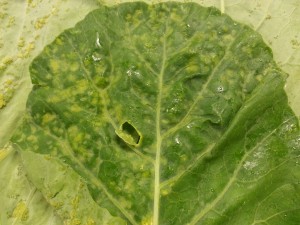
Symptoms of edema on top side of
collard leaf.
Note the off-color appearance of leaf surface.
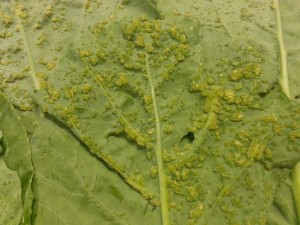
Edema, bottom side of collard leaf.
Note irregular, “corky” appearance due to leaf cell rupture.
July 18, 2022 Andy Wyenandt
Recovering from hail damage
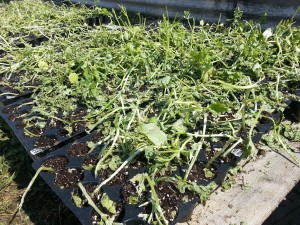
Squash transplants destroyed by hail.
Parts of New Jersey have been hit with heavy rain this past week and more is expected over the next few days. Remember, the wounds on stems, leaves, and fruit of vegetable plants created by hail damage opens the plant up to fungal and bacterial infections. Hail, on most occasions, comes down in narrow streaks so one part of a field may be heavily damaged while another part may look completely untouched. For operations who have been hit with hail, growers need to carefully walk fields and assess the amount and severity of damage done. Growers should also carefully inspect for any damage in transplant trays that may be waiting outside prior to transplanting.
In order to reduce the chances for bacterial and fungal infections, growers should consider applying a disinfestant, such as Oxidate or OLF. Remember, products such as Oxidate, only kill what they come into direct contact with and should be applied as a stand alone between a standard weekly protectant fungicide program.
July 17, 2022 Andy Wyenandt
Controlling Root Knot Nematode in New Jersey
The Root Knot Nematode does show up from time to time in vegetable production in New Jersey. Fortunately, for New Jersey, the distribution and damage done by the Root Knot Nematode is no where near the levels seen in regions further south of the state. There are two species involved, the Northern Root Rot Nematode (Meloidogyne hapla) and the Southern Root Rot Nematode (Meloidogyne incognito) and both species have been found in the state. [Read more…]