Andy Wyenandt

This is an archive of Dr. Wyenandt's posts on the Plant and Pest Advisory.

Preparing for Pepper Anthracnose in 2024

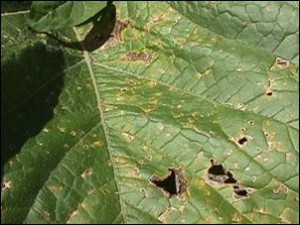
Pepper Anthracnose

Pepper Anthracnose

Pepper anthracnose caused by Colletotrichum spp. has become a significant problem on some farms in southern New Jersey.

Unlike in tomato, where symptoms are only present in mature (red) fruit, pepper anthracnose can infect pepper fruit at any growth stage. Currently, there are no commercially-available bell or non-bell peppers with known resistance to anthracnose. [Read more…]

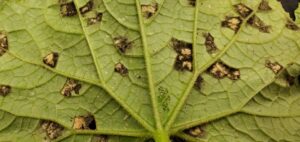
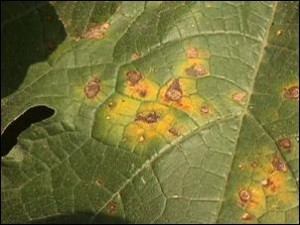
Controlling Anthracnose and Alternaria Leaf Blights in Cucurbit Crops

Anthracnose and Alternaria leaf blight can become problematic in cucurbit crops during long periods of wet, humid weather. Both can cause significant losses if not controlled properly. With the production season in full swing, now is a good time to review a few of these important diseases. [Read more…]

Preparing for cucurbit downy mildew in 2024

In 2004, cucurbit downy mildew re-emerged in the US with a vengeance causing significant losses in cucurbit production. In most years prior to this, concern for CDM control was minimal, since the pathogen arrived late in the growing season (in more northern regions), or the pathogen caused little damage, or never appeared. After 2004, with significant losses at stake, and with very few fungicides labeled for its proper control, CDM became a serious threat to cucurbit production. Importantly, at the time, cucumber varieties with very good levels of CDM resistance were no longer resistant, suggesting a major shift in the pathogen population. Research done over the past 19 years has led to a better understanding of the pathogen. Recent research has determined that the CDM falls into two separate clades: Clade I and Clade II. [Read more…]

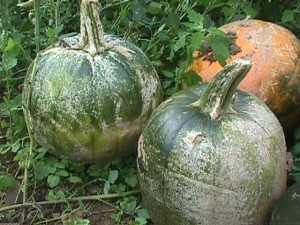
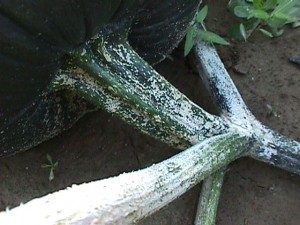
Cucurbit powdery mildew control in 2025

Cucurbit powdery mildew (CPM), caused by Podosphaera xanthii, is one the most important diseases of cucurbit crops throughout the world. The pathogen is an obligate parasite, just like cucurbit downy mildew, meaning it needs a living host in order to survive. In northern regions that have a killing frost in the fall the pathogen will die out when the crop freezes. Not being able to overwinter, the pathogen must be re-introduced each spring or summer in the mid-Atlantic region. The pathogen accomplishes this by re-infecting cucurbit crops in the spring as they are planted up the east coast starting in Florida, then the Carolina’s, Virginia, and so forth. By late May, as soon as cucurbit crops begin to germinate in the mid-Atlantic region, the potential threat for potential powdery mildew infections begin. [Read more…]

Preparing for important fungal diseases in Asparagus during the summer.

Asparagus growers should consider scouting their fields regularly during the summer months for  foliar disease development. Important pathogens that growers need to scout for on a regular basis include Purple spot, Cercospora, and Rust. [Read more…]

Controlling white mold in spring crops

White mold, or lettuce drop, caused by Sclerotinia sclerotiorum, can cause serious losses in lettuce and other susceptible crops if left uncontrolled. Disease development is favored by wet, humid conditions (especially in high tunnels and fields) with known histories of the disease.

WhiteMold

White mold on lettuce. Notice the white fungal growth and black sclerotia developing on the base of the stem. The sclerotia can survive in the soil for up to 10 years.

[Read more…]