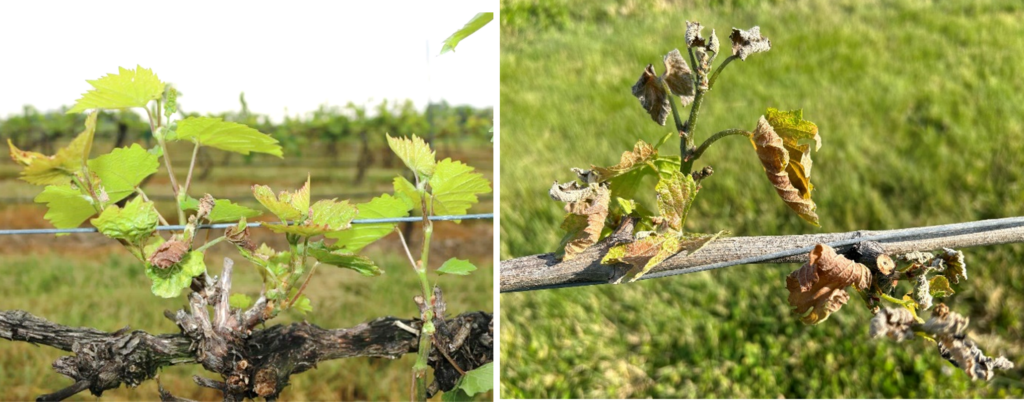
NJ DEP issues Controlled Open Burn Permit from April 18, through Wednesday April 22.

(TRENTON) – With the state expected to experience cooler spring temperatures, the Department of Environmental Protection has agreed with NJDA Secretary Ed Wengryn’s request to allow farmers to do controlled open burning or use specialized torches known as smudge pots to protect flowering crops from damage beginning Saturday, April 18, through Wednesday, April 22. Temperatures are expected to drop to the 30s or below this week with varying winds through portions of the state. These expected temperatures follow warm temperatures in recent days. Damage from freezing weather now can significantly reduce yields of certain fruits and vegetables that are in the flowering stage.

The DEP and the Department of Agriculture are allowing these steps to protect farmers’ livelihoods and ensure that consumers can enjoy an ample supply of Jersey produce later this year.  The DEP intends to exercise its authority and discretion under the Air Pollution Control Code, N.J.A.C. 7:27, et seq., and other applicable authorities to permit the following procedure for open burning or the use of smudge pots to assist farmers in protecting their crops in low temperatures. Farmers who believe they will need to conduct open burns and/or use smudge pots must provide notice to the DEP’s 24-hour Communications Center at 1-877- WARNDEP (1-877-927-6337). Notification to DEP does not require implementing either technique, but it ensures proper procedures are followed should they become necessary. If a farmer does not call DEP in advance but uses either technique, the farmer must notify DEP by 9 a.m. the following day. The farmer will be asked which technique was used. Farmers must record the incident number provided to them by the Communications Center. The following information is to be provided:

 Name of the individual making the decision to conduct the open burning/use of smudge pots and name of the farm.

  • Actual street address of the farm on which either technique will be used (no P.O. Boxes).
  • Telephone number of a contact at the farm.
  • Predicted temperature (in degrees Fahrenheit) at the agricultural operation when the technique will be used.
  • Wind speed anticipated when the technique will be used.
  • Predicted hours of open burning and/or use of smudge pots.
  • Materials expected to be burned.
  • At the time of the initial call to the Communications Center, farmers will be given an email address and incident number.

Within two days, they must submit to DEP via this email address the following information:

  • The DEP Communications Center incident number.
  • Ambient temperature (in degrees Fahrenheit) at the time the technique was used.
  • Actual wind speed at the orchard at the time the technique was used.
  • A statement verifying that all restrictions in the open burning or use of smudge pots were followed.
  • The New Jersey Department of Environmental Protection and New Jersey Forest Fire Service caution all farmers and agriculture businesses with respect to the use of open burning in high wind velocity conditions. Please take note that farmers are encouraged to utilize smudge pots for warming as necessary during higher wind conditions. Use of open burning when wind velocity is greater than 5 mph is strictly prohibited, may contribute to wildfire risk, and can carry significant penalties.
  • Smudge pots must be fueled only with either kerosene or No. 2 fuel oil.
  • Open burning can consist only of either the following materials: clean and untreated scrap lumber, felled trees, clippings pruned from trees and shrubs, hedgerows, or firewood. Absolutely no refuse, trade waste, tires or garbage of any type may be added to the authorized open burning material.

 The New Jersey Department of Environmental Protection and New Jersey Forest Fire Service caution all farmers and agriculture businesses with respect to the use of open burning in high wind velocity conditions. Please take note that farmers are encouraged to utilize smudge pots for warming as necessary during higher wind conditions. Use of open burning when wind velocity is greater than 5 mph is strictly prohibited, may contribute to wildfire risk, and can carry significant penalties.

###

The New Jersey Department of Agriculture (NJDA), established in 1916, serves New Jersey’s agricultural community and residents through a wide range of programs across its divisions that ensure the preservation and continuation of the state’s agricultural landscape.  NJDA works to ensure the safety and quality of New Jersey’s food supply, protect animal and plant health, and promote the overall long‑term viability of agriculture. The Department also connects consumers with New Jersey’s farmers and locally grown products while supporting the state’s diverse agricultural industry through initiatives of the Jersey Fresh program.  

For more information about the New Jersey Department of Agriculture, follow us on Facebook at www.facebook.com/NJDeptofAgriculture and www.facebook.com/JerseyFreshOfficial; on Instagram @njdeptofagriculture; on X/Twitter @NJDA and @JerseyFreshNJDA; and on LinkedIn at New Jersey Department of Agriculture. 

[Read more…]

Assessing the Severity of Frost Damage to Peach and Apple Flower Buds

Figure 1. The brown and shrunken pistil (L) indicates the flower is dead; a green and upright pistil indicates that the flower is alive. Photo by H. Gohil.

The below-freezing temperatures on Wednesday (4/8/26) and Thursday (4/9/26) early mornings are likely to cause frost damage in several peach and a few apple orchards in New Jersey. It got down to 25°F–28°F in Southern NJ, and 22°F -27°F in Central and Northern NJ, and those temperatures could have killed vulnerable blossoms. The night of April 8th saw wind speeds above 10 mph, which mixed the cold air at the bottom with the warm air above. This prevented cold-air stratification and reduced the heat loss from the soil surface and plant tissues. The night of April 9th was even colder, and the wind dropped below 5 mph, almost coming to a standstill for a few hours. This causes the rapid loss of thermal energy from the soil and plant tissues. Most unprotected peach and a few apple orchards were affected by these conditions on the night of April 9th. In several parts of New Jersey, peach flower buds were at full bloom, the most susceptible stage to frost (Fig. 1). In Apples, though most orchards were in the tight cluster or earlier stages of bud development, and few varieties were in the first pink. The critical temperatures for 90% bud kill at these stages are 21°F for the tight cluster and 24°F for the first pink; hence, only a few apple orchards in South NJ were vulnerable to significant frost damage (Fig. 2).

Figure 2. Frost damage to Apple bloom at first pink

In Peach, not all flowers bloom at the same time, which makes frost-damage assessment a little more difficult. Often, many flowers look damaged, but they still bear fruit. This estimate can be even more difficult in some varieties, simply because they bloom so much that even 90% damage can yield close to the full crop. The natural tendency is to look for open flowers, which can easily lead to overestimating the damage. The developing flower buds will quickly die once damaged by a freeze. You can’t tell what will happen just by looking at the flower. The browning of flower petals doesn’t mean the ovary is dead.

You can do a quick, destructive assessment of loss by randomly opening 10-20 flowers per tree; do this on 5-10 trees across an acre or block for each variety. This can give a relative estimate of bloom loss. If you take a more systemic approach, you may get more accurate results. Due to cold-air stratification, cold air settles to the bottom, so more buds are damaged at the bottom; therefore, you want to sample from both the upper and lower branches. Sometimes, the loss of flower buds could be as good as natural thinning. So, flower bud loss may not result in a crop loss.

After opening the flower, if the pistil is shrunken and brown, consider it dead; and if completely green, consider it alive (Fig 1). The pistil is sticking out, and you see it is brown; it could have been pollinated and is in the senescence stage. It is not brown because of frost, but it’s brown because of the normal progression of development. In another scenario, the pistil is brown because it has frost damage, but it still may have done its job of pollination. It served its purpose and senescence because both frost and pollination are over. After pollination and fertilization, rapid hormonal changes enhance fruit development and make them slightly more cold-hardy. So even the destructive analysis is a close approximation.

Figure 3. Uneven development of peach due to frost injuries, represented by very small ripe fruits in PF Flamin Fury 24 (Left) and Silverglo (right), and a significant number of green unripe fruits in Lady Nancy (middle). Photo by H. Gohil.

If frost occurs at the shuck-split or shuck-off stage, the seed/pit will be damaged. But the fruit looks normal. However, they will not reach full size because the nonviable seed cannot produce the hormones required for fruit growth (Fig. 3). Even if they do grow, they may still face other problems. For example, the pit may have sustained damage, predisposing it to shatter during phase III of fruit growth. If you wait for a week to 10 days, it will be easier and more accurate non-destructive assessment. The live flowers will develop normally, and the dead flowers will be shrunken brown mummies that can be flicked away easily. You will still have plenty of time to adjust fruit thinning to achieve a near-normal crop. You should not be in a hurry to do fruit thinning this year! If you see some fruits that have stopped getting bigger and are distinctly smaller, will you want to thin? Maybe after the June drop.

Frost Protection for Orchards and Perennial Fruit Crops

The forecast for New Jersey statewide is expected to drop below freezing Tuesday and Wednesday overnight into early morning this week. Fruit crops are most vulnerable in the full bloom to petal fall stages.

Peach bud development stages and corresponding critical temperatures. Adapted from MSU Fruit Extension. Photos by H. Gohil.

Figure 1. Peach bud development stages and corresponding critical temperatures. Adapted from MSU Fruit Extension. Photos by H. Gohil.

Temperatures beginning at 28°F can kill 10% of the flowers when in full bloom and 90% of the flowers when temperatures drop to 24°F or below for more than 30 minutes (Figure 1). Please refer to your local forecast at nearby weather stations to receive the most accurate temperatures during this time period at www.njweather.org/ or https://newa.cornell.edu/.

Management Options for Frost Protection

  • Cloth coverings – This can be an effective tool to protect a small number of trees. Sheets, burlap, or frost blankets can provide some protection. Avoid plastic tarps which do not provide efficient insulation and can increase freeze damage on plant tissue. Ensure the covering reaches the ground.
  • Irrigation – Irrigate the soil under the trees the day before so any heat will be absorbed. Overhead irrigation is an option if available. The irrigation must stay on until ice starts to melt.
  • Heaters – Heat can be sourced through burning propane, natural gas, or oil burning Smudge pots. This could be a valuable investment for a commercial orchard that experiences frost events at critical bloom times; however, it is expensive and highly inefficient as heat produced dissipates quickly.
  • Wind machines & helicopters – These devices can be used in conjunction with heat or alone to mix warm air from higher elevation with cold air in the orchard.
  • Frost Rescue Sprays – Plant growth regulators such as Promalin can be applied to apples and pears following a frost event to help increase fruit set. The application must be made within 24 hours of the frost event and the trees must be thawed. Follow the label for use restrictions.

References

Gohil, H., Muehlabuer, M., Polanin, N, and Crassweller, R. (2020). Active Frost Protection Methods for Your Orchard. Rutgers Cooperative Extension Bulletin E363. https://njaes.rutgers.edu/e363/

Gohil, H., Muehlbauer, M., Besancon, T., and Ward, D. (2025). Preparing Orchards Against the Frost – Low Tech Strategies. Plant & Pest Advisory Rutgers Cooperative Extension Preparing Orchards Against the Frost – Low Tech Strategies — Plant & Pest Advisory

Demchak, K. (2020). Frost and Freeze Damage on Berry Crops. PennState Extension https://extension.psu.edu/frost-and-freeze-damage-on-berry-crops


Change in Location – South Jersey Commercial Fruit Growers Meeting

Please note that the location of the South Jersey Commercial Fruit Growers Meeting has been changed.
Location:      254 County House Road, Clarksboro, NJ 08020
Date:          March 5, 2026 (Thu)        
Registration:  Pre-registration required. Please call (856) 224 – 8030 or Email: jmedany@co.gloucester.nj.us
               $20 per person. Checks only. Payable to Rutgers University.

Pesticide Credits: CORE,PP2, 10, 1A
PROGRAM

08:30 am   Registration and Coffee and pastries
08:50 am   Welcome and Opening Remarks. Hemant Gohil, Rutgers NJAES
09:00 am   Ambrosia Beetle Management in the Apple. Monique Rivera, Cornell University.
09:30 am   Woolly Apple Aphid Management in Apple. Monique Rivera, Cornell University.
10:00 am   Introducing Dr. Nancy Sharma, new Extension Specialist, Fruit Pathology, Rutgers Uni.

10:15 am   Coffee Break

10:30 am   Industry Updates  
10:45 am   Current Trends in Tree Fruit Pest Management. Janine Spies, Rutgers NJAES
11:15 am   Pesticide Safety Update: Exposure, ​Recordkeeping, and Storage. Kate Brown, Rutgers NJAES.
11:45 pm   From Field to Current – Harnessing Electricity for Sustainable Weed Control. Thierry Besancon, Rutgers NJAES.

12:15 pm   Lunch 

1:00 pm    Mycorrhizae Products that Enhance the Root Systems of Young Apple Trees. Megan Muehlbauer, Rutgers NJAES
1:30 pm    Updates and Recommendations for Scale Management. Anne Nielsen, Rutgers NJAES
2:00 pm    Peach Varieties Comparisons – New and Standard. Hemant Gohil and Daniel Ward, Rutgers NJAES.
2:30 pm    Grower Open Forum and Pesticide recertification credits
           Adjourn 

For questions, please get in touch with Hemant Gohil at 856-418-6538 or email at gohil@njaes.rutgers.edu

2026 Grape Expectation – New Jersey Grape and Wine Symposium

Date:    March 12 (Thu)
Venue:   Forsgate Country Club, 375 Forsgate Dr, Monroe Township, NJ 08831
Fees:    Please see the details on registration fees and payment methods at the end of the program.
Credits: CORE, 1A, PP2, 10

PROGRAM

08:30 am   Registration and Continental Breakfast
09:00 am   Welcome, Introductions, and Symposium Overview. Dr. Gary C. Pavlis – RCE of Atlantic County
09:10 am   Managing Grape Diseases: What to Watch and What to Do?
           Nancy Sharma, Extension Specialist in Fruit Pathology, Rutgers NJAES.
09:40 am   Beyond the Garden State: How Emerging Wine Regions Overcome Perception, Policy, and Market Barriers.
           Seth Porter, Chief Innovation Officer, Dean of the Kraemer Family Library, Colorado State University.
10:10 am   What’s New from the Industry

10:25 am   COFFEE BREAK

10:45 am   The Evolution of Long Island Viticulture, 1973-present
           Alice Wise, Ag Program Director - Viticulture Research, Cornell Cooperative Extension.
11:30 am   Mystery Wine Challenge

12:00 pm   BUFFET LUNCH FEATURING NJ WINES

01:00 pm   Active Frost Protection in the Vineyard – Panel Discussion.
           The Panel: Larry Sharrott (Sharrott Vineyards), William Heritage (William Heritage Winery), Nick Sharko 
           (Alba Vineyards), Lewis DeEugenio (Summit City Farms and Winery), and Moderator, Hemant Gohil (Rutgers).
01:45 pm   Early Season IPM for NJ Grapevines
           Janine Spies, Statewide Fruit Integrated Pest Management Agent, Rutgers NJAES.

02:15 pm   Coffee Break

02:30 pm   New Weed Management Technology in Grape
           Thierry Besancon, Extension Specialist, Weed Science, Rutgers NJAES
03:00 pm   NJDEP’s Pesticide Safety and Regulations – CORE Credit
           Spencer Kerkhof, Pesticide Enforcement Officer, NJDEP
03:30 pm   Decreasing Fungicide Sprays with the New PIWI Grape Varieties
           Eric Amberg, Founder, Amberg Grapevines, Clifton Springs, New York  
04:00 pm   Beyond the Bottle: Refining Visitation in Wine
           Susan Dematei, President, WineGlass Marketing
04:30 pm   End of the Session, Pesticide Recertification Credits, Q and A
Registration: Non-Industry members - $110
              Winery Personnel - $110 for the first person and $90 for each additional winery members.
              At the Door registration $130
              Vendors $160
              For online registration and payment, please use the web link https://ce-catalog.rutgers.edu/courseDisplay.cfm?schID=96808 

South Jersey Commercial Fruit Growers Meeting

Venue:         RCE of Gloucester County
               254 County House Rd, Clarksboro, NJ 08020
Date:          March 5, 2026 (Thu)        
Registration:  Pre-registration required. Please call (856) 224 – 8030 or Email: jmedany@co.gloucester.nj.us
               $20 per person. Checks only. Payable to Rutgers University.

Pesticide Credits: CORE,PP2, 10, 1A
PROGRAM

08:30 am   Registration and Coffee and pastries
08:50 am   Welcome and Opening Remarks. Hemant Gohil, Rutgers NJAES
09:00 am   Ambrosia Beetle Management in the Apple. Monique Rivera, Cornell University.
09:30 am   Woolly Apple Aphid Management in Apple. Monique Rivera, Cornell University.
10:00 am   Introducing Dr. Nancy Sharma, new Extension Specialist, Fruit Pathology, Rutgers Uni.

10:15 am   Coffee Break

10:30 am   Industry Updates  
10:45 am   Current Trends in Tree Fruit Pest Management. Janine Spies, Rutgers NJAES
11:15 am   Pesticide Safety Update: Exposure, ​Recordkeeping, and Storage. Kate Brown, Rutgers NJAES.
11:45 pm   From Field to Current – Harnessing Electricity for Sustainable Weed Control. Thierry Besancon, Rutgers NJAES.

12:15 pm   Lunch 

1:00 pm    Mycorrhizae Products that Enhance the Root Systems of Young Apple Trees. Megan Muehlbauer, Rutgers NJAES
1:30 pm    Updates and Recommendations for Scale Management. Anne Nielsen, Rutgers NJAES
2:00 pm    Peach Varieties Comparisons – New and Standard. Hemant Gohil and Daniel Ward, Rutgers NJAES.
2:30 pm    Grower Open Forum and Pesticide recertification credits
           Adjourn 

For questions, please get in touch with Hemant Gohil at 856-418-6538 or email at gohil@njaes.rutgers.edu