Date: March 31, 2015
Location: RAREC, 121 Northville Road, Bridgeton, NJ 08302
Rutgers University and the NJ Center for Wine Research and Education will be hosting a “Grape IPM School” on March 31st in Bridgeton, NJ. Experts from Michigan, Virginia and Ohio will be joining Rutgers to share their knowledge about key insect pests, diseases and weed identification. This workshop is aimed at growers of all experience levels.
Please pre-register (856-455-3100 or bradbury@aesop.rutgers.edu)
Space is limited. See attached flyer for details.
March 18, 2015 Anne Nielsen
Wine Grape IPM School: March 31

March 5, 2015 Anne Nielsen
Grape IPM School March 31, 2015
With all the snow and cold weather it’s hard to believe that it’s March already and Spring is right around the corner! It’s time to start planning your pest management programs.
For the first time, we are hosting an all-day “Grape IPM School”. The aim of this “school” is to introduce and update wine grape growers of all experience levels to the key pest issues they face. We will discuss the basics of Integrated Pest Management (IPM) and how to apply it to your vineyard. We have invited regional experts who will share their expertise on how to use IPM to scout for and manage grape berry moth, grape root borer, plant viruses and diseases, among others.
Please join us at the Rutgers Agricultural Research and Extension Center (RAREC), 121 Northville Rd., Bridgeton on MARCH 31st. Mark your calendars, more details to follow….
November 13, 2014 Anne Nielsen
Granulate Ambrosia Beetle in Tree Fruit
A farm in Southern NJ is experiencing an infestation of the granulate ambrosia beetle, Xylosandrus crassiusculus (Mot.). GAB was identified by expert Dr. James Lashomb at Rutgers. Adults are hunch-backed in appearance and are cinnamon or brownish in color. Females are 2.1-2.9mm in length and males are 1.5mm. Offspring are small white and legless c-shaped larvae.
Females bore into trunks or limbs and excavate a system of tunnels in the wood. The beetles feed on living trees and carry a mutualistic fungus with them. When GAB females attack a tree, they introduce the fungus, which also is used as a food source. Eggs, larvae, and pupae are found together in galleries. There are related ambrosia beetles that attack apple and are present in other states and it is possible we have multiple species.
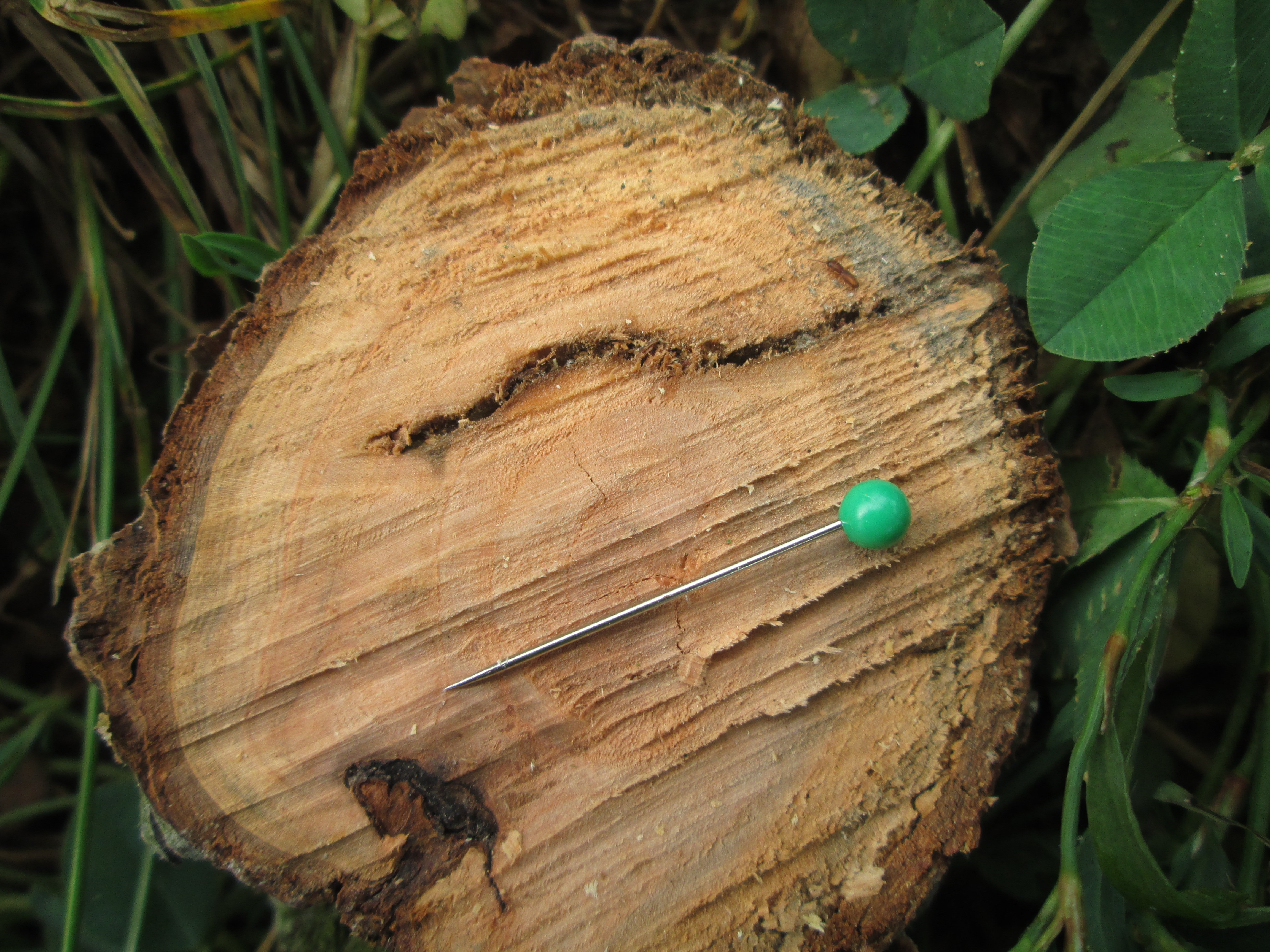
GAB galleries within an apple limb.
Click image to enlarge.
September 9, 2014 Anne Nielsen
Volunteers Needed for Brown Marmorated Stink Bug Count
Scientists at the USDA are conducting a second year of the “Great Stink Bug Count” and are looking for volunteers from NJ! They are trying to identify characteristics of houses that brown marmorated stink bugs look for when finding overwintering sites. Last year’s count had over 200 volunteers with 44 individuals who counted every day.
The basics:
- Fill out the form
- Count the BMSB on the exterior of your home each day
- Enter in your count data
Consider participating in the 2014 Great Stink Bug Count!
September 15 – October 15, 2014
You can download particpant forms here: http://www.stopbmsb.org/2014-
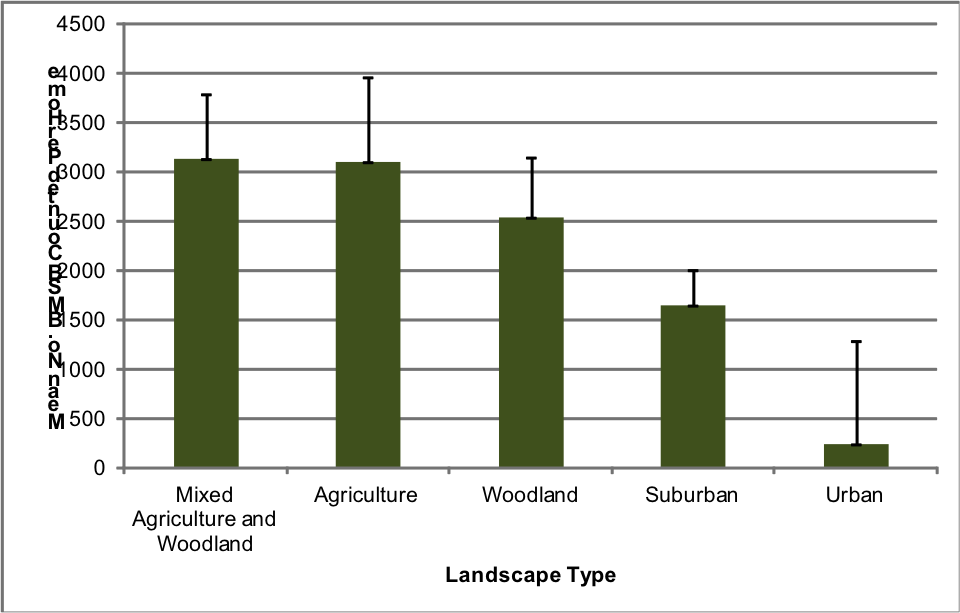
Results from 2013 are the first to document factors that may be important in where bugs chose to overwinter. Last year’s results suggest that landscape factors, specifically agriculture and woodland habitats, may have the greatest influence on the number of BMSB overwintering on a house.
This data will go a long way to helping us figure out important steps to managing BMSB. They are looking for citizen scientists to help out! Please fill out the attached form and send it in if you are interested!
July 29, 2014 Anne Nielsen
Proposed Importation of Apples from China
A proposed rule is open for public comment that would allow the importation of apples into US markets from China.
A pest risk assessment has identified 21 pests that are on US quarantine lists which could be introduced in/on apples from China. Assurances have been made that fruit will be inspected prior to harvest for signs of infestation and fumigated prior to entrance into the US. However, the importation of fruit increases the likelihood that pests, such as the Oriental Fruit Fly, the plum fruit moth and the summer fruit tortrix, could be accidentally introduced and become established.
You may submit comments electronically by visiting http://www.regulations.gov/#!docketDetail;D=APHIS-2014-0003
April 28, 2014 Anne Nielsen
BMSB Survey
“Are you a grower? Got stink bugs? We need your help! We’re surveying growers to assess the impact of BMSB on crops and gathering information that will help us defeat this pest.
Receive a free Guide to Stink Bugs* if you complete the 10-minute BMSB survey”
https://cornell.qualtrics.com/SE/?SID=SV_5ssnjXLNhvp6v1H
Thanks in advance! – From the Northeast IPM Center
The BMSB Working Group, through NE IPM Center and Cornell University, is collecting information from farmers on BMSB impact and management. If you have time, please fill out this short survey. It will help to gather information that we can use to identify what’s working and what we still need to do.