SLF Adults Are Here (again)

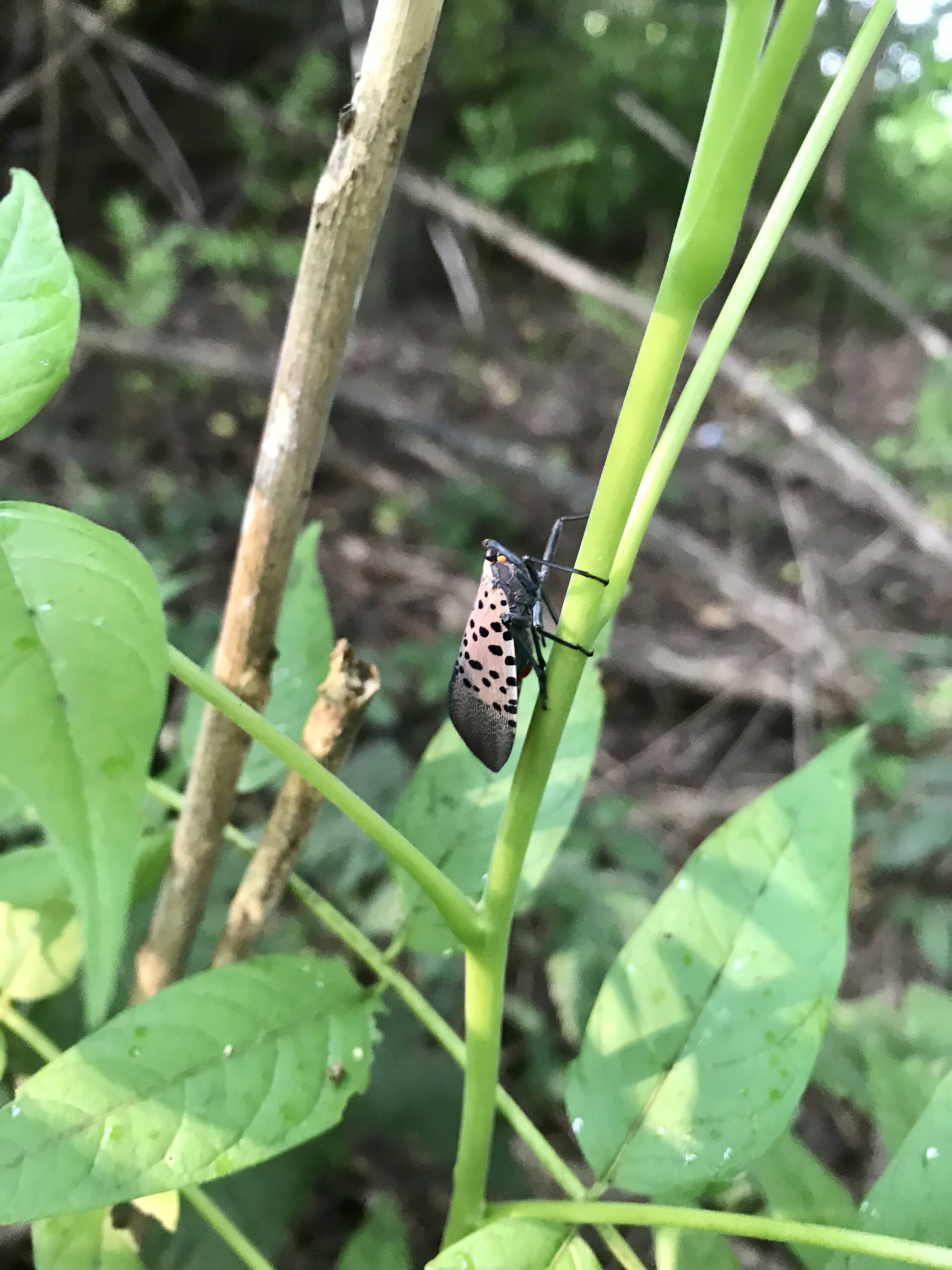
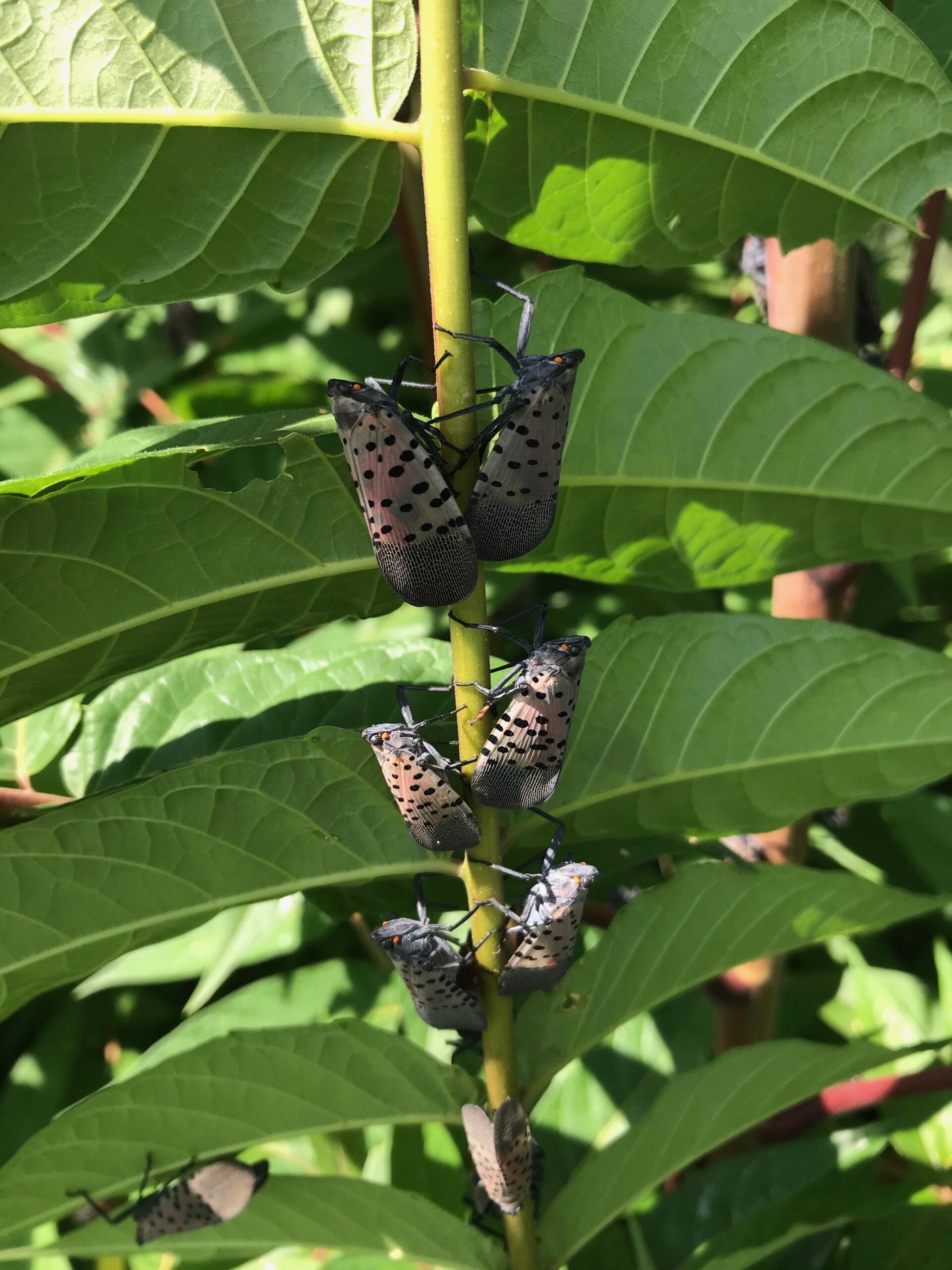
Right on time with last year’s observations, adult spotted lanternflies (SLF) were found in Pilesgrove (Salem County) NJ. In 2020 adults at the same location were found on July 23 so despite the earlier hatch observed in May, the phenology is right on track.

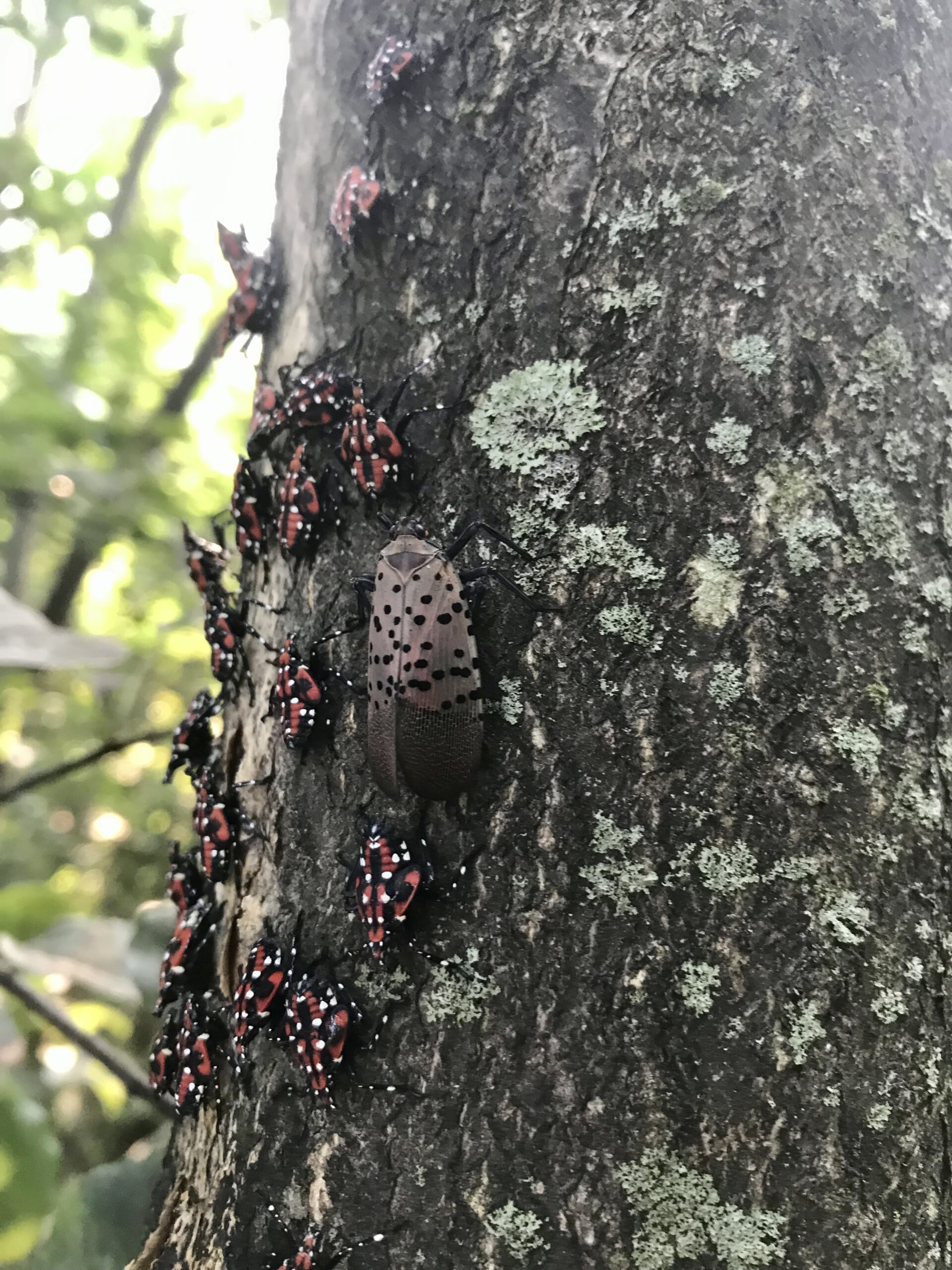
Adults were not the dominant life stage, mostly fourth instars were observed. Now is a critical time for management efforts as even these young adults will not become reproductive until September. Adults will congregate on trees, feeding in groups to access the phloem. At this time of year they prefer black walnut and tree of heaven and will gradually move towards red maples, willow, river birch, and sycamore. There are other hosts, these are just the ones we have consistently found high numbers of adults on in NJ.
 

In 2020, adults dispersed in large numbers to commercial vineyards around September 4. I think this dispersal is a combination of depletion of resources (they are literally sucking the sap out of trees) and density. As NJ populations of SLF increase, they are depleting food resources faster. I expect this movement from wooded areas to vineyards will happen earlier this year, likely mid August. There will be a few bugs here and there, but commercial vineyard managers should wait to apply insecticides until you see the larger influx. Across sites, the 10 adults/vine threshold was reached around the same time last year – although some vineyards had much larger numbers per vine – so this is a good threshold to use for now. I will post management recommendations for the adults soon!
Spotted Lanternfly Hatch

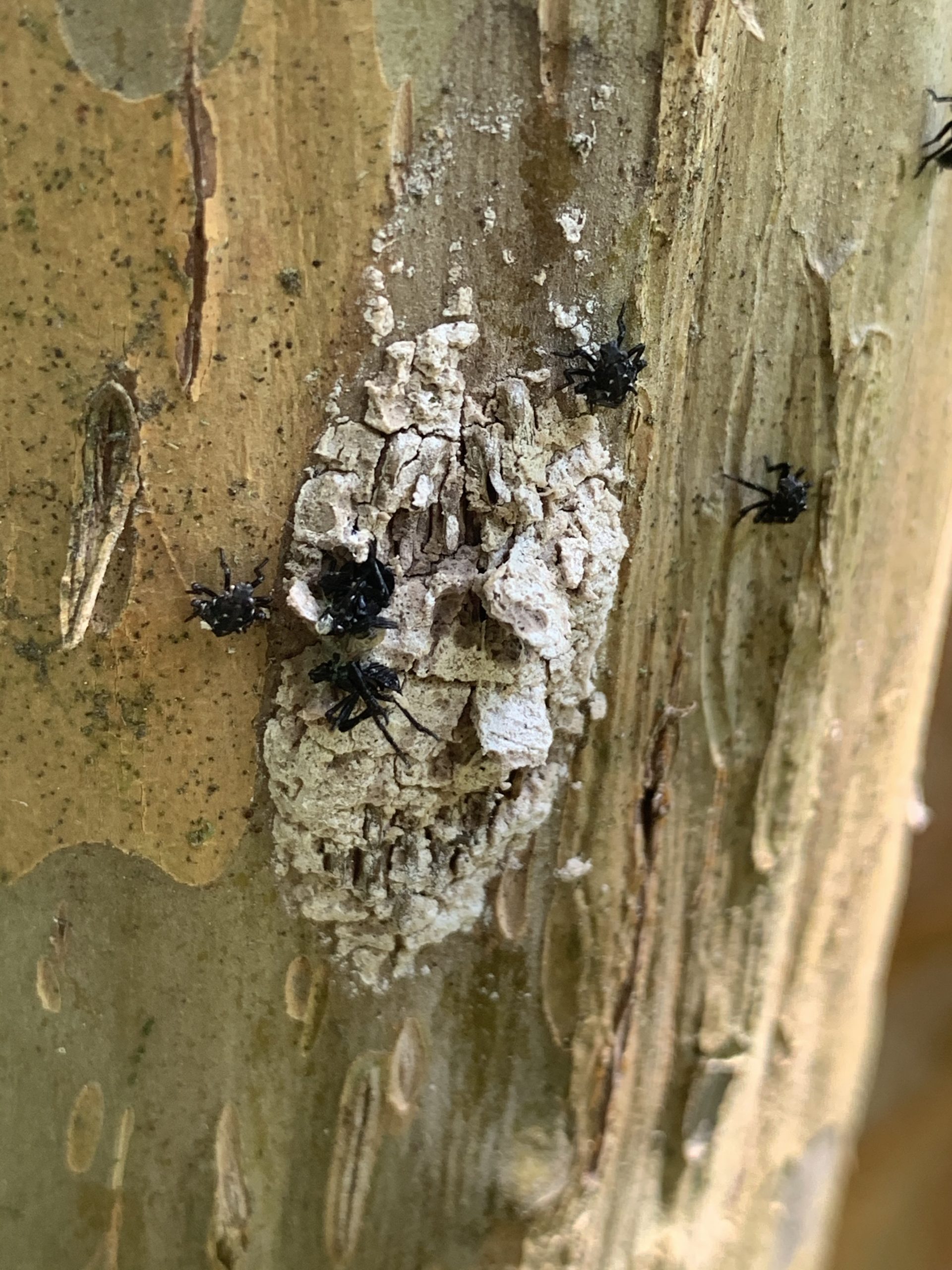
Spotted lanternfly nymphs

photo by Autumn Angeles

Spotted lanternfly nymphs are hatching throughout the state and first instars are present in multiple vineyards. Lanternfly overwinters in the egg stage and hatch is quite protracted, likely depending on the microhabitat where eggs are laid. In our surveys in 2019-2020, we identified a 2 year delay from the time SLF adults are first identified in the woods bordering vineyards and movement of the adults into the vineyard and laying eggs at levels that require management.

While it may seem counterintuitive, management is not needed as soon as SLF hatches. There is currently no evidence that the nymphs cause any yield loss or plant injury. However, this is an invasive species that requires management and there is no threshold for management against the nymph stage.

Best management practices against SLF nymphs in vineyards are to time management with other key insect management such as grape berry moth or Japanese beetle. This will not only save on insecticide costs but will also allow for all of the nymphs to hatch from the egg masses. See the table below on efficacy of materials targeting multiple vineyard pests.

Trade name Active ingredient Class Rate per acre Days of activity SLF GBM JB
Brigade 10WSB bifenthrin Pyrethroid 16 oz. 14 E E
Actara 25WDG thiamethoxam Neonicotinoid 3.5 oz 7 E G
Assail 30SG acetamiprid Neonicotinoid 5.3 oz <7 G G F
Carbaryl 4L carbaryl Carbamate 2 qt 7 E G G
Avaunt 30DG indoxicarb Oxadiazine 6 oz 7 E G G
Danitol 2.4EC fenpropathrin Pyrethroid 21.33 fl oz 7 E E E
Belay clothianidin Neonicotinoid 6 oz. G G G
Baythroid cyfluthrin Pyrethroid 3.2 oz 7 E E

E = excellent control
G = good control
F = fair control

SLF: Current Management Recommendations in Vineyards

By Katarzyna Madalinska, Megan Muehlbauer, George Hamilton, and Anne L. Nielsen

Spotted lantern flies on a tree

Spotted lanternfly adults congregating on tree of heaven

Spotted lanternfly was first found in northern NJ in 2018. Since then, populations are rapidly increasing and will substantially surpass those seen in 2019. Management of this pest is critical as we are still in the exponential growth phase of the population. There has been a 1300% increase in nymphs reported this year, which will most likely reflect higher numbers of adult SLF from previous years. This means that pressure from SLF adults will be felt more intensely by more vineyards this year.

The predominant life stage of the spotted lanternfly (SLF) seen across New Jersey during this time of year is the adult stage. That does not mean you will not see juveniles as well, which can appear black with white spots or their last juvenile stage which are red with black and white spots. The adult stage will be present until first frost.

Our current understanding of SLF adult behavior may aid in targeting management in vineyards. Right now, adult SLF are congregating in large numbers on hardwood trees along hedgerows or in bordering woods. It can be useful to identify one or a few spots around your vineyard where large numbers of SLF are feeding. One option for action at this time could be to target these trees with a backpack sprayer

using an insecticide labeled for SLF control as well as labeled for the tree species being treated. This is expected to decrease populations in general before they start reproducing but MAY not result in a decrease of pressure within the vineyard. While adults may be observed in the vineyard, right now SLF movement into the vineyard is minimal and is expected to dramatically increase in September and October. During the period of predicted peak SLF feeding within vineyards (September and October), the vines are storing carbohydrates for winter and excessive feeding by SLF can decrease winter hardiness by 1.5oC.

Movement into the vineyard will occur across several weeks and a strong edge effect will occur. However, SLF do not discriminate between vines that have been harvested or not. The treatment threshold used in South Korea is 10 SLF per vine, however, a more conservative threshold may be warranted to reduce populations and injury to the vines. If you can identify the more vulnerable parts of your vineyard you can target your insecticide application in those areas. The key is the application of an insecticide with long residual activity. There are several effective options for insecticide application (see Table 1).

Insecticides and their application rates are broken down in the table below. Be mindful of allowable uses and PHI when choosing an insecticide. After harvest there is more flexibility in insecticides available for application. We recommend the use of insecticides with a longer residual activity such as Bridgade post-harvest.

Table 1. Effectiveness of Insecticides Against Spotted Lanternfly Adults. SLF activity derived from PSU extension and Leach et al. Crop Protection 2019 v. 24 DOI:10.1016/j.cropro.2019.05.027

Trade name Rate per acre Total Use Systemic, Contact, Ingestion PHI (days) REI (hrs) Days of activity Labeled for SLF? SLF activity
Malathion 8F 1.88 pt 1.88 pt C, I 3 36 3-7 Yes, 2(ee) Excellent
Baythroid XL 2.4-3.2 oz 12.8 C, I 3 12 No Good
Scorpion 35SL 5 fl oz (foliar) 20.9 oz S, C, I 1 12 <14 Yes, 2(ee) Exc.
Brigade 10WSB 8-16 oz. 16 oz C, I 30 12 21 Yes, 2(ee) Exc.
Mustang Maxx 0.8EC 4 fl. oz. 24 oz C, I 1 12 <7 Yes, 2(ee) Good
Actara 25WDG 3.5 oz 7 oz. S, C, I 5 12 <21 Yes, 2(ee) Exc.
Assail 30SG 5.2 oz 2/yr S, C, I 3 48 0 Yes, 2(ee) on nymphs only Good
Carbaryl 4L 2 qt 10 qt C, I 7 12 <14 No Exc.
Avaunt 30DG 6 oz 2/yr C, I 7 12 0 Yes, 2(ee) Fair
Admire Pro 1.4 fl oz 2.8 oz C, I 0 12 <7 No Good
Belay 4-6 oz (foliar) 1/yr S, C, I 0/30 12 No Good/Excellent
Prepared by PennState  with modifications by Anne Nielsen


There are several reasons to manage adult SLF in September and October during peak movement.

  1. Adults feed on the canes, cordon, and trunk of grape vines. Excessive feeding has been shown to lower winter hardiness by >1.5°C.
  2. SLF females lay egg masses in October. Killing females prior to egg laying will decrease population growth the following year.

In October, female SLF prefer to lay egg masses on a relatively smooth surface that is positioned horizontally.  Within a vineyard, egg masses may be laid on posts, farm equipment, and the grape vines themselves. When looking for egg masses on your vines, be sure to examine any layers of peeling bark on the trunk or canes. However, if many egg masses are present in your vineyard, there are substantially more in any bordering wooded areas. Currently, we feel that management against the nymphs in the spring is more effective than targeting egg masses with an insecticide.


Integrating Management for Key Orchard Pests


By: Robert McDougall and Anne L. Nielsen

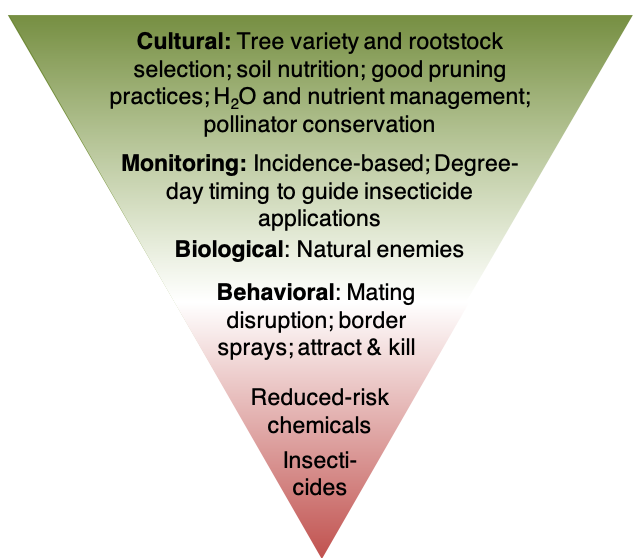
Integrated Pest Management (IPM) is the practice of using biological information to efficiently and effectively control pests while reducing reliance of pesticides. IPM is typically depicted as a pyramid of tactics that build on each other moving from least toxic at the bottom to most disruptive at the top. But in practice, IPM for insects in tree fruit relies primarily on application of synthetic insecticides guided by degree-day timing or trap counts. We want to flip the “IPM pyramid” around to emphasize that insecticides are the last tool for pest management and build upon other biologically-based practices.

Graphic describing management practices for orchard pests

By Anne Nielsen

The least disruptive means of pest control are cultural measures, those that seek to prevent pests from becoming problematic in the first place. These can include measures such as planting resistant cultivars, practicing good hygiene to prevent pest entry and maintaining diverse plantings in crop margins to encourage natural biological control agents (e.g. other insects that eat pests). In tree fruit, cultural control may include rootstock resistant to wooly apple aphid or removal and burning of pruned limbs and dying trees (for borer or scale management) which removes infested plant material and habitat for other pests.

For curative action, a central component of IPM programs depends on monitoring programs to identify pest species, occurrence and seasonality, and abundance. This is achieved primarily through direct sampling of plant tissue or baited traps. Regardless of the monitoring method, it must be conducted frequently, weekly at best. Monitoring can also establish biofix dates to start accumulating degree-days that when applied to models predict life stages of insects based on available heat units for development.

Upon identification of key pests within the orchard, the next action can take on a wide range of forms depending on the pest. This can include biological control measures, such as enhancing or introducing a natural enemy of the pest into the system in the hope of controlling it. Interactions between natural enemies and pests occur naturally within an orchard, but the strength of the interaction can be weakened through chemical insecticides and lead to outbreaks of pests, particularly aphids, mites, thrips, and scales. Implementation of reduced input or non-chemical methods can protect populations of natural enemies such as predators or parasitoids within the orchard and prevent a pest from becoming actionable. An example of a biological control program currently under investigation is controlling the Brown Marmorated Stink Bug with the Samurai Wasp, a tiny stingless Asian wasp which lays its eggs in BMSB eggs, preventing them from hatching and producing more Samurai Wasps instead of stink bugs.

The next IPM tool is behavioral management which changes the behavior of the insect so that less insecticide can be used. Insects, like other animals, have predicable behaviors, that once understood can be exploited for management. Two common approaches include altering insect behavior with pheromones (ie. mating disruption or attract-and-kill) or exploiting dispersal behaviors to apply targeted management (ie. border sprays). Mating disruption uses a species’ own sex pheromone to reduce mating within the orchard. This is accomplished by placing multiple dispensers containing pheromone throughout the orchard. This changes the behavior of male moths that are searching for females and results in fewer females laying eggs within the orchard (and cleaner fruit at harvest). For many insect species, including Oriental Fruit Moth and borers, no additional insecticide is needed (based on monitoring trap thresholds). Mating disruption for Oriental Fruit Moth in peaches can cost the same if not less than insecticide management and is highly effective. Mating disruption technology against borers is becoming increasingly necessary as further use restrictions change for Lorsban.

The behavioral tactic attract-and-kill places high doses of pheromone, usually an aggregation pheromone, on select trees to attract males and females (and sometimes nymphs) to a tree where they can then be killed with an insecticide. It is not believed to bring additional insects into the orchard, rather it brings those that are already there into one area. A second type of behavioral control is the use of border sprays. Many insects are often found in greater numbers in the edges of orchards because their dispersal is arrested due to visual cues provided by trees on the orchard edge. A border spray is usually defined as spraying the outer rows of orchard trees with insecticide. This tactic has shown to be very successful for controlling brown marmorated stink bug in peaches and apples, and reduces insecticide sprays by 25% relative to alternate row middle applications. Plum curculio also exhibits this behavior, and Rutgers is currently investigating whether it can be effectively controlled by spraying just the outer two rows of orchards during movement into the orchard.

IPM practices have evolved considerably in the past few decades and orchards are managed safer and more efficiently each year. Some of the IPM tactics described above may already be part of your orchard management practices. But as production cost increases are not instep with fruit prices, tactics that rely less on insecticide inputs will help protect orchard viability.

Spotted Lanternfly Updates

Spotted lanternfly (SLF) populations are very active in multiple NJ counties such as Hunterdon, where large numbers of adults can be seen feeding. As of last week, the majority of adults were observed feeding on tree of heaven. Where possible, tree of heaven should be treated with either an herbicide and/or an insecticide. PSU has information on treatment here https://extension.psu.edu/tree-of-heaven

Based on observations in Pennsylvania, feeding by adult Spotted Lanternfly in grapes can reduce overwintering survival and may have broader impacts to vine health. Spotted lanternfly is a phloem feeding insect that feeds directly on the cordon, not on the fruit. As they feed, they expel the extra sugars from their bodies in the form of honeydew. Honeydew can buildup underneath trees or on plant material beneath vines and can be colonized by sooty mold fungi. In grapes, sooty mold can develop on clusters, significantly reducing quality, although this has not yet been observed in the USA. More importantly in areas with high SLF populations, vine health has deteriorated quickly. In Pennsylvania both a decrease in winter hardiness and vine death has occurred.

Vines should be watched closely to determine if SLF adults are dispersing into the vineyards and feeding. Populations will likely be higher along vineyard edges. If feeding occurs, an insecticide treatment may be warranted. The adults have not started to lay eggs yet so this is a critical time for population management. Multiple insecticide materials are effective against the adult stages. Recommendations from PennState in grapes are:

Pennsylvania State University Insecticide Recommendations Against Spotted Lanternfly

 (*modified for space)

Trade Name Active Ingredient Class

(IRAC Group)

Rate per Acre PHI (days) REI (hours) Labeled for SLF on Grape in PA? Life Stage Tested Longevity SLF Activity
Brigade 10WSB bifenthrin Pyrethroid

(IRAC 3)

16 oz 30 12 Yes, 2(ee) Nymphs Adults **** ++++
Actara 25WDG * thiamethoxam Neonicitinoid (IRAC 4A) 3.5 oz 5 12 Yes, 2(ee) Nymphs Adults **** ++++
Scorpion 35SL * dinotefuran Neonicitinoid (IRAC 4A) 5 fl oz 1 12 Yes, 2(ee) Nymphs Adults *** ++++
Carbaryl 4L carbaryl Carbamate (IRAC 1A) 2 qt 7 12 No
Note: Sevin XLR has 2(ee)
Nymphs Adults *** ++++
Danitol 2.4EC fenpropathrin Pyrethroid

(IRAC 3)

21.33 fl oz 21 24 No Nymphs ** ++++
Malathion 8F malathion Organophosphate (IRAC 1B) 1.88 pts 3 12 Yes, 2(ee) Nymphs Adults ** ++++
Mustang Maxx 0.8EC zeta- cypermethrin Pyrethroid

(IRAC 3A)

4 fl oz 1 12 Yes, 2(ee) Nymphs Adults ** +++
Avaunt 30DG indoxacarb Oxadiazine (IRAC 22) 6 oz 7 12 Yes, 2(ee) Nymphs Adults * ++
Assail 30SG * acetamiprid Neonicitinoid (IRAC 4A) 5.2 oz 3 48 Yes, 2(ee) on nymphs only Nymphs Adults * +

Always follow the insecticide label for use and application instructions. Please note that there is variation in the residual activity of each material and some materials require a 2(ee) label for use in grapes. BotaniGard is also being evaluated as a biological insecticide by PSU.

New sightings of spotted lanternfly in NJ can be reported, along with a picture and address to slanternfly@njaes.rutgers.edu

Plum Curculio Phenology Model

Plum Curculio Biology and Management in New Jersey Peaches


Dr. Anne Nielsen, Tree Fruit Entomologist

Dr. Clement Akotsen-Mensah, Postdoctoral Research Associate

Plum curculio (PC)continues to be a major pest of peach, apple, plum, cherry and blueberry, and can cause significant crop losses through early season scarring of the fruit. Untreated peach blocks in NJ can have >90% injury through scarring, direct fruit loss, and larval contamination of the fruit. In recent years, we have observed that more applications are needed for control to bring PC populations to manageable levels, particularly in peaches. This is because of 1) extended period of PC activity, 2) less effective insecticides, or 3) presence of the Southern population which has at least 2 generations per year.


There is a lot of seasonal variations in major plant phenological events like time of bloom and petal fall within NJ, we can use degree-day accumulation and plant phenology to better predict activity and injury. We present results from series of research conducted in the laboratory and in research plots to help unravel the population structure and (unbaited) trap based degree-day model of PC in NJ peaches. Also, pest phenological events have been determined and a degree-day model developed which is being validated in peach orchards.


Table 1. Phenological events recorded in experimental peach orchard in 2017 and 2018 peach seasons in New Jersey

  Biofix at January 1 and LTDT at 10°C (50°F)
Phenological event 2017 2018 Mean
First trap catch 89 96 93
First peak trap catch 123 167 145
First egg lay in fruit 247 295 271
Peak egg laying 383 399 391
Peak larval emergence 547 515.5 531
Peak trap catch of second generation 1256 961 1108


Plum Curculio Management

Insecticide treatments continue to be the main management tool for plum curculio. Insecticides are applied to the whole block targeting critical phenological events such as petal fall, peak of oviposition, and emergence of the second generation. Insecticides used (Table 2) will target the adults migrating from overwintering or egg laying. The model predicts plum curculio will start migrating from overwintering sites into peach orchards at a degree-day of 88-100DD using January 1 as biofix and 10°C as lower development temperature threshold (Table 1). The peak trap capture of the overwintering population occurs within 113-176DD. The peak egg lay in peach occurs in a range of 379-402 DD.

Growers typically begin insecticide applications against plum curculio in peach at petal fall and repeat every 7 to 14 days as long as new damage appears or until 400DD in apple (post golden delicious petal fall).

Our model provides additional decision making using pyramid trap numbers and degree-day accumulations. We predict the first application (whole block) using a plum curculio adulticide (Imidan, Avaunt, Asana, Harvanta, or Apta) to occur before the peak trap capture at 113-176 DD. This application should be made as long as the phenology of the plant permits (after petal fall). A second application (using Actara, Belay, Rimon (apples)) should be made before the peak egg laying (379-402 DD) to kill eggs. Applications should continue on 7-14 day schedule if activity and pressure warrant management. If needed, application using Imidan, Avaunt, Asana, Harvanta or Apta at the peak of the second generation 900-1317 DD.

Table 2: List of insecticides that are used to control plum curculio on pome and stone fruit (Rutgers Cooperative Extension Commercial Tree Fruit Production Guide 2016)

Compounds Chemical class / activity Crop Life Stage targeted
Imidan 70W Organophosphate (phosmet) Pome fruit

Stone fruit

Adults
Lethal via contact  
Actara 25WG Neonicotinoid (thiamethoxam) Pome fruit

Stone fruit

Adults

Eggs

Lethal, Antifeedant and Curative  
Belay 2.13SC Neonicotinoid (clothianidin) Pome fruit

Peach

Adults

Eggs

Lethal, Antifeedant and Curative  
Avaunt 30WG Oxadiazine (indoxacarb) Pome fruit

Stone fruit

Adults
Lethal via ingestion    
Asana, Warrior, Baythroid Pyrethroids Pome fruit

Stone fruit

Adults
Lethal, repellent  
Rimon (targeting codling moth, obliquebanded leafroller) IGR (novaluron) Apple Eggs
Egg sterilization Stone fruit  
Harvanta Diamide Apple Adults

(maybe eggs)


The mention of a product does not mean endorsement of this product. Growers are required to strictly follow all labels.