Based on our degree-day (DD) model for Sparganothis fruitworm, first eggs hatch at about 895 DD (see chart). As of June 27, Sparganothis has accumulated 991.5 DD (using April 15 as biofix). This indicates that eggs have started to hatch, and fruit will become susceptible to infestation since larval injury to fruit usually begins after the eggs hatch. According to our model, peak flight should have occurred about a week ago (around June 20). Insecticide applications are usually recommended 10-14 days after peak flight (i.e., June 30-July 4). Most beds should be close to the end of bloom. If trap counts have been high, growers should consider treatment by the end of next week (depending on the variety and time of winter flood removal) to prevent damage to berries. If spraying when bees are present, your option is to use an insect growth regulator (IGR), such as Confirm or Intrepid, or the diamide Altacor. Our “standard” recommendation has been, however, to wait until bees are removed to apply an insecticide. Your post-bloom options include the organophosphate Diazinon, the diamides Altacor, Verdepryn, or Exirel, the spinosyn Delegate, or the IGR Intrepid. Timing of insecticide application is critical; so, if needed, do not wait too long to manage this pest.
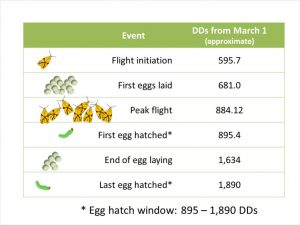
Degree-day model for Sparganothis fruitworm
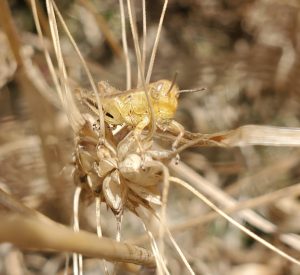 A field of ready to harvest wheat was observed infested with 4th to 5th star grasshopper nymphs in Salem County. While waiting for positive identification from entomologists familiar with the differences in the nymp identification, these nymphs appear to be differential grasshoppers (Melanoplus differentialis). The uniform yellowish color of nymphs observed, is an indication the population is quite high. Lesser populations tend to be more green in color. Additional fields of wheat, corn and soybean on the same farm all had nymphs present but were not at economic threshold yet.