Search Results for: corn borer

Veg IPM Update: Week Ending 8/19/15

Click to View

Click to View

Sweet Corn

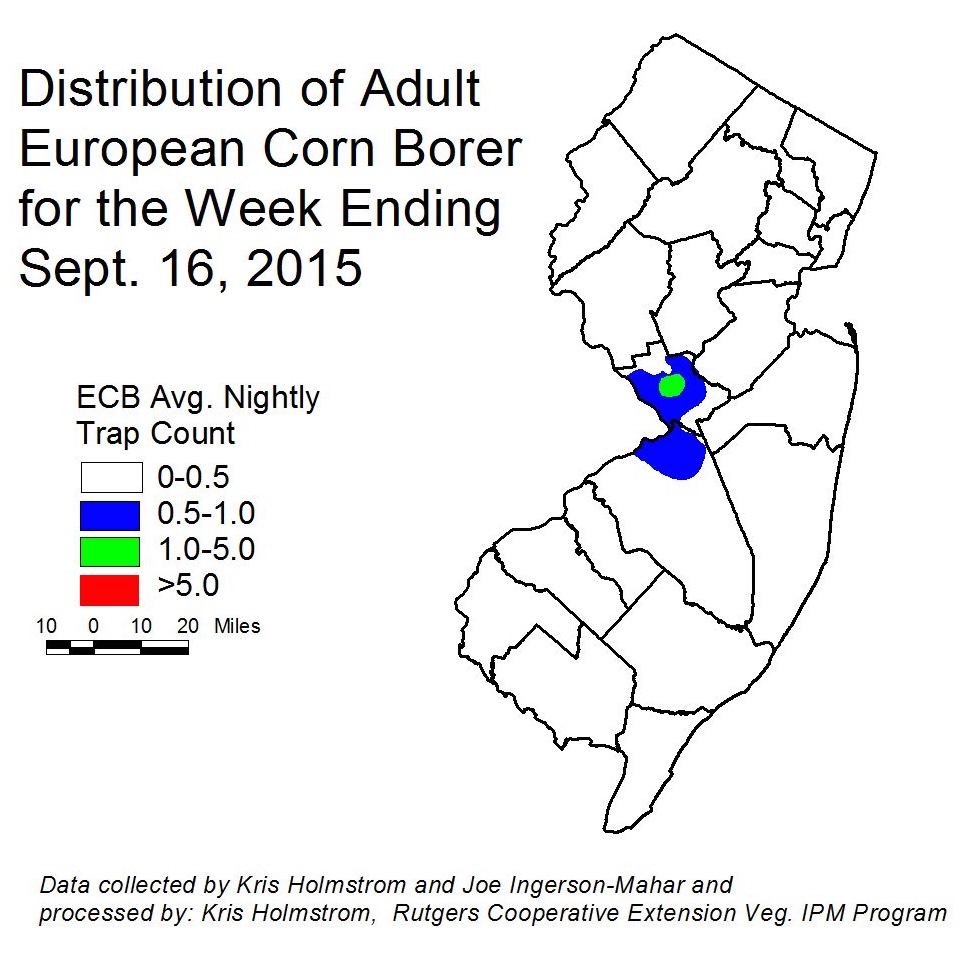
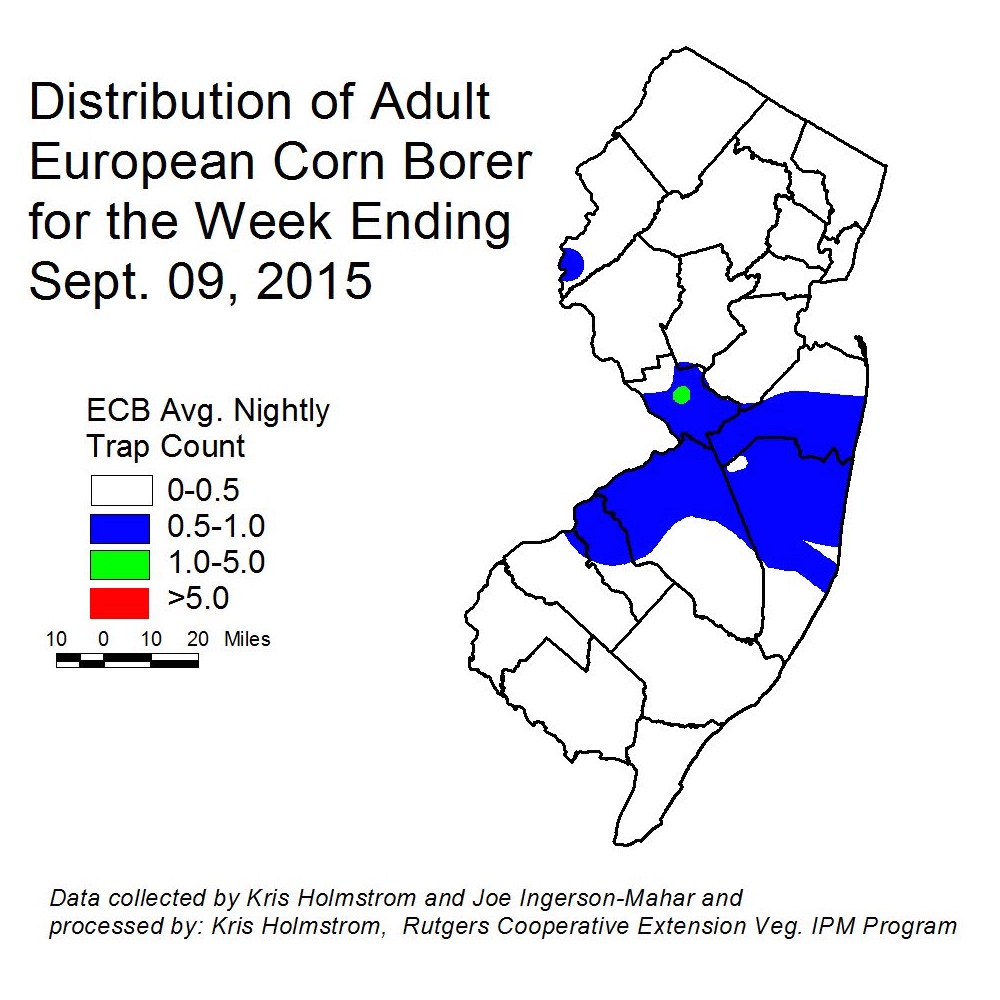
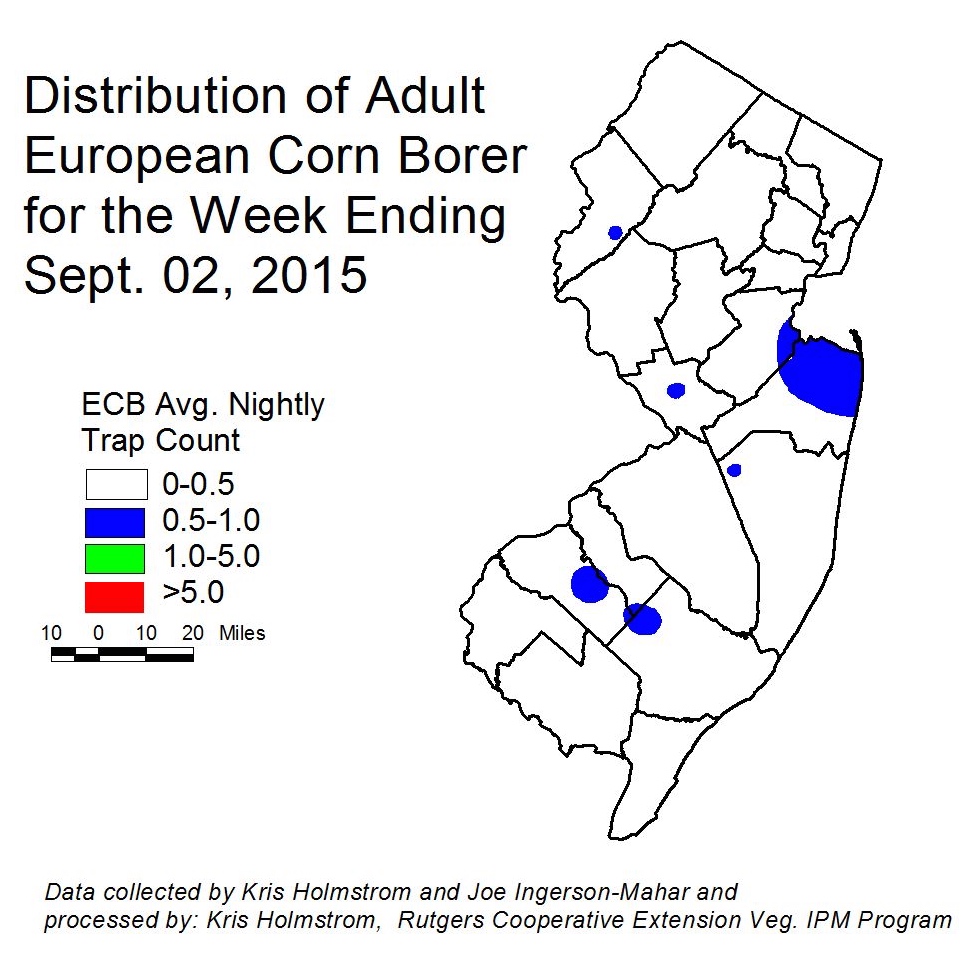
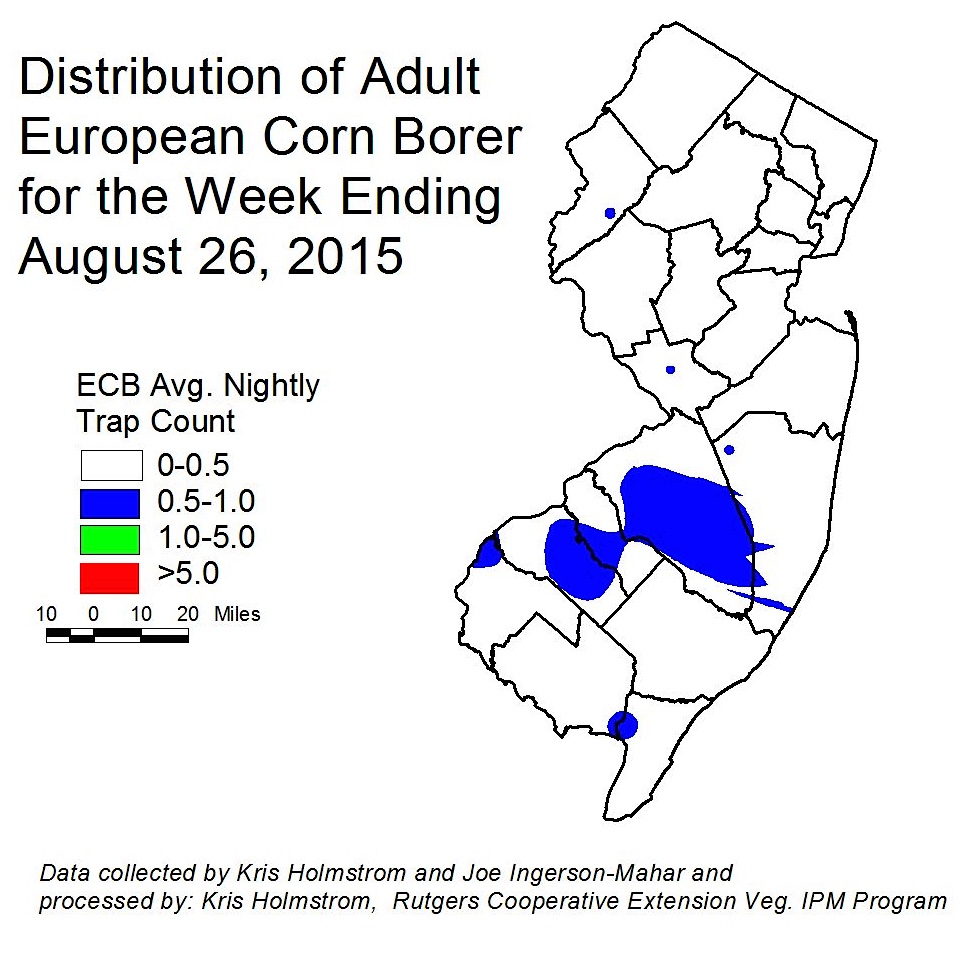
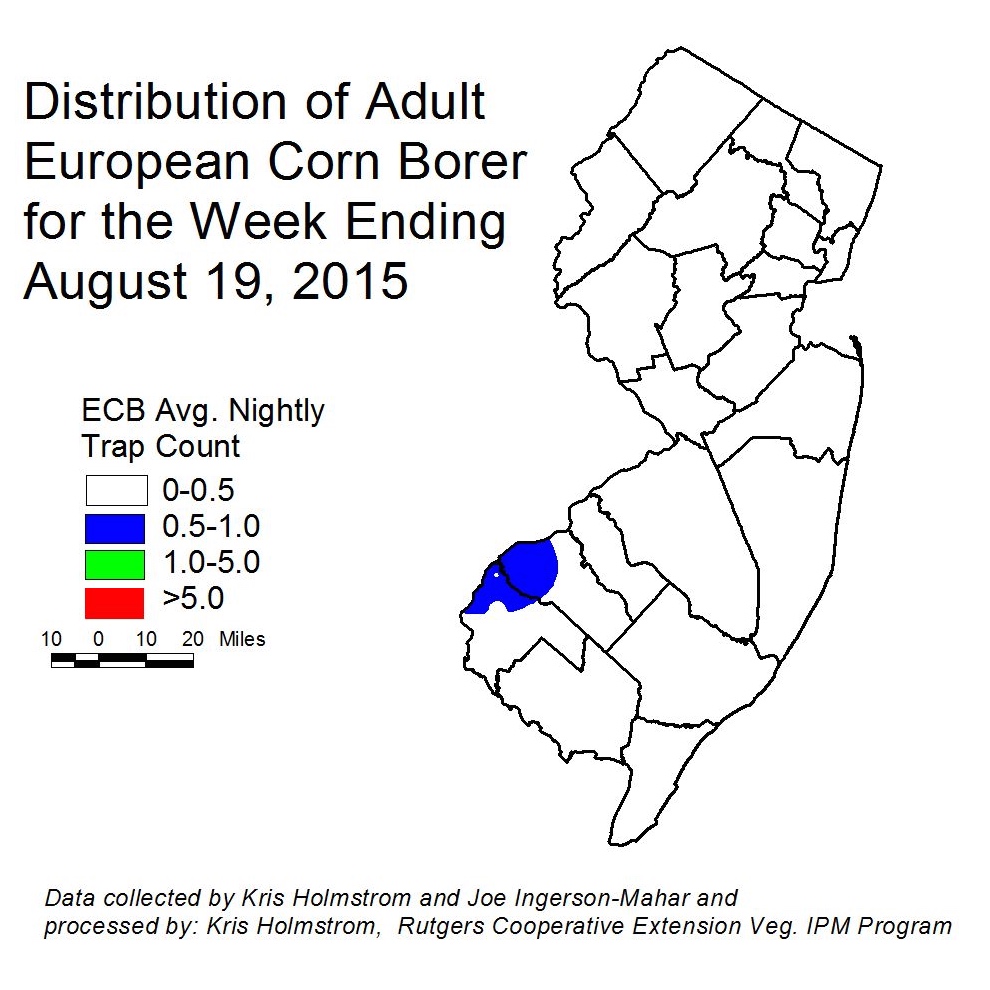
European corn borer (ECB) adult activity has declined somewhat over the past week, with only scattered individuals outside of western Gloucester and Salem Counties (see ECB map). It remains to be seen whether we get another surge in moths as the summer winds down. As always, consider treating when the number of infested plants in a 50 plant sample exceeds 12%. Any planting remaining at or above threshold as it proceeds to full tassel should be treated, as this is the last stage at which ECB larvae will be exposed and vulnerable to insecticidal sprays.

See the 2015 Commercial Vegetable Recommendations Guide for insecticide choices.
[Read more…]

Veg IPM Update: Week Ending 8/12/15

Click to View

Click to View

Sweet Corn

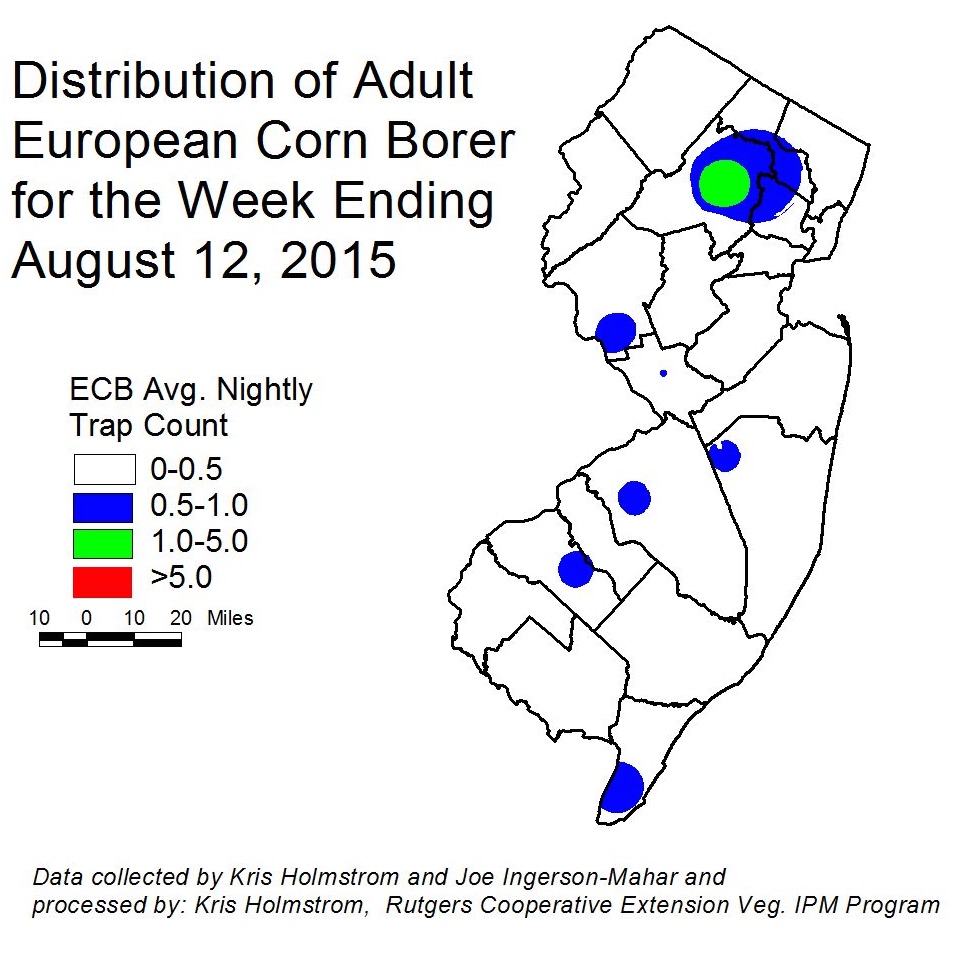
European corn borer (ECB) adult activity is on the increase, with low catches in parts of the state now. The second adult flight is underway. Areas of highest activity are scattered throughout the state with one notable hot spot in central Morris County (see ECB map).

As always, consider treating when the number of infested plants in a 50 plant sample exceeds 12%. Any planting remaining at or above threshold as it proceeds to full tassel should be treated, as this is the last stage at which ECB larvae will be exposed and vulnerable to insecticidal sprays.

See the 2015 Commercial Vegetable Recommendations Guide for insecticide choices.
[Read more…]

Veg IPM Update: Week Ending 7/29/15

Sweet Corn

ECB 7-29-2015

Click to View

European corn borer (ECB) adult activity is stable, with low level activity in parts of the state now. This is the beginning of the second adult flight. Areas of highest activity are still along the Delaware Bay Shore and in central Morris County (see ECB map), but areas between should fill in over the next week.

As always, consider treating when the number of infested plants in a 50 plant sample exceeds 12%. Any planting remaining at or above threshold as it proceeds to full tassel should be treated, as this is the last stage at which ECB larvae will be exposed and vulnerable to insecticidal sprays.

See the 2015 Commercial Vegetable Recommendations Guide for insecticide choices.
[Read more…]

Veg IPM Update: Week Ending 7/22/15

Sweet Corn

Click to View

Click to View

European corn borer (ECB) adult activity is starting to increase in parts of the state now. This is the beginning of the second adult flight. Areas of highest activity are currently along the Delaware Bay Shore and in central Morris County (see ECB map), but areas between should fill in over the next week.

As always, consider treating when the number of infested plants in a 50 plant sample exceeds 12%. Any planting remaining at or above threshold as it proceeds to full tassel should be treated, as this is the last stage at which ECB larvae will be exposed and vulnerable to insecticidal sprays.

See the 2015 Commercial Vegetable Recommendations Guide for insecticide choices.
[Read more…]

Veg IPM Update: Week Ending 7/15/15

Sweet Corn

Click to View

Click to View


There is still very little European corn borer (ECB) adult activity at this time. Few individuals have been captured throughout NJ this past week (see ECB map). ECB infestations are absent from sweet corn plantings. We would expect to see signs of the second flight within the next week or so.

As always, consider treating when the number of infested plants in a 50 plant sample exceeds 12%. Any planting remaining at or above threshold as it proceeds to full tassel should be treated, as this is the last stage at which ECB larvae will be exposed and vulnerable to insecticidal sprays.

See the 2015 Commercial Vegetable Recommendations Guide for insecticide choices.
[Read more…]

Veg IPM Update: Week Ending 7/8/15

Click to View

Click to View

Sweet Corn

We are still between European corn borer (ECB) adult generations at this time. Very few individuals have been captured throughout NJ this past week (see ECB map). ECB infestations are almost gone from all sweet corn plantings. We would expect to see signs of the second flight within the next two weeks.

As always, consider treating when the number of infested plants in a 50 plant sample exceeds 12%. Any planting remaining at or above threshold as it proceeds to full tassel should be treated, as this is the last stage at which ECB larvae will be exposed and vulnerable to insecticidal sprays.

See the 2015 Commercial Vegetable Recommendations Guide for insecticide choices.

[Read more…]