Search Results for: corn borer

IPM Update 7/25/18

Sweet Corn

European corn borer (ECB) moth catches in black light traps, after showing signs of increase, have now largely subsided again.  The second flight is most likely going to be spotty, with specific locations getting low numbers of moths while other regional traps catch none.  There will be no map in this edition.  While we expect to see some feeding signs over the next two weeks, this second generation feeding is sometimes obscured by fall armyworm (FAW) feeding.  Once plants hit full tassel, any ECB larvae present will move downward on the stalk and re-enter the plant near the area where ears are forming.  This can result in direct injury to the ear.  Growers should consider an insecticide application at the full tassel stage to target ECB larvae as they migrate downward.  This application can eliminate larvae that have escaped any earlier insecticide applications. [Read more…]

IPM Update 7/18/18

Sweet Corn

European corn borer (ECB) moth catches in black light traps are showing signs of increase now.  This is an indication that the second flight is getting under way.  Catches overall are still quite low however, and there will be no map in this edition.  We expect to see increased feeding signs over the next two weeks, although this second generation feeding is sometimes obscured by fall armyworm (FAW) feeding.  Once plants hit full tassel, any ECB larvae present will move downward on the stalk and re-enter the plant near the area where ears are forming.  This can result in direct injury to the ear.  Growers should consider an insecticide application at the full tassel stage to target ECB larvae as they migrate downward.  This application can eliminate larvae that have escaped any earlier insecticide applications. [Read more…]

IPM Update 7/11/18

Sweet Corn

European corn borer (ECB) moth catches in black light traps continue to be very low. There will be no map in this edition due to insufficient catch.  There have been isolated incidents of new feeding in the far south of the state, but generally, the threat to corn should be low until the second flight begins in earnest.  Once plants hit full tassel, any ECB larvae present will move downward on the stalk and re-enter the plant near the area where ears are forming.  This can result in direct injury to the ear.  Growers should consider an insecticide application at the full tassel stage to target ECB larvae as they migrate downward.  This application can eliminate larvae that have escaped any earlier insecticide applications. [Read more…]

IPM Update 7/04/18

Sweet Corn

European corn borer (ECB) moth catches in black light traps remain very low; situation unchanged from last week.  There will be no map in this edition due to insufficient catch.  Incidents of feeding are declining as infested plantings proceed to silk and whorl stage corn has not been exposed to egg laying.  We should be in a period relatively free of whorl infestations now.  The next whorl infesting pest will be fall armyworm (FAW).  As yet, no infestation of this pest have been detected.    [Read more…]

IPM Update 6/27/18

Sweet Corn

European corn borer (ECB) moth catches in black light traps remain very low.  There will be no map in this edition due to insufficient catch.  Incidents of feeding are declining as infested plantings proceed to silk and whorl stage corn has not been exposed to egg laying.  We should be in a period relatively free of whorl infestations now.  The next whorl infesting pest will be fall armyworm (FAW).  As yet, no infestation of this pest have been detected.    [Read more…]

IPM Update 6/20/18

Sweet Corn

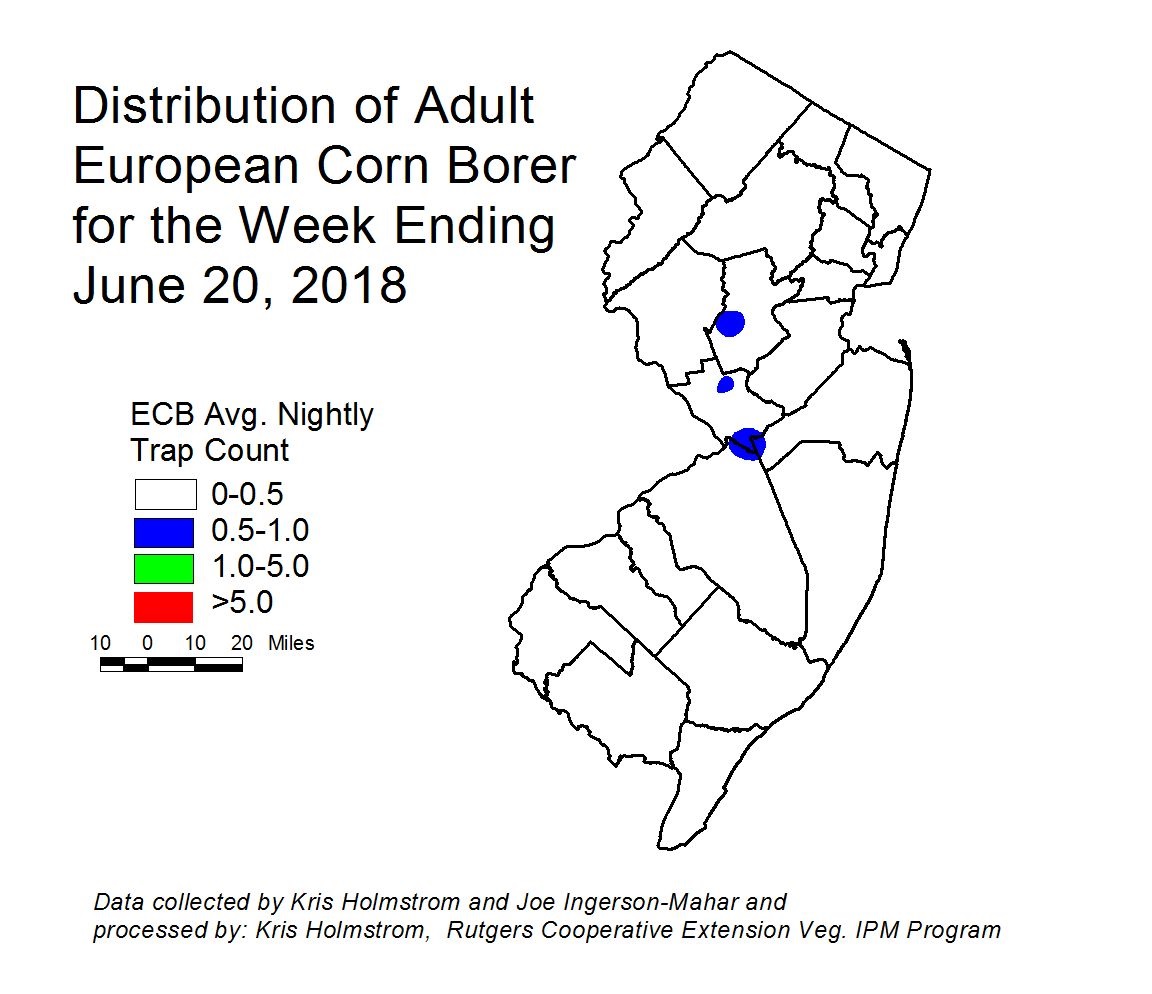
European corn borer (ECB) moth catches in black light traps are very low.  The highest activity now in north central areas (see ECB map).   Feeding continues to increase, although infestations are spotty.   [Read more…]