Search Results for: corn borer

IPM Update 5/22/19

Sweet Corn

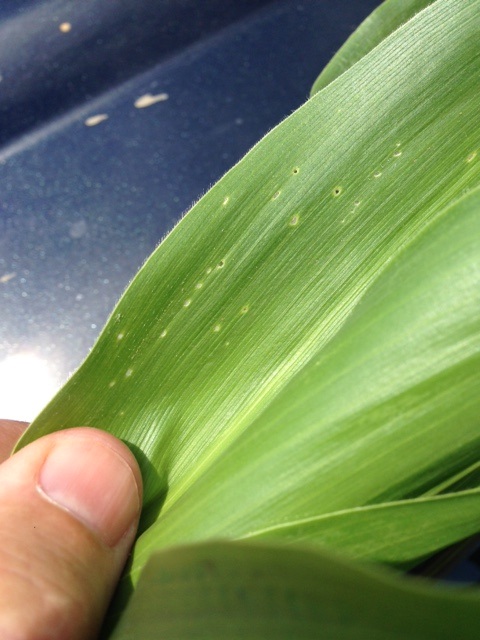
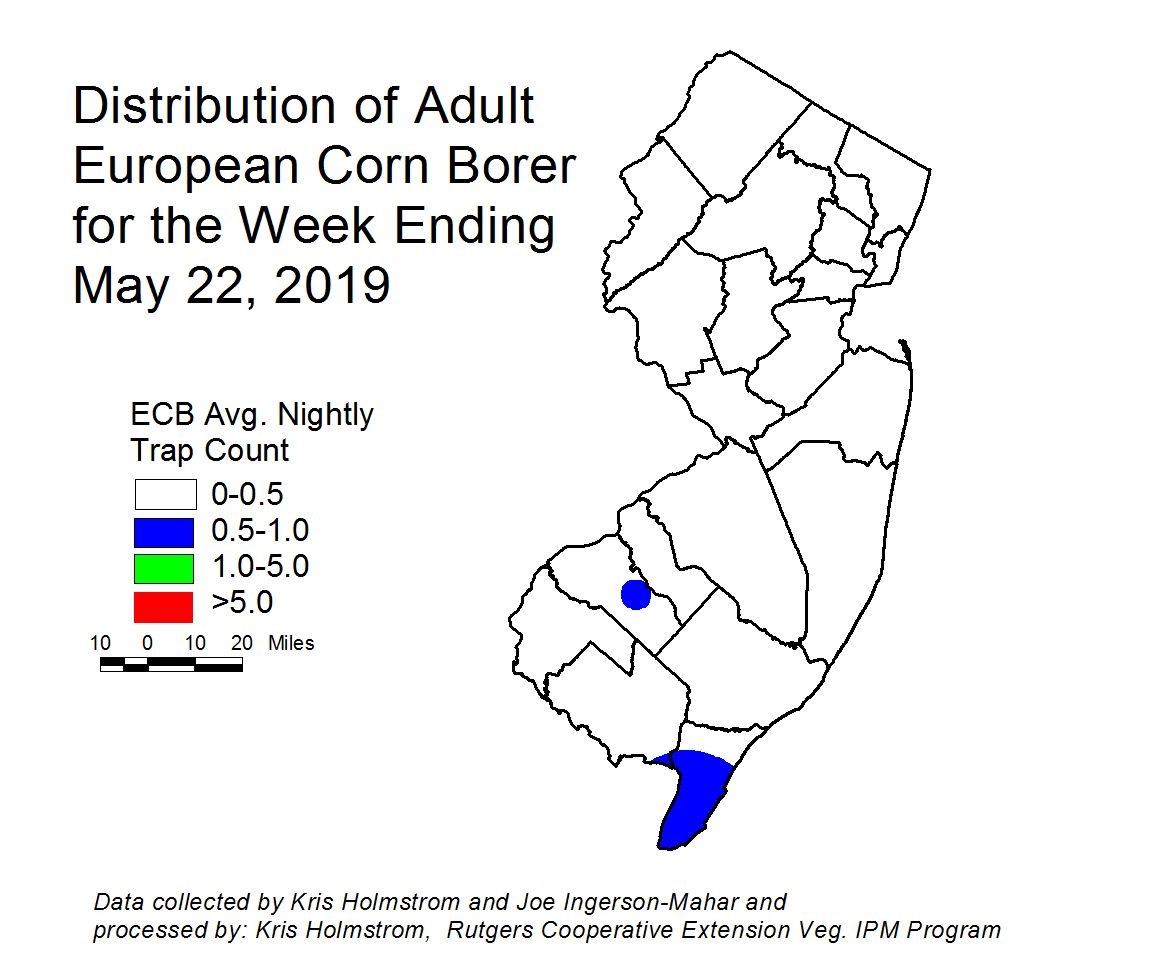
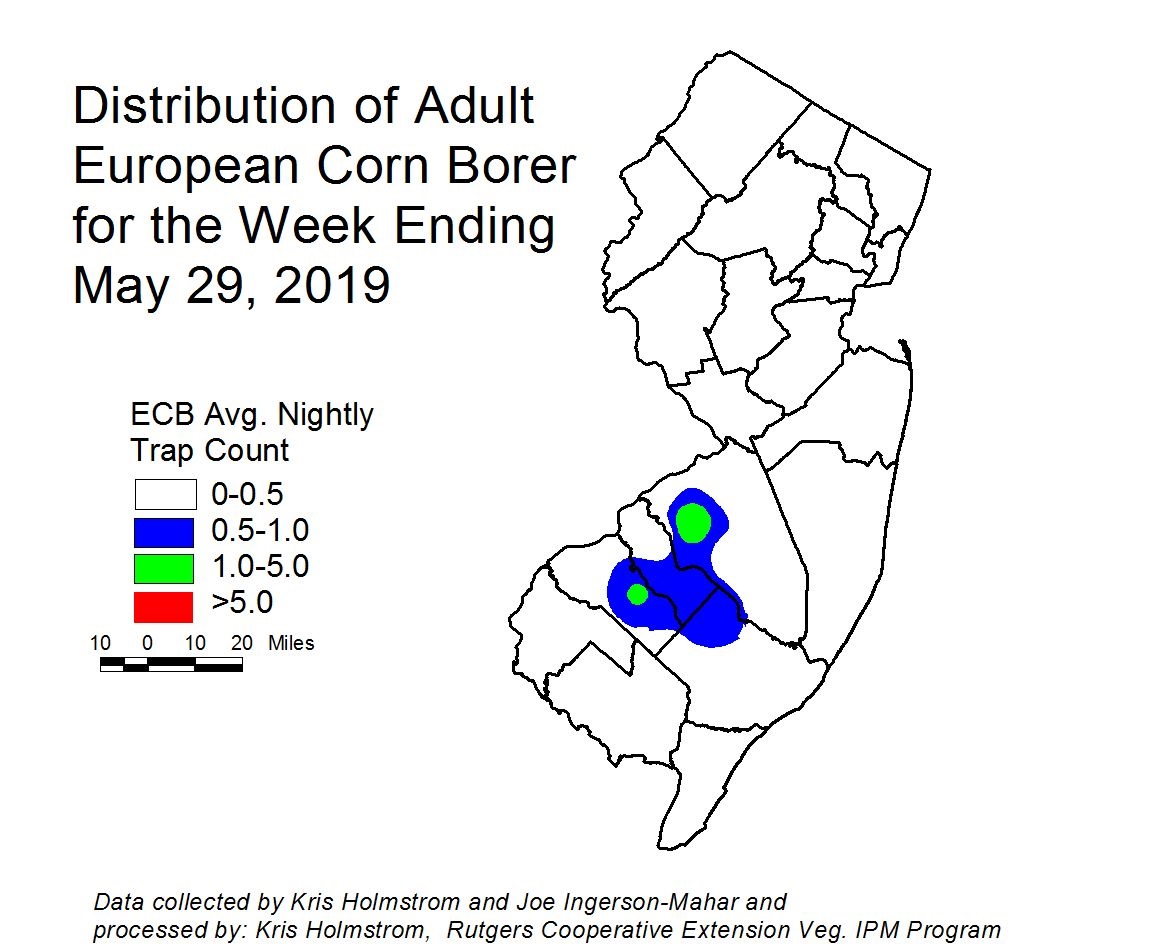
Low numbers of European corn borer (ECB) moths continue to be captured in a few traps (see map at left).  Several cold nights may have suppressed the first flight of the season, although declining ECB populations due to transgenic corn may play a part in the low catches.  Early plantings grown under plastic will be at risk first, followed by the first bare ground plantings.   Through the central counties, a few early corn plantings have reached the whorl stage.  Growers should begin scouting whorl corn for injury.  Look for the characteristic “shot-hole” type of feeding (photo below at right) and consider treating when infested plants exceed 12% in a 50 plant sample.

The highest nightly trap catches of ECB for the week ending 5/21/19 are as follows:

Green Creek   2 Crosswicks   1 Pedricktown   1
Beckett   1 Downer   1 Princeton   1
Blairstown   1 New Egypt   1 Woodstown   1

Several corn earworm (CEW) individuals have been captured in blacklight traps this week.  Catches occurred at Port Colden in Warren County, Matawan in Monmouth County and Woodstown in Salem County.  These individuals likely represent a limited overwintered population to our south, and arrived on the southerly breezes that occurred over the weekend and early this week.  There is little threat from these CEW at this time.

[Read more…]

IPM Update 5/15/19

Sweet Corn

Most of the IPM Program black light trap network is now operational in New Jersey.   To date, no corn earworm (CEW) have been captured.  However, low numbers of European corn borer (ECB) moths are now appearing in a number of traps (see map at left).  This is the onset of the first flight of the season.  As yet, most corn is too young to support an infestation, although early plantings grown under plastic will be at risk first.   As numbers increase and corn plantings progress into the whorl stage, growers should begin scouting for injury.  Look for the characteristic “shot-hole” type of feeding (photo below at right) and consider treating when infested plants exceed 12% in a 50 plant sample.

The highest nightly trap catches of ECB for the week ending 5/15/19 are as follows:

Downer   2 Cinnaminson   1 Medford   1
Beckett   1 Elm   1 South Branch   1
Bellemeade   1 Georgetown   1 Woodstown   1


[Read more…]

IPM Update 5/08/19

Sweet Corn

IPM Program personnel are currently finishing deployment of the black light trap network in New Jersey.  At present, we are approximately 80% operational and have begun to monitor traps.  To date, no corn earworm (CEW) have been captured.  The low numbers of European corn borer (ECB) moths that have been caught do not allow us to produce a map image.  As numbers increase, look for population maps of ECB, CEW and CEW catches from pheromone traps in this weekly publication.  The Vegetable IPM Program is expanding the use of CEW pheromone traps to include central and northern counties this year.  The resulting full-state maps will include interpretive information.

The highest nightly trap catches of ECB for the week ending 5/08/19 are as follows:

Georgetown   1              Woodstown   1

Hillsborough   1

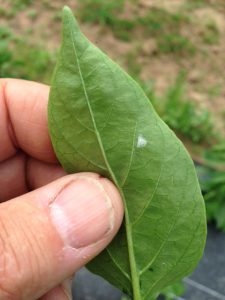
European corn borer egg mass on a pepper leaf.

[Read more…]

IPM Update 10/03/18

Note:  This is the final weekly edition of the Vegetable IPM Update for 2018.  Further updates may be published in response to specific pest threats. 

Sweet Corn

European corn borer (ECB) moth catches remain low.     There will be no map in this edition.   [Read more…]

IPM Update 09/26/2018

There will be no maps for this edition of the IPM Update.

Sweet Corn

State-wide, European corn borer and fall armyworm have declined in the traps.  There has been little field activity for either moth.

Corn earworm

Corn earworm populations have declined, but based upon blacklight information, most areas of the state will need to continue on a 3-day silk spray schedule for late season sweet corn.  In the pheromone traps of southern NJ, the number of adult males caught has declined indicating a 4-day spray schedule in most locations.

Other vegetable crop pests:

Beet armyworm

Beet armyworm has been generally low in number throughout the summer season.  While there was an increase in trap catches for the Hammonton area this past week, it is not likely to be an economic problem.

Pepper weevil

No other field populations have been detected outside of the Hammonton area.  This will be the last note for this season regarding pepper weevil.

Hawaiian beet webworm

Hawaiian beet webworm on spinach

We have been picking up small numbers of HBWW in the blacklight traps, especially in southern NJ, in the past couple of weeks.  A field was found this week in Cape May County where the HBWW was abundant feeding on pigweed and sugar beets.  The primary host of HBWW is pigweed, but amaranth, spinach, beets, sugar beets, and chard are also fed upon.  The greenish caterpillars feed on the leaves and produce loose webbing which pulls leaves together.  As the larvae mature they become more reddish with longitudinal stripes.  Because localized populations can build up large numbers, farmers should check plantings of susceptible crops for this moth.  If spraying is necessary, refer to the Mid-Atlantic Commercial Production Recommendations for control options.

Soybean Looper in eggplant

An unusual infestation of soybean looper was found in eggplant this past week in the East Vineland area.  The caterpillars resemble cabbage looper but have more distinct white stripes and dark margins on the sides of the head.  Soybean looper can feed on a wide range of plants besides soybean, including tomato and pepper.  This situation stood out for two reasons: 1) that soybean looper was found in the eggplant, and 2) that any caterpillar infestation was found in eggplant requiring control.

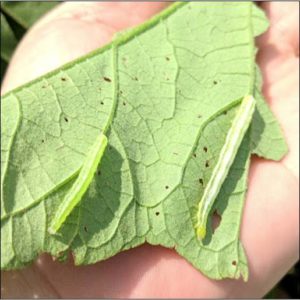
soybean loopers on eggplant

IPM Update 09/12/18

Sweet Corn

European corn borer (ECB) moth catches remain low.   Feeding signs in whorl corn are rare.  There will be no map in this edition.  Second generation feeding is often obscured by fall armyworm (FAW) feeding.  Once plants hit full tassel, any ECB larvae present will move downward on the stalk and re-enter the plant near the area where ears are forming.  This can result in direct injury to the ear.  Growers should consider an insecticide application at the full tassel stage to target ECB larvae as they migrate downward.  This application can eliminate larvae that have escaped any earlier insecticide applications. [Read more…]