Native White Birches & Their Resistance to the Bronze Birch Borer

The Dilemma Regarding Birch Trees

Bronze birch borer adult female laying an egg on the bark surface of a birch tree. (Photo Credit: Ohio State Coop. Ext.)

Bronze Birch Borer (Agrilus anxius) adults (440-800 GDD) are now actively searching landscapes for various species of Betula (Birch) to lay eggs upon. The adult beetles will be attracted to susceptible trees that are genetically defenseless or are compromised from stress (e.g., especially drought stress).

It is well known that the native River Birch (Betula nigra) has a strong resistance against the BBB. As a result, this species has been extensively planted in NJ landscapes during the past few decades to the extent of arguably being over-planted. And it is also widely understood that the non-native Asian & European birch species have virtually no or little resistance to the BBB. Therefore, the planting of these non-natives has rightfully been reduced over the decades. However, what about some of our other native species such as the paper, gray, & yellow birches. Is it best to avoid planting these species as well?       

River birch (Betula nigra) is a native birch that is strongly resistant to the bronze birch borer. (Photo Credit: Steven K. Rettke, Rutgers Coop.Ext.)

Is it best to avoid planting other native birch trees in our landscapes, such as the gray birch shown above? (Photo Credit: Steven K. Rettke, Rutgers Coop. Ext.)


[Read more…]

Questioning the Plant Stress Hypothesis

Definition

The Plant Stress Hypothesis generally states that plants subjected to stressful conditions become more susceptible to attack by insects and diseases. This is often thought to be due to the plant’s increased suitability as a food or due to the reduced ability of the stressed plant to defend itself. It is commonly believed that when a plant is stressed it becomes better food for “bugs.” Is it correct to state that plant stress leads to pest outbreaks, or is the statement too simplistic?

The Experiments

A publication written in 1998 (Koricheva et. al.) summarized approximately 70 controlled experiments that were performed to study how distinct types of plant stresses affected insect/mite attacks. Diverse types of environmental stresses were included in these studies (e.g., drought stress, waterlogged roots, ozone exposure, excess shade, as well as many others). Plant nutrient stress & insect impacts has been researched but was not performed within these studies.

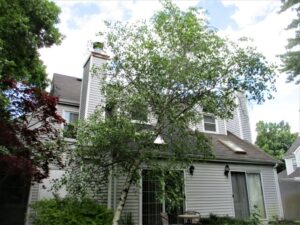
Plant roots stressed from waterlogged soils were included in these studies. Research also included other types of environmental stresses such as excess shade & ozone exposure. (Photo Credit: Steven K. Rettke, Rutgers Coop. Ext.)
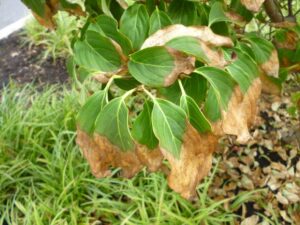
Dogwood leaves scorched from environmental drought stress. How does this plant stress impact insect herbivores? (Photo Credit: Steven K. Rettke, Rutgers Coop. Ext.)


[Read more…]

Leaf Spot and Melting Out……of Pachysandra?

Last week’s post concerning leaf spot diseases in turfgrass, and a few samples of dead pachysandra in the lab this week, got me thinking about how much I hate pachysandra. Hate might be too strong a word for a plant, but like Neumann and Jerry, this subshrub is my nemesis. Some of you may have heard me tell stories about trying to rid my home garden of pachysandra and finding it impossible to kill, but subsequently planting several hundred plants at my late-mother’s house only to see them all die of disease, so surely you can empathize with my perspective!

Pachysandra can grow in deep-shade areas, so it is well-suited and popular as a ground cover for shade gardens. The most commonly used species is P. terminalis, the Japanese spurge, which is an aggressively spreading evergreen. It is very deer-resistant, which unfortunately, also means that it gets planted into many New Jersey landscapes and gardens for that reason alone.

Deep shade usually means a wet site and that is where the disease issue comes in. Pachysandra, especially P. terminalis, is susceptible to the fungus Pseudonectria pachysandricola, which is the cause of the disease Volutella Leaf and Stem Blight. Leaf and stem blight is the most destructive disease of pachysandra in New Jersey.

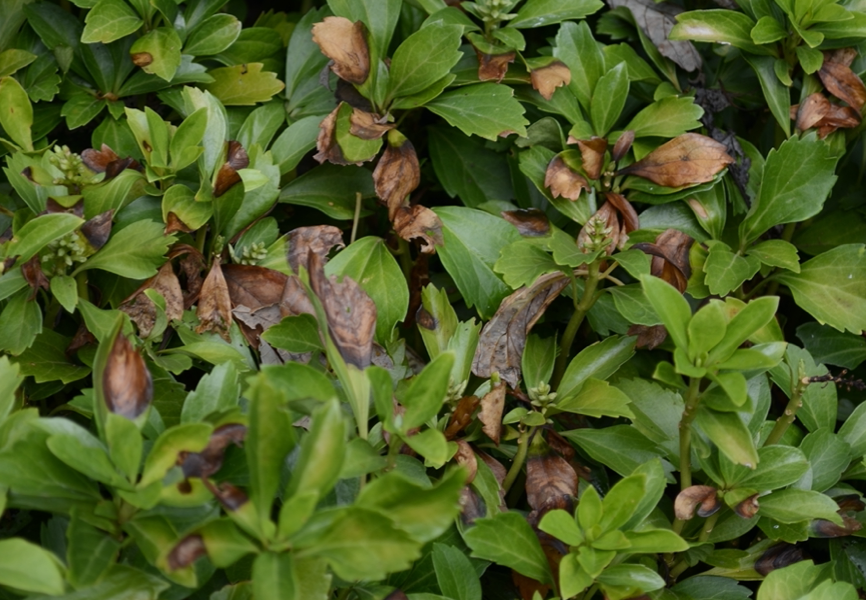
Photo 1: Leaf spot phase of Volutella Leaf and Stem Blight. Photo: Richard Buckley, Rutgers PDL

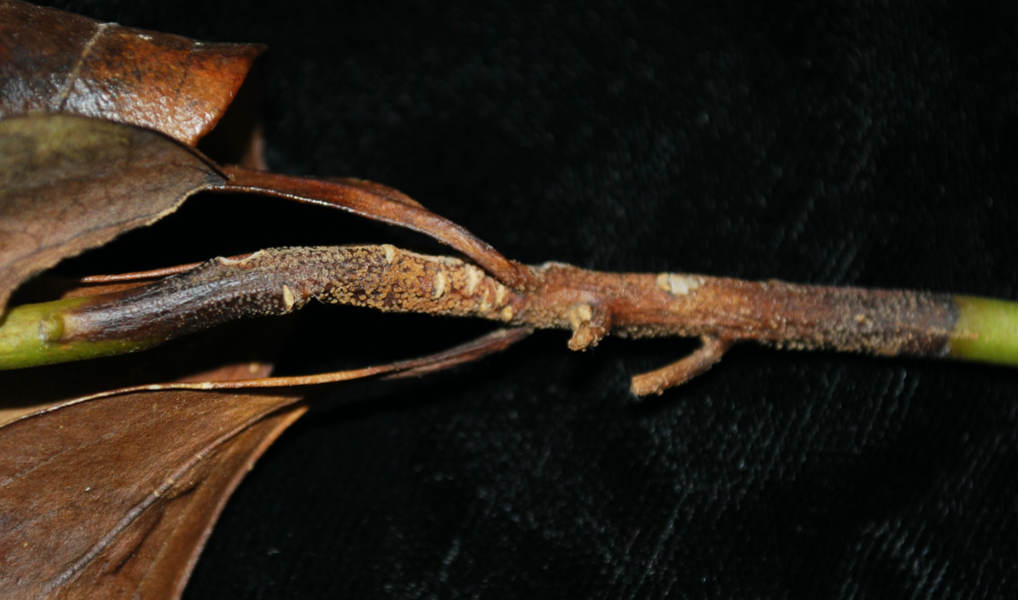
Numerous patches of wilting and dying plants in a landscape bed are often the first indication that Volutella blight is in active in the bed. Both leaves and stems are attacked by the causal fungus. Leaves develop irregular tan to brown blotches, often with concentric circles of light and darker zones and sometimes with dark-brown margins. These blotches gradually increase in size until the entire leaf turns brown or black and dies. Stem cankers usually develop and cause whole plants to die back. Stem cankers can appear at any point on the stem and begin as greenish-brown and water-soaked lesions that eventually turn brown or black as the stems shrivel. As the fungus girdles the stem, sizeable parts of the plant beyond or above that point turn brown and die. Plant death from stem infections can be quite extensive, so the planting appears to melt away in a manner very much like turfgrass subjected to leaf spot and melting out.

Photo 2: Stem infection of Volutella Leaf and Stem Blight. Photo: Sabrina Tirpak, Rutgers PDL

Photo 3: Melting out of a Pachysandra planting due to Volutella Leaf and Stem Blight. Photo: Richard Buckley, Rutgers PDL

During wet, humid weather, affected plant parts can be covered with reddish-orange, cushion-like fungal fruiting bodies, called sporodochia. Conidia (asexual spores) produced in the sporodochia disseminate the fungus within the planting. They are easily spread by rain splashing and wind, or mechanically by people working the bed during wet weather. If blight is suspected, but fruiting bodies are not evident, place suspect plant material in a plastic bag with a moist paper towel. In a day or two fruiting bodies will develop that can be seen with a hand-lens.

Weak or injured plant material is much more susceptible to the disease than healthy tissue, so damage may be very severe when plants have been stressed by excessive sunlight, winter injury, drought, or insect attack. Spread of the fungus is also more rapid in dense plantings, where heavy mulches are used, or in beds with residual leaf debris. Planting beds subject to regular overhead irrigation often have more disease activity.

Photo 4: Winter injury to Pachysandra. Photo: Dr. Ann Gould, NJAES

Photo 5: Euonymus scale on Pachysandra. Photo: Richard Buckley, Rutgers PDL

Normally this disease does little damage to vigorous plants, thus providing good growing conditions is one of the most important control measures. Begin by selecting healthy, disease-free planting materials. Plant in a well-drained soil and on sites with suitable sun/shade exposure.

Control of the disease in an infected planting bed begins with good sanitation. Remove and destroy all of the affected plants and plant debris. Use a regular lawn mower set at a 1 to- 2 inch cutting height to mow the affected area. Catch all of the debris in a bag and discard. Be sure to mow an area well outside of the diseased patch. A little nitrogen fertilizer will help the remaining plants to fill in the mowed area.

Prune trees and shrubs to increase light penetration and air circulation in and around the site to help keep it dry. Avoid overhead irrigation and avoid wet foliage whenever possible. If irrigation is needed to avoid drought stress, then water early in the day, so the foliage can dry as quickly as possible.

On high value landscapes, and after sanitation and moisture management issues are corrected, fungicides may be an effective addition to a management program: make applications of chlorothalonil, copper, mancozeb, myclobutanil, or thiophanate-methyl at the first sign of disease and repeat at label specified intervals and rates.

I’ll leave you with this existential question: are you sure you really want to plant pachysandra? How about a hosta or something instead?

Spring (and Summer) Leaf Spot Diseases in Lawns and Sports Turf.

Spring and early summer bring leaf spot diseases to cool-season grasses in home lawns, parks and grounds, on sports fields, and occasionally on golf courses. These diseases are caused by several fungi in the genera Curvularia, Bipolaris and Drechslera. Every cool-season turfgrass species has at least one leaf spot disease associated with it, but the most common and well researched of the spring leaf spot diseases is Leaf Spot and Melting Out of Kentucky Bluegrass, so it gets the most attention here.

Symptoms and Signs

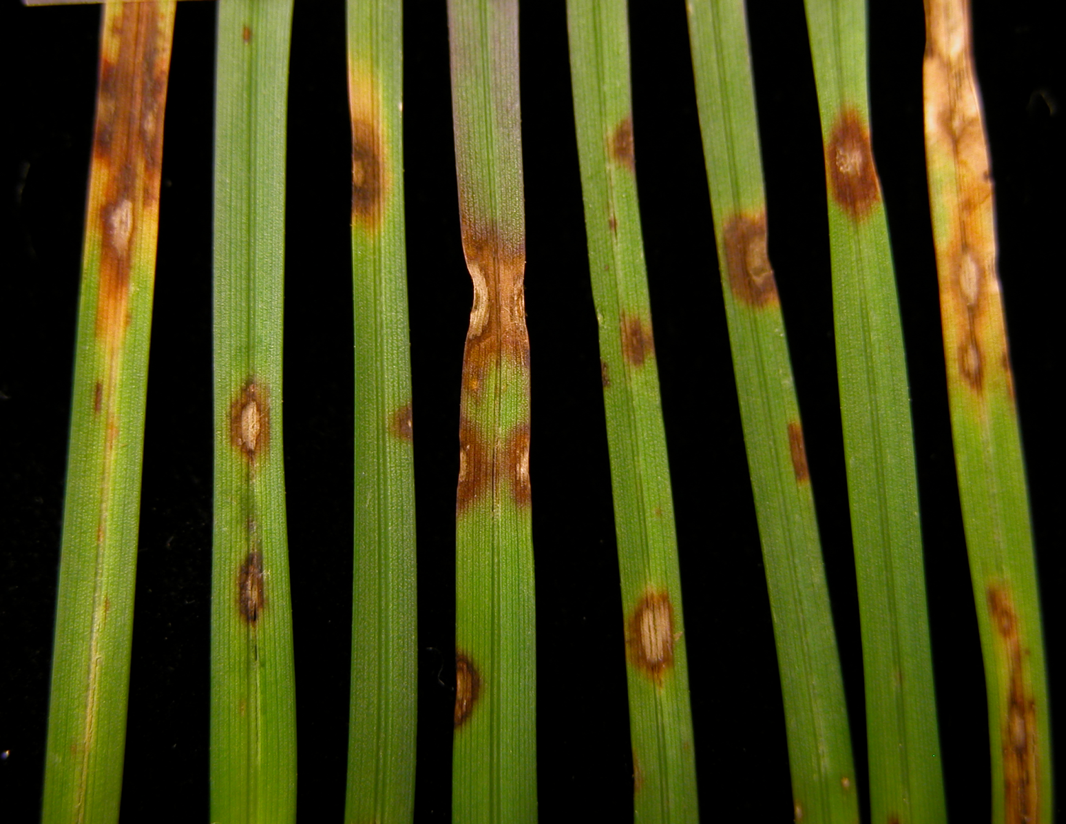
The causal fungi initially penetrate and infect leaf tissues producing small brown spots. These spots on infected leaves expand and develop dark purplish or reddish-brown oval borders with tan centers. The spots are often described as “football” shaped (Photo 1). Infected leaves yellow as the disease progresses and senesce prematurely. This process can thin turf stands, but most modern turfgrass varieties can tolerate minor infections and the loss of a few leaves, so the thinning is generally minimal (Photo 2).

Photo 1: “Football” shaped leaf lesions on Kentucky bluegrass caused by Drechslera poae. Photo: Sabrina Tirpak, Rutgers PDL

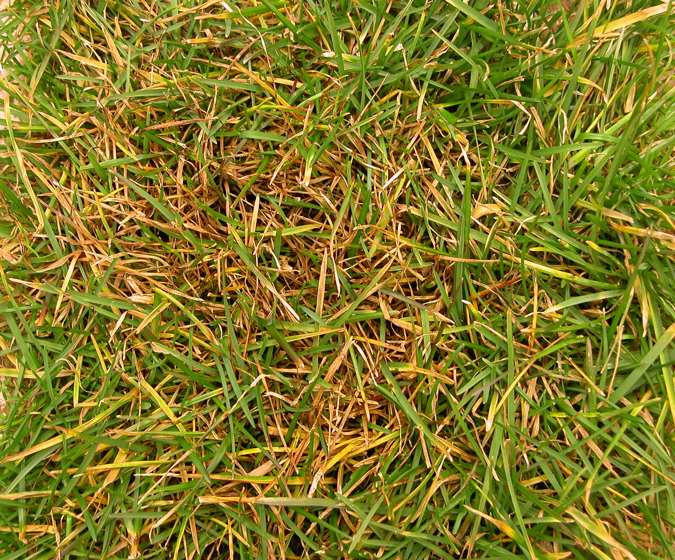
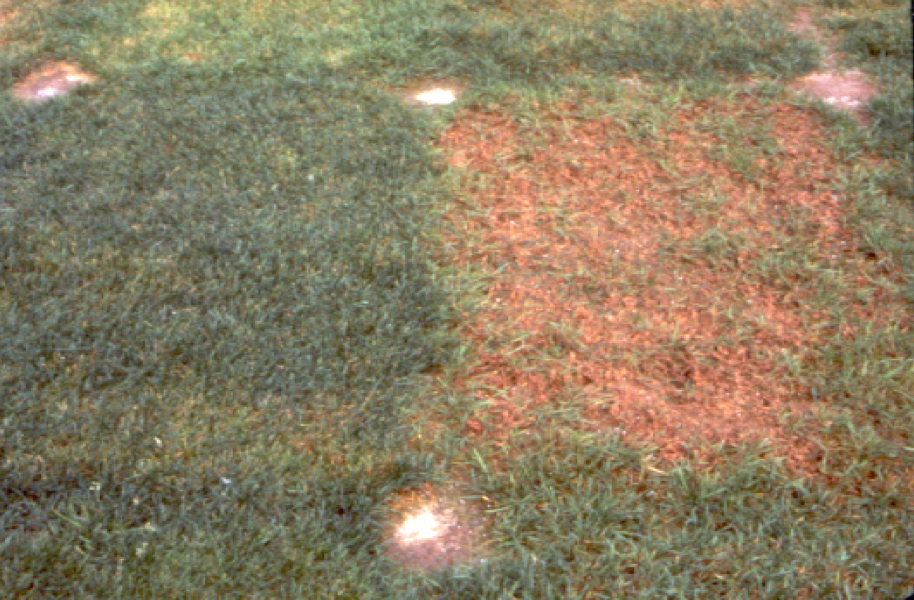
Under ideal conditions for disease development, or with very susceptible cultivars, the crowns and roots of infected plants also become diseased, which results in a brown or black rot of the crown tissue. Once the crown becomes dysfunctional, individual plants begin to fail as temperatures rise and the evapotranspiration demand on the grass increases into the summer months. This usually results in severe thinning of the turf stand and is known as the “melting-out” phase of the disease (Photo 4).

Photo 2: Yellowing and thinning Kentucky bluegrass by Drechslera poae. Photo: Richard J. Buckley, Rutgers PDL

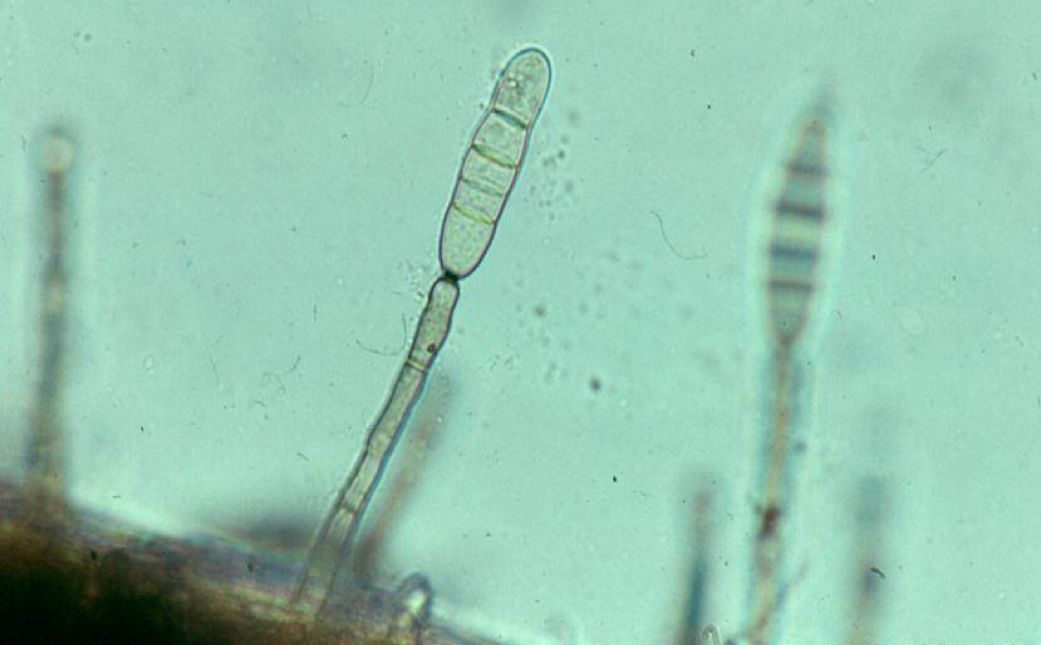
Conidia (asexual spores) produced by the these fungi grow on stalks (conidiophores), are olivaceous (dark), and are shaped like cigars (Photo 3). They are only visible with the aid of a microscope or a high-magnification hand-lens. Trained diagnosticians can determine the genus and species of each leaf spot fungus based on spore germination characteristics as well as the size and shape of the spores.

Photo 3: Conidia of Drechslera siccans on a conidiophore. Photo: Richard J. Buckley, Rutgers PDL

Disease Cycle

The causal fungus of Leaf Spot and Melting Out of Kentucky Bluegrass, Drechslera poae, survives the winter in crowns and roots of infected turfgrass plants and/or on turf debris (thatch). This fungus begins to grow and reproduce during cool, wet weather in late-winter and early-spring beginning in March. Conidia produced by the fungus are splashed by rain or irrigation water to newly emerging grass leaves causing leaf spots. Successive generations of spores and leaf spot symptoms are produced during mid-to-late spring with the highest concentrations of conidia found on leaf litter during May at temperatures between 50 and 65oF. Research suggests that conidial production ceases at temperatures over 68oF. If conditions are favorable for disease development in late-spring, infections of the crowns result in the melting-out phase of the disease by summer. Melting-out causes large areas of previously thinning turfgrass to fail.

Be aware that not all of these closely related pathogens follow the same disease-cycle. Differences among the various causal fungi are generally related to host and the temperature range necessary for disease activity. Table 1. outlines the group.

Disease Typical Host Pathogen Environment
Leaf Spot and Melting Out Kentucky bluegrass Drechslera poae Cool, wet weather in spring
Net Blotch Fescues Drechslera dictyoides Cool, wet weather of late-spring
Brown Blight Perennial ryegrass Drechlsera siccans Cool, wet weather of spring and fall
Red Leaf Spot Bentgrass Drechslera erythrospila Warm, wet weather of summer
Melting Out All cool-season grass Bipolaris sorokiniana Warm, wet weather of summer
Fading Out All cool-season grass Curvularia spp. Warm, wet weather of summer

Cultural Conditions that Favor Disease

Cultural conditions favoring leaf spot disease include: mowing at low cutting heights, light and frequent irrigation cycles, and excessive nitrogen fertilizer applications in early spring. These diseases can also be severe on turfgrasses with nitrogen deficiencies. There is evidence that turf stands (KBG) with excessive thatch accumulations can have more severe disease outcomes. Although many improved cultivars of Kentucky bluegrass and perennial ryegrass have a high degree of leaf spot resistance, other older cultivars—often found in inexpensive seed mixtures or as components in tall fescue sod—are susceptible (Photo 4). These cultivars can sustain severe damage and will suffer recurring disease outbreaks in a single season and over multiple years.

Management

Genetics is everything with leaf spot diseases. The single, most effective cultural practice for preventing severe damage is to plant leaf spot-resistant turfgrass cultivars whenever possible. Lists of leaf spot-resistant grasses can be found on the National Turfgrass Evaluation Program website (NTEP.org). Another important cultural practice is to apply only moderate amounts of nitrogen fertilizer at a time (0.5 lb. nitrogen/1,000 sq. ft.), particularly in the early spring. If higher rates are necessary, using products that are formulated with at least 50% of the available nitrogen in a slow release form are desired to avoid succulent and over-stimulated foliage. Mowing lawns at cutting heights above 2.5 inches during spring may help to reduce the severity of leaf spot and melting-out. If irrigation is required, watering inputs should be made to prevent drought stress and sustain growth, without creating an overly wet canopy. Thatch accumulations should be mechanically removed.

Photo 4: Melting out of Kentucky bluegrass due to Drechslera poae. Note the damage to the older cultivar compared to the improved cultivar. Photo: unknown

Chemical Control

Many fungicides are labeled and efficacious for the control of leaf spot diseases. Timing matters for disease outcomes and preventative fungicide applications provide the best results. Make applications to susceptible grasses in April at the first evidence of leaf infection. Products containing iprodione, chlorothalonil, mancozeb, fluazinam, fludioxonil, azoxystrobin, or penthiopyrad have demonstrated good control of leaf spot diseases in University Trials. Be aware that some research trials have shown enhanced leaf spot disease activity with thiophanate-methyl products, even though they are labeled for leaf spot control. For a complete list of labeled materials and their efficacy, see University of Kentucky’s information bulletin:

Chemical Control of Turfgrass Diseases 2020. Bruce B. Clarke, Department of Plant Biology, Rutgers University; Paul Vincelli, Department of Plant Pathology, University of Kentucky; Paul Koch, Department of Plant Pathology, University of Wisconsin-Madison; Gregg Munshaw, Department of Plant and Soil Sciences, University of Kentucky.

Pest Counts & Action Thresholds in the Greenhouse

Scouting Methods & Options:

There are essentially three options available when scouting your greenhouse crops for insect/mite pests. 1- No scouting performed with pesticides being applied on a calendar timetable. 2- Simply scouting for pest existence  with pesticides applied when presence is observed. 3- Scouting crop and making pesticide application decisions based on pest counts and action thresholds. The third option is part of an integrated pest management (IPM) approach that has been promoted throughout the green industry the past few decades.

Greenhouse pest populations are measured by trapping or direct plant inspection, and both involve determining pest numbers. Counting pests and using action thresholds requires time and knowledge, but results in less pesticide use, reduced potential for insect resistance, and can improve plant quality. It is important to remember that trapping (e.g., yellow, or blue sticky cards) improves the efficiency when scouting your greenhouse but does not replace the actual inspection of individual crop plants (Fig. 1 & Fig. 2). This is particularly the case when scouting for aphids and mites.

Fig.1. Yellow or blue colored sticky traps are used to capture flying insect pests in the greenhouse. The blue traps attract the western flower thrips more effectively. (Photo Credit: Steven K. Rettke, Rutgers Coop. Ext.)
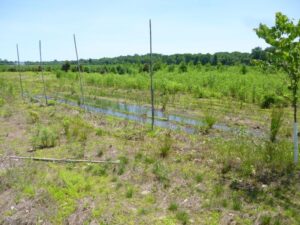
Fig. 2. The optivisor (3x) at top of photo works best when counting or viewing the insects captured on sticky traps. The other magnifiers shown (5x, 16x, 20x) are used to more closely view pests on crop plants. (Photo Credit: Steven K. Rettke, Rutgers Coop. Ext.)


[Read more…]

Weed Science Webinar Series

Weed Science Webinar Series

USDA – ARS and the Weed Science Society of America (WSSA) are co-hosting 10 webinars on weed science and research. Beginning April 5, presentations will be given by ARS weed science research experts.

The webinars will occur every Tuesday from 2-3p.m. Eastern Time (ET) and include an interactive Q&A session.

Register Here Today!

Two people conducting research in a field

Weed Science Webinar Series Schedule

April 5
ARS Weed Science: Past, Present, and Future: Steve Duke, Principal Scientist at the National Center for Natural Products Research at the University of Mississippi, Steve Young, National Program Leader – Weeds and Invasive Pests, WSSA Representatives and ARS Administrators

Meeting Information:

Zoom Meeting Link

Webinar ID: 831 3320 1055

Passcode: 825921

Please download and import the following iCalendar (.ics) files to your calendar system.

Theme I: Tactics

April 12
Integrated Weed Management in Cropping Systems: Marty Williams, Ecologist at the Global Change and Photosynthesis Research Unit in Urbana, IL

April 19
Non-Crop Systems: Advancements in Weed Biocontrol Tools: Melissa Smith, Research Ecologist at the Invasive Plant Research Laboratory in Fort Lauderdale, FL

April 26
New Technology for Weed Identification and Control: Steven Mirsky, Research Ecologist at the Sustainable Agricultural Systems Laboratory in Beltsville, MD

Theme II: Mechanisms

May 3
Role of Plant Physiology in Weed-Crop Competition: Dave Horvath, Research Plant Physiologist at the Sunflower and Plant Biology Research Unit in Fargo, ND

May 10
Molecular Basis for Controlling Invasive Plants: Matt Tancos, Research Plant Pathologist at the Foreign Disease-Weed Science Research Unit in Fort Detrick, MD

May 17
Addressing Herbicide Resistance with Alternative Chemistries: Scott Baerson, Molecular Biologist at the Natural Products Utilization Research Unit in Oxford, MS

Theme III: Impacts

May 24
Spread and Distribution of Invasive Plants: John Madsen, Research Biologist at the Invasive Species and Pollinator Health Unit in Albany, CA

May 31
Climate Change Effects on Weeds and Management: Dana Blumenthal, Ecologist at the Rangeland Resources & Systems Research Unit in Fort Collins, CO

June 7
Restoration for Managing Invasive Plants: Roger Sheley, Ecologist at the Range and Meadow Forage Management Research Unit in Burns, OR