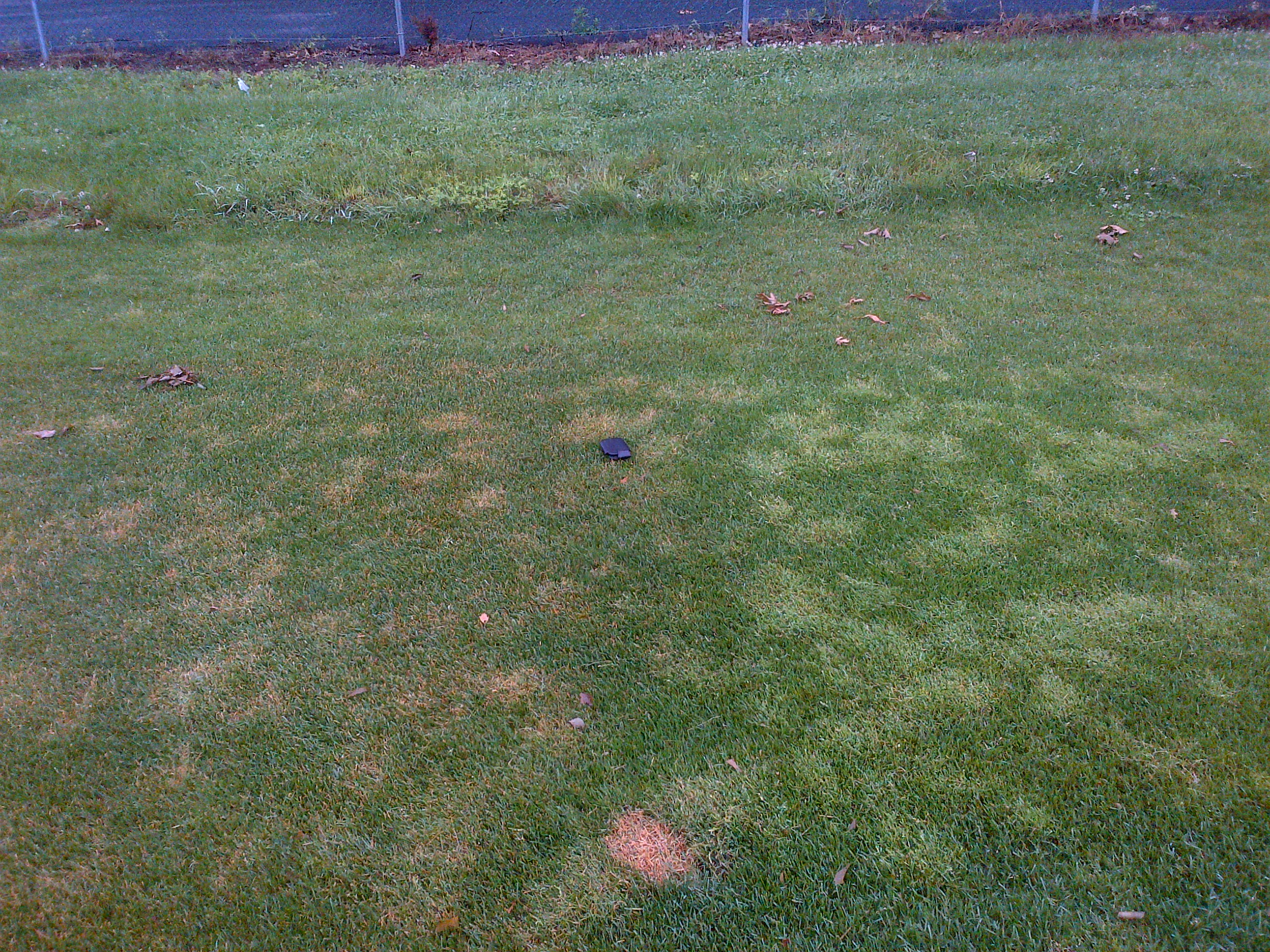
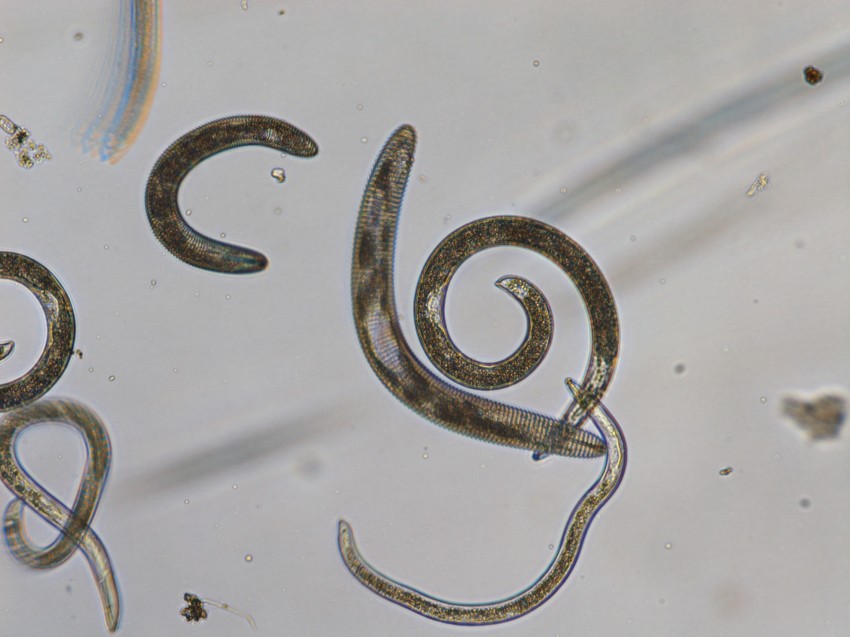
Golf turf sample submission has been rather slow so far this season. Arguably, cooler temperatures and ample precipitation this spring have provided us with excellent growing conditions for cool-season turfgrass. As long as everybody’s grass looks good, then submissions stay down (bring on some heat!). There has been one exception this season, which is the frequent submission of samples for nematode analysis.
Landscape, Ornamentals, Nursery, and Turf Edition
Seasonal updates on ornamental, nursery, and turf pests.
Subscriptions are available via EMAIL and RSS.
Companion Website Links:
Rutgers Turf Blog - Articles on turfgrass diseases and cultural practices for the commercial turfgrass industry. Subscription available via RSS.
Rutgers Weather Forecasting - Meteorological Information important to commercial agriculture.
Greenhouse Growers Conference
Date: Thursday, June 20, 2013
Location: Rutgers Eco-Complex, Bordentown, New Jersey
- Great Speakers: The line-up for this event will include professionals from Rutgers and Cornell Universities, as well as industry professionals and suppliers. These leaders will present you the most up-to-date and relevant information needed for you to continue your business success. Speakers will include Dr. AJ Both, Dr. Neil Matison, Dr. Ann Brooks Gould, Pat Hastings, Don Lovisone, and more.
- Practical Presentations: Our great speakers will be presenting on timely topics specifically for the greenhouse grower. Topics will include pesticide safety, managing diseases in a greenhouse setting, finishing spring flowers and baskets in unheated houses.
- Pesticide Credits approved:
- New Jersey: 2 Units – CORE, 8 Units – 3A, 8 Units – 3C, 8 Units – PP2
- Pennsylvania: 2 Units – 00, 4 Units – PC, 4 Units – 18, 4 Units – 22
- Delaware: 5 Units – 1A, 5 Units – 03
- New York: 1.00 – CORE, 2.00 – 1A, 2.00 – 3A, 2.00 – 10, 2.00 – 24
- Registration: Includes all classes, pesticide credits, a light breakfast and catered lunch. See NJNLA website for details.
Maskelled Bandit
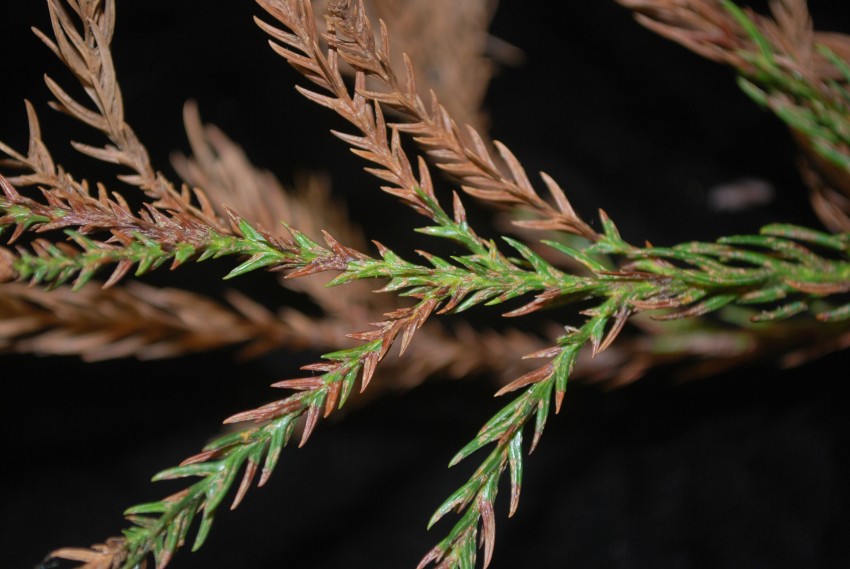
If you don’t pay attention, the Maskell bandit will steal the health of your conifers. Maskell scales, Lepidosaphes pallida, will cause needle browning and branch dieback on Cryptomeria, Sciadopitys, and Pinus thunbergiana. Heavy infestations can cause tree death.
The Emperor has No Clothes
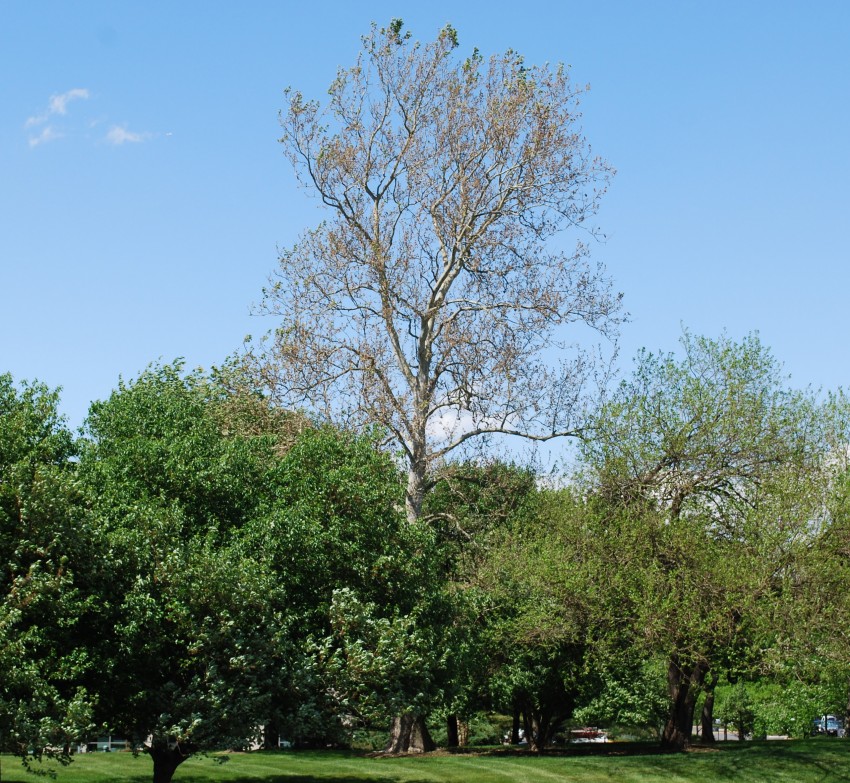
Have you noticed in the landscape that the sycamores, and to a lesser degree, the plane trees are devoid of leaves? Anthracnose of Platanus species is a well known disease in our area. The disease causes leaf and shoot blight, twig cankers, and branch dieback, and has been particularly severe this spring.
Annual Bluegrass Control in Kentucky Bluegrass
By Jim Murphy
Unfortunately, we had annual bluegrass invasion into the 2011 Kentucky Bluegrass Trial, sponsored by the National Turfgrass Evaluation Program (NTEP). As a result, we are trying a relatively new herbicide,amicarbazone, in combination with paclobutrazol on the borders of the 2011 trial.
Light-colored patches of grass are annual bluegrass plants in Kentucky bluegrass border of the 2011 NTEP trial at Hort Farm No. 2 in North Brunswick NJ.
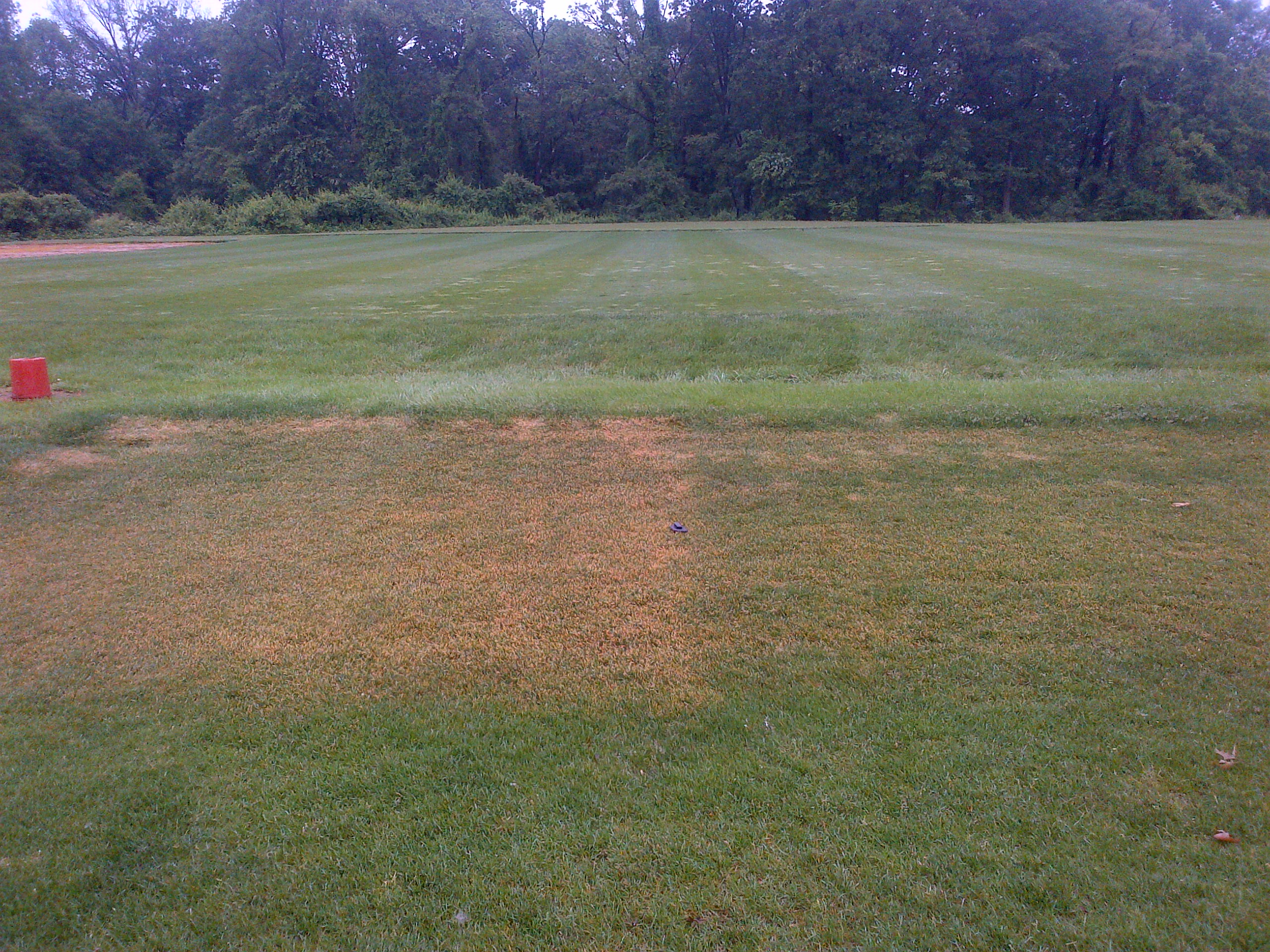
The tank mix we used was 2.0 oz per acre of amicarbazone + 1 pint per acre of paclobutrazol. Injury to the annual bluegrass was highly visible around 2 weeks after the initial application (left side of this image). Annual bluegrass on the right-side of the image was not treated and, as result, no injury.
Kentucky bluegrass is more sensitive to amicarbazone than other lawn grasses like tall fescue and perennial ryegrass. The maximum recommended rate of amicarbazone on Kentucky bluegrass is 2.0 oz per acre applied no more than twice in the spring at temperatures less than 85° F.
On the left is injury to Kentucky bluegrass from an intentional double-treatment (4.0 oz per acre) with amicarbazone. The yellowing of Kentucky bluegrass on the right side of the image is due to amicarbazone applied at the 2.0 oz per acre, the maximum recommended rate. Image taken about 2 weeks after application.Anthracnose Active on Annual Bluegrass
By Jim Murphy
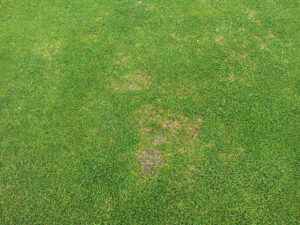
Anthracnose disease was active as early as April 16 this year and has intensified in recent weeks on our low N fertilization plots.
Active anthracnose disease on annual bluegrass (Poa annua) plots in North Brunswick NJ, 16 April 2013.
One of our experiments has the objective of determining whether anthracnose can be managed with curative sprays if the turf is maintained under best management practices (BMPs). The disease management goal is to keep disease severity below 10%, a subtle level that does not impact visual quality or playability (ball roll).
Our curative fungicide program included one spray just before the expected onset of disease followed by subsequent curative applications of fungicides. Curative sprays were applied once disease symptoms reach 5% with repeated applications occurring no sooner than 7-days and only if disease was active (severity increase). Our study focused on the practices of mowing height (0.090 vs. 0.125 inch) and N fertility (2.05 vs. 4.10 lbs. per 1,000 sq. ft.).
We were pleased to find that turf managed with BMPs required fewer fungicides but we were very surprised by how much. Annual bluegrass turf maintained under BMPs required 60-78% fewer fungicide sprays than turf maintained with one or two non-BMPs.
In this year’s trial, we have already applied several fungicide applications this year on plots receiving the lower N fertility regime.
You can see these plots for yourself at this year’s Rutgers Fine Turf Research Field Day at Hort Farm No. 2 in North Brunswick NJ on 30 July 2013. Click here to register. Hope to see you in July!