Landscape, Ornamentals, Nursery, and Turf Edition

Seasonal updates on ornamental, nursery, and turf pests.
Subscriptions are available via EMAIL and RSS.


Companion Website Links:

Rutgers Turf Blog - Articles on turfgrass diseases and cultural practices for the commercial turfgrass industry. Subscription available via RSS.


Rutgers Weather Forecasting - Meteorological Information important to commercial agriculture.

NJDA Plant Laboratory Offers Growers Mycotoxin Testing

The recent stretch of unusual rainy weather raises the potential of mycotoxin contamination in small grains, and other field or forage feed crops. Grain growers may be affected by price discounts and/or restricted markets. Mycotoxin contamination in animal feed and forage can lead to feed refusal, reduced productivity (reduced production of eggs, milk, and weight gain), reproduction problems (disrupted heat cycles, early embryonic death, abortion) impaired health, and in severe cases, death.

The NJ Department of Agriculture’s Division of Plant Industry Plant Laboratory offers concerned growers and producers services to test for mycotoxins: Aflatoxin, DON/Vomitoxin, Fumonisin, Ochratoxin, T-2 Toxin, and Zearalenone.

Sample Submission Form information. For questions or more information, please call (609) 406-6939.

Boxwoods: Now You See Them, Soon You Won’t!

Samples of boxwood infected with the fungus Cylindrocladium pseudonaviculatum, the cause of boxwood blight, have been confirmed by the Rutgers Plant Diagnostic Laboratory and the New Jersey Department of Agriculture Laboratory in recent days. This is the first report of the disease is New Jersey.

Boxwood blight leaf lesion. Photo: Sabrina Tirpak, Rutgers PDL

Boxwood blight leaf lesion. Photo: Sabrina Tirpak, Rutgers PDL

[Read more…]

Singing the Blues

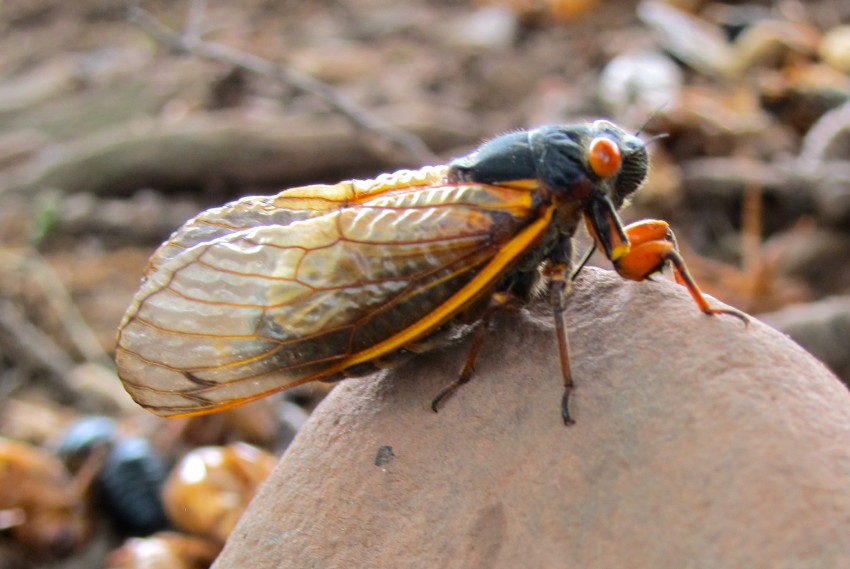
You’ve got to suffer if you want to sing the blues… and some of us in certain parts of the state have been suffering the infernal din of the periodical cicadas since late-May.

Adult periodical cicada. Photo: Kim Greene

Adult periodical cicada. Photo: Kim Greene

[Read more…]

Red, White, and Brown?

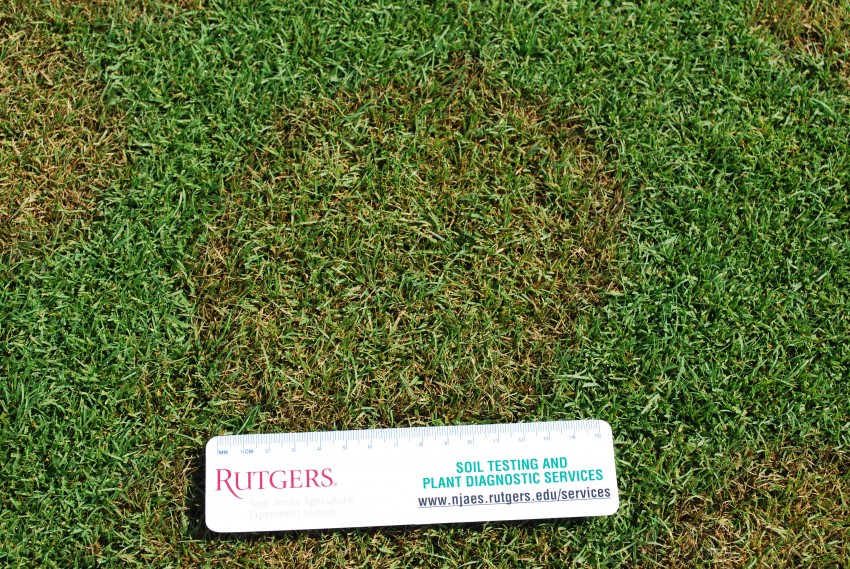
Patch that is! Recent weather conditions have driven the fungus Rhizoctonia solani into overdrive. Brown patch has flared up all over the place just in time for our July 4th celebrations!

Brown patch on colonial bentgrass. Photo: Richard Buckley, Rutgers PDL

Brown patch on colonial bentgrass. Photo: Richard Buckley, Rutgers PDL

[Read more…]

Cool Season Mites Fade, As Warm Season Mites Surge

As would be predicted, observations during the past few weeks within nurseries located in central & southern NJ have shown reduced activities of both the spruce spider mites & southern red spider mites. These common cool season mite pests feed predominately on conifers & broadleaf evergreens, respectfully. During the hot summer months, both of these spider mite species enter into a dormant stage. Alternatively, the two-spotted spider mite & several more host specific shade tree spider mites (e.g., maple spider mites, oak spider mites, honeylocust spider mites & European red mites) are common warm season mite species and are now rapidly laying eggs & building populations.

Spider Mite, Egg & Pine Needle Stomates

Spider Mite (0.5 mm), Egg & Pine Needle Stomates         Photo: Cornell University Press

[Read more…]

The Last Word in Leaf Spots

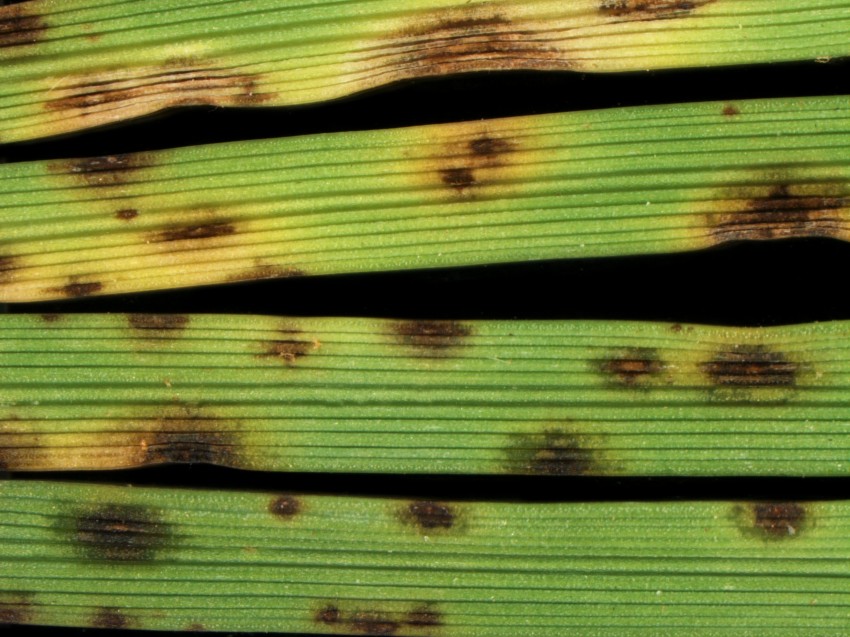
Oh no! Not more leaf spot posts! This is the last one for now, I promise. First thing first, we had a nice sample from a perennial ryegrass baseball field that was submitted for dollar spot diagnosis, which it had, but it was also covered with leaf lesions caused by the fungus Bipolaris sorokiniana. Sabrina thought it would be nice to share a photo with you.

Leaf spots caused by Bipolaris sorokiniana on perennial ryegrass leaves. Photo: Sabrina Tirpak, Rutgers PDL

Leaf spots caused by Bipolaris sorokiniana on perennial ryegrass leaves. Photo: Sabrina Tirpak, Rutgers PDL

[Read more…]