Vegetable Crops Edition

Seasonal updates and alerts on insects, diseases, and weeds impacting vegetable crops. New Jersey Commercial Vegetable Production Recommendations updates between annual publication issues are included.
 
Subscriptions are available via EMAIL and RSS.
 
Quick Links:

NJ Commercial Vegetable Production Recommendations

Rutgers Weather Forecasting - Meteorological Information important to commercial agriculture.

Food Safety Certification for Specialty Crop (FSCSC) Cost Share Program

This is the chance for eligible fresh fruit and vegetable growers to recover some of their expenses for implementing food safety practices on the farm.

For 2024:

  • Applications are due between July 1, 2024 and January 31, 2025
  • Eligible expenses must be between June 26, 2024 and December 31, 2024

For 2025:

  • Application is due between January 1, 2025 and January 1, 2026
  • Eligible expenses must be between January 1, 2025 and December 31, 2025

Eligible specialty crop operations can apply for FSCSC by working directly with the Farm Service Agency offices at your local FSA office for details. Applications will be accepted via mail, fax, hand delivery, or electronic means.

How the Food Safety Certification for Specialty Crops Program Works

The FSCSC program provides financial assistance for specialty crop operations that incur eligible on-farm food safety program expenses related to obtaining or renewing a food safety certification in years 2024 and 2025. This program helps offset costs to comply with regulatory requirements and market-driven food safety certification requirements.  FSCSC will cover a percentage of the specialty crop operation’s cost of obtaining or renewing their certification, as well as a percentage of their related expenses.

Program Eligibility

Eligibility requirements for FSCSC applicants are outlined below. We recommend you review these requirements before initiating your FSCSC application.

To be eligible for FSCSC, an applicant must:

  • Have obtained or renewed:
  • 2024 food safety certification issued between June 26, 2024, and December 31, 2024
  • 2025 food safety certification issued during calendar year 2025.
  • Be a specialty crop operation (growing fresh fruits and vegetables); and meet the definition of a small business or very small business.
  • A small (farm) business means an applicant that had an average annual monetary value of specialty crops the applicant sold during the 3-year period preceding the program year of more than $250,000 but not more than $500,000.
  • A very small (farm) business means an applicant that had an average annual monetary value of specialty crops the applicant sold during the 3-year period preceding the program year of no more than $250,000.
Category of Eligible Expenses Payment Amount of Eligible Costs
Developing a Food Safety Plan for First Time Certification 75% (no maximum)
Maintaining or Updating a Food Safety Plan 75% up to $675
Food Safety Certification 75% up to $2,000
Certification Upload Fees 75% up to $375
Microbiological Testing of Produce 75% up to 5 tests
Microbiological Testing of Soil Amendments 75% up to 5 tests
Microbiological Testing of Water 75% up to 5 tests
Training Expenses 100% up to $500

FSCSC payments are calculated separately for each category of eligible costs based on the percentages and maximum payment amounts.  The FSCSC application and associated forms are available online at  farmers.gov/food-safety.

You are encouraged to contact the Farm Service Agency office about FSCSC, program eligibility, or the application process. You may also call 877-508-8364 to speak directly with a USDA employee ready to provide one-on-one assistance.

Vegetable IPM Update 6/26/24

Sweet Corn

European corn borer (ECB) moths have declined in blacklight traps in the northern and central counties, and feeding is also declining as previously infested plantings enter the silk stage and are treated.   Plantings now in whorl stage are showing little feeding.

The highest nightly trap catches of ECB for the week ending 6/26/24 are as follows:

Farmingdale   1
Milltown   1
Pennington   1


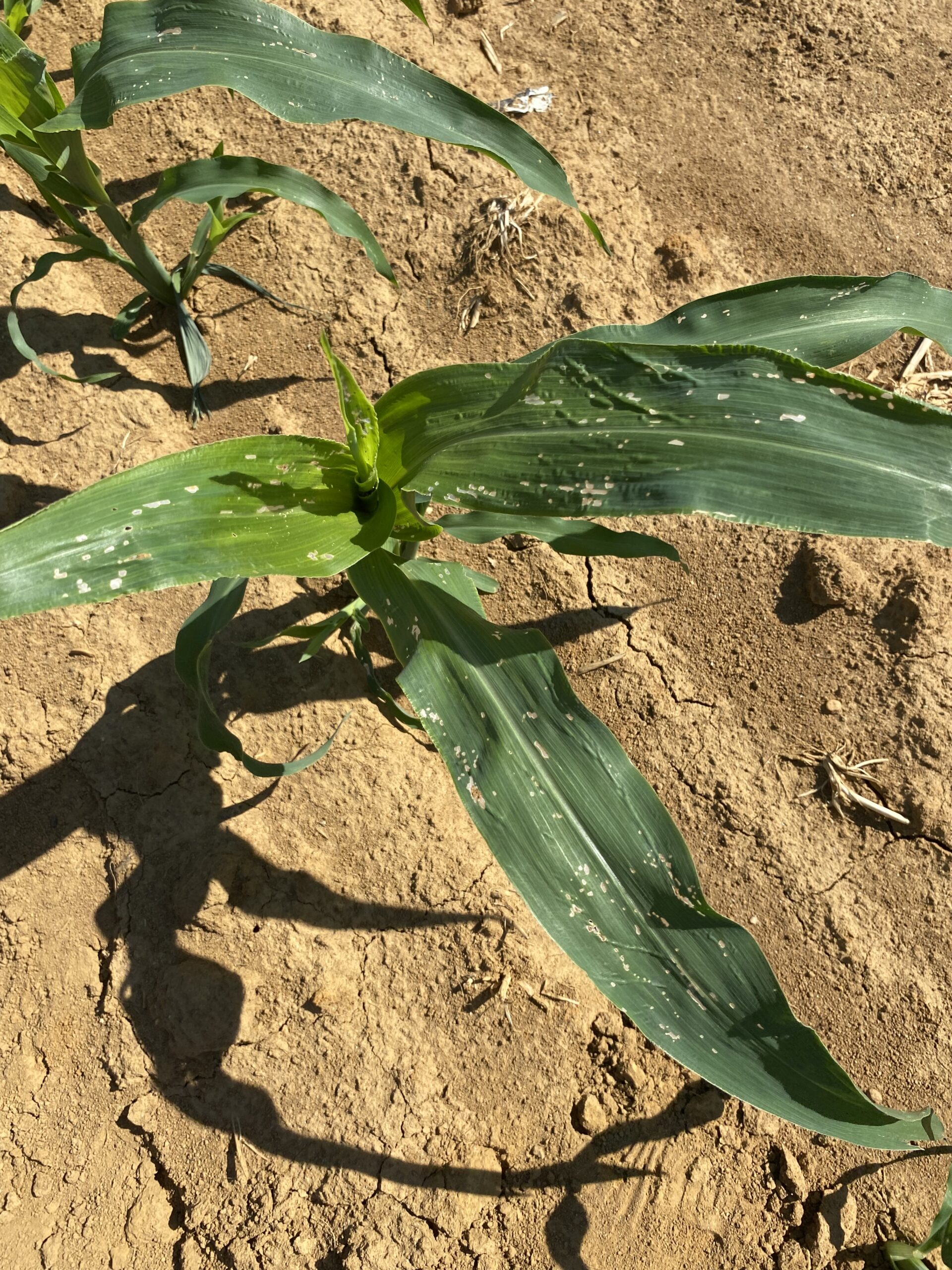
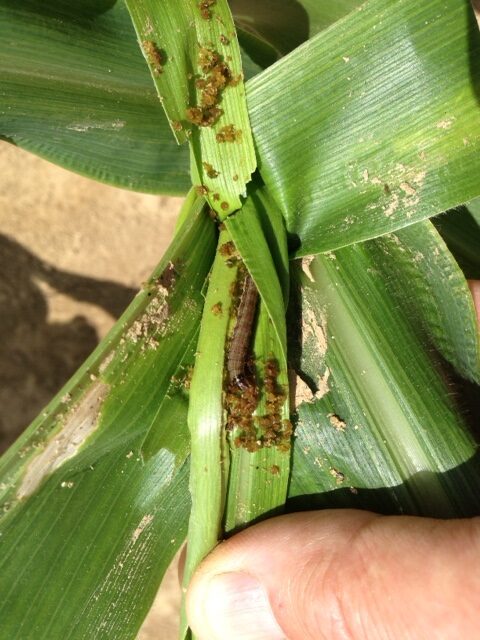
Low level fall armyworm (FAW)  infestations have been detected in a few whorl stage plantings in central counties ranging from Princeton in Mercer County to Farmingdale in Monmouth County.  There are likely more of these infestations in central and southern NJ counties.  The appearance of very scattered clusters of infested plants points to a low number of moths arriving prior to the last weather front.  These individuals will have deposited eggs on small groups of plants, resulting in the feeding pattern we now see.  Many of these fields are below 2% plants infested.  It is possible, however, that some fields in the southern counties have higher infestation levels, so it’s important to check these short whorl plantings at least weekly.

Newly hatched FAW larvae cause holes and scratches on leaves that are similar to ECB feeding, except that they tend to be more concentrated and always lead down into the whorl  (see photo at left).  As the larvae grow, the feeding becomes more destructive, with large ragged holes and obvious droppings deposited in the whorl (see photo at right)Infected plant

We will provide updates on new FAW appearances and severity as reports come in.  FAW are resistant to synthetic pyrethroids.  Effective sprays should include IRAC grp. 5 (spinosyns) or IRAC grp. 28 (diamides).  The carbamate (IRAC grp. 1A) Lannate is also still effective.  Sufficient water should be used in the applications to allow the solution to penetrate the layer of droppings that may have formed above the caterpillar.

[Read more…]

IMPORTANT: EPA Issues Final Cancellation Order and Updates to Existing Stocks Provisions for Several Chlorpyrifos Products

[Tuesday June 25, 2024]. The U.S. Environmental Protection Agency (EPA) is issuing a final cancellation order for Corteva’s chlorpyrifos product “Dursban 50W in Water Soluble Packets” and three Gharda chlorpyrifos products, and an amendment to the existing stocks provisions for two Liberty and three Winfield chlorpyrifos end-use products. The Agency has also updated the frequently […]

EPA Releases Updates on Organophosphate Pesticides Dicrotophos, Dimethoate, and Tetrachlorvinphos

[Thursday 6/20/2024]. The U.S. Environmental Protection Agency (EPA) has released the Proposed Registration Review Interim Decisions (PIDs) for dicrotophos and dimethoate, as well as an Interim Registration Review Decision (ID) for tetrachlorvinphos (TCVP), three organophosphate (OP) pesticides. OPs are a group of pesticides used in agriculture (e.g. food crops) and non-agricultural sites (e.g., turf at […]

The Curious Case of the Virus Infected Tomato Fruit

Original Article published on 6 June 2024 by Dr. Jerry Brust, University of Maryland Extension

Ben Beale, educator from St. Mary’s County found an odd thing last week. He found in a grower’s high tunnel, tomato fruit that had the symptoms of a virus infection, but there were no foliar symptoms on any of the plants. Some fruit on a cluster had symptoms while other fruit on the same cluster looked perfectly fine. Ben had the fruit tested and got a fast response from Jill Pollok at the University of Delaware Diagnostic Clinic and it was Tomato Spotted Wilt Virus. The cultivar in question Big Beef Plus has TSWV resistance. There could be one or two possibilities for TSWV symptoms showing up in a resistant cultivar and for fruit symptoms but not any foliar symptoms of the virus.

We will look at how tomatoes can get infected by the TSWV (if you already know how this works skip down to the next paragraph). Tomato spotted wilt virus (TSWV) is an obligate parasite, i.e., it must have a living host and must be moved from one plant to another by thrips or through cuttings or possibly seed. This disease can affect tomato and other Solanaceae crops as well as lettuce, beans and cucumber. TSWV may occur in the field but tends to affect greenhouse and high tunnel crops more severely. The virus is transmitted most efficiently by Western flower thrips (WFT) (Frankliniella occidentalis), and less so by Onion thrips (Thrips tabaci), Tobacco thrips (Frankliniella fusca) and several other thrips species.  It is not transmitted by Eastern flower thrips (Frankliniella tritici). Only immature thrips can acquire the virus, which they can acquire within 15 minutes of feeding, but adults are just about the only stage able to transmit the virus. Adults can transmit the virus for weeks. It may take 2 – 4 weeks from when the adult thrips first feeds on a plant until initial symptoms are observed. Because of this TSWV appears to worsen in plantings over time.

Why are we seeing fruit symptoms but little if any foliar symptoms? The most likely explanation is that TSW viruliferous thrips fed on the flowers or very young fruit. The resistance to the TSWV is expressed (active if you will) in the non-reproductive parts of the plant but not expressed to any extent in the reproductive parts (flowers and fruit) of the plant. Even though the flower and fruit can act as an entry point into the plant the resistant tomato does a good job of limiting the virus into any other areas of the plant. Thus, under low to moderate feeding pressure (1-4 thrips/flower) only the fed upon fruit or possibly a few other fruits on the same cluster become infected. The other possibility is that the TSWV resistance in Big Beef Plus is intermediate and under environmental stress it may not be ‘complete enough’ to protect all of the plant.

The first question above as to why is the virus showing up at all in a resistant cultivar can be explained by the above paragraph. But there may be another possibility although not in this particular case, that we will have to watch out for in the coming years. And that is resistance- breaking virus variants. The Sw-5b gene (Sw-5) is the most widely used resistance gene for TSWV in tomato. It not only provides resistance to TSWV but also resistance to a several associated viruses including Tomato chlorotic spot virus (TCSV) and Impatiens necrotic spot virus (INSV). The presence of the Sw-5 gene in tomato plants confers resistance to TSWV by a hypersensitive defense response that causes local lesions on the leaf, preventing the spread of the virus from the infection site through the plant. In 2022, symptoms of TSWV were observed in North Carolina tomato fields on cultivars that had the gene for TSWV resistance (Sw-5). The cultivars from different farms had symptomatic foliage and fruit. Samples were collected from both farms and subjected to sequencing to identify and confirm the presence of resistance-breaking variants, which they did. I mention this because NC is very close by, many growers get their tomato transplants from NC and because the resistance-breaking occurred in the last year or so. These resistance-breaking variants may start to show up in our fields and I am guessing that when they do, we will see 20-40% viral foliar infection and possibly worse in the fruit of resistant plants. For now, we should keep using the resistant cultivars, but watch closely for any breakdown of the resistance.

Resources: 2023. First Report of Resistance-Breaking Variants of Tomato Spotted Wilt Virus (TSWV) Infecting Tomatoes with the Sw-5 Resistance Gene in North Carolina. K. Lahre, R. Shekasteband, I. Meadows, A. E. Whitfield, and D. Rotenberg. Plant Disease vol. 107.

This article appears in Volume 15, Issue 4 of the Vegetable and Fruit News.

Vegetable IPM Update 6/19/24

Sweet Corn

European corn borer (ECB) moths continue to be captured in blacklight traps in the northern and central counties, although catches are occurring at fewer sites.  The highest feeding levels are in Somerset and southern Hunterdon Counties.   ECB injury is declining as infested plantings pass into the tassel stage and receive the first insecticide application.  Plantings now in whorl stage are showing little feeding.  While ECB has become something of a local phenomenon in NJ, growers should not assume that feeding is below economic levels in their area.  ECB infestations will be present for another 1-2 weeks.

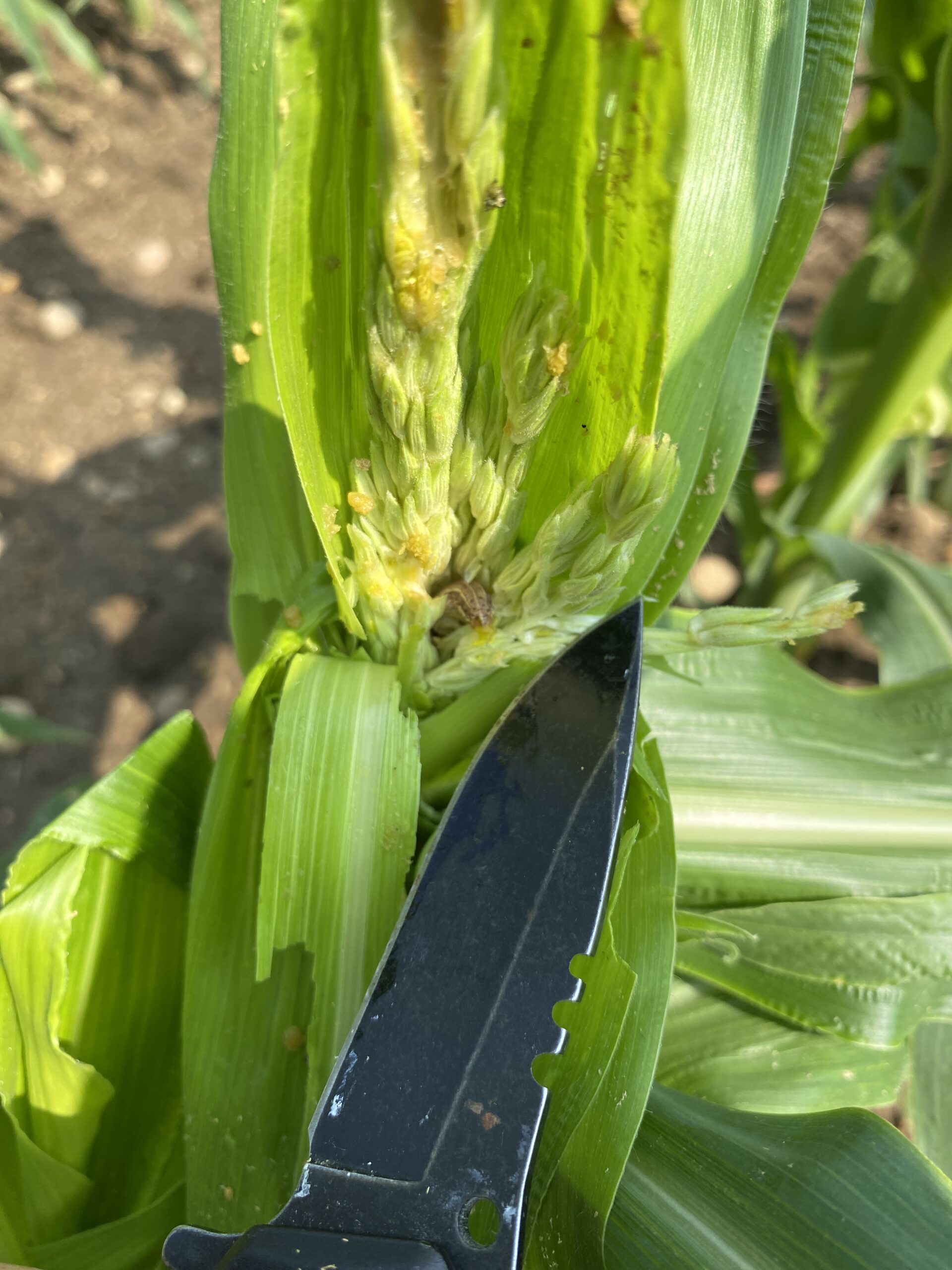
Look for the characteristic “shot-hole” type of feeding (photo  below at right) and consider treating when infested plants exceed 12% in a 50 plant sample.  As plantings proceed to the pre-tassel stage, ECB larvae may be found in emerging tassels (see photo at left)It is a good idea to treat individual plantings as they move into the full tassel/first silk stage one time.  This eliminates any ECB larvae that have emerged with the tassels as they begin to move down the stalk to re-enter near developing ears.


Useful insecticides for this particular application include synthetic pyrethroids (IRAC Grp 3), spinosyns (including OMRI approved Entrust) IRAC Grp 5), and diamides such as Coragen or Vantacor (IRAC Grp 28) or materials such as Besiege which include the active ingredient in Coragen.  Synthetic pyrethroids alone should NOT be used for corn earworm (CEW) protection on silking corn.  Control with these materials is very inconsistent.

The highest nightly trap catches of ECB for the week ending 6/19/24 are as follows:

South Branch   3 Farmingdale   1 Pennington   1
Califon   1 Hillsborough   1 Princeton   1
Clinton   1 Old Bridge   1

[Read more…]