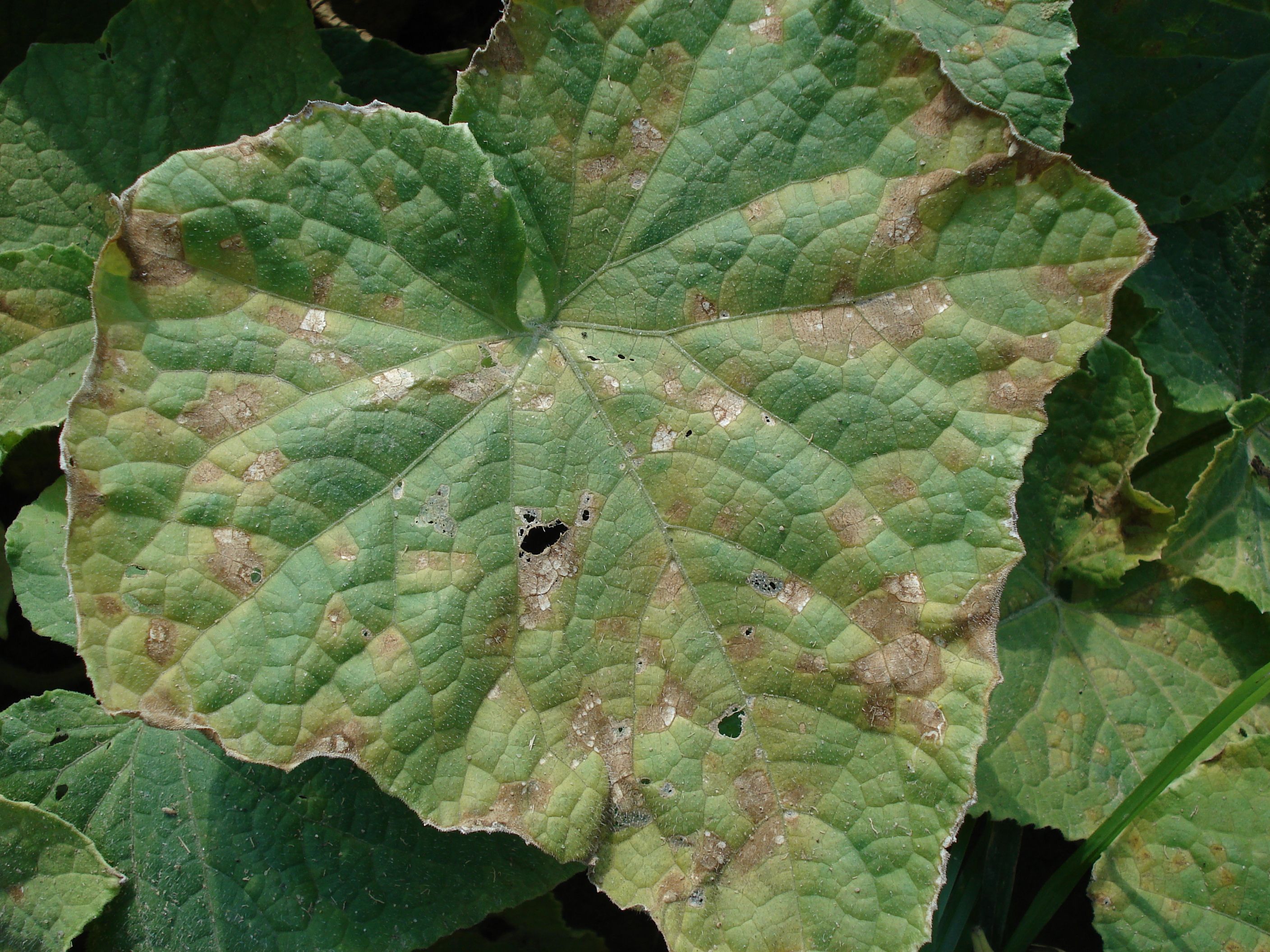
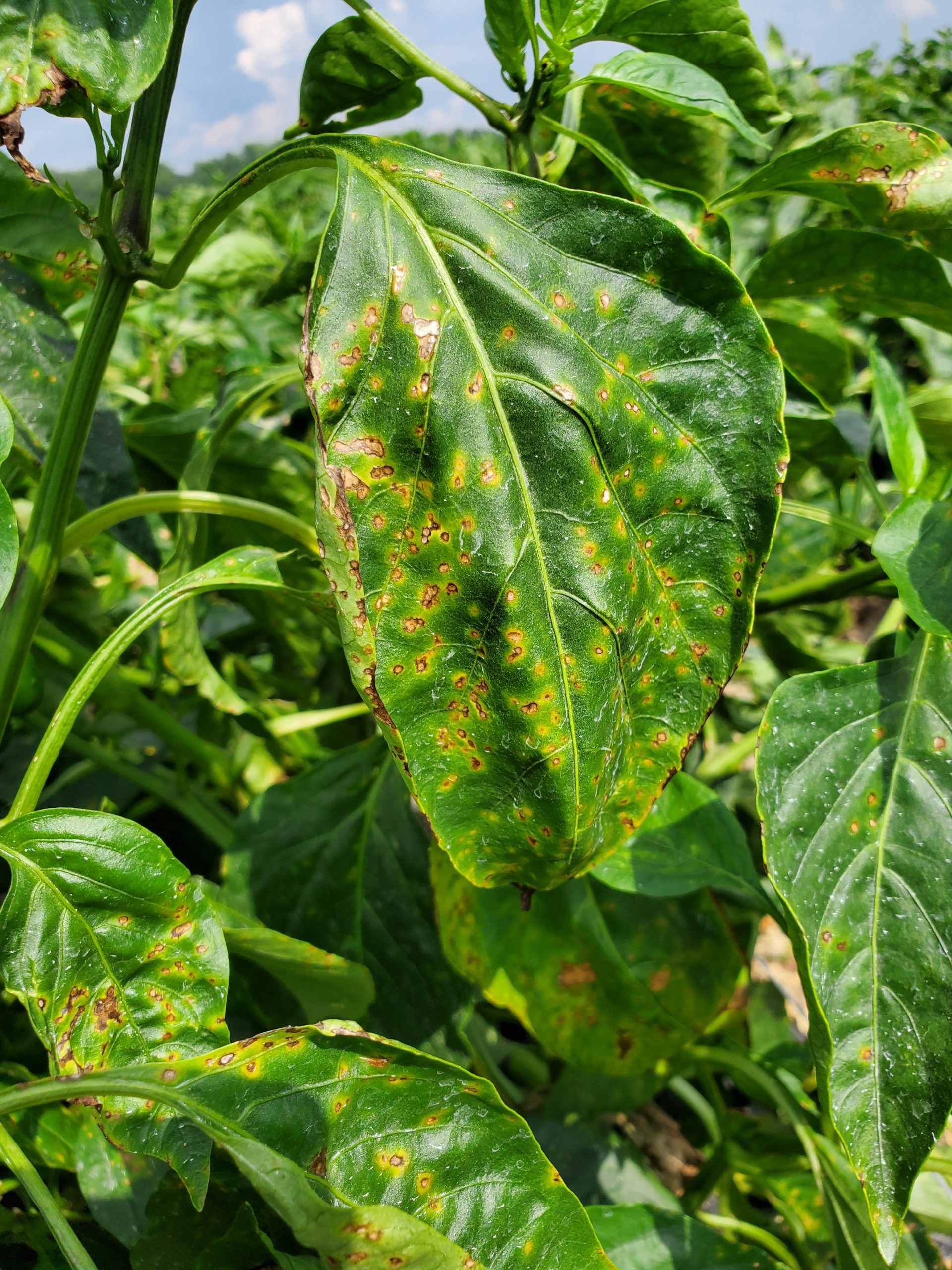
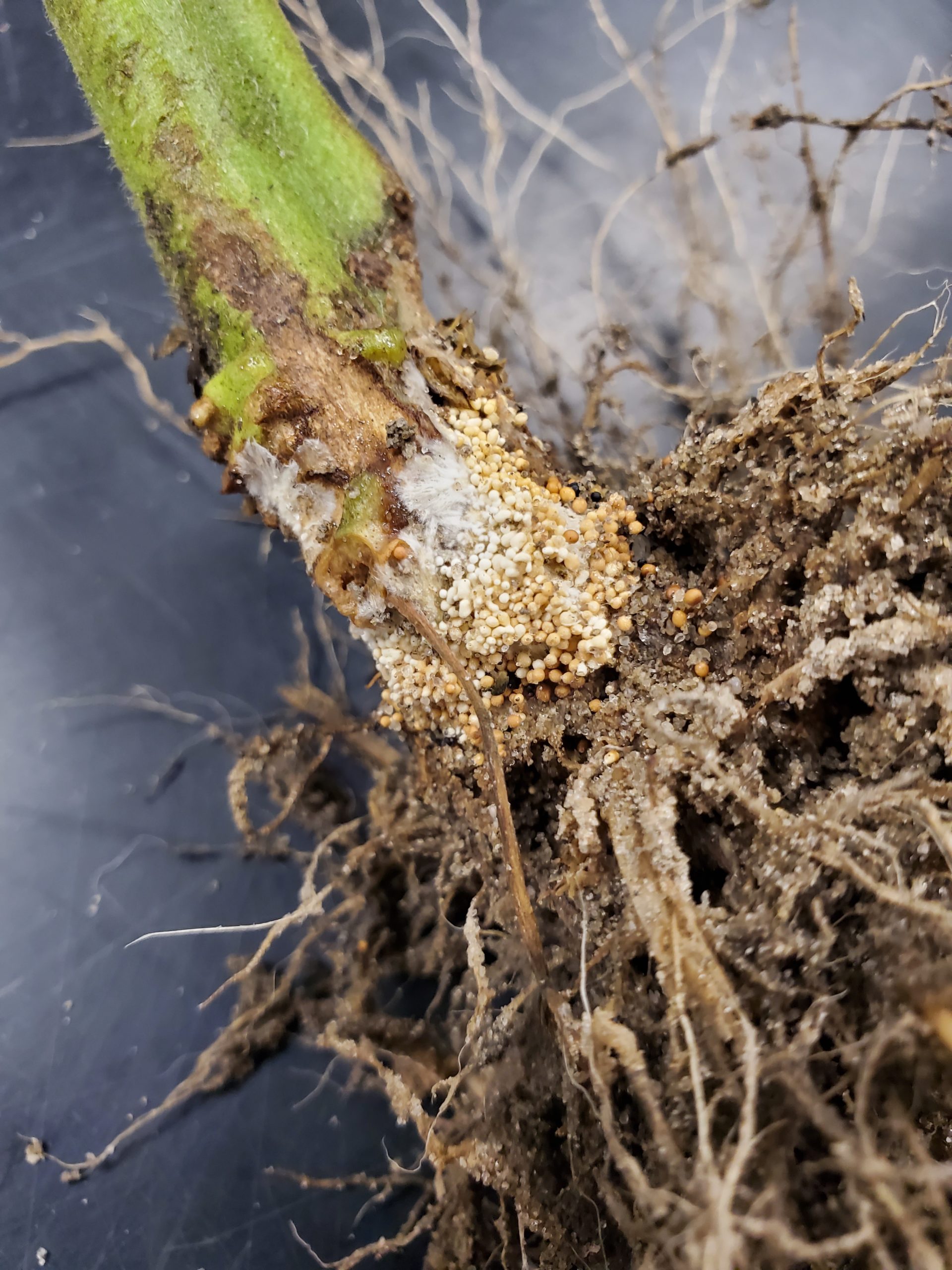
Full season robust stands of beans planted the end of April early May are beginning to pod in Salem County. Grasshopper, thrip and japanese beetle population feeding has brought on a host of leaf symptoms coupled with the beginning of bacterial blights that emerge with volitile weather patterns.
Overall bean field growth and R stage are looking very green but the beginning of leaf abnormalities are visible in most fields and signs of leaf yellowing/leaf drop on lower leaves is occasionally seen below dark green canopies. Many fields have canopied at waist height. However, low areas and low lying fields with higher clay content have pockets or acres of compaction from last year’s harvest situation and stress on beans in these areas is visually evident. Cut these plant’s stems and roots open to monitor stem health and potential response to corrective foliar measures. Brown discolored stems is an indicator the plants are already infected with fungal or bacterial pathogens. Healthy stems with lackluster root branching and few nodules are hungry for nutrients. Compare varietal resistance to these pathogens from the seed tag to the visual symptoms in field to narrow down concerns and take notes for next year’s seed order and crop rotation. Remember to consider if applied fertilizers leached due to excessive rainfall after application or did beans have an opportunity to absorb.
Crinkled leaves like these non-wilted in field insect damaged plants that “curled up when watered with tap water” may be a sign of high salinity or a sign the plants are stressed from insect feeding, viral load. Recently weed control applications coupled with an insecticide can also stress plants temporally as the plant’s metabolize the products.
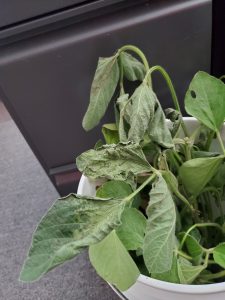 If irrigating pay particular attention for signs of salt buildup. https://www.corn-states.com/app/uploads/2018/07/salt-damage-to-soybean.pdf
Thrip pressure https://content.ces.ncsu.edu/thrips-in-soybean is also a common cause of crinkled leaves and other insect vectored viruses can cause curling. One indicator of insect vectored viral infection is curled down leaf margins on the newest leaves in the canopy. Leaves having a mottled appearance.
Insect pressure on later planted, double crop beans is expected to be very high as these plants rapidly grow with the rainfall received from Elsa. These plantings should be monitored frequently for timely insecticide and fungal applications. Timely and frequent fungicide and insecticide applications are key components of maintaining quality yield moving forward in stands with the highest yield potential and highest stand population.
Nematode pressure in soybean after soybean rotation should also be considered in areas of fields that are doing poorly. Take soil samples from good areas vs bad areas. Remember to include the root and first node of stem in the bag to keep the nematodes alive when samples are submitted. Mail nematode samples beginning of week with next day delivery so samples do not get overheated in the process over the weekend when laboratories are closed.
Sampling procedure: Waypoint Analytical has a good guide on sampling for nematodes based on soil type. https://www.waypointanalytical.com/Docs/WaypointNematodeGuide.pdf.
The University of Delaware describes sampling procedure for commercial fields in their https://cdn.extension.udel.edu/wp-content/uploads/2012/05/15103208/Nematode_Instruction_and_Form_2015-16.pdf
Rutgers Plant Diagnostic Nematode Assay: https://njaes.rutgers.edu/plant-diagnostic-lab/pdfs/pdl-brochure.pdf
Soybean disease calender: https://www.krugerseed.com/en-us/agronomy-library/soybean-disease-calendar.html
Soybean disease diagnostics: https://www.ag.ndsu.edu/publications/crops/soybean-disease-diagnostic-series
Soybean cyst nematode: https://extension.psu.edu/proactive-management-of-soybean-cyst-nematode-scn-requires-taking-action-now
Soybean viruses: https://soybeanresearchinfo.com/soybean-disease/viruses/