Organic Farm Advisory

The Plant & Pest Advisory serves NJ growers by reporting on important pests and recommending responses that are grounded in reproducible trials.

Articles in this section contain information helpful to the NJ commercial organic grower.

Sharing organic practice trial results between land-grant universities is a cost effective way to create a common knowledge base built on the strengths of individual programs. In the sidebar, find institutions with programs in organic agriculture which augment knowledge developed at the Rutgers New Jersey Ag Experiment Station.

Rutgers Cooperative Extension Field Guides: These concise guides help with decision making from pre-planting to harvest. For each crop listed, learn what pests to proactively look for as the season progresses, how to look for them, and when to take action.

Field Guide List

Cucurbit Downy Mildew and Beet Armyworm Alert 7/13/18

Cucurbit Downy Mildew – New OccurrenceCucurbit Downy Mildew

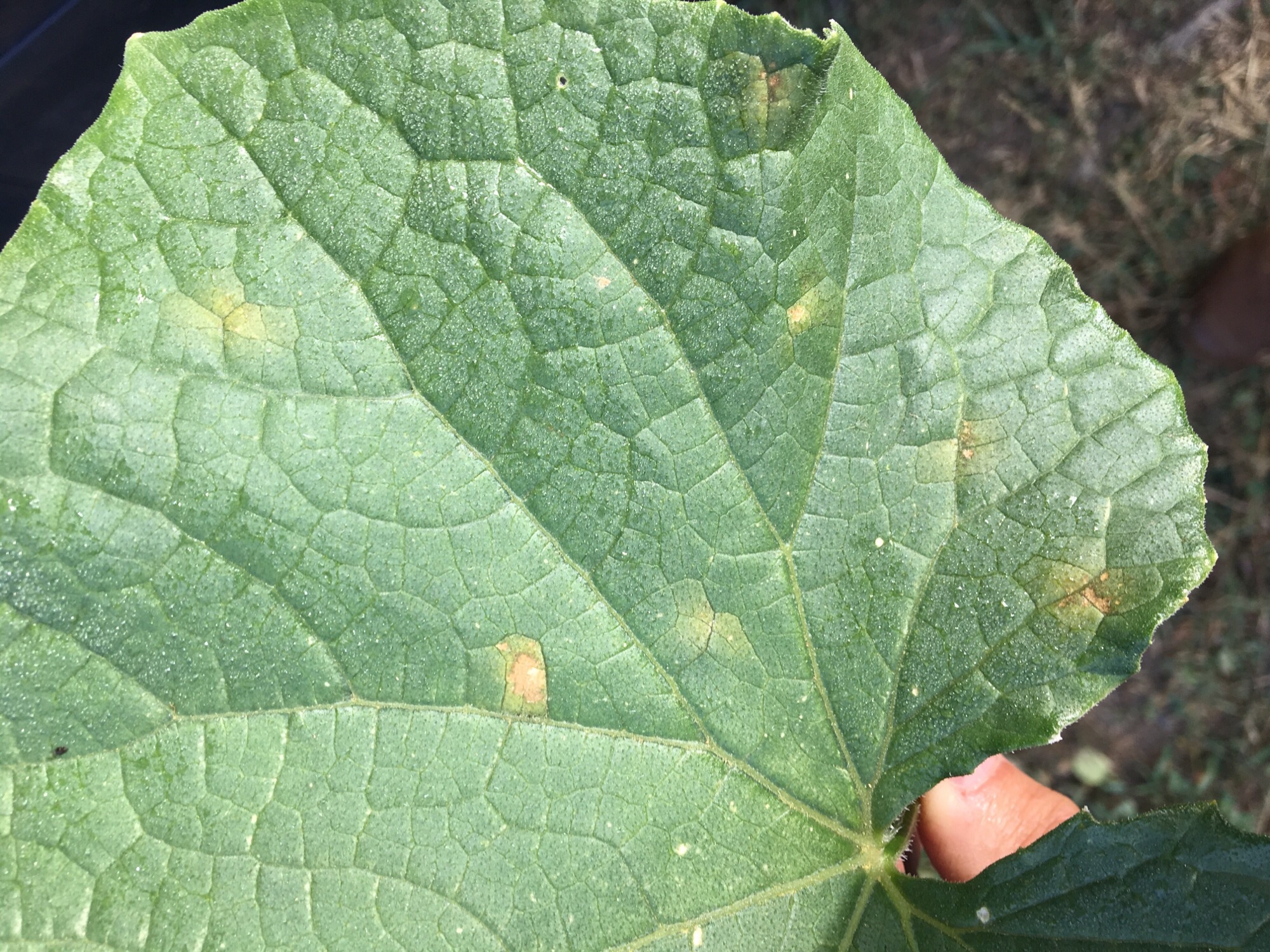
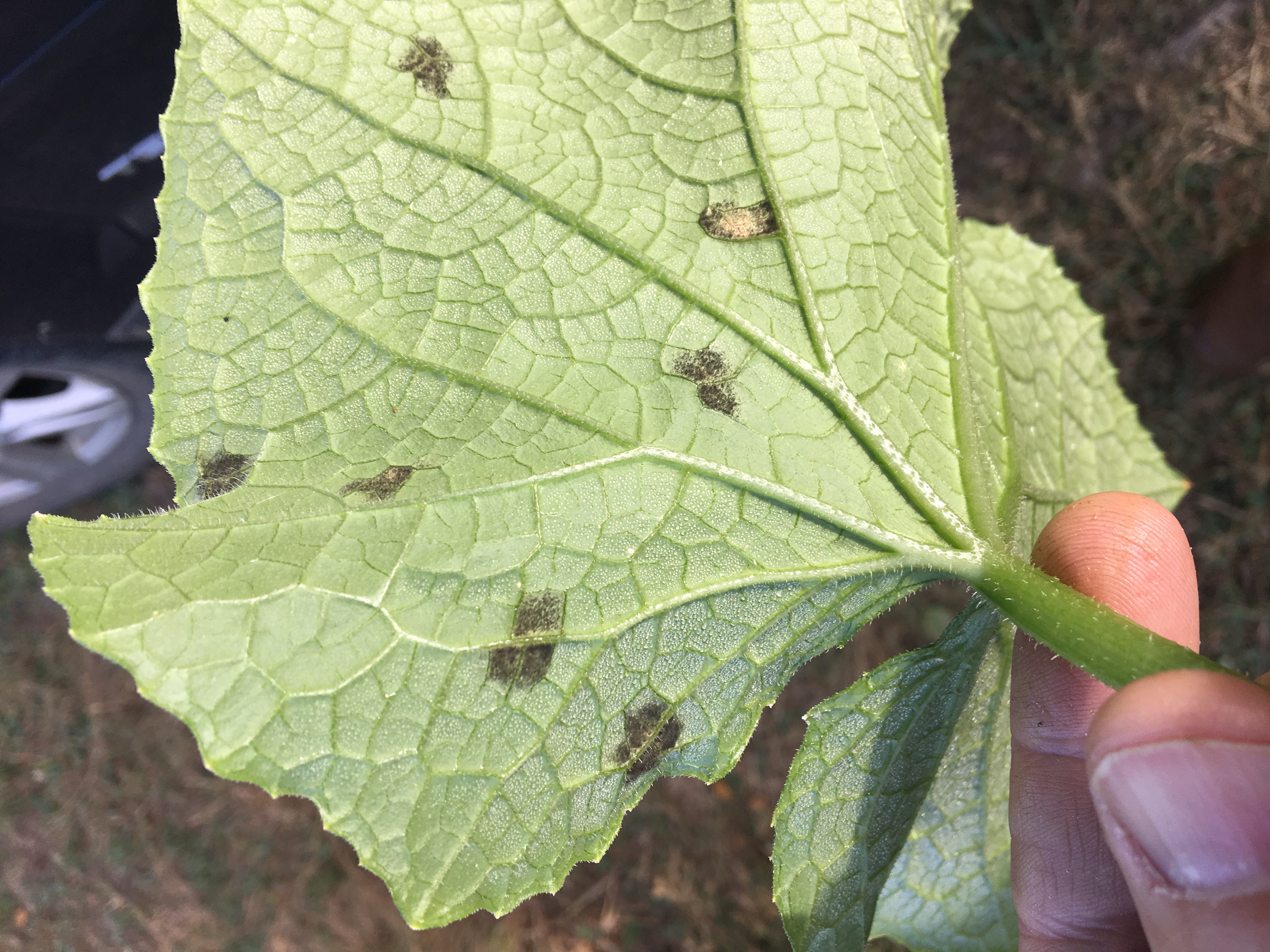
Cucurbit Downy Mildew (CDM) was discovered on cucumbers near Belvidere, Warren County on Friday 7/13.  This occurrence is in addition to the previously reported infection sites in Salem County.  All growers statewide, should be adding appropriate downy mildew specific fungicides to their protection programs on cucumbers. Look for yellow “panels” on the upper leaf surface, with dark sporulation on the lower leaf surface (see photos at right).   It should be noted that, in the Belvidere case, adjacent crops of summer squash and muskmelons were uninfected.  Additionally, no pumpkin or winter squash fields are known to be infected at this Cucurbit Downy Mildewtime.  Most races of CDM will infect cucumbers, while there are limited strains that will infect other cucurbits like musk and watermelons as well as pumpkins and winter squash.  Please refer to the CDM Forecast   http://cdm.ipmpipe.org/ for updates on disease outbreaks and forecasts for this disease.  Useful fungicides and rotations are to be found in the 2018 Commercial Vegetable Production Guide Cucumber section.
 

Beet Armyworm

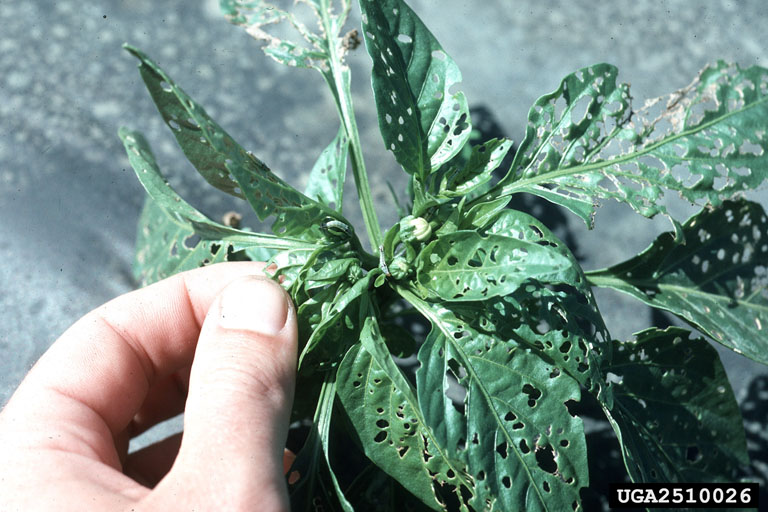
A number of beet armyworm (BAW) pheromone traps are deployed in southern NJ counties each year.  BAW has, at times been a troublesome pest of peppers in south Jersey, and occasionally in the north as well.  This week one trap in the Woodstown area of Salem County increased from low single digit nightly catches to 15-16 per night.  While no field infestations by this pest have been discovered thus far, these moth numbers are a warning to all pepper growers in the area that fields should be scouted at least weekly.  BAW can cause extreme defoliation of plants, beginning near the upper terminals (see photo at lower right, courtesy of Univ. of Georgia).  If left untreated, the larvae will consume much of the foliage and bore into fruit.  BAW are largely resistant to synthetic pyrethroid insecticides.  Effective insecticides include those in the IRAC classes 5 (Radiant, Entrust Beet Armyworm(OMRI approved)) and 28 (Coragen, Exirel).  For a complete list of useful insecticides, see the Pepper section of the 2018 Commercial Vegetable Production Guide.



IPM Update 7/11/18

Sweet Corn

European corn borer (ECB) moth catches in black light traps continue to be very low. There will be no map in this edition due to insufficient catch.  There have been isolated incidents of new feeding in the far south of the state, but generally, the threat to corn should be low until the second flight begins in earnest.  Once plants hit full tassel, any ECB larvae present will move downward on the stalk and re-enter the plant near the area where ears are forming.  This can result in direct injury to the ear.  Growers should consider an insecticide application at the full tassel stage to target ECB larvae as they migrate downward.  This application can eliminate larvae that have escaped any earlier insecticide applications. [Read more…]

IPM Update 7/04/18

Sweet Corn

European corn borer (ECB) moth catches in black light traps remain very low; situation unchanged from last week.  There will be no map in this edition due to insufficient catch.  Incidents of feeding are declining as infested plantings proceed to silk and whorl stage corn has not been exposed to egg laying.  We should be in a period relatively free of whorl infestations now.  The next whorl infesting pest will be fall armyworm (FAW).  As yet, no infestation of this pest have been detected.    [Read more…]

Cucurbit Downy Mildew ALERT – 7/2/18

Cucurbit downy mildew was confirmed on cucumber near Pedricktown in Salem County, New Jersey on 7/2/18. This is the first report of CDM in New Jersey this growing season. All cucumber growers are encouraged to add downy mildew specific fungicides to their weekly maintenance spray programs. All growers should scout cucumber plantings as well as all other cucurbit crops for symptoms. To track the progress of cucurbit downy mildew in the US through the CDMpipe website through NCSU please click here.

IPM Update 6/27/18

Sweet Corn

European corn borer (ECB) moth catches in black light traps remain very low.  There will be no map in this edition due to insufficient catch.  Incidents of feeding are declining as infested plantings proceed to silk and whorl stage corn has not been exposed to egg laying.  We should be in a period relatively free of whorl infestations now.  The next whorl infesting pest will be fall armyworm (FAW).  As yet, no infestation of this pest have been detected.    [Read more…]

IPM Update 6/20/18

Sweet Corn

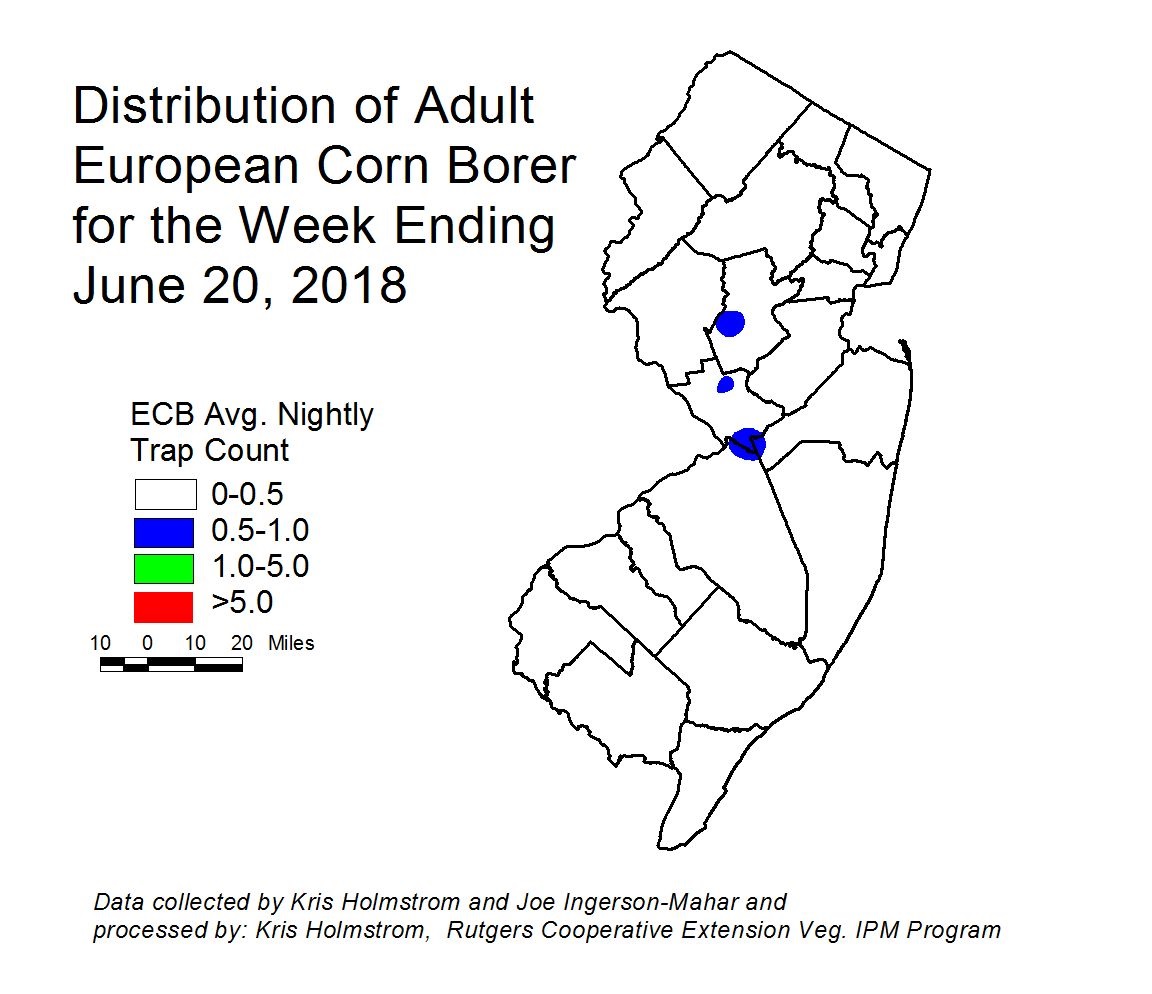
European corn borer (ECB) moth catches in black light traps are very low.  The highest activity now in north central areas (see ECB map).   Feeding continues to increase, although infestations are spotty.   [Read more…]