Fruit Crops Edition - Wine Grape Section

Seasonal updates on diseases, insects, weeds impacting small fruit (blueberry, cranberry, and wine grape). Fruit Pest Alerts are also available via this category feed.
 
Subscription is through the general Fruit feed available via EMAIL and RSS.

BMSB Survey

“Are you a grower? Got stink bugs? We need your help! We’re surveying growers to assess the impact of BMSB on crops and gathering information that will help us defeat this pest.

Receive a free Guide to Stink Bugs* if you complete the 10-minute BMSB survey”
https://cornell.qualtrics.com/SE/?SID=SV_5ssnjXLNhvp6v1H
Thanks in advance! – From the Northeast IPM Center

The BMSB Working Group, through NE IPM Center and Cornell University, is collecting information from farmers on BMSB impact and management. If you have time, please fill out this short survey. It will help to gather information that we can use to identify what’s working and what we still need to do.

Organic SWD Management Survey

There is a national effort to identify management options for no-spray or organic growers that are trying to manage spotted wing drosophila. If you are an organic grower, please consider filling out this survey to help researchers prioritize areas of research.
Organic Grower Survey on Spotted Wing Drosophila

Pesticide Storage Inventory Due May 1

All NJ licensed pesticide applicators, as well as dealers, who store pesticides are required by law to send a copy of their storage inventories with an explanatory cover letter to the local fire company by May 1st each year. [Read more…]

Annual Weed Control in Vineyards

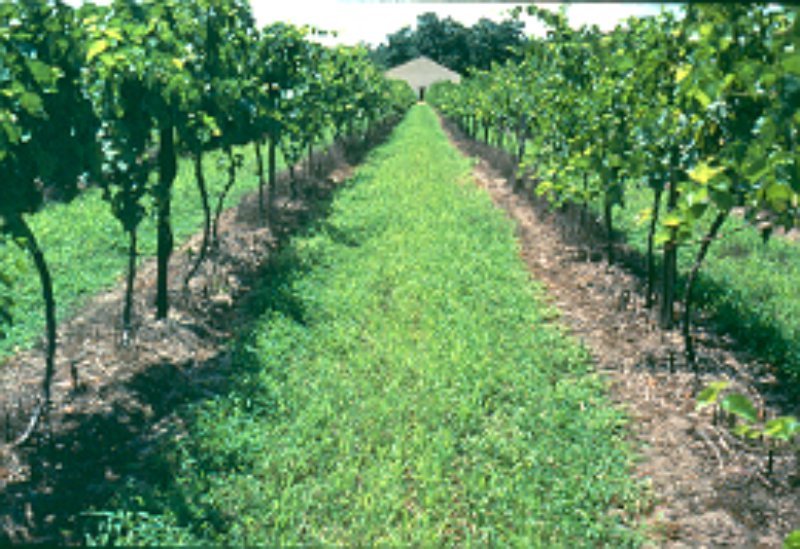
The program for the control of annual weeds in the vineyard should consider the weed free strip under the trellis and the sod middles between the rows separately.

Good weed control eliminates competition, improves air circulation, and fungicide and insecticide coverage.

Good weed control eliminates weed competition, improves air circulation, and fungicide and insecticide spray coverage.


The “Weed Control Season” starts in late fall, after harvest.  The program implemented in the spring depends on what herbicides were applied the previous fall.  If herbicides were applied in late fall, applications can be delayed until later in the spring.  Residual herbicides should be applied in late winter or early spring after the soil is no longer frozen, if no late fall treatment was applied. [Read more…]

‘Polar Vortex’ vs. Stink Bugs

This winter, especially January and February have been a bit cold, complete with ‘polar vortexes’ and lots of snow. There have been a couple of newspaper articles about how this will negatively impact insect pest populations, specifically brown marmorated stink bug. Is this true?

For BMSB, most likely NO. While insects do have something similar to antifreeze in their hemolymph (blood) there is a critical freezing temperature at which most species will die. Preliminary research by Dr. Tom Kuhar at Virginia Tech says the super cooling point – when the blood freezes – of BMSB is 5ºF. Populations in natural habitats may have suffered from the extreme cold weather. However, the majority of the BMSB population spends its winter with you, tucked inside the attic and under the eaves of houses, in boxes, under tarps etc. where it is warmer. They are in a reproductive diapause at this point, meaning that adult BMSB have physically prepared themselves to survive cold temperatures, and snow further acts to insulate the populations. There is a saying in Japan that lots of snow in the winter means lots of stink bugs (BMSB) in the summer! Research by Dr. K. Kiritani in Japan shows that BMSB is better adapted at surviving the winter than other stink bug species. There are many factors that contribute to winter mortality or survival and previous research suggests ~20% winter mortality for BMSB in any given year, regardless of weather.

So since the polar vortex may not keep the stink bugs at bay, keep monitoring your crops in the mid-late Spring for the initial dispersal.

Considerations for Estimating Cold Hardiness in Wine Grape

The severity of the current winter weather has growers and ag agents questioning how to accurately assess vineyard damage and develop a plan for coping with the damage through cultural management.

Fruit Specialist Dan Ward supplies comprehensive answers.

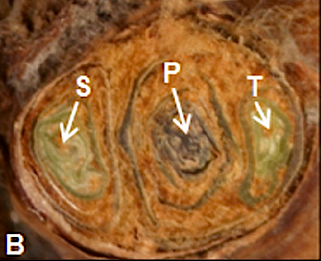
Cross sections of grapevine compound buds showing the location of primary (P), secondary (S), and tertiary (T) buds. P bud is dead, while S and T buds are alive;

Cross sections of grapevine compound buds showing the location of primary (P), secondary (S), and tertiary (T) buds.
P bud is dead, while S and T buds are alive.
Photo courtesy WSU Extension

The hardiness of grape buds and wood ranges widely among cultivars and different antecedent weather and physiological conditions. Any estimate of cold hardiness needs to be considered as specific to either the buds or the wood, given the cultivar, under the previous Fall’s conditions for the development of hardiness, given the weather conditions preceding the cold event in question. [Read more…]
