Commercial Ag Updates + Farm Food Safety

Rutgers Cooperative Extension Ag Agents provide updates on what they see in the field, upcoming events, and other important news that affects your operation, such as developments in on-farm Food Safety. Subscribe if you wish to be notified about workshops, meetings, and upcoming commercial ag events.
 
Subscriptions are available via EMAIL and RSS.

Mid-season corn crop evaulations

Silking corn received some much needed precipitation over the last forty-eight hours across much of Salem County. On a hot July day, corn in pollination mode can easily uptake .25 to .30 inches of moisture. Depending on the location, some fields only received a day’s worth of rain while other’s under the path of the northeasterly tracking storms received upwards of .80 inches this weekend.
Droughty corn

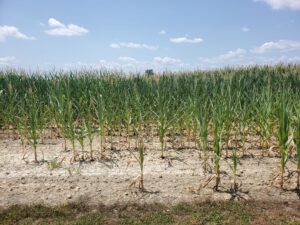
Curled leaves of corn waiting for rainfall


Evaluating field water holding capacity. Precipitation is critical to mazimizing grain fill on soils with low water holding capacity under these conditions. Soil compaction in fields that are exhibiting classic surface sealing are exasperating corn moisture stress conditions as seen in this July 23rd photograph. Combined with the high evapotranspiration rate of the last two weeks, these soils are unable to absorb or retain enough moisture to meet crop removal needs. Now is a good time to evaluate soil water holding capacity and tilth condition and how well the corn hybrid planted on that soil met expectations despite any pressure from silk feeding insects.

When moisture stress occurs makes all the difference. Remember, corn hybrids mature at different times based on their individual need to accumulate heat units. Just before silking is visible, corn plants are in the V12 collar stage. At this stage, one can assume at least 880 heat units since planting at this location. At V12 stage, we can assume the crop emerged 43 to 50 days ago. When fifteen collars are present, the crop is about ten days away from silking. This is when ear size, kernel size and kernel number are determined. Take a moment to look back and see what maturity corn was planted. Do you like what you see? Despite the weather stress? If counting leaves, their should be at least sixteen leaves on the plant before the tassel appears on shorter season hybrids and as many as twenty-one on longer season hybrids.

What happens at silking? Did you know that at silking, 50% of the available nitrogen and phosphorus in the soil is taken up by the crop over the next few weeks. When did you put down nitrogen? Sixty days ago as a plow down but with a delayed planting? Forty days ago at planting? Twenty days ago as a side-dress? Did you split applications?

How many days are left to physiological maturity? An ‘85 day’ corn requires about 2100 heat units since planting to mature. ‘101’ day corn varieties require more than 2400 heat units. It’s the end of July. How many heat units are left in the growing season to reach physiological maturity based on the V stage of the crop? Given the soil moisture holding capacity of the soil, could you have planted that field any earlier? Planted it later? Used a longer or shorter maturing variety? If the planting date had remained the same, would a shorter day or a longer day corn have pollinated better or faired worse given the precipitation pattern at that locale? What if the planting date had been earlier, or later? How did tillage choice impact water holding capacity of that soil?

What next? While a typical field of corn can take up to fourteen days to reach full pollination, some of the crop wil be pollinating every day. This is actually a good thing. Pollen only sheds when anthers are dry and extreme heat can even kill pollen. Corn is wind pollinated. When shed, the pollen clouds will drift from twenty to fifty feet. Last week’s low air quality rating due to the smokey haze over the region was also due in part to the amount of corn pollen in the air locally. Conversely, on overcast rainy days, tassles do not release pollen to the silks below. Too much wind during pollen shed can actually blow the pollen beyond reach.

Lastly, while the silks are being pollinated they have to compete with japanese beetles, corn beetles and a myraid of other silk clipping insects.
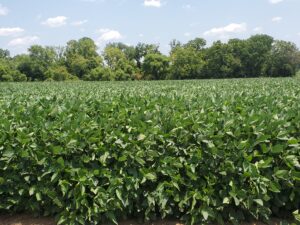
If you can tolerate the smell and feel of corn pollen on your eyelashes, put on a rain coat and go for a walk through your crop to see how the interior of the field is fairing this season. Remember as hay comes off and soybeans are sprayed, the bugs are seeking haven in corn.


Additional Resources:

Water holding capacity of some NJ soils:

https://www.nrcs.usda.gov/Internet/FSE_DOCUMENTS/nrcs141p2_018372.pdf

Crop development:

https://cropwatch.unl.edu/documents/Corn%20Growth%20%20Development%2013-1-1.pdf
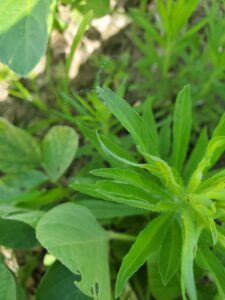
 

Field crop progress mid-July, Salem County

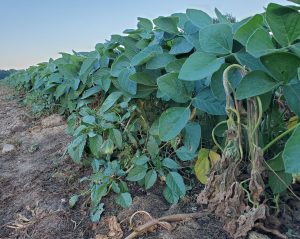
Crop fields continue to be a smorgesborg for insect and insect vectored pathogens. With four different planting groups of soybean and three of corn, foliar and silk clipping pests are making their presence known in soybeans and corn.

Corn: Japanese beetle feeding continues to expand across soybean fields. The abundance of healthy stands and silk emergence in early planted corn will shift these leaf feeders over to corn silks. This planting group is overall in excellent condition and most fields have obtained maxiumum height and nitrogen utilization. These fields have very high stand populations and leaf development. Hopefully this will help mitigate the edge feeding losses from Japanese beetles and another silk clipper, stinkbugs. In the coming weeks after pollination, good air flow and lower humidity through grain fill is needed to limit mycotoxin development.

Late May and June planted corn up to three feet in height oversaturated just prior to planting continues to show signs of moisture stress, and soil compaction issues. These fields are in the rapid stem elongation phase and were leaf curling this week in the high heat. Several fields are symptomatic for nitrogen deficiency as a result of those earlier ponding events. Soils are sunbaked on the surface and fields with higher clay content are root zone compacted. These are the fields to monitor for economic damage from silk clipping if the crop continues to be under heat stress. To limit further yield losses, these acres are more likely to benefit from insecticide treatments during silking still a few weeks away. Stink bugs in V1 to V6 plantings are most likely to be of economic concern and treatable in this corn group when 1 out of ten plants have bugs; decreasing to 1 out of every four at reproductive stage.

July planted corn is less effected by moisture and heat stress. The root systems of these v1 to v5 plantings have found adequate surface soil moisture from last week’s rains and are loving this heat and humidity. This crop group is highly variable for soil compaction depending on the quality of the soil and the path of heavy rainfall just prior to planting.

Soybeans: Overwintering pests of concern vectoring diseases to soybeans have emerged in abudance from vegetation in field edges, old meadows, and grass hay fields. The acreage and variability in cover crop plantings and cash grain crop plantings last fall was ideal for insect populations and residue infected bacterial innoculums to increase.

Along the south-west side of the county, in uncanopied vegetative beans on sandy soils, wind-rain-sand deposition of soil onto leaves occurred in recent storms and disease progression is evident on stems and leaves. Field comparisions here observed tillage at planting reduced movement of bacterial innoculum onto stems and leaves in canopied stands in contrast to adjacent no-tilled early vegetative stands. On the opposite corner of the county, oversaturated, low-lying loamy fields recently fitted for planting are showing expected variablity in stand establishment.

Adult soybean stem borer

Soybean stem borer adults are present in bean after bean fields

On better ground without compaction issues, most early planted fields are in good foliage condition.  Early R stage beans that were under heat and moisture stress last week show signs of self-abortion of lower stem flowers. Management of insect feeding and variatal resistance response in these fields is optimum. Crop rotation matched to soil type and timing of inputs stands out as the key niche for uniform early planted stand evaluations. In these ideal stands, evaluate what combination of variety, tillage, prior crop rotation, planting date, and timing of inputs and preciptation thwarted insect vectored diseases.

Observations on later planted beans are quite variable regardless of when inputs were applied. Grasshoppers, japanese beetles, spider mites and thrips have already vectored leaf diseases in this group. Soybean stem borer adults and larva were observed in v4 to v5 fields.

Knowing the weather was just not ideal for this planting group, document signs and progression of insect vectored diseases in the foliage, exterior of stems, interior of stems, cross section of roots, feeder root presence and presence of healthy nitrogen fixing bacteria by variety.

Healthy stems and roots in the vegetative stage are a good sign plants will respond to foliar feeds if needed. Expect insect pressure to continue to build. Soybean diseases overlap as do insect stages and feeding pressure. While one pathogen may be of minimal concern in early planted beans, another may take over second plantings and dominate later plantings as season progresses.

Edge of field weed control to reduce resistance

soybean field edge

Giant ragweed: Sporadic patches of giant ragweed (Ambrosia trifida) are emerging above the grassline in field edges mostly along ditches and not within field margins. Let your neighbors know if you spot giant ragweed and where as they are not easy to find amongst all the other weeds along ditches.


Palmer amaranth: Pigweeds, mostly palmer amaranth (Amaranthus palmeri) along field crop margins are rapidly growing and are one of the more frequent observations along outside rows adjacent to lawns and sensitive crops in Salem County. For resistance management, these outside rows of half-dead, curled but still living plants are where resistance can develop. If already sprayed, mow these down to the ground or till under even if it means sacraficing the outside row of crop. If sprayed or mowed, monitor the area to make sure pigweeds completely die.

Ivy Leaf morning glory: Ivy leaf morning glory (Ipomoea hederacea) will continue to sprout with this flush of rain. Monitor newly planted double crop soybeans into wheat stubble for flushes moving into fields from field edges.

Marestail: Over all marestails (Conyza canadensis) are under control except in fallowed unplanted and untilled fields with last year’s crop residue still present. Brushog these down before notilling. Marestail is a wind dispersed seed that like thistles, will end up infesting hundreds of acres downwind if allowed to go to seed.

Thistles: Thistles in the Cirsium and Carduus genus are sporadic but on some idled fields extensively spreading by root rhizomes (Canada) and seed dispersal (Bull, Musk). Canada thistle in sandy soils is a life time headache greatly increasing field management costs over time.

Available Food Safety Signs and Posters

We continue to get questions about what signage is required for an audit or the Produce Safety Rule and where to get them.  Not all the signs listed below are, but handwashing and visitor signs need to be posted in English and in the language of the workers.  For example, if you have a mixture of Spanish and Creole speakers, you will need signs in three languages.

The signs and posters listed below are available at the following locations – Rutgers Cooperative Extension office in Cumberland County (291 Morton Ave., Millville Tel. 856-451-2800 x 1) or Rutgers Cooperative Extension office in Mercer County (1440 Parkside Ave., Ewing, NJ 08638 Tel. 609-989-6830). If you would like any of the signs, please call the office to schedule a pick-up.

Please Wash Your Hands Often! (8.5x11inches) – English, Spanish, Creole, Chinese, Greek, Polish, Portuguese, Russian and Vietnamese.

Please Put Used Toilet Paper in the Toilet (8.5×11 inches) – English and Spanish

Please Use Toilets Provided in the Field (8.5×11 inches) – English and Spanish

When Must Hands Be Washed (8.5×11 and 21.5×27.5 inches) – English and Spanish

Health and Safety Notice for Visitors (21.5×27.5 inches) – English and Spanish

Cleaning and Sanitizing Food Contact Surfaces (21.5×27.5 inches) – English and Spanish

Service Animals Covered by the ADA are Welcome Here (8.5×11 and 21.5×27.5 inches) – English and Spanish

Many of these signs can also be downloaded from our revised website onfarmfoodsafety.rutgers.edu starting July 1st.

Don’t Let Your Guard Down With Farm Worker Health

The COVID-19 pandemic highlighted the critical and essential role of farm labor in getting food from farm to plate. However, health concerns should not stop with a negative COVID test or vaccine, especially if an employee or family member is exhibiting any of the ‘flu-like’ symptoms that are associated with corona virus.

From the Vermont Law School Center for Agriculture and Food Systems (CAFS) – “The CAFS launched the Food System Worker Law and Policy Project in 2021 with research focused on farmworkers, who—despite forming the backbone of a trillion-dollar industry in the U.S.—face a level of occupational risk unrivaled by most workers. From repeated exposure to pesticides and extreme heat, …. ” Their newly published “report titled “Essentially Unprotected: A Focus on Farmworker Health Laws and Policies Addressing Pesticide Exposure and Heat-Related illness,” … May 2021, provides an overview of the findings as well as policy recommendations that are urgently needed to protect farmworkers.”

Typically not seen until July, we’ve already had 3 heat waves beginning in May that expose workers to a number of potential health risks that may present very similar symptoms and can be equally health, and even life, threatening. Published studies from the Rutgers Institute of Earth, Ocean, and Atmospheric Sciences suggest growing numbers of people worldwide are at risk of heat stress and related complications, including farmers and ag laborers working in high heat and humid conditions. Last year, OSHA-NIOSH released a Heat Index App (in English and Spanish at the Apple App Store or Google Play) featuring:

  • A visual indicator of the current heat index and associated risk levels specific to your current geographical location
  • Precautionary recommendations specific to heat index-associated risk levels
  • An interactive, hourly forecast of heat index values, risk level, and recommendations for planning outdoor work activities in advance
  • Editable location, temperature, and humidity controls for calculation of variable conditions
  • Signs and symptoms and first aid information for heat-related illnesses

For more information about safety while working in the heat, see OSHA’s heat illness webpage, including online guidance about using the heat index to protect workers.

In addition to heat stress, harvesting and other activities along field edges, including going into the woods instead of using a portable bathroom facilities, create a high risk for tick bites which can also carry a number of diseases, many as or more debilitating than Lyme disease. It is critical for your employees’ health and well-being to get proper diagnosis and treatment for all of these ailments. This table illustrates how many tick-born diseases, as well as heat stress, all have potential symptoms very similar to those of COVID-19. Each is linked to additional resources at the CDC. In many cases, it may be the ‘other symptoms’ that may be unique to each disease and assist a medical practitioner with correct identification and lead to better verification with further testing.

   Disease    >

Symptoms  v

COVID-19 Heat Stress Lyme Disease Ehrlichiosis Babe- biosis Powas-san Rocky Mtn Spotted Fever
Vector* Human Black-legged Tick (a.k.a. Deer Tick) (I. scapularis) Lone Star Tick (A. americanum) & Black-legged Black-legged Tick Ground hog(I. cookei), Squirrel (I. marxi) & Black-legged Ticks American Dog Tick (D. variabilis)
Fever or chills X X X X X X X
Cough X X
Shortness of breath/difficulty breathing X
Fatigue X X X X
Muscle/body aches X X X X X X
Headache X X X X X X X
New loss of taste or smell X
Sore throat X
Congestion or runny nose X
Nausea/vomiting X X X X X X X
Diarrhea X X
Rash X X X
Other symptoms X X X X X X
Potentially Deadly/Disabling
X X X X X X X

*NOTE – main vector listed, but many tick born diseases may be vectored by other species of ticks, or different species causing same disease may be carried by different tick species.

Grasshopper 4th instar in ready to harvest wheat

June 26, 2021

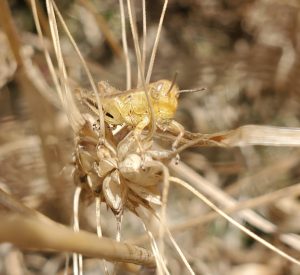
GrasshopperA field of ready to harvest wheat was observed infested with 4th to 5th star grasshopper nymphs in Salem County. While waiting for positive identification from entomologists familiar with the differences in the nymp identification, these nymphs appear to be differential grasshoppers (Melanoplus differentialis). The uniform yellowish color of nymphs observed, is an indication the population is quite high. Lesser populations tend to be more green in color. Additional fields of wheat, corn and soybean on the same farm all had nymphs present but were not at economic threshold yet.

Visual counts observed walking into the field were more than 4 as they hopped away fro

Grasshopper eating a leaf

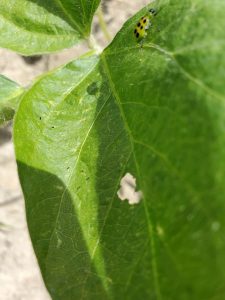
A cucumber beetle in the top right corner on a soybean leaf with grasshopper feeding hole

m a square foot area, repeated in multiple locations. This confirms the population is very high. The threshold for nymph stage grasshopper populations causing economic injury is 15 – 20 per square yard. (Four or more per square foot; nine square feet in a yard = more than 20 per square yard = high infestation.)

Because grasshoppers move from preferred forbs like alfalfa and hay fields, and field edges, into cereal crops it is recommended each cereal grain field not yet ready to harvest due to high moisture content be observed to assess thresholds.

When grasshopper nymph levels are this high, the damage to unharvested cereal grains can be concernin if the adult phase coincides with near ready moisture crops, because their feeding can clip the dried grain head stem and both phases chew on seed head grains.

There is no standard for the level of clipped seed heads per say. Monitoring is the best method to determine if harvest will resolve the issue or if a foliar insecticide is needed to protect the grain quality and yield.

The active ingredient Rynaxypyr (Chlorantraniliprole, IRAC 28) found in Dupont insecticide Coregen and FMC’s insecticide Prevathon are labeled for foliar application of grasshoppers in multiple vegetable, field and forage crops.

“Growers can make a foliar application of Prevathon insect control by ground, air or overhead sprinkler chemigation. It has a short re-entry interval of four hours, a favorable worker protection standard profile and a short PHI.” – FMC website, https://ag.fmc.com/us/en/insecticides-miticides/prevathon-insect-control

Once wheat is harvested, grasshoppers will fly to corn and soybean and alfalfa regrowth. Japanese beetles were present in these crops but currently at low levels. Feeding damage may be misidentified as japanese beetle damage when it is actually an indication of grasshopper pressure building. Nymphs were present in adjacent corn and soybean fields but at low levels.

Monitor soybean and young corn fields closely for signs of adult grasshopper feeding through August. Note that a dense swarm of differential and two-striped field crop grasshoppers can destroy the leaf area of a crop in just a few hours.

The following links have useful identification and detailed management recommendations for various stages of grasshoppers on various crop stages of development. The soybean research link shows the defoliation thresholds in soybeans.

Identification https://www.youtube.com/watch?v=bgi6De5NDIw

Identification https://www.youtube.com/watch?v=bgi6De5NDIw

Identification http://idtools.org/id/grasshoppers/factsheet.php?name=13190

Economic importance  http://idtools.org/id/grasshoppers/factsheet.php?name=13190

New Jersey species in 2005 https://njaes.rutgers.edu/pubs/publication.php?pid=fs290

Coragen label http://www.cdms.net/ldat/ld8KF045.pdf

Soybean reasearch https://soybeanresearchinfo.com/soybean-pest/grasshoppers/

Prevathon label https://ag.fmc.com/us/en/insecticides-miticides/prevathon-insect-control